







Search Results for: Logo replacement
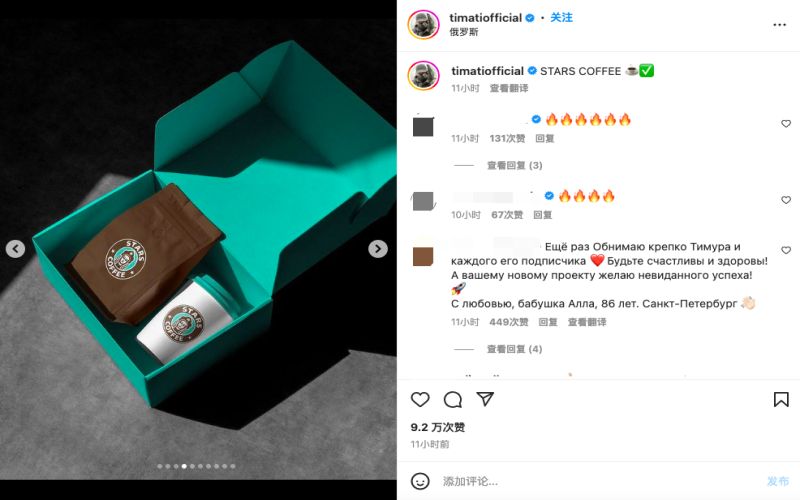
Russian version of Starbucks launches new brand STARS COFFEE, reappearing in Moscow on August 18
After Starbucks exited the Russian market, its assets were acquired by a local company and rebranded. On August 17, 2022, rapper Timur Yunusov revealed the new name "STARS COFFEE" and its logo on Instagram, and the official website went live simultaneously. The new brand replaced the mermaid logo with a girl wearing traditional Russian headwear, and officially opened in Moscow on August 18, with all 120 stores planned to resume operations by the end of September. The new stores no longer write cup names by hand, switching to thermal printing, and food has also become pre-made and heated. Marketing experts pointed out that the new owners are striving to maintain continuity between the old and new brands, but the effectiveness of the rebranding still needs to be tested by the market. Russian netizens have been discussing it extensively. [more…]

Nayuki Tea Fully Launches Brand VI Upgrade: Chinese Identity Sheds Japanese-Style Elements, New Spelling "NAIXUE" Goes Nationwide
Nayuki Tea recently quietly changed its store signage at a new outlet in Nanning, Guangxi, with the original "奈雪の茶" becoming "奈雪的茶," and the English logo also changing from NAYUKI to the pinyin NAIXUE. The company officially responded that this is an upgrade move for the brand's seventh anniversary and will be rolled out gradually nationwide. This new tea beverage brand, founded in Shenzhen in 2015 and listed in Hong Kong in 2021, is turning a new page in its eight-year brand history through a visual rebranding that removes Japanese-style elements. Since June this year, its parent company has intensively applied for multiple NAIXUE trademarks, and the signage replacement work at nearly a thousand directly operated stores nationwide has already begun. [more…]
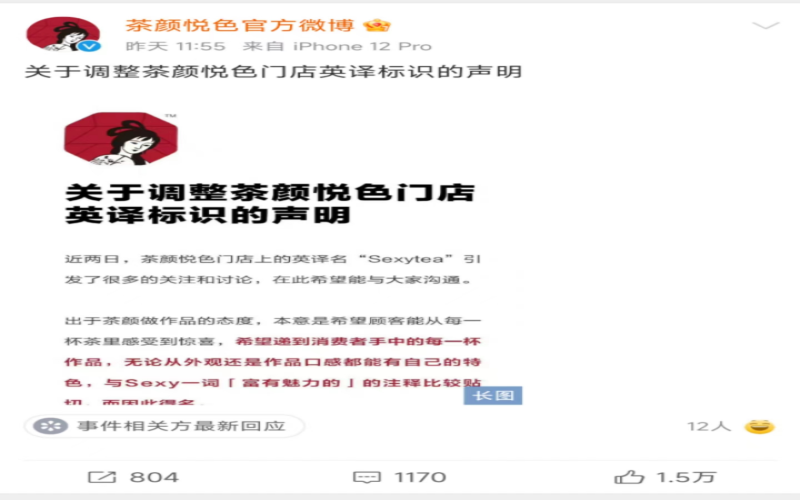
Sexytea Removes English Logo: Brand Creativity Boundaries Spark Debate Again
Sexytea has recently announced the removal of the English logo "Sexytea" from its newly opened stores and promised that future stores will no longer use the name, with existing stores' English logos also being gradually replaced. The brand explained that "Sexy" was intended to mean "charming," hoping customers would feel surprise in every cup of tea, but due to the word's multiple meanings causing controversy, they deeply apologize. The statement also mentioned that the team had discussed optimizing the English name during a mid-year review, but progress was slow, and this online discussion served as a wake-up call. Additionally, netizens dug up past incidents where Sexytea had apologized twice—once for a mug with the phrase "pick up leftovers" and once for tea bags labeled "Officer, I want it"—sparking renewed discussion about the boundaries of brand creativity. As a representative of Changsha's local guochao tea beverage scene, how Sexytea balances creativity and values is worth watching. [more…]
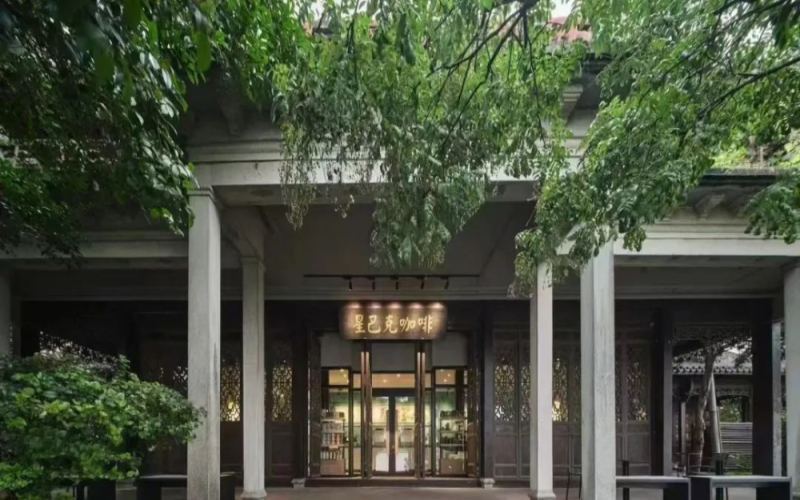
Starbucks Takes Over Former COSTA Site at West Lake, Red-and-White Signage Replaced with the Siren, Sparking Heated Discussion
A quaint shop on Gushan Road by West Lake recently put up a Starbucks sign, though the location was originally the COSTA Xiling store. After COSTA moved out in August this year, Starbucks quickly took over this prime spot, incorporating Chinese elements into the store design, drawing tourists and locals to check in. Meanwhile, COSTA has been closing stores across many parts of the country, with only 393 stores remaining, far more closures than openings. What netizens once joked about—"Starbucks replacing COSTA"—has ironically come true, which is quite lamentable. Front Street Coffee reminds us that behind the brand turnover is a microcosm of rising rents in the West Lake commercial area and intensifying competition in the coffee market. [more…]
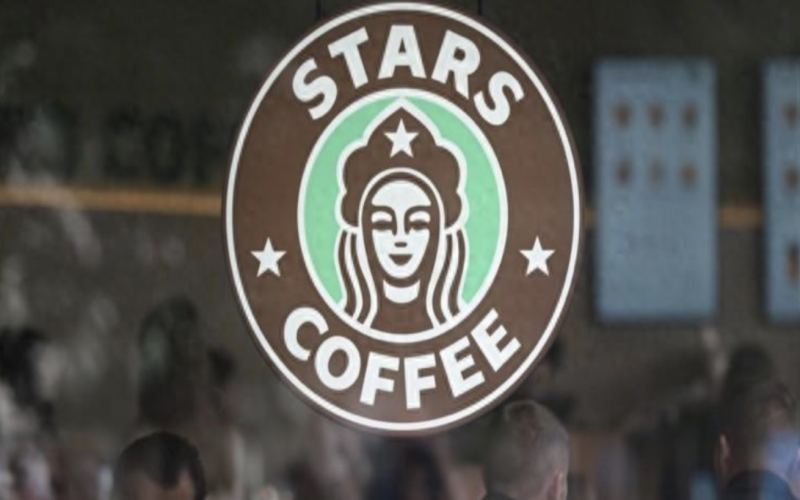
Starbucks' trademark will not be protected in Russia!
After Starbucks announced to suspend its business in Russia and withdraw from the Russian market last year, the founder of the local famous catering company Pinskiy & Co, Anton Pinsky, and the Russian rap singer Timati collaborated to acquire Starbuc [more…]
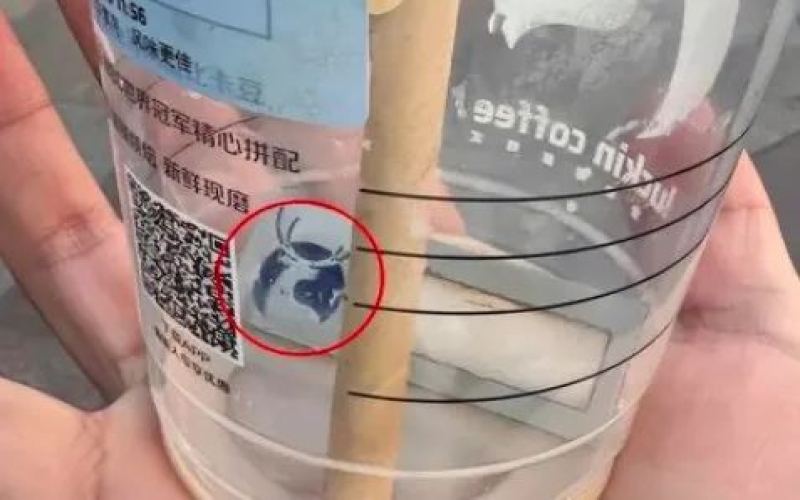
A Grand Showcase of Luckin Employees' New Badges: From Pinyin to Memes, Naming Freedom at Its Peak
Not long ago, the incident of an employee badge being found in a Luckin drink drew public attention to that little silver deer badge for the first time, and recently it has gone viral again—Luckin has required employees to replace their old badges and adopt English names or pinyin, along with unified font specifications, which the QC department will strictly inspect. Some people honestly use pinyin or proper English names, while others have turned their badges into a comedy show: the handmade group, the phonetic group, the weird word group, the undercover group, and the ultimate god-tier group all take turns stepping up. This article compiles these wildly creative badge names, showcasing the humorous daily lives of coffee workers while also reminding stores of the importance of compliant naming. At the end, Front Street Coffee-related recommendations are kept for coffee enthusiasts' reference. [more…]
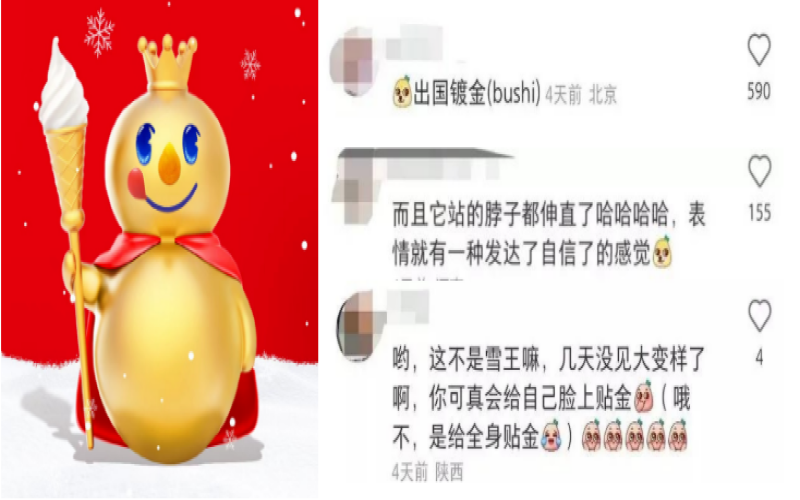
Brand Avatars Get a Makeover as a New Marketing Tactic: The Promotional Logic Behind Mixue Bingcheng's Golden Snow King
For professional coffee knowledge exchange and more coffee bean information, please follow Coffee Workshop (WeChat public account: cafe_style) For more specialty coffee beans, please add the private WeChat of Front Street Coffee (FrontStreet Coffee), WeChat ID: qjcoffeex When a brand changes its avatar on social platforms, it often signals the start of a new round of marketing moves. Recently, Mixue Bingcheng's iconic Snow King image went from chubby and white to a golden version, sparking heated discussion among netizens. This change is not simply to build momentum for overseas expansion, but to tie in with the "Drink Mixue Bingcheng, Get a Golden Snow King Necklace" campaign. In fact, Mixue Bingcheng has long treated its avatar as ad space, having previously launched looks such as the "Darkened Snow King" and the Winter Outfit Snow King. Brands such as Heytea and McDonald's also frequently create buzz by changing their avatars for a limited time. This article will analyze the logic and effects behind this marketing tactic. [more…]
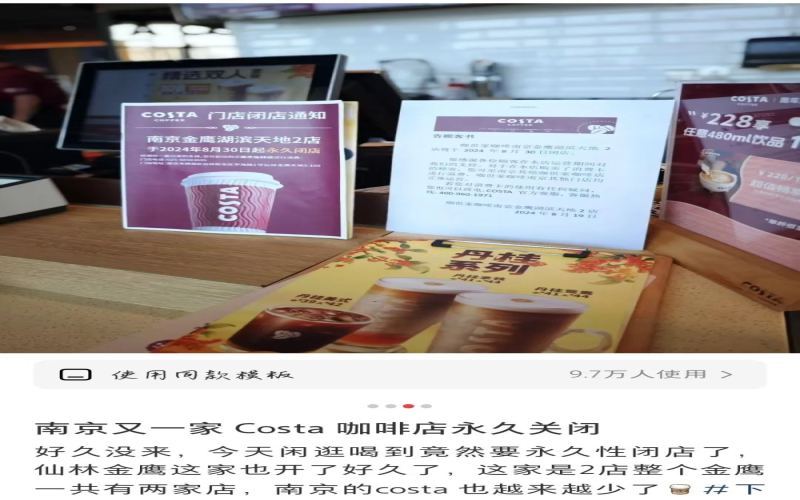
COSTA Coffee's Jiangxi stores cleared out, multiple Nanjing locations closed; why is Starbucks' former rival retreating step by step?
COSTA Coffee, once as famous as Starbucks, is now quietly shrinking in the Chinese market. A store in Nanjing has announced it will close permanently at the end of August, and two stores in Nanchang Wushang Mall also shut down in early August, meaning COSTA has completely exited the Jiangxi market. From its ambitious plan in 2018 to have 2,500 stores to now having only 343 in operation across 36 cities, COSTA's downward slide is lamentable. A chaotic mini-program, weak marketing, and products lacking highlights are all eroding the patience of loyal users bit by bit. For many consumers whose coffee awakening came from COSTA, the gradual disappearance of this veteran brand, which has been in China for nearly 20 years, inevitably stirs emotion. [more…]
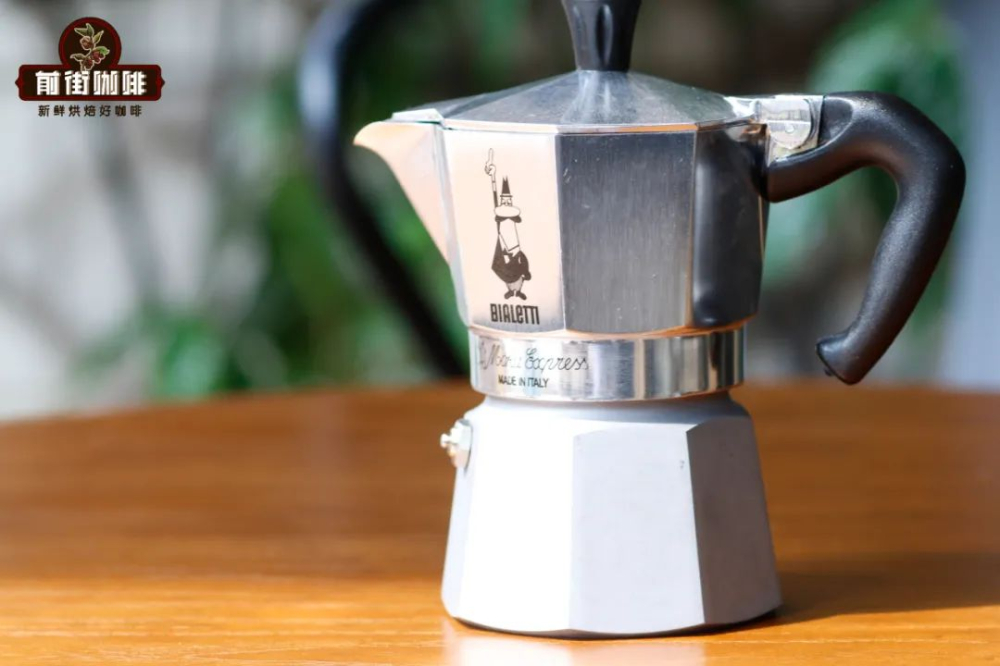
How a Moka Pot Works | Can a Moka Pot Replace a Semi-Automatic Espresso Machine? Is There a Big Difference in Flavor and Mouthfeel Between Moka Pot Coffee and Espresso?
The moka pot is a coffee brewing device with a very long history and is a national treasure-level coffee apparatus of Italy. As everyone knows, Italy is a country of art and romance, and it is also a country that loves drinking coffee. The moka pot is just such a cultural symbol that cannot be ignored, and it is held in high regard all over the world. [more…]
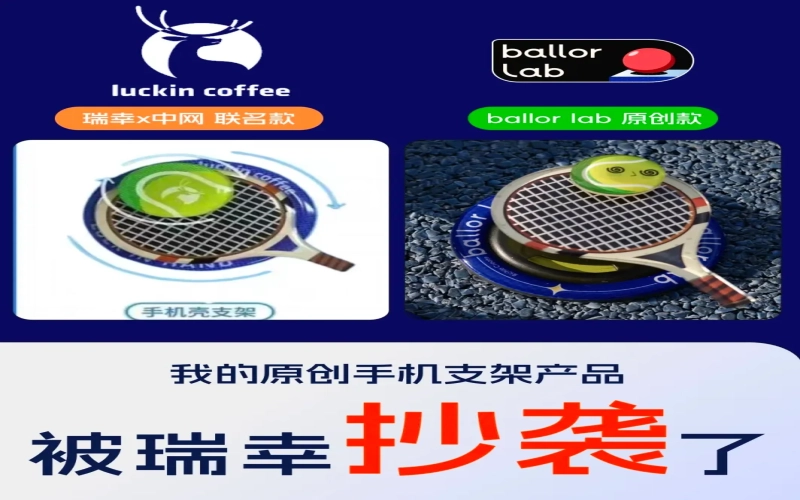
Luckin Coffee's collaboration merchandise with the Chinese tennis association has been accused of plagiarism, with the phone stand and pillow designs raising suspicions.
Luckin Coffee recently launched a co-branded campaign with the China Open, only to unexpectedly get caught up in a plagiarism controversy. An original designer posted on social media, accusing Luckin's co-branded phone case stand of being highly similar to their own work from last year, with details from the color scheme and the tennis-spin concept to the font on the base being almost identical. Meanwhile, another sports brand also discovered that its promotional image for a tennis pillow was strikingly similar to Luckin's merchandise, and after comparison, netizens pointed out that the tag position, plush texture, and even the stitching were exactly the same. As the incident continued to escalate, a wave of questioning flooded Luckin's official comment section, but as of press time the brand had yet to respond. This is not the first time Luckin has faced such accusations, and this controversy has dealt a blow to its co-branded marketing image. [more…]
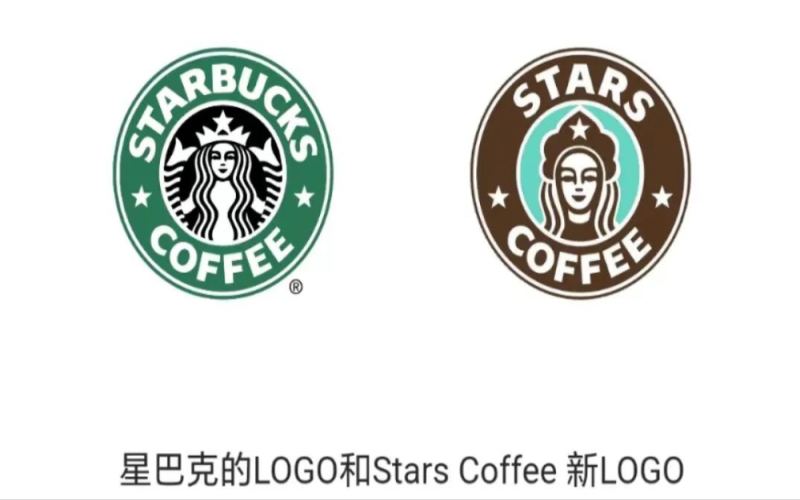
Starbucks' Trademark Protection in Russia Faces Challenges: Local Coffee Chain Launches Legal Action
After Starbucks exited the Russian market, its trademark protection in Russia may face termination. The owner of Stars Coffee, which acquired Starbucks' Russian assets, has filed a claim with a court seeking to terminate the protection of Starbucks' trademarks. This move aims to reduce trademark infringement risks and pave the way for store expansion. This article will provide a detailed introduction to the background, progress, and possible impact of this event. [more…]
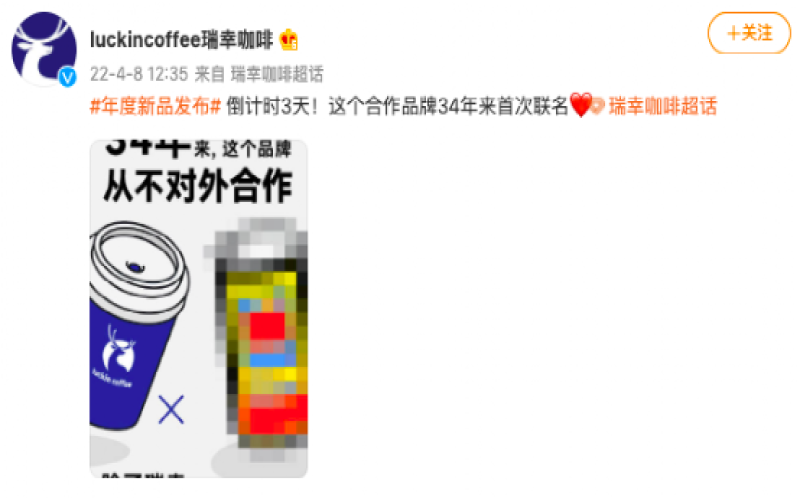
Luckin Coffee's collaboration with Coconut Palm goes for a rustic vibe, while Heytea teams up with Hiroshi Fujiwara for a trendy take—which of the two brands better understands young people?
Luckin Coffee's collaboration with Coconut Palm coconut juice successfully broke through with its rustic packaging, while Heytea chose to collaborate with Japanese streetwear godfather Hiroshi Fujiwara for a minimalist, dark aesthetic. Both are cross-industry collaborations—one takes a down-to-earth, rustic route, the other focuses on street fashion—reflecting the two brands' different strategies for competing over young consumers. This article analyzes the packaging design, marketing tactics, and visual color schemes behind these two collaborations, and explores whether Luckin's competitor has shifted from Starbucks to the milk tea circle. For coffee lovers, whether it's rustic or trendy, tasting good is what matters most—Front Street Coffee always selects quality coffee beans for you. [more…]
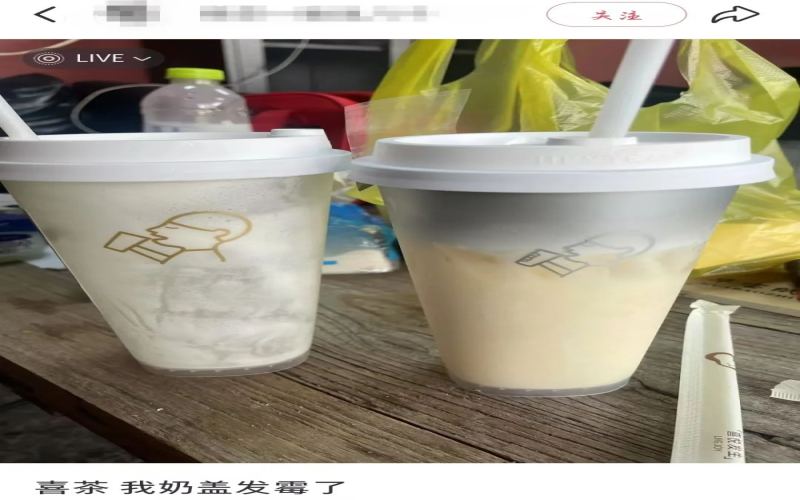
Heytea's new silver-coated cold drink cup sparks debate: the milk cap line is obscured, consumers mistake it for spoilage, and staff find it inconvenient to use.
Heytea recently switched to new transparent plastic cups for cold drinks, adding a silver-gray decorative coating to the top of the cup and changing its brand logo to silver-gray as well. This design change has sparked discussions from multiple sides: some customers mistakenly thought the milk cap had gone moldy, milk cap lovers worried they could no longer judge the amount of milk cap by appearance, and some netizens felt the silver coating easily reminded people of something inedible or spoiled. Meanwhile, Heytea employees also reported that the fill lines and milk cap lines on the new cups were hard to recognize because they were obscured by the coating, making it more difficult to judge product standards when manually adding milk cap. Although the new cups look more layered and premium in photos, the misunderstandings and inconvenience in actual use have come along with them. This article is compiled from Coffee Workshop, and Front Street Coffee presents the full picture of the incident for you. [more…]
Front Street Jamaican Blue Mountain No. 1 Coffee: Flavor Interpretation of Typica Variety, Washed Processing, and CIB Roasting Standards
Front Street Jamaica Blue Mountain No. 1 coffee is renowned for its nutty notes reminiscent of dark chocolate, low acidity, and a smooth, mellow, aromatic cup. Behind this unique sensory profile lies a clear logic of variety, processing, and roasting. The core variety of Jamaica Blue Mountain is traditional Typica, which, thanks to the geographical advantages of the island, has escaped the ravages of leaf rust and preserved the authentic Typica dark chocolate flavor; fully washed processing brings a delicate and smooth texture; the Jamaica Coffee Industry Board (CIB) has strict regulations on roasting degree and procedures, ensuring its classic medium-roast style. This article will analyze the causes of its flavor from three dimensions—the variety origin, processing method, and roasting requirements of Front Street Blue Mountain coffee—while retaining relevant product information for the Front Street brand. [more…]
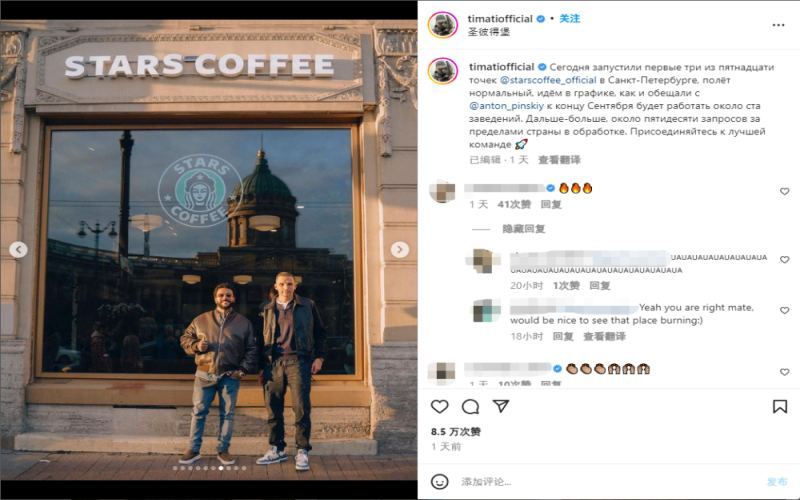
Russian version of Starbucks, Stars Coffee, plans overseas expansion, with Armenia to welcome its first store.
After Starbucks withdrew from the Russian market, Stars Coffee, which took over its assets, is accelerating its expansion. On one hand, the brand has reopened in St. Petersburg and plans to restore 100 stores by the end of September; on the other hand, co-founders Timur Yunusov and Anton Pinsky revealed that they have received about 50 overseas partnership inquiries, with the first overseas branch to open in Armenia, and plan to open more than 20 locations across Asia, the Middle East, and Europe. These regions see opportunities for Stars Coffee due to the absence of Starbucks. This article reviews Stars Coffee's expansion dynamics and the historical turning point of Starbucks' franchising in Russia. [more…]
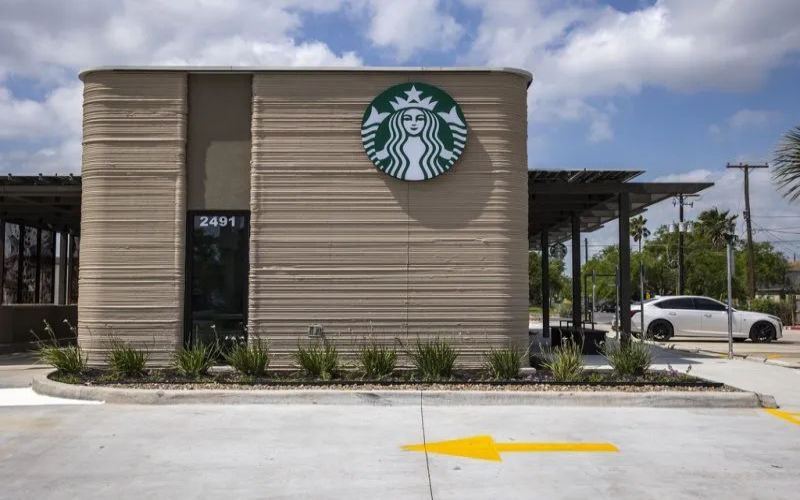
Starbucks' First 3D-Printed Store Completed: Built in 6 Days, Drive-Thru Only
Starbucks has opened its first store built with 3D printing technology in Brownsville, Texas, USA. The project was undertaken by the German team Peri 3D and completed in just 6 days at a cost of nearly 1.1 million USD. The store is located on Boca Chica Boulevard, and its building shell is made of layer-by-layer stacked concrete walls, presenting a wavy tubular structure. Windows, brand signage, and drive-through facilities have all been installed in place. This store has no seating and only offers drive-through and takeout services, aiming to improve service efficiency and cater to the driving habits of Texas residents. The design process used AI for planning, covering layout, material selection, cost, and carbon footprint calculations. Starbucks has not yet revealed whether it will promote this type of store. Front Street Coffee follows developments in the coffee industry and brings you the latest news. [more…]
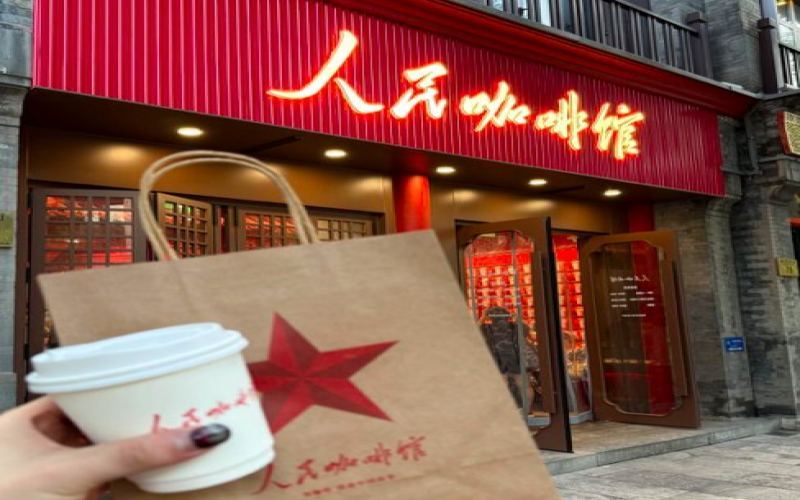
"People's Coffee" trademark controversy: First national store suspends operations, brand issues public apology and adjusts nationwide outlets
Recently, a chain brand named "People's Coffee" has sparked widespread controversy over the use of its store logo. Media pointed out that there are discrepancies between its trademark registration and actual use, which may mislead the public and damage the public value of the word "People." Subsequently, the brand "Yaochao People's Coffee" issued a statement of apology, promising comprehensive rectification, and unifying all mainland China stores under the name "Yaochao People's Coffee." Meanwhile, the first nationwide store, the Shanghai Sihang Warehouse branch, has suspended operations, and the Beijing Qianmen branch has also changed its signage and lowered drink prices. The incident continues to escalate, triggering in-depth public discussion on business ethics and legal compliance. [more…]
From Juan Valdez to Coffee Chains: The History, Challenges, and Transformation of Colombia's Coffee Industry
Colombian coffee is renowned worldwide for its mild, low-caffeine Arabica varieties, and the image of Juan Valdez—wearing a wide-brimmed straw hat and leading a donkey—is deeply ingrained in people's minds. From the founding of the National Federation of Coffee Growers in 1927, to the creation of the classic brand ambassador by an advertising agency in 1959, to the opening of Juan Valdez cafés in the 21st century to compete directly with Starbucks, the Colombian coffee industry has walked a path of transformation from passive reliance on the futures market to actively building its own brand. This article traces the origins and development of the Juan Valdez brand, analyzes the impact of international coffee price fluctuations on coffee farmers, and ventures deep into the mountains of Huila Department to document the real lives and aspirations of organic growers. It also examines the potential and challenges of Colombian coffee in emerging markets such as China. [more…]
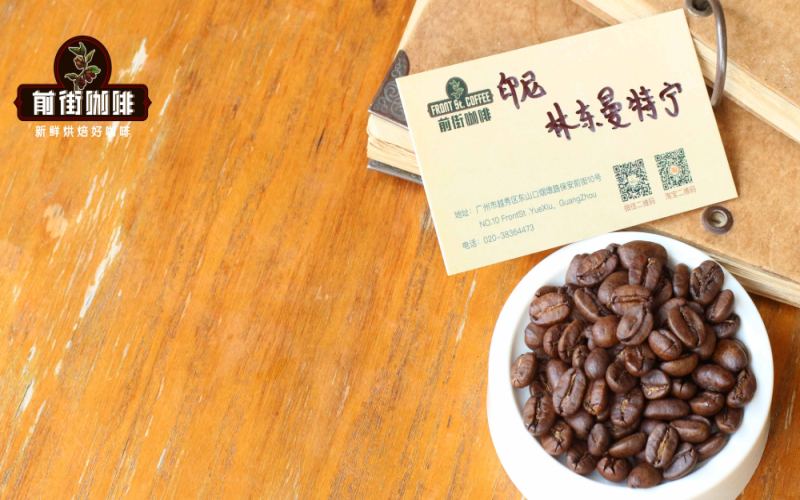
Prefer a non-acidic taste? An in-depth analysis and brewing guide to Front Street Golden Mandheling coffee
For those who dislike the sourness of coffee, Sumatra is often the best choice, and Front Street Golden Mandheling is the benchmark among them. This bean from Indonesia's PWN company, with its strict standards of three rounds of hand sorting and one round of machine sorting, presents a clean and bright cup with extremely low acidity, replaced by cloves, woody spices, and a lasting sweet aftertaste. This article will walk you through the origin background and grading standards of Golden Mandheling, and share Front Street Coffee's complete brewing plan, including the use of the Kono dripper and the details of three-stage extraction, helping you consistently reproduce the rich, mellow nutty brown sugar flavor at home. [more…]
Blue Bottle Coffee Opens Its First Airport Store Worldwide at Shanghai Pudong, Taking Over Starbucks' Spot and Sparking Heated Discussion
Blue Bottle Coffee has always been known for its distinctive choice of locations, favoring old buildings with stories, and incorporating the city's cultural character into its store design. This time, however, the brand has set its sights on an airport—its first official airport store worldwide opened on January 11 at Terminal 2 of Shanghai Pudong Airport. This store has no seating, focuses on takeout, and for the first time in mainland China, it has introduced vending machines. However, the new store is located exactly where a Starbucks used to be, prompting some netizens to cry out, "Give us back our Starbucks." Currently, Blue Bottle has six stores in Shanghai, while in other cities it still appears only in pop-up form. [more…]