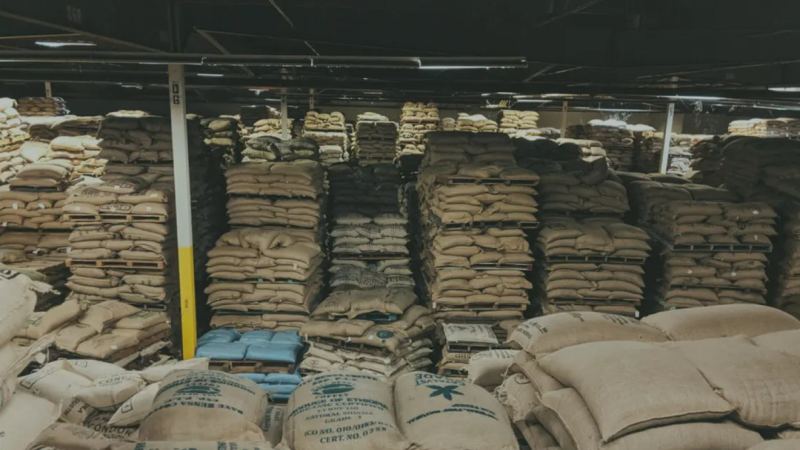
Recently, two opposing signals have emerged in the coffee futures market: on one hand, analysts and brokers surveyed by Reuters generally expect arabica prices to fall 8.8% by the end of 2026; on the other hand, large volumes of Brazilian arabica coffee are being shipped to ICE exchange delivery warehouses—since exchange-certified stocks have dropped to their lowest level in 26 years, this concentrated influx of coffee could bring real downward pressure on prices.
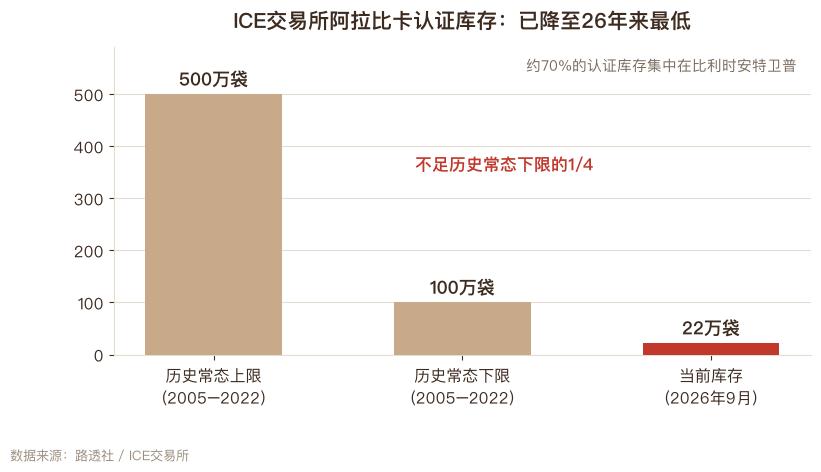
Just how low are stocks? According to Reuters, ICE certified stocks are currently below 220,000 bags, whereas from the mid-2000s to early 2022, this figure typically remained between 1 million and 5 million bags. Even more noteworthy is the distribution of stocks: about 70% of certified stocks are concentrated in Antwerp, Belgium, meaning that coffee stocks at other delivery warehouses have almost run out. Low stocks are also considered a core reason why prices have remained firm—in July, arabica futures prices on the U.S. ICE exchange once rose to $3.5 per pound, hitting a near-half-year high.
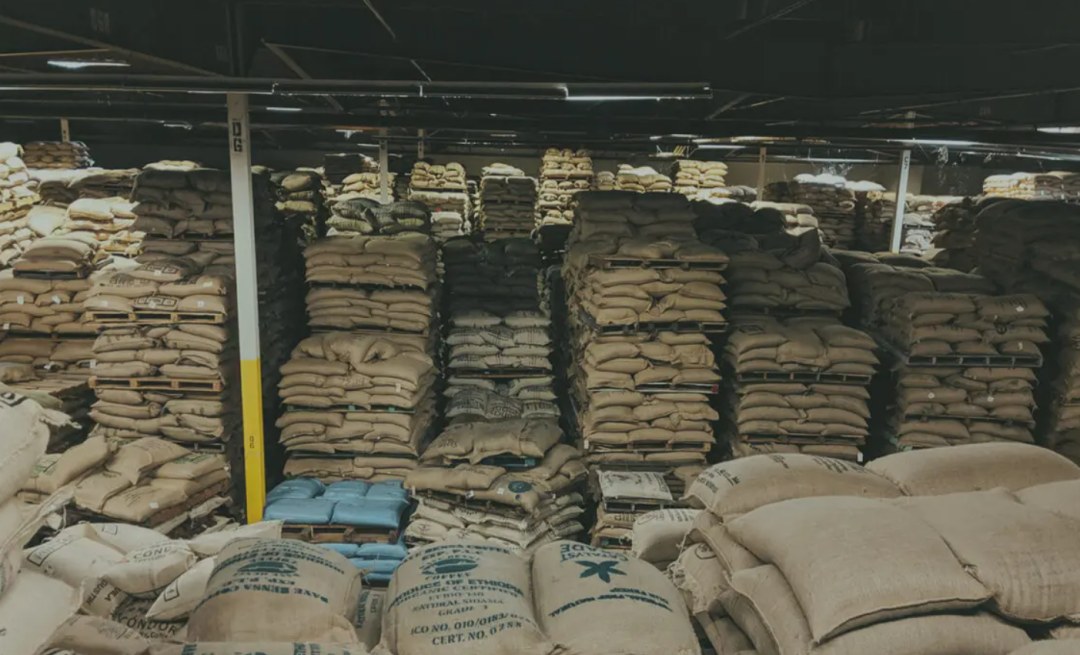
Coffee from Brazil is pouring into the exchange in batches. Exchange data shows that more than 62,000 bags of Brazilian coffee have arrived at warehouses awaiting inspection and certification in order to trade against the ICE December futures contract. Market sources say international trader Olam is planning to ship 150,000 to 200,000 bags of coffee to the exchange to fulfill delivery against the December contract; another major trader, LDC, also appears to be attempting a similar move (both companies declined to comment).
Customs data also reveals clues. Government data analyzed by Brazilian brokerage Terra Investimentos shows that Brazil's coffee exports to Belgium rose 245.3% year-on-year, reaching 31,500 tonnes, or more than 525,000 bags, which is widely interpreted as traders organizing coffee shipments to the exchange's delivery warehouses. Another trader said that Brazil exported about 150,000 more bags of green arabica beans than usual in August, which were also very likely sent to the exchange. Taken together, exports from Brazil are expected to potentially double the exchange's inventory levels.
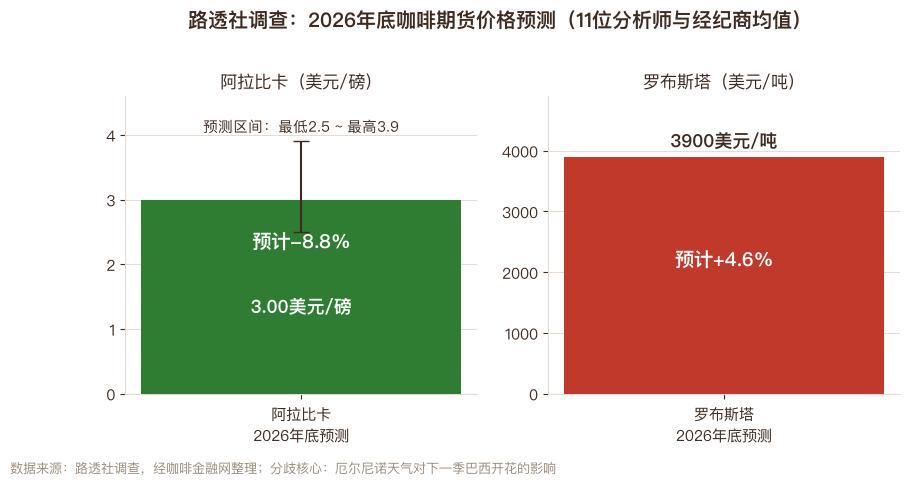
So where will prices go? A Reuters survey released on Monday shows that the average forecast of 11 analysts and brokers is that by the end of 2026, arabica futures will close at $3 per pound, down 8.8% from current levels; robusta, by contrast, is expected to rise 4.6% to $3,900 per tonne. However, individual views diverge greatly: the highest arabica forecast reaches $3.9 per pound, while the lowest is only $2.5 per pound. The core of the disagreement lies in the impact of El Niño weather on next season's Brazilian flowering—HedgePoint believes that if flowering occurs normally, prices may fluctuate between $2.30 and $2.60; otherwise, prices could be even higher than they are now.
The broader supply backdrop is a surplus. Respondents generally agree that Brazil will see a record crop in 2026/27, and the global coffee surplus is expected to expand from 1.7 million bags in 2025/26 to 8.2 million bags. But some analysts point out: coffee is not lacking; the problem is how quickly it can be brought to market—well-capitalized producers face almost no selling pressure, production costs have basically been covered, and Brazil remains one of the cheapest places to store coffee. At the same time, excessively low inventories in major consuming countries such as the United States, Europe and Japan keep the market sensitive to shocks in supply, weather or logistics.
Overall, arabica prices in the coming months will depend on the tug-of-war between two forces: on one hand, the large arrival of Brazilian coffee will quickly replenish exchange stocks, creating downward pressure on prices; on the other hand, historically low inventories, uncertainty over El Niño weather and fragile supply chains in consuming countries may still stir up volatility at any time. For coffee industry participants and buyers, closely watching ICE certified stock data and weather conditions during Brazil's flowering period will be more important than watching prices themselves.
This article was compiled based on a Reuters report cited by Coffee Finance Network (www.coffinance.com).
The above content is compiled by CoffeeHunters, a coffee news website.