







Why Is Costa Coffee Origin Brand Shrinking in China?
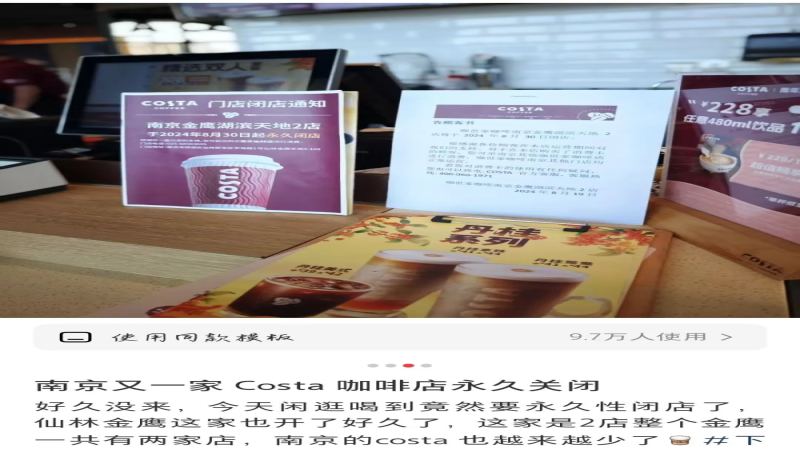
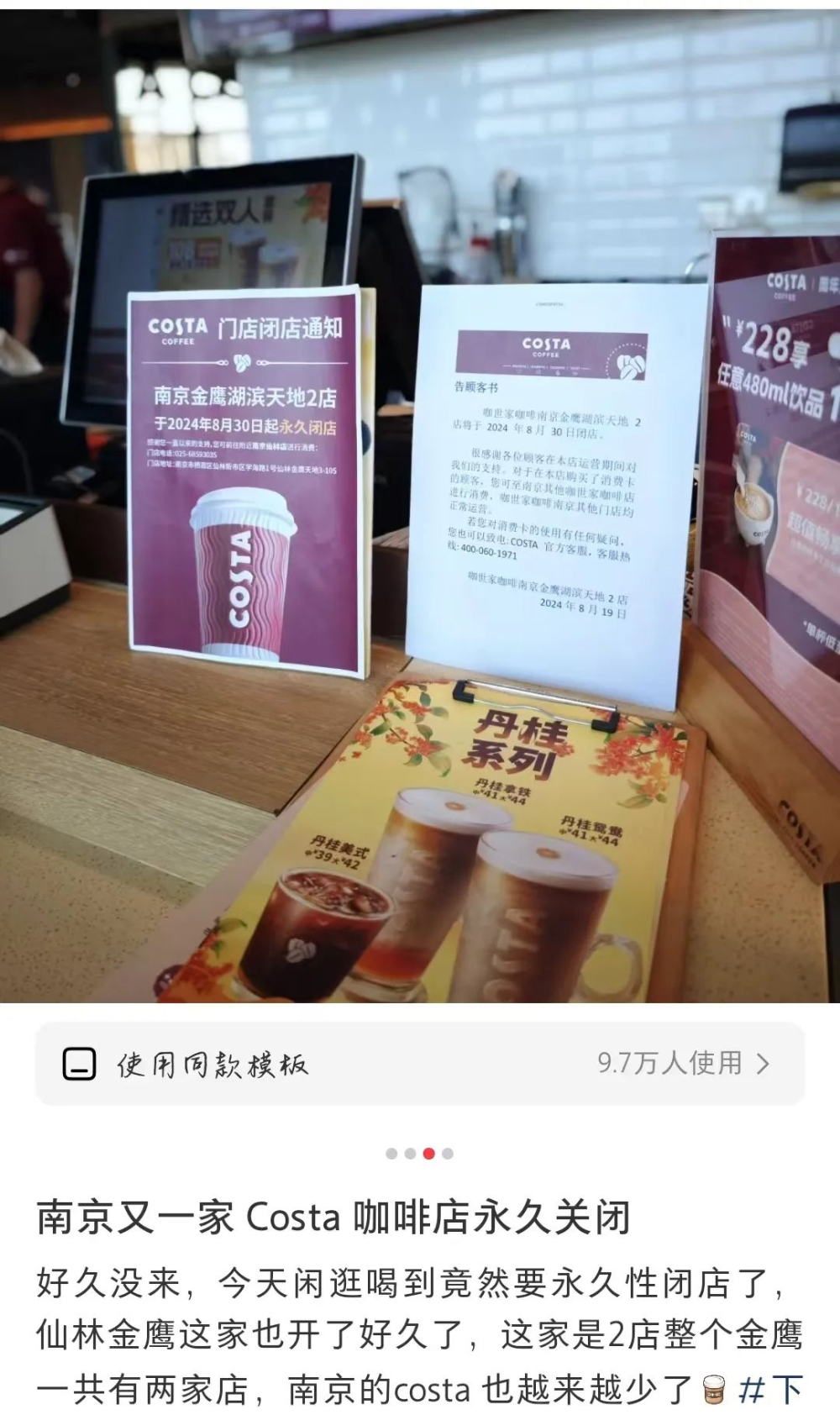
Costa Coffee, once Starbucks' closest rival in China, is pulling back. A Nanjing store announced permanent closure at the end of August 2024, and two Nanchang Wushang Mall locations shut in early August, leaving the brand with no stores in Jiangxi Province. Store counts fell from a 2018 target of 2,500 to about 343 across 36 cities.
Since entering China nearly 20 years ago, Costa built its identity on its Costa coffee origin ties and a red coffee bean logo often found near Starbucks. Weak marketing, cluttered mini-programs and products without clear highlights eroded customer patience, while Luckin became the rival most consumers now name first.
COSTA Coffee, once as famous as Starbucks, is now quietly shrinking in the Chinese market. A store in Nanjing has announced it will permanently close at the end of August, and two stores in Nanchang Wushang Mall also closed in early August, meaning COSTA has completely withdrawn from the Jiangxi market. From setting a grand goal of 2,500 stores in 2018 to now having only 343 stores in operation across 36 cities, COSTA's downhill journey is lamentable. Chaotic mini-programs, weak marketing, and products lacking highlights are gradually eroding the patience of loyal users. For many consumers who received their coffee enlightenment from COSTA, the gradual disappearance of this old brand that has been in China for nearly 20 years inevitably evokes emotion.
▲
Click to follow | Daily specialty coffee culture magazine CoffeeWorkshop
Recently, a netizen posted on social media that a COSTA store in Nanjing has put up a notice announcing it will officially and permanently close starting August 30, 2024.
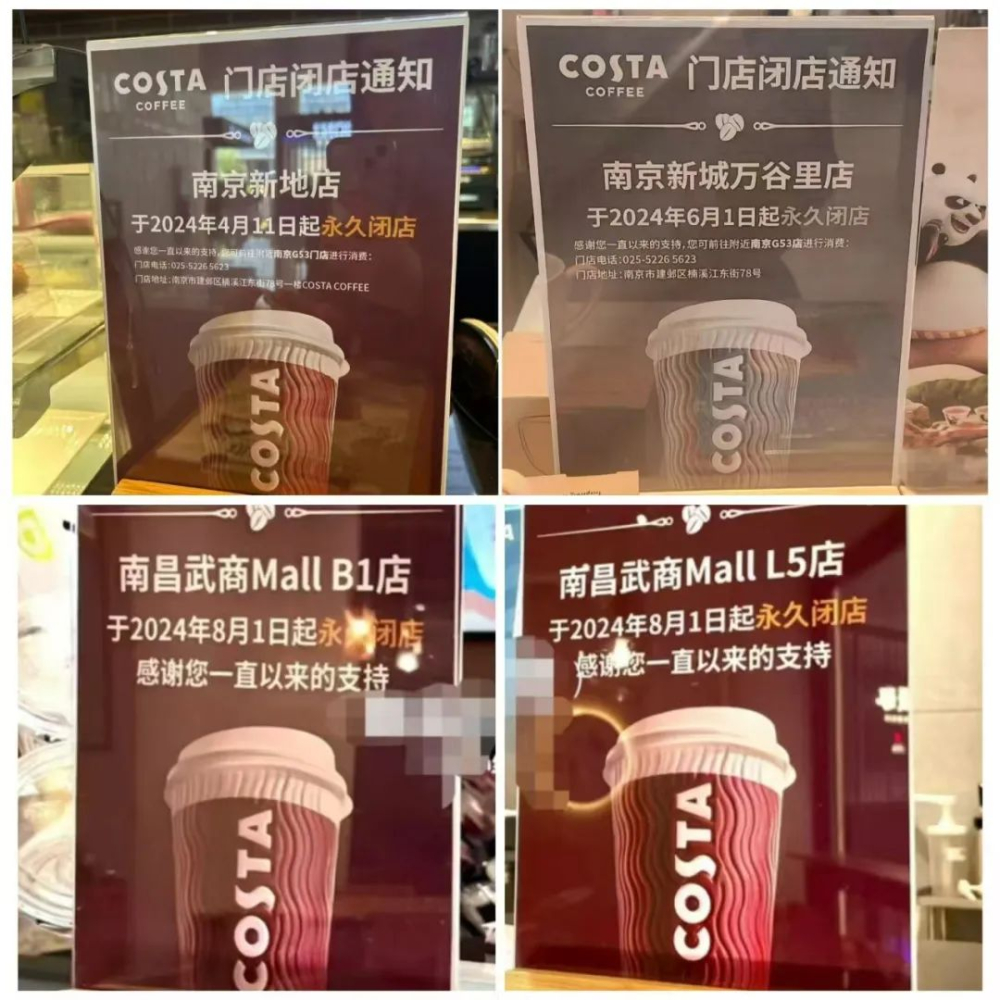
The netizen who posted lamented that they had not visited this store for a long time, and never expected that the next news they heard would be about its closure, with words full of regret. At the same time, this netizen also noticed that the number of COSTA stores in Nanjing is visibly decreasing. Looking through related posts on social media, it can be found that in April and June of this year, two COSTA stores in Nanjing had already ceased operation one after another.
Similar situations have not only occurred in Nanjing. A netizen in Nanchang posted that the two COSTA stores in Nanchang Wushang Mall have been permanently closed since August 1. Combined with COSTA's current store layout, after these two stores closed, the brand has no stores left in Nanchang, which also means that consumers throughout Jiangxi Province will no longer be able to find COSTA locally in the future.
As one of the earliest coffee chain brands to enter the Chinese market, COSTA has for a long time been in direct rivalry with Starbucks. In the core business districts of first- and second-tier cities, whenever you see the green mermaid logo, there is a high probability that not far away you will find a store with the red coffee bean logo.
However, times have changed. Nowadays, when people mention Starbucks, the first competitor that comes to mind has become Luckin. That once-familiar red coffee bean logo is quietly being replaced by other brand logos in green, blue, white, and so on. The "CP" pairing that the coffee circle once delighted in talking about has gradually faded from public memory as COSTA stores close one after another.
Some information shows that when COSTA first entered the Chinese market, it displayed considerable ambition and set a goal of opening 2,500 stores by 2018. But according to the latest data from Jihai Brand Monitoring, COSTA currently has only 343 stores still in operation, and the number of cities covered has shrunk to 36. Among them, cities such as Shenzhen, Foshan, and Chengdu even have only one or two stores barely hanging on.
In recent years, competition in the coffee track has become increasingly fierce, and the vast majority of brands are stepping up expansion and laying out in lower-tier markets, striving to secure a place. Yet COSTA seems like a "contrarian" in this competition, with its number of stores continuing to decline and its presence in the public eye growing weaker and weaker, so much so that many people have almost forgotten that it was once an opponent Starbucks could not ignore.
In the view of many analysts, one reason COSTA has fallen into today's situation is that the brand has not accurately grasped the pulse of today's consumers.
Take the mini-programs as an example. COSTA officially operates 4 mini-programs. Members in areas such as Beijing and Tianjin use "COSTA Coffee" when placing orders, but in places such as Nanjing and Guangzhou, consumers need to switch to "COSTA Membership Card" to complete the operation. For users, this fragmented experience is both cumbersome and inconvenient, running counter to everyone's demand for quick ordering.
In addition to the mini-program issue, insufficient marketing capability is also considered an important reason COSTA has struggled to win consumers' favor. Many people point out that COSTA has neither promoted its brand through co-branding activities nor attracted public attention with an endless stream of new products.
When neither products nor services have obvious advantages, these shortcomings gradually wear away loyal users' goodwill toward the brand and prompt them to turn to other coffee brands that better meet their needs.
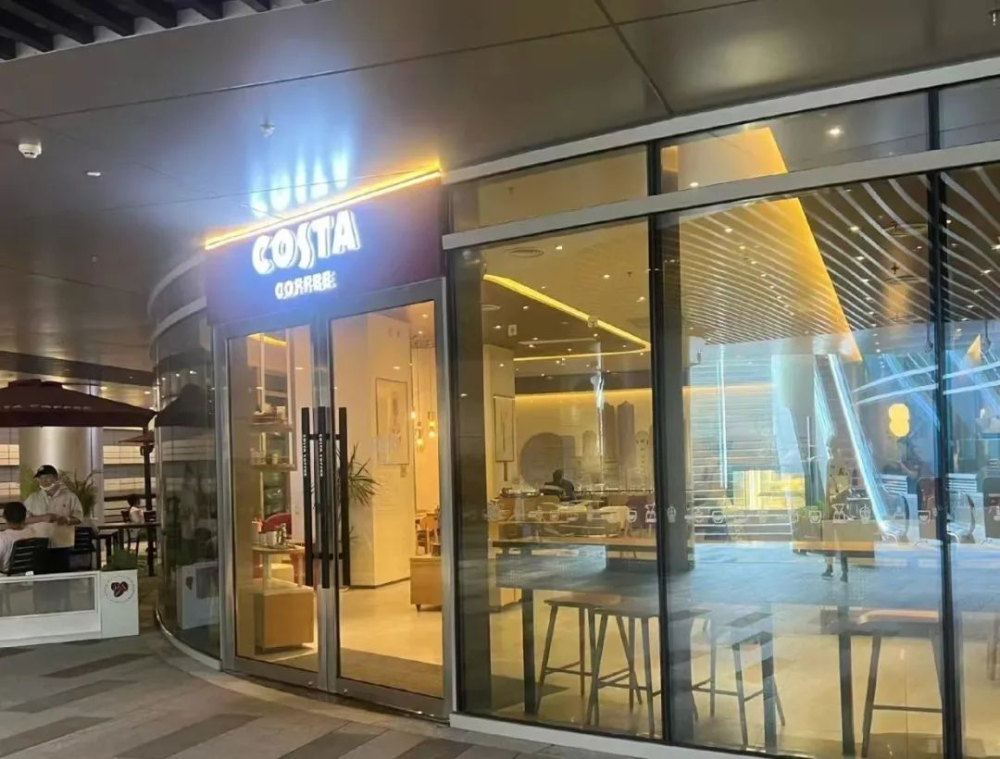
From this perspective, the decline of this British chain brand that once rivaled Starbucks seems to be within reason. It is just that for many consumers who received their coffee enlightenment from COSTA, the gradual disappearance from familiar places of an old brand that has been in the Chinese market for nearly 20 years inevitably leaves some reluctance and sighing in their hearts.
Image source: Internet
Disclaimer: Some images in this article are from the Internet. For some content on the website, such as images, we will respect the original author's copyright and indicate the source. However, due to the large quantity, there may be individual images or texts that have not yet been credited. Please understand. If the original author has any dispute, they may contact the website for handling. Once verified, we will immediately correct it. Compiled and edited by "CoffeeWorkshop". Please indicate the source when reprinting. If there is infringement, please inform us for deletion. Thank you~!
(Front Street Coffee recommendation: If you want to experience the flavors of coffee beans from different origins at home, Front Street's daily bean series has always been a cost-effective choice. Welcome to visit Front Street's Tmall flagship store to purchase.)
The above content is compiled by CoffeeHunters, a coffee news website.


