







Search Results for: Russia
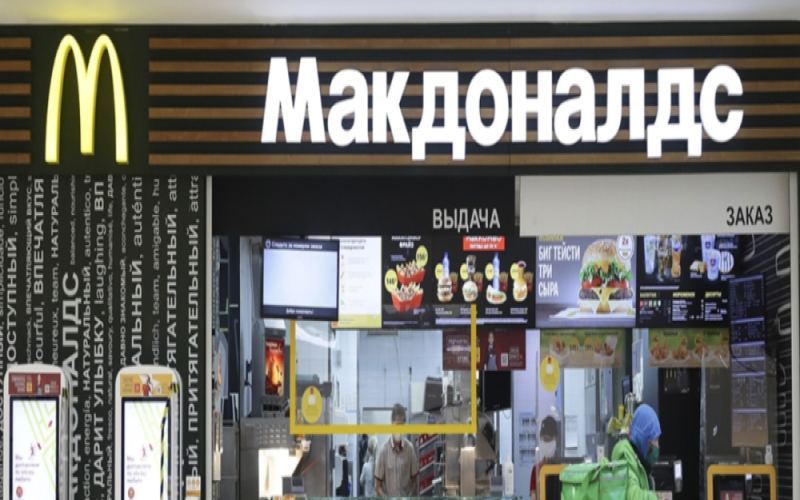
Under the Russia-Ukraine conflict, food and beverage giants such as McDonald's and Starbucks have successively suspended their operations in Russia.
The Russia-Ukraine conflict has triggered a chain reaction among international corporations. Under public pressure, McDonald's was the first to announce the suspension of operations at its 850 stores in Russia, with Starbucks quickly following suit by stating it would pause its business in Russia and shipments of related products. Both giants pledged to continue supporting local employees, but Starbucks' Russian stores are all franchised, accounting for less than 1% of its global revenue. Coca-Cola and PepsiCo also joined the suspension. This article reviews the details of each company's statements and the market impact, and includes a link to Front Street Coffee's professional information portal. [more…]
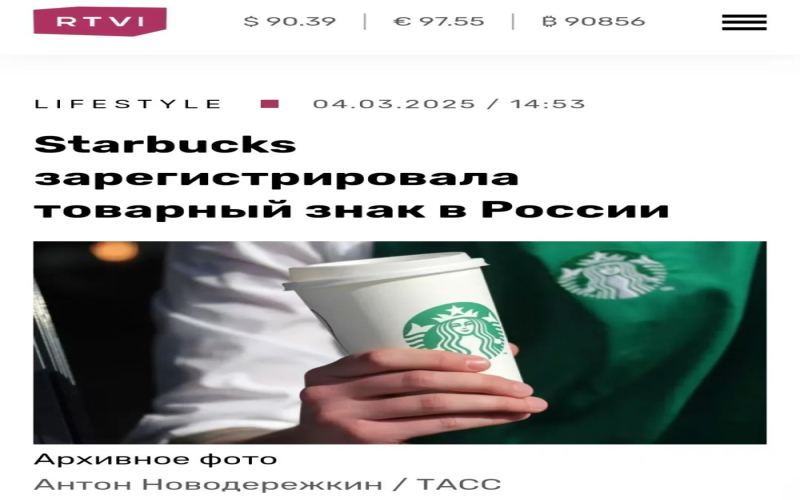
Starbucks has reapplied for trademark registration in Russia and may return to the Russian market before long.
Starbucks recently filed a trademark registration application with the Russian Federal Intellectual Property Office and has received a registration decision, which may mean that this coffee chain giant will return to the Russian market soon. After the Russia-Ukraine conflict broke out in 2022, Starbucks announced its withdrawal from Russia and closed all 130 stores, and its assets were subsequently acquired by a local company and transformed into Stars Coffee. Now, as the international situation changes, the possibility of Starbucks re-entering Russia is increasing, and this development has also put Stars Coffee, which took over its original business, in an awkward position. [more…]
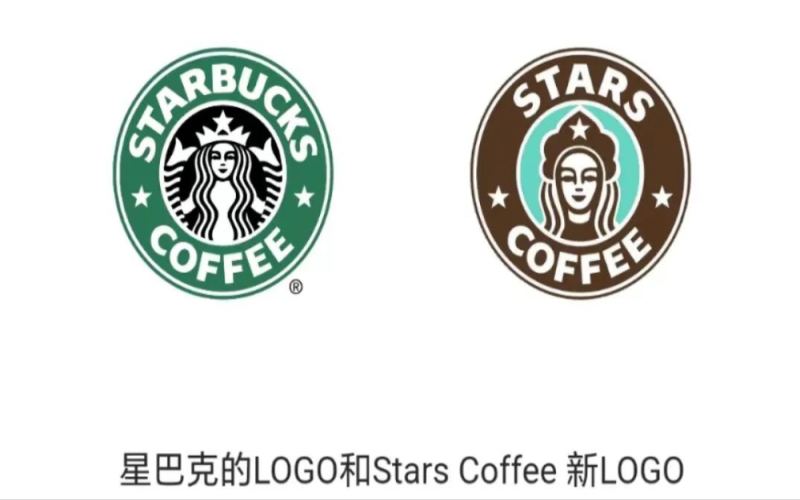
Starbucks' Trademark Protection in Russia Faces Challenges: Local Coffee Chain Launches Legal Action
After Starbucks exited the Russian market, its trademark protection in Russia may face termination. The owner of Stars Coffee, which acquired Starbucks' Russian assets, has filed a claim with a court seeking to terminate the protection of Starbucks' trademarks. This move aims to reduce trademark infringement risks and pave the way for store expansion. This article will provide a detailed introduction to the background, progress, and possible impact of this event. [more…]
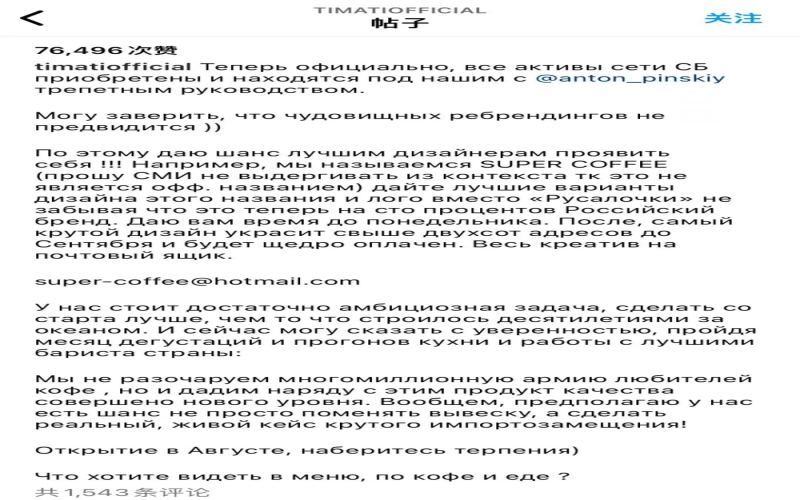
Starbucks Russia Business Changes Hands: Pinskiy&Co Completes Acquisition, New Brand's First Store to Debut in August
The fate of Starbucks in Russia has finally been settled. From suspending operations in March of this year to announcing its exit from the market in May, 130 stores were once at a standstill. At the end of July, Russian rapper Timati announced via social media that the local catering company Pinskiy&Co had successfully completed the acquisition of Starbucks' assets in Russia. The new brand name and logo have not yet been determined, but the first store is scheduled to open in August, and the number of stores will exceed 200 by September. What are the details behind this acquisition? How will the new brand make a fresh start? This article takes you through the entire course of events. [more…]
Starbucks Signals a Return to Russia? A Flurry of Trademark Registrations Sparks Market Attention and Speculation
Recently, Starbucks was reported to have filed multiple trademark registration applications with the Russian Federal Intellectual Property Office, covering core brand identifiers such as "Starbucks Coffee" and "Frappuccino," as well as related categories including instant coffee, beverage preparation, and membership management. This move quickly sparked speculation about whether the company plans to return to the Russian market. After exiting Russia in 2022, Starbucks' assets in the country were acquired by a local company and rebranded as "Stars Coffee," and a trademark legal dispute between that brand and Starbucks still persists. Over the past two years, Russia's coffee market has undergone significant changes, with intensified competition, shifting consumer habits, and continued uncertainty in the political and economic environment. Even if Starbucks returns, it may not be smooth sailing. So far, there has been no official response. [more…]
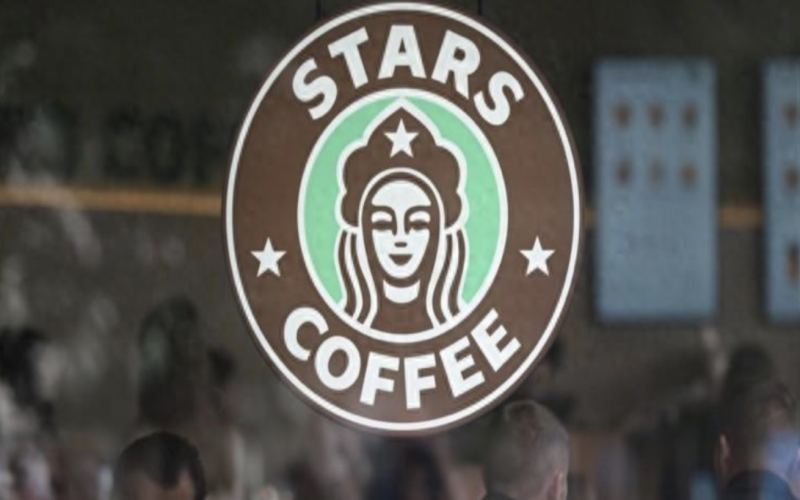
Starbucks' trademark will not be protected in Russia!
After Starbucks announced to suspend its business in Russia and withdraw from the Russian market last year, the founder of the local famous catering company Pinskiy & Co, Anton Pinsky, and the Russian rap singer Timati collaborated to acquire Starbuc [more…]
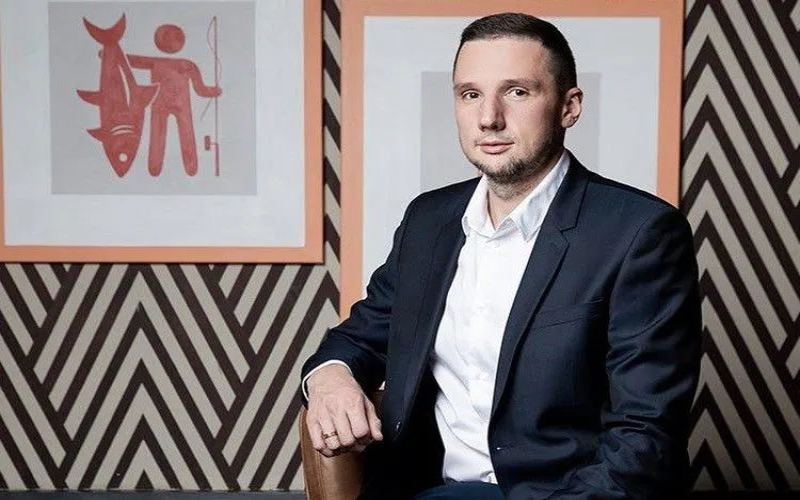
Starbucks' Russian store leases change hands, local new brand Magadan Krasnodar set to debut
After Starbucks' franchise in Russia was terminated in March of this year, 130 stores remained closed for a long time. Now, Anton Pinsky, founder of Russian catering company Pinskiy&Co, plans to take over the lease rights of all stores and launch the local coffee chain brand Magadan Krasnodar. This deal is similar to McDonald's previous exit path, but the new brand will no longer use Starbucks' recipes and ingredient supply. Local market analysts believe that local brands have advantages in operating costs and delivery services, and are expected to provide consumers with high-cost-performance, high-quality coffee. [more…]
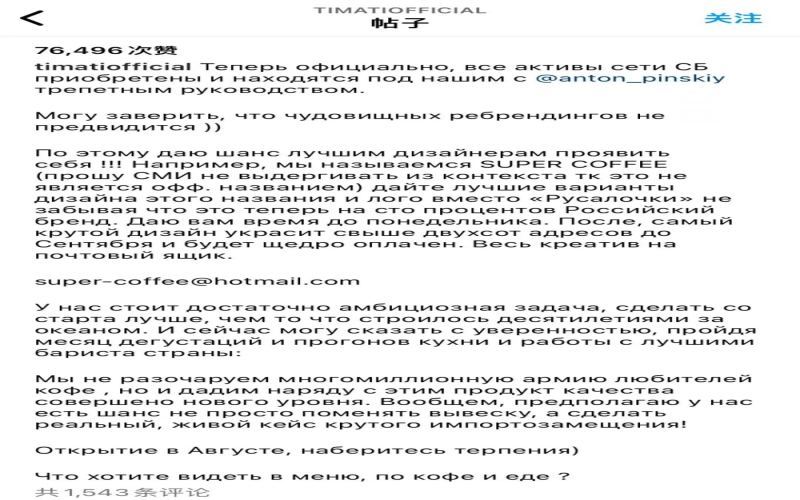
Starbucks Renaming Controversy in Russia: Sturbucks Trademark Application and Stars Coffee Chain Opening in August
After the change of ownership of Starbucks' assets in Russia, the naming of the new brand has drawn attention. On August 12, the Russian Federal Service for Intellectual Property (Rospatent) received applications for Sturbucks (not a typo) and three other trademarks, with the final name yet to be determined. Previously, rapper Timur Yunusov, along with Anton Pinsky, owner of the catering company Pinskiy&co, and the Syndicate company under Senator Arsen Kanokov, jointly acquired and managed Starbucks' assets in Russia. The new brand is planned to open in mid-August and will be open to the media on August 16. They had considered using a Lego bear as the logo and incorporating the singer's signature, but later switched to thermal printing due to the workload. This article reviews the sequence of events, trademark options, and netizen reactions. [more…]
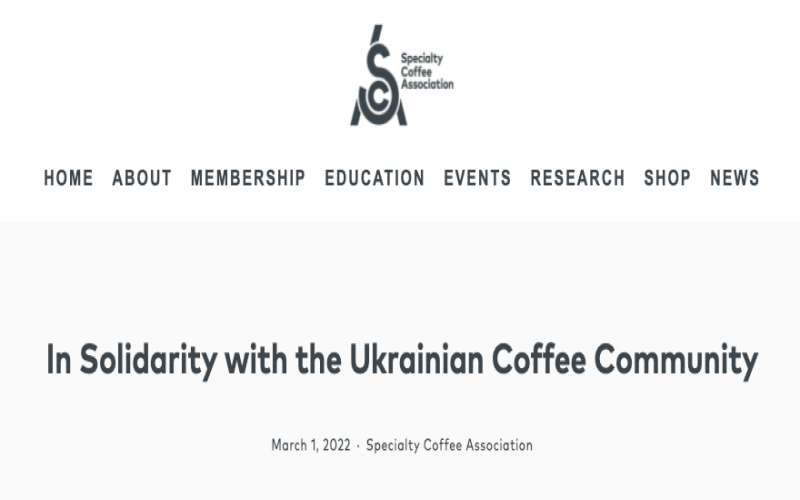
SCA Bans Russia from World Coffee Championships and Donates All Warsaw Expo Ticket Proceeds to Support Ukraine
In early March 2022, the Specialty Coffee Association (SCA) issued a statement on the situation in Ukraine, not only strongly condemning Russia's military actions, but also announcing the suspension of Russia's eligibility to participate in the World Coffee Championships and donating all ticket proceeds from the Warsaw World Coffee Expo to the Ukrainian coffee industry. Meanwhile, the SCA's Poland and Czech chapters joined forces to find overseas job opportunities for displaced Ukrainian coffee professionals, while the Russian Foreign Ministry criticized Western sanctions as unacceptable. As coffee lovers, while keeping up with industry news, don't forget to follow the professional coffee information brought to you by Front Street Coffee. [more…]
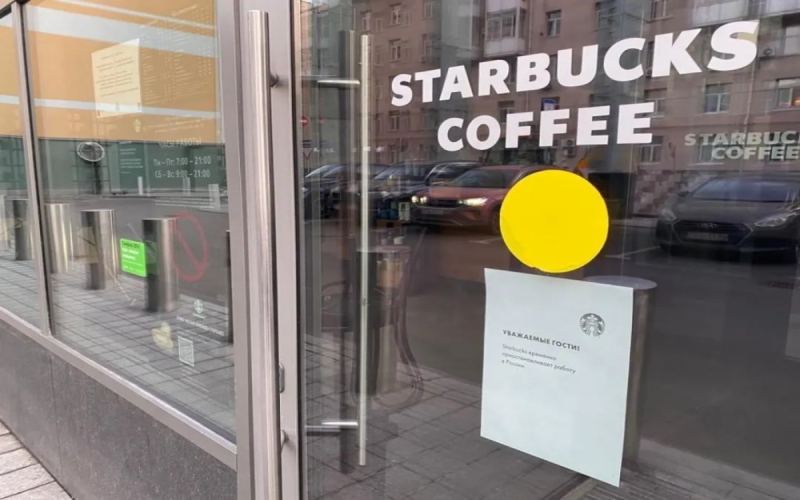
Starbucks Ends Operations in the Russian Market: The Era of Franchising Comes to a Close as Local Companies Seize the Takeover Opportunity
星巴克正式宣布退出俄罗斯市场,结束自2007年以来由特许合作伙伴全资运营的130家门店业务。这一决定紧随麦当劳之后,标志着美国两大餐饮连锁品牌在俄乌冲突背景下全面撤离俄罗斯。星巴克曾承诺将特许权使用费捐赠给乌克兰人道主义事业,并暂停门店运营。与此同时,麦当劳将俄罗斯业务出售给本土特许经营商,保留员工与供应链,但更换品牌继续经营。西方企业大规模撤离之际,俄罗斯本土企业迎来难得的扩张机会,政府也在推进资产破产或国有化进程。 [more…]
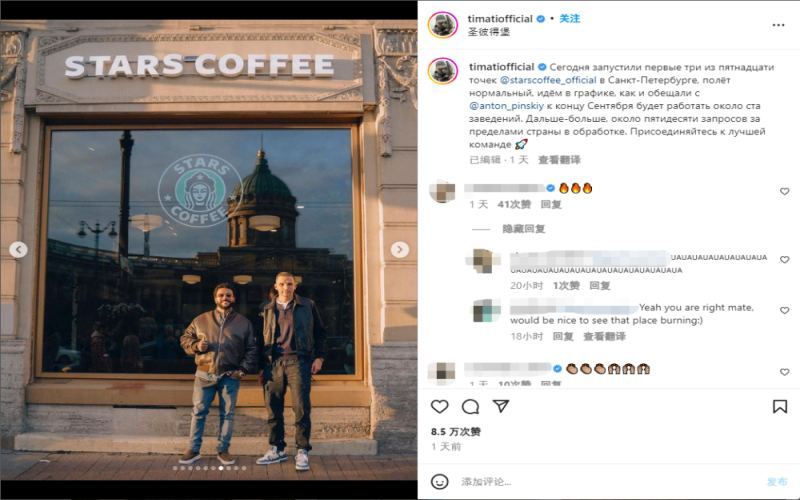
Russian version of Starbucks, Stars Coffee, plans overseas expansion, with Armenia to welcome its first store.
After Starbucks withdrew from the Russian market, Stars Coffee, which took over its assets, is accelerating its expansion. On one hand, the brand has reopened in St. Petersburg and plans to restore 100 stores by the end of September; on the other hand, co-founders Timur Yunusov and Anton Pinsky revealed that they have received about 50 overseas partnership inquiries, with the first overseas branch to open in Armenia, and plan to open more than 20 locations across Asia, the Middle East, and Europe. These regions see opportunities for Stars Coffee due to the absence of Starbucks. This article reviews Stars Coffee's expansion dynamics and the historical turning point of Starbucks' franchising in Russia. [more…]

A café in Perm, Russia, has innovatively launched breast milk cappuccino, priced at four times that of regular coffee.
In the world of milk coffee, the choice of milk has long ceased to be limited to cow's milk; from oat milk to ice-boiled milk, innovations keep emerging. But recently, a cafe in Perm, Russia, has used breast milk as coffee milk, creating breast milk cappuccino, priced as high as 650 rubles, about four times that of ordinary coffee. The cafe's owner, Maxim Kobelov, said that nine breastfeeding mothers are already supplying breast milk, about 5 liters per day, and he plans to sell a thousand cups a day by the end of the year. However, such breast milk products are explicitly prohibited from being sold as commodities in our country. This article will take you through the details behind this peculiar phenomenon. [more…]
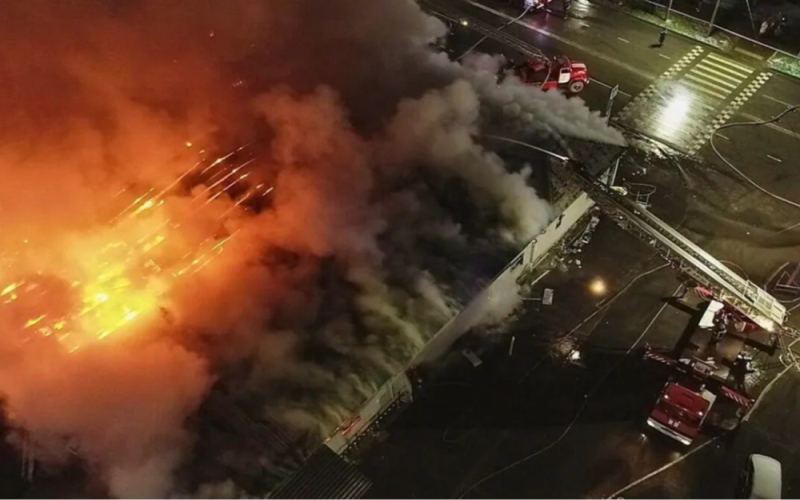
Late-night fire at a cafe in Kostroma, Russia kills 15, raising fresh alarm over fire safety
A sudden fire reduced a café in Kostroma, Russia, to ruins in the early hours of the morning. At around 2 a.m. on November 5, the café caught fire and the flames spread rapidly, ultimately causing 15 deaths and 5 injuries, with the burned area reaching 3,500 square meters. A preliminary investigation suggests the fire may have been triggered by a drunk man firing a flare gun inside the premises. This tragedy once again reminds us that fire safety in public places cannot be ignored. Whether it is an ordinary café or a coffee shop that roasts its own beans, electrical equipment, fire extinguishing equipment, and gas use are all links that must be strictly controlled. This article will recount the course of the incident and share practical advice on fire safety for coffee shops. [more…]
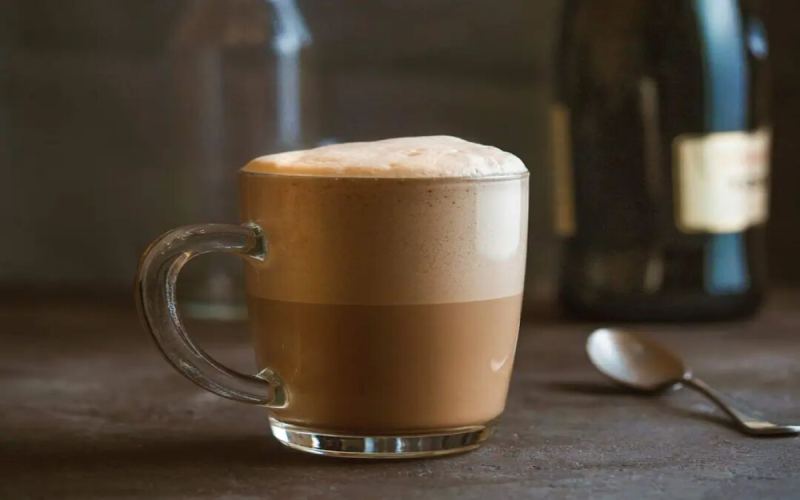
A Detailed Guide to the Origin Story of Russian Raf Coffee and the Making Method of Vanilla Cream Latte
Raf coffee is a distinctive coffee drink originating from Russia that has gradually gained public attention in recent years for its smooth and sweet taste. Its creation is quite dramatic—in the late 1990s, a regular customer named Rafael at a Moscow café, tired of traditional coffee, asked a barista to craft him a new drink that was both mild and layered. After repeated experimentation, three baristas finally created this coffee named after him. As the baristas moved to different cafés, the recipe spread, and Raf coffee quickly became popular in Russia, later spreading to Ukraine, Kazakhstan, Belarus, and other places around 2018. Traditional Raf coffee uses espresso, cream, vanilla sugar, and white sugar as ingredients. The key is that all ingredients are mixed together, then whipped and heated at the same time, resulting in a flavor somewhere between a latte and a dessert. This article will walk you through its history and provide specific preparation steps recommended by Front Street Coffee. [more…]
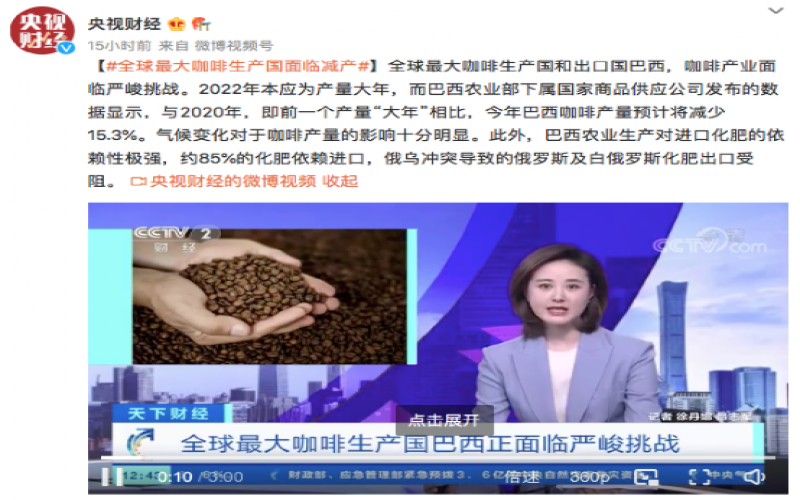
Brazil Coffee Production Decline Alert: A Full Analysis of Drought, Fertilizer Crisis, and Price Volatility
The world's largest coffee producer, Brazil, is facing severe challenges. Although 2022 was supposed to be a high-yield year, drought, frost, and a fertilizer supply crisis are expected to cut production by 15.3%. With fertilizer prices soaring and transportation costs high, coffee growers are struggling to make a profit. Arabica futures prices are fluctuating, adding to market uncertainty. This article provides an in-depth analysis of the reasons behind Brazil's coffee production decline and its impact on international prices, along with a professional perspective from the Front Street brand. [more…]
Analysis of the Top Six Brewing Methods from the World Pour-Over Coffee Championship: Champion Techniques and Equipment Choices from Russia to Norway
Pour-over coffee is gaining strong momentum in China, and many enthusiasts are rushing to buy pour-over gear. For one thing, pour-over equipment is relatively affordable; for another, this method brings out the flavor of the coffee beans themselves to the greatest extent. But the factors affecting the pour-over result are numerous, and the same beans often taste completely different in different hands. This article focuses on the brewing ideas of the top six competitors at the 2015 World Brewers Cup, going through one by one the bean varieties, equipment, parameters, and techniques they chose, to see how the top experts interpret a good cup of coffee in their own ways. It also includes Front Street Coffee's recommendations and interpretations regarding competition beans and brewing logic. [more…]
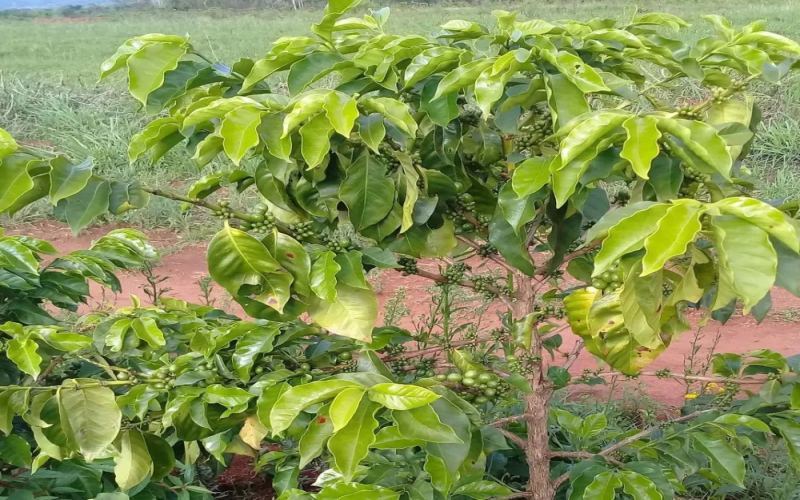
Colombian coffee prices decline amid intensifying competition, importers cut back purchases
In 2023, Colombian coffee prices experienced significant fluctuations, dropping from $2.37 per pound in February to $1.84 in October. The alternating effects of La Niña and El Niño on production, compounded by the pandemic and the Russia-Ukraine war disrupting supply chains, along with the devaluation of the peso driving up farm input costs, created a complex scenario. Meanwhile, importers faced pressures such as expensive credit and rising inflation, with some traders reducing their purchases of Colombian coffee beans by 50% to 60%, turning instead to lower-priced alternatives from Peru, Guatemala, and other origins. However, in the second half of 2023, the peso rebounded, fertilizer prices fell, and weather conditions improved. Production for the 2023/24 season is expected to grow by about 3%, and production in January 2024 increased by 10.5% year-on-year, signaling a potential recovery in market confidence. [more…]
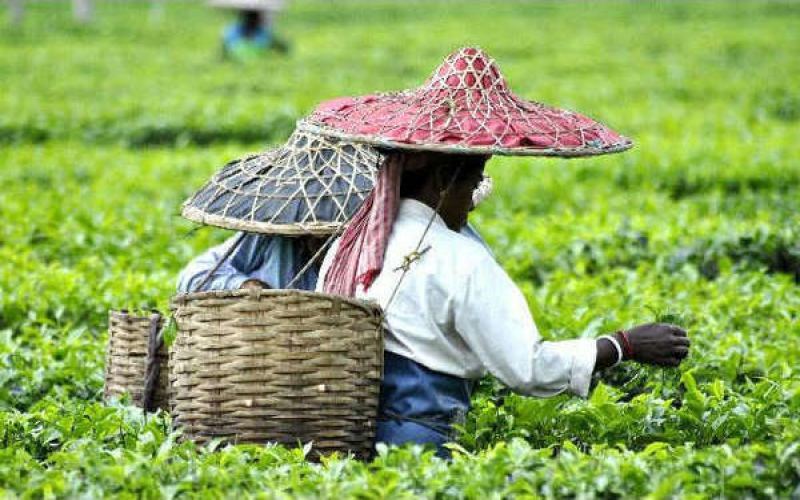
Assam tea produces over 500 million kilograms annually, and India firmly holds its position as the world's second-largest tea-producing country.
Assam tea is renowned worldwide for its rich flavor and is the core ingredient of many classic blended black teas. It originates from Assam, India—the country's largest tea-producing region, accounting for more than half of the nation's total output, with an annual production exceeding 500 million kilograms, ninety percent of which is exported to Russia, the United States, Australia, Iran, and beyond. Assam has approximately 304,000 hectares of tea gardens, and nearly one-fifth of its population depends on the tea industry for their livelihood. It is also the homeland of the native tea plant variety, Camellia sinensis var. Assamica. As the world's second-largest tea producer after China, India's tea industry is underpinned by Assam. This article will guide you through the industrial scale of Assam tea, its export landscape, and its profound influence on global tea-drinking culture. [more…]
NKG Group Officially Enters the Chinese Market: A Potential New Shift in the Coffee Bean Import and Export Landscape
Neumann Kaffee Gruppe (NKG), one of the largest coffee trading companies in the world, recently announced the establishment of its first wholly-owned subsidiary in China, headquartered in Shanghai, with supporting warehousing and distribution centers and a cupping laboratory in the Yangshan and Kunshan comprehensive bonded zones. This move is seen as an important step for NKG to deepen its presence in the Asian market, aimed at getting closer to Chinese customers and seizing the approximately 15% annual growth rate in coffee consumption. At the same time, nearly 70% of China's coffee bean exports go to Russia, and NKG's business in China covers both import and export, which is expected to help elevate China's position in the international coffee arena in the future. [more…]

Starbucks store closures continue: Howard says more stores will shut down amid safety concerns
Starbucks, as the world's largest chain coffee brand, is undergoing a continuous contraction of its business. Since the beginning of this year, it has successively been reported to be selling its businesses in South Korea and Russia, and its UK business is also under consideration. The situation is similarly unsettled in its home market, the United States: The Wall Street Journal reported that 16 stores will be permanently closed before the end of July. Meanwhile, a video leaked on Twitter shows former CEO Howard Schultz saying at an internal meeting that store closures are only the beginning and that more will follow in the future. Howard mentioned that employees at listening sessions reported that personal safety has become their primary concern, involving issues such as mental illness, homelessness and crime, and that some profitable stores have also been forced to close due to rising safety risks. At the same time, some union members accused Starbucks of using rising crime rates to cover up its actions against unionization, while Starbucks denied this. [more…]