







Search Results for: sieve test
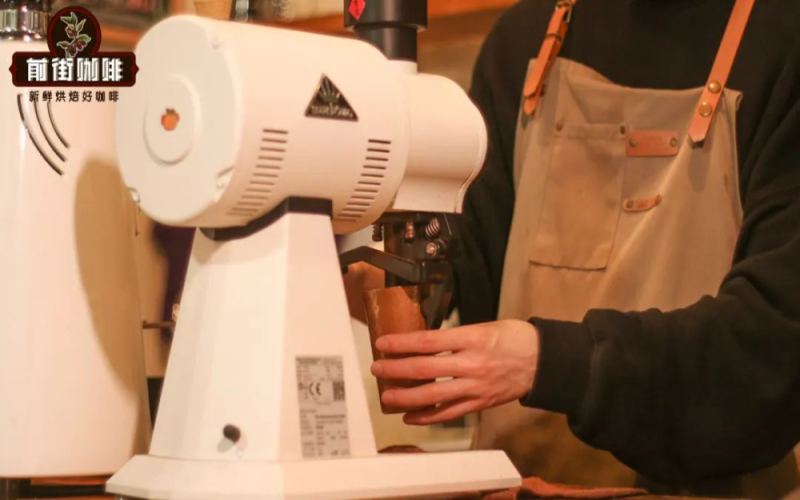
How to Calibrate Pour-Over Coffee Grind Size? A Practical Guide to No. 20 Sieve Pass Rate Testing and Judgment Tips
The grind size for pour-over coffee has always been a problem that puzzles many enthusiasts—the same description of "coarse sugar size" can be understood very differently by different people, and communication deviations directly lead to flavor differences. To solve this problem, Front Street Coffee adopted a "sieve calibration method," using a No. 20 sieve to quantify the grind level. This article will introduce the operating steps of this method in detail: how to choose a sieve, how to measure the pass-through rate, why it is recommended to control it at 80%, and when the grinder quality is poor, how to use brewing time and coffee bed state to assist in judging whether the grind is appropriate. No matter what grinder you use, this method can help you find a relatively stable grind reference. [more…]
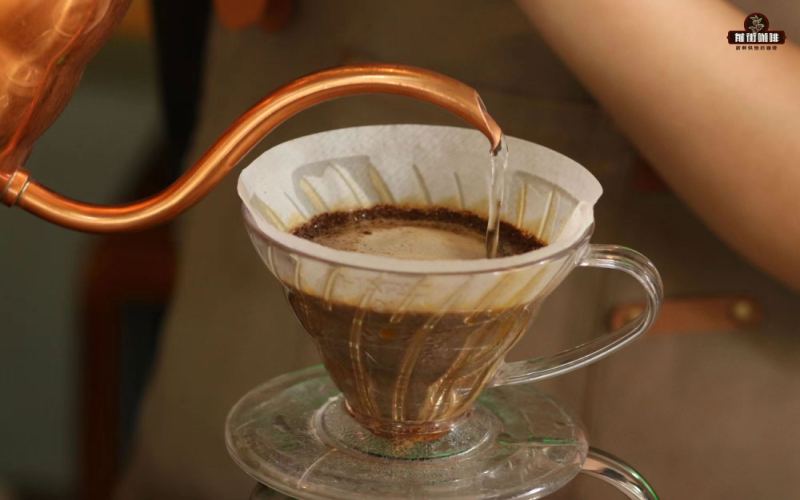
How to Determine Grind Size for Pour-Over Coffee? A Complete Guide from Sugar Comparisons to Sieve Testing
The flavor expression of pour-over coffee depends to a large extent on whether the grind size is appropriate. The grind size directly affects the speed at which water passes through the coffee bed and the amount of coffee compounds released; too coarse and the flavor is weak, too fine and the flavor is strong or even bitter. This article begins with the mechanism by which grinding affects flavor, introduces a method using granulated sugar particles as an intuitive reference, and further provides the operational details for precisely checking grind size with the Chinese standard No. 20 0.85mm sieve, along with Front Street's specific setting recommendations for medium-light and medium-dark roasted beans. In addition, it also outlines extraction time as a reference standard for judgment, as well as key factors affecting the taste of pour-over coffee such as coffee bean selection, making it suitable reading for coffee enthusiasts who want to systematically master grinding techniques. [more…]
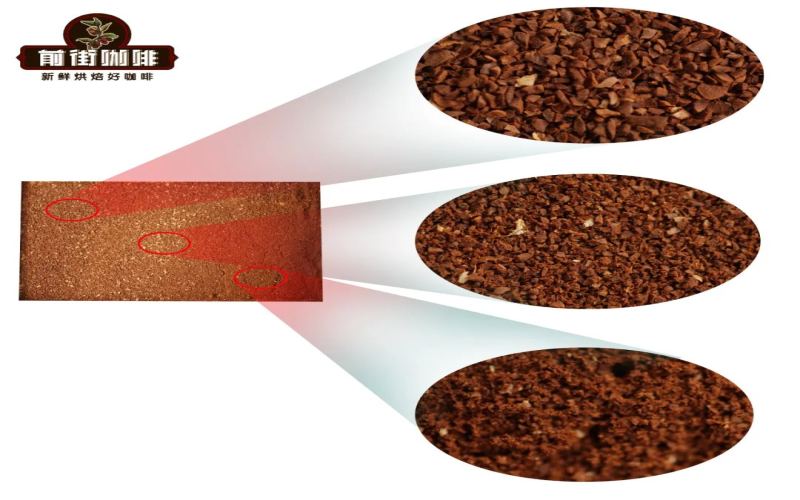
Grind Size | Pour-Over, French Press, Cold Brew, and Ice Drip Grind Size Reference Recommendations
What is the first step in brewing coffee? Grinding beans. In recent years, with the rise of the specialty coffee wave, more and more people have come to enjoy drinking coffee, and at the same time, more and more people hope to fully experience the beauty and leisure of drinking coffee, so they choose to buy coffee beans and brew them at home. And so at this point, a [more…]
How Does Grind Size in Pour-Over Coffee Affect Extraction? A Comparative Test Using Ethiopia Sidamo Candlelight as an Example
Grind size plays a pivotal role in pour-over coffee, directly influencing flavor presentation and extraction efficiency. This article uses Ethiopian Sidamo Candlestick (natural process, light roast) as a sample, adopts the brewing framework recommended by Front Street Coffee, and conducts a segmented extraction comparison across three different grind sizes—BG-5I (75% passing a No. 20 sieve), BG-5T (58% passing), and BG-7D (43% passing). The results show that too fine a grind lets bitterness suppress the tropical fruit notes; the medium-fine BG-5T releases citrus, mango, nectarine, and creamy aromas more fully, with a full body and pronounced sweet aftertaste; while the coarser BG-7D underextracts, yielding a thin flavor. The article ends with some tips on pour-over extraction stages and water temperature control for coffee enthusiasts' reference. [more…]
How to Choose the Grind Size for Brewing Blue Mountain Coffee with a Flannel Filter Cloth? Front Street Coffee Tests and Compares Three Grind Sizes
The flannel filter cloth retains coffee oils, making the mouthfeel richer and smoother, and is especially suited to the full-flavored Front Street Blue Mountain coffee. But what grind size should be used when brewing with a cloth filter? Is it the same as the common grind size for the KONO dripper? Front Street Coffee conducted a comparative experiment using three grind sizes—BG-5R, BG-6M, and BG-6A—with 20 grams of coffee, a water temperature of 85°C, a coffee-to-water ratio of 1:13, and a single-pour brewing method. The results showed that BG-5R was somewhat strong with a slight astringency, BG-6M had a somewhat thin mouthfeel, while BG-6A performed in a balanced and mellow way. The article also explains the reasons behind the changes in flow rate of the flannel filter cloth and offers grind size recommendations for dark-roasted beans. [more…]
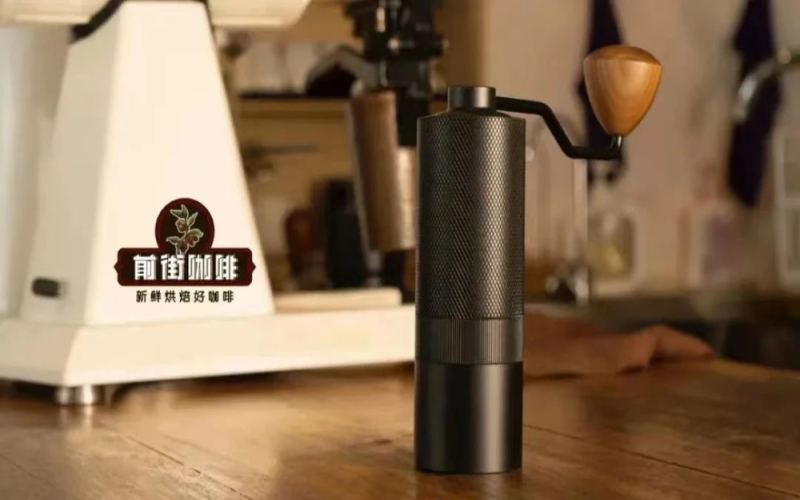
How Fine Should You Grind for Pour-Over Coffee? A Full Analysis of Grinder Burr Types and Sieve Calibration
Grind size is one of the core variables in pour-over coffee extraction, directly affecting water flow rate, extraction yield, and the final flavor profile. But with conical burrs, flat burrs, ghost tooth burrs, and other burr types on the market, along with the complex distribution of coarse, fine, and extra-fine particles, how can you find the right grind setting for your coffee beans? Front Street Coffee starts from how burr structure affects particle size, combines it with practical testing methods using standard inspection sieves, and systematically sorts out the grind passing-rate standards corresponding to different roast levels and brewing methods, helping you determine grind parameters in a quantifiable way so that every brew is more stable and controllable. [more…]
Pour-Over Coffee Grind Size Selection Guide: Three Methods for Judging Grind and the Practical Application of Particle Size Distribution
How should you determine the grind size for pour-over coffee? This is the first challenge many coffee enthusiasts encounter when getting started. This article systematically introduces three methods for judging grind size—visual analogy, grinder setting reference, and sieve calibration—analyzing the pros, cons, and applicable scope of each, and further introduces the advanced concept of "particle size distribution" to help understand how grind uniformity affects extraction. At the same time, Front Street Coffee, drawing on its own brewing framework, shares how to combine visual observation, data, and brewing tests to find the pour-over grind size that suits you in a more practical way. [more…]
How to Choose the Grind Size for Pour-Over Coffee? A Practical Guide from Extraction Principles to Sieve Calibration
The flavor expression of pour-over coffee is directly related to the grind size. The coarseness of the particles not only determines how easily water passes through the coffee bed, but also influences the efficiency with which flavor compounds are released. When the grind is finer, extraction resistance increases, the flow rate slows, and the coffee tends toward intensity; when the grind is coarser, water passes through smoothly, the extraction yield drops, and the flavor tends toward weakness. So in everyday brewing, how can you find the right grind setting for beans of different roast levels? Starting from Front Street's brewing experience, this article sorts out the specific effects of grind size on extraction, explains the typical manifestations of over-fine and over-coarse grinds during brewing, and introduces a method for judging whether the grind is appropriate using a 0.85mm test sieve. [more…]

The Complete Guide to Extracting Coffee with Ice Milk: Milk Brew Methods, Three Bean Tests, and Key Considerations
Using iced milk instead of water to extract coffee, a method known as "milk brew," has become increasingly popular among coffee enthusiasts in recent years. Front Street Coffee once launched a call for beans suitable for milk brew and received a large number of shares from readers. This article selects three representative beans for testing: Strawberry Candy, Boundary Line Xizhua, and Elida Catuai, representing conventional processing, anaerobic processing, and light-medium roasting respectively. The article explains in detail the basic principles of milk brew—why hot milk cannot be used, the advantages of low-temperature extraction—and provides specific preparation parameters: 20g of beans, a coffee-to-milk ratio of 1:10 to 1:12, a grind size passing through a No. 20 sieve at 70%-75%, and refrigerated steeping for 12 hours. In addition, it includes practical tips such as filtering methods, ratio adjustments, and drinking it as soon as possible, helping readers make delicious milk brew coffee at home. [more…]
Coffee Grind Size Comparison Guide: A Detailed Explanation of Electric Grinder Settings, Particle Diameter, and Brewing Compatibility
Grind size is the key variable that determines the success or failure of coffee extraction, and different brewing devices have significantly different requirements for particle diameter. This article systematically sorts out the corresponding grind settings from French press to espresso machine, introduces the industry-recognized cupping standard and the No. 20 sieve pass rate as calibration references, and provides specific scale references for the EK43s grinder. Whether you prefer immersion or pour-over, you can find suitable grind parameters here. The article also specifically reminds readers that coffee bean density and roast level will affect the actual particle coarseness at the same setting, so it is recommended to repeatedly confirm with the same beans. Several Front Street Coffee beans are also used as examples throughout to help readers understand the logic of grind adjustment more intuitively. [more…]
Coffee Ground Size Standards Illustrated | How to Use a Coffee Sieve? Moka Pot and Espresso Bean Grind Size Parameters, Extraction Ratio, and Time Introduction
There are many factors that affect the taste of coffee. During the brewing process, the factors that influence coffee include the coffee-to-water ratio, grind size, water temperature, etc. Among them, grind size can be said to be very important. There is a saying in the industry: "You can buy a cheaper coffee machine, but the grinder must be the best." It has to be said that grinding really has an [more…]
How Does Coffee Bean Grind Size Determine Extraction? A Complete Guide from Resting to Sieve Correction
The grind size of coffee directly determines the contact area between water and coffee grounds as well as the extraction time, which in turn affects the final taste. But when faced with different roast levels and different brewing devices, how do you determine the right grind size? This article starts with the freshness of coffee beans and resting, systematically explains the actual impact of grind size on flavor, analyzes the respective signs of over-grinding and under-grinding, and introduces the cup-testing correction sieve method recommended by Front Street Coffee. Finally, it gives specific coarseness references for common devices such as espresso, drip bags, pour-over, and French press, helping coffee enthusiasts find a grinding plan that suits them. [more…]
How Do Coffee Bean Density and Brittleness Affect Grind Size? A Guide to Choosing Grind Settings for Pour-Over Coffee
Many pour-over enthusiasts have discovered when testing ground coffee with a sieve that the same grind setting produces different passing rates for different bean varieties. Front Street Coffee recently received similar questions: why does particle size vary under the same grind setting? The core reason lies in the differences in bean density and brittleness—high-altitude, light-roasted beans tend to be harder and denser, producing fewer fines during grinding; low-altitude, dark-roasted beans are more brittle and prone to crumbling into fines. Only after understanding this principle can one adjust the grind size for different beans. This article combines medium-light roasted beans such as Front Street Yirgacheffe Gotiti, Front Street Ethiopia Hachira, and Front Street Granja Geisha, as well as medium-dark roasted beans such as Front Street PWN Golden Mandheling, Front Street Brazil Queen's Estate Yellow Bourbon, and Front Street Jamaica Blue Mountain No. 1, to provide specific EK43 settings and No. 20 sieve passing rate recommendations, helping coffee enthusiasts achieve consistent results. [more…]
Starbucks Coffee Bean Pour-Over Grind Size Guide: A Detailed Explanation of Coarseness Assessment and Adjustment Methods
Many coffee enthusiasts, after buying Starbucks coffee beans, often find themselves at a loss when faced with the grinder settings, worrying that grinding too coarse or too fine will ruin the coffee's flavor. In fact, grind size directly affects the speed at which water passes through the coffee bed and the extraction efficiency, making it a key variable that determines the success of a pour-over. Starting from Front Street's brewing practices, this article first explains the underlying logic of how grind size affects extraction, then separately describes the appearance of the coffee bed and the drip performance when the grind is too fine versus too coarse, and finally provides specific steps for measuring the passing rate with a 0.85mm test sieve and precisely calibrating the grind setting, helping you find the right grind parameters for Starbucks beans of different roast levels. [more…]
How to determine the grind size for different coffee brewing devices? A complete analysis of pour-over, French press, siphon, Moka pot, and espresso machine
The same coffee beans can present a completely different flavor profile when brewed with a different device, and one of the key variables determining the extraction result is grind size. Coffee beans must first be ground to efficiently release aroma and soluble solids, but different devices extract in very different ways, so grind coarseness cannot be generalized. Over-extraction brings out bitter, off-flavors, while under-extraction results in a thin, sour taste, so finding grind parameters that match your device is especially important. Based on Front Street Coffee's hands-on testing experience and using the industry-recognized cupping grind standard—the No. 20 sieve pass-through rate—this article provides recommended grind ranges one by one for the French press, pour-over coffee, cold drip and cold brew, siphon, espresso machine, and moka pot, and explains how roast level, water temperature, and extraction time affect grind adjustments, helping you consistently reproduce a delicious cup at home. [more…]
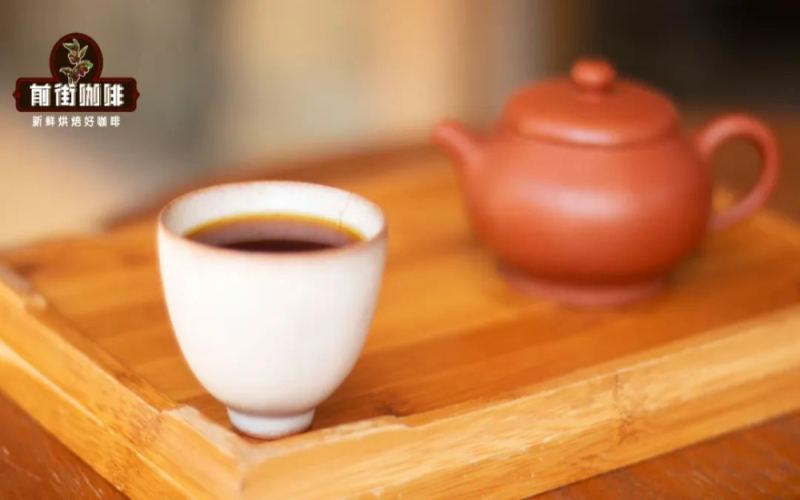
Can a purple clay teapot be used to extract coffee? Testing the feasibility and flavor performance of using a teapot instead of a dripper.
When teaware crosses over into the coffee realm, is brewing coffee with a Yixing clay pot a quirky gimmick or a viable approach? Front Street Coffee put this question to the test. Yixing clay pots, known for their dual-pore structure and slow heat dissipation, are often thought to absorb off-flavors and soften bitterness, while coffee's immersion extraction happens to share the same logic as a French press. This article documents the full process of brewing medium-dark roasted Paradise Bird, washed, and honey-processed beans in a 150ml Yixing clay pot, covering parameters such as coffee-to-water ratio, water temperature, grind size, and steeping time, along with TDS and flavor descriptions. The results show a prominent sweetness and a clean cup, but a general lack of body and complexity. If you're also curious whether a teapot can replace a dripper, this is worth a read. [more…]
How Coarse Should Hand-Brewed Coffee Be Ground? A Complete Standard Analysis from Sieve Pass-Through Rate to Brewing Technique
In the world of pour-over coffee, grind size is one of the key variables that determines the success or failure of a cup. If the coffee grounds are ground too fine, it easily leads to over-extraction and a bitter taste; if ground too coarse, it leads to under-extraction and a weak, watery flavor. So is there a reference standard for pour-over coffee grind size? Through extensive practice, Front Street Coffee uses a 0.85mm sieve as the benchmark, taking a grinding degree with a sieving pass rate of about 80% as the pour-over reference, and for medium-light roast and medium-dark roast coffee beans gives specific recommendations of a 75-80% and 70-75% pass rate through a No. 20 sieve. This article will systematically explain the mechanism by which grind coarseness affects flavor, sieve testing methods, tool choices for beginners, and Front Street's approach to grind size settings when brewing single origins such as Ethiopian washed Yirgacheffe, while also sharing practical points such as the three-pour method, coffee-to-water ratio control, and coffee bean freshness, to help coffee enthusiasts build a stable and reproducible pour-over system. [more…]
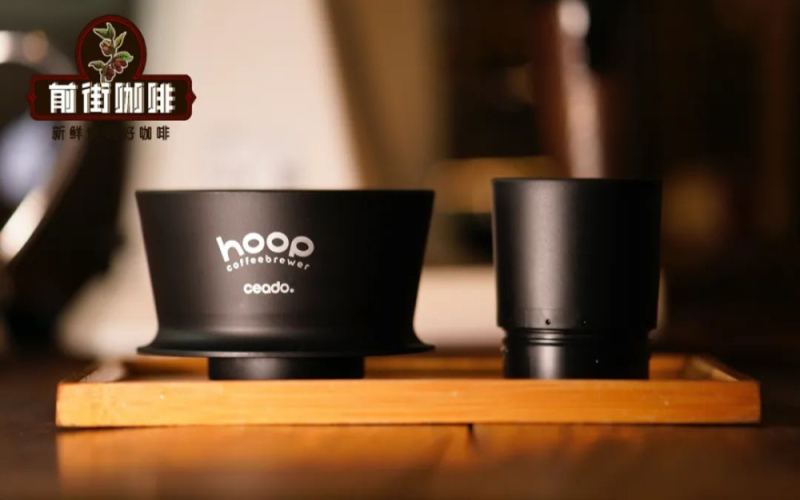
Hoop Dripper Brewing Techniques Explained: Grind Settings and Flavor Differences Compared to V60
The Hoop dripper from the Italian brand Ceado won the 2023 SCA Best Product of the Year award thanks to its unique ring-shaped water dispensing structure. It completely separates the water dispensing zone from the coffee bed, with water seeping laterally from the outer water crown through 12 small holes into the filtration tower, creating a slow, immersion-like extraction. This design eliminates the need for consistent pouring technique, but places more refined demands on grind size and water temperature. Front Street tested three coffees—Sidra, Yirgacheffe Kochere, and Golden Mandheling—to compare the flavor differences between the Hoop and the V60, and compiled six practical tips, including checking the filter paper seal,适配 of the server, and the consideration of a purchase cost as high as 280 yuan. [more…]
How much does a 2°C difference in brewing water temperature affect coffee flavor? Front Street Coffee's actual test comparing light roast and dark roast beans
When brewing coffee, should the water temperature be 91°C or 93°C? Does this seemingly tiny difference really determine the flavor direction of a cup of coffee? Front Street Coffee often receives similar questions, because when we share extraction parameters, the water temperature is often given as a range rather than a fixed value. To clarify this issue, we brewed a light-roasted Ethiopian Yirgacheffe and a dark-roasted Brazilian Queen's Estate using the lowest and highest recommended water temperatures respectively, making four pots of coffee in total, and measured the concentration one by one, calculated the extraction yield, and then compared the flavor differences through tasting. This article will present the experimental results in full, analyze the specific effects of high and low water temperatures on the balance of acidity and sweetness, layering, and body, and share how Front Street Coffee chooses the appropriate water temperature based on the roast level of the beans in daily production. [more…]
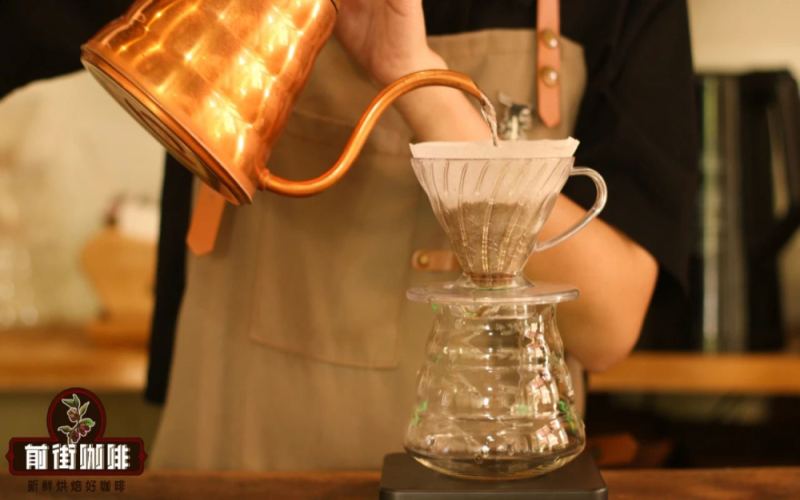
How to Make Pour-Over Coffee for Two | How Should the Coffee-to-Water Ratio for Pour-Over Coffee Be Allocated? What Coffee Strength Does the SCAA (Specialty Coffee Association of America) Recommend?
With the development of the specialty coffee market, single-origin coffee is increasingly recognized by the public, so many coffee enthusiasts are teaching themselves how to brew pour-over coffee at home. As a result, coffee-loving friends often ask, when buying coffee beans at Front Street Coffee, how the coffee-to-water ratio for pour-over coffee should be determined. So in this next article, Front Street [more…]