







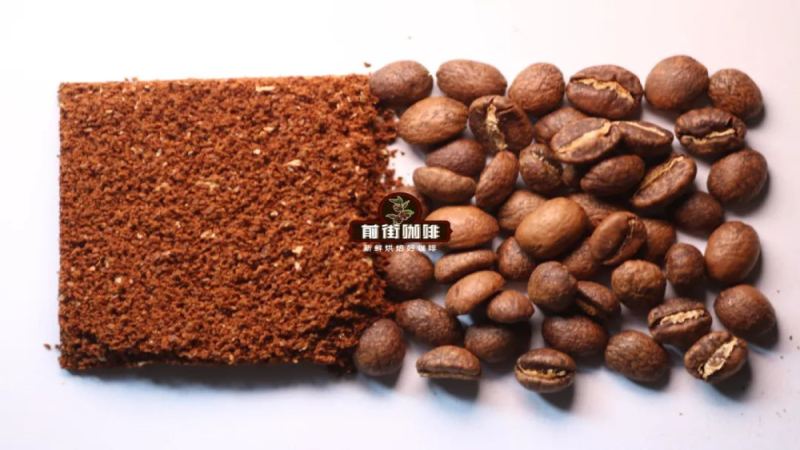
How Can Coffee Particles Guide Pour-Over Grind Size?
Pour-over grind size can be judged three ways: visual analogy, grinder dial reference, and sieve calibration. The visual method compares grounds to coarse or fine sugar, but it is the least reliable, because the eye struggles to separate tiny coffee particles and tends to focus on a few larger ones. Touch has the same problem. Grind size directly affects how fast water drains and whether the bed clogs.
The dial method uses grinder settings as a shared reference, while sieve calibration measures particle size distribution to show how uniform the grind really is. A coffee enthusiast often sees coarse-looking particles from a hand grinder and assumes the grind is coarser than it is. Combining visual observation, data, and actual brewing tests gives a more practical way to settle on a pour-over grind size.
How should the grind size for pour-over coffee be determined? This is the first challenge many coffee enthusiasts encounter when getting started. This article will systematically introduce three methods for judging grind size—the visual analogy method, the dial reference method, and the sieve calibration method—analyzing their respective advantages, disadvantages, and applicable scenarios. It will further introduce the advanced concept of "particle size distribution" to help understand how grinding uniformity affects extraction. At the same time, Front Street Coffee, drawing on its own brewing framework, shares how to combine visual observation, data, and brewing tests to find a pour-over grind size that suits you in a more practical way.
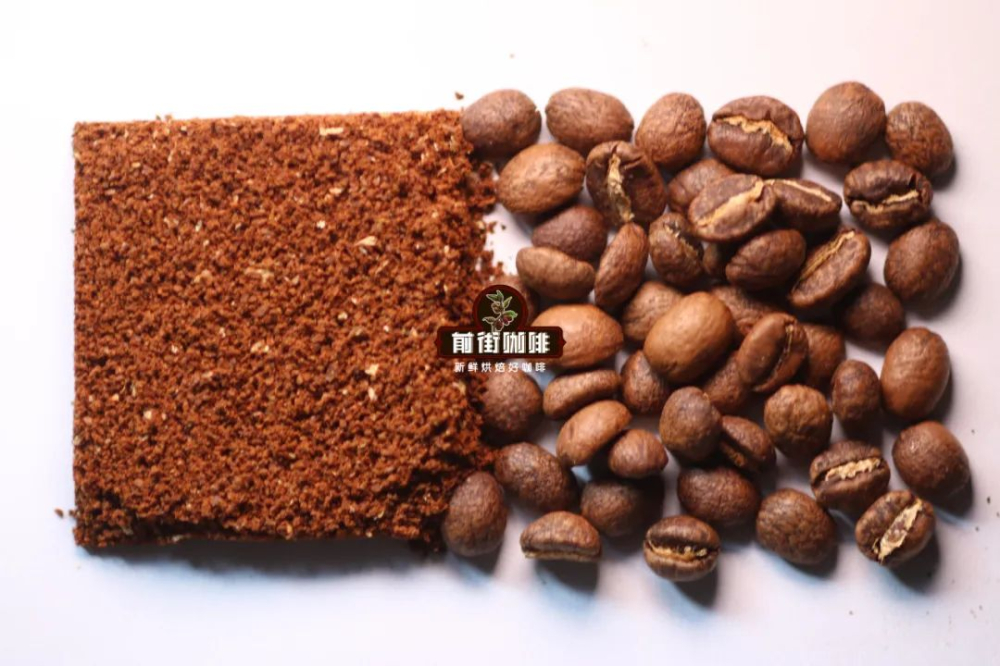
Visual Analogy Method
The visual analogy method refers to what we commonly call "coarse sugar size" or "fine sugar size"—using everyday objects to draw parallels with coffee grind coarseness. But this is the least reliable method. First, the human eye struggles to distinguish differences between tiny particles. Second, the eye is easily drawn to focal objects, causing other details to be overlooked.
Take a simple example: friends who haven't come to Front Street to exchange ideas, upon seeing the coarseness of the pour-over coffee grounds ground at Front Street, will almost always raise a similar question—"I see you grind quite fine, but why doesn't the water drain too slowly or clog during brewing?"
Generally, those who raise this question fall into two categories. The first: if I used your grind size to brew coffee, it would most likely drain slowly or clog. The second: my brewing grind size is coarser than yours.
This is essentially your eyes deceiving you. If you use a hand grinder to grind coffee, there will inevitably be some larger-looking particles. Compared to Front Street's coffee grounds, which have fewer of these large particles, your memory amplifies the focal point, leading you to mistakenly believe your grind is coarser.
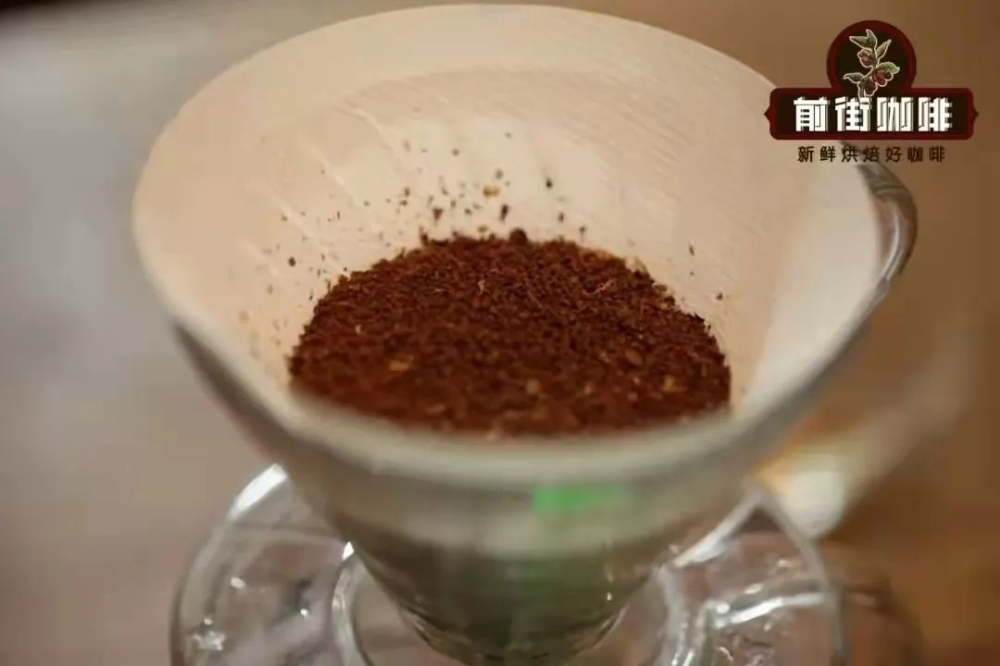
Unless you've undergone long-term training, judging coffee coarseness by naked eye alone will have a very large margin of error. The same principle applies to judging by touch.
Dial Reference Method
This method uses the dial settings on a grinder to define the coarseness of coffee grounds. Typically, widely compatible grinders are used as references—for example, setting 4 on a Fuji Royal, setting 7 on an EK-43, 26 clicks on a C40...
The drawbacks are obvious. If you're using an obscure grinder, communication becomes largely impossible. Moreover, even two grinders of the same brand and model may not produce the same grind at the same setting. For instance, Front Street once tested two brand-new Feima grinders and found that setting 4.5 on one matched the coarseness of setting 5 on the other.
Sieve Calibration Method
This is the method Front Street uses to calibrate grind coarseness for cupping, pour-over, and other purposes. Front Street uses a No. 20 standard sieve with a mesh size of 0.85mm. This sieve is for judging coffee grind coarseness—it serves a different purpose from a fines sifter that removes fine particles.
The specific procedure: use 10 grams of coffee beans (or a multiple of 10 for easier calculation—the more coffee, the more precise the data). Choose a grind setting, grind the coffee, place it in the sieve, then shake horizontally until particles no longer visibly fall through (typically 3-5 minutes of shaking). Then weigh the fallen grounds and divide by the total weight to get the pass-through rate. For example, if 5g passes through the sieve, the pass-through rate is 50%. If you need to reach the 80% standard, you'll need to adjust to a finer grind, re-grind, and re-measure until you reach 80%.
Of course, this method has limitations. A 0.85mm sieve can only separate coffee particles larger than 0.85mm from those smaller than 0.85mm—we only know the ratio between the two. How coarse the coarsest particles are, and how fine the finest particles are, remains unknown. So for some grinders with poor grind quality, this method may yield a grind setting that meets the pass-through rate requirement, yet the brewed coffee flavor is still unsatisfactory.
Is There a More Accurate Method?
Actually, there is. If one sieve can't solve the problem, add more sieves. This involves a term called "particle size distribution."
Even the best grinder on the market cannot produce coffee grounds of perfectly uniform size—there will always be some coarser and some finer particles. If we define a range—coffee particles >0.3mm as extremely fine, 0.3-0.6mm as medium-fine, 0.6-0.85mm as medium—<0.85mm的咖啡粉为粗颗粒,<1mm的咖啡粉为极粗颗粒。
then use 0.3mm, 0.6mm, 0.85mm, and 1mm sieves to separate these coffee particles and calculate the proportion of each interval. This is "particle size distribution." The ideal pour-over grind state is one where 0.6-0.85mm particles make up the largest proportion, with other intervals clustering toward the middle.
In plain terms, the more concentrated the particle size distribution, the more uniform the grind. When the particle size distribution is scattered, it indicates uneven grinding. To remedy this, you'd need to discard some of the extremely fine and extremely coarse particles.
But using this method in practice to judge grind size is too much hassle. Is there a simpler way? Yes—pragmatism. Perhaps all this knowledge is fascinating to those who love studying coffee, but for someone who just wants to know whether their current grind size is suitable for pour-over, it seems impractical.
Why does Front Street say 80% pass-through rate on a No. 20 sieve when sharing pour-over grind sizes? It's based on the grind size selection under Front Street Coffee's entire brewing framework. Slightly coarser or finer than this can also brew good coffee. Brewing coffee can be understood as very complex, or as very simple.
If you want to judge whether your coffee grind size is suitable using a simple approach, you can combine Front Street's three methods. For example, if you've purchased a grinder, first ask the seller for a recommended grind setting. They'll usually give you a range, so your ground coffee won't be too far off.
Then you can visually inspect it—does it feel like rough granules or a dense powder layer? This can be distinguished by sight and touch. The grind size used for pour-over has a rough, granular feel.
If conditions permit, you can use a sieve to specifically determine the coffee's pass-through rate, which links your visual judgment with data-based judgment.
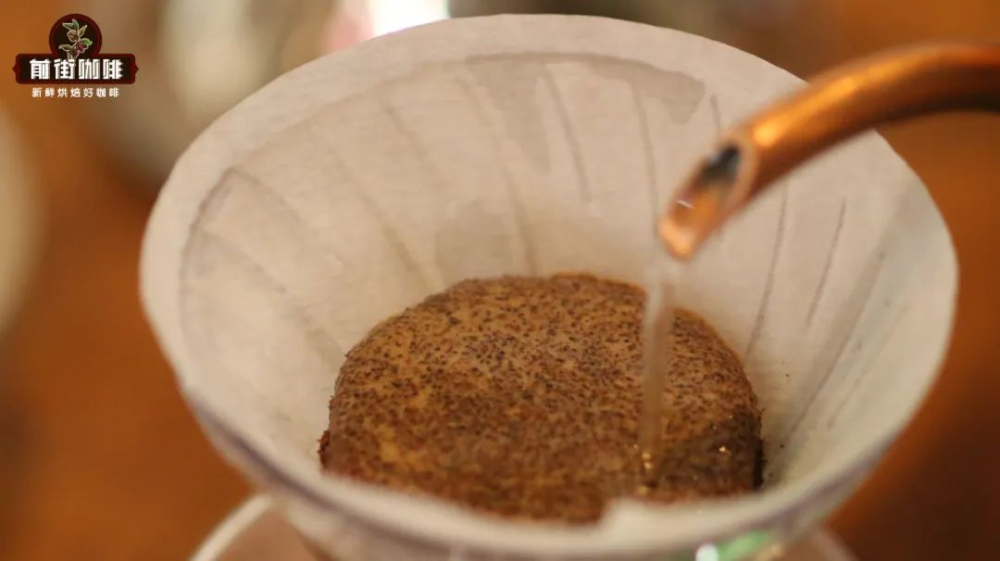
Regardless of particle size distribution, the final step is always testing at the brewing stage. You can use drainage speed and extraction time to judge whether the grind size is appropriate. For example, when brewing with 15g of coffee, if the drainage speed is even and moderate with an extraction time of about 2 minutes, the grind size is suitable. If the drainage is slow but still at a steady pace, with total extraction time exceeding 2.5 minutes, the grind may be too fine. If the drainage is fast with extraction time under 1 minute 40 seconds, the grind may be too coarse. If the drainage gradually slows down, it may be due to too many fine particles.
The above content is compiled by CoffeeHunters, a coffee news website.


