







How Coarse Should Pour-Over Coffee Be Ground for a Long Brew?
Pour-over grind size should aim for about 80 percent pass-through on a 0.85mm sieve. For a typical long brew, medium-light roasts work at a 75 to 80 percent pass rate on a No. 20 sieve, while medium-dark roasts sit slightly coarser at 70 to 75 percent. Grinding too fine causes over-extraction and bitterness; too coarse produces a weak, watery cup.
A repeatable setup uses a scale, thermometer, filter and a steady pour. Front Street Coffee recommends 15 grams of coffee at a 1:15 ratio, with water at 87 to 88°C and a three-pour sequence to keep extraction even. Freshness matters too: beans rested a few days after roasting release gas more predictably, so the brew stays consistent from batch to batch.
In the world of pour-over coffee, grind size is one of the key variables that determines the success or failure of a cup. If the coffee grounds are too fine, it easily leads to over-extraction and a bitter taste; if too coarse, it results in under-extraction and a weak, watery flavor. So is there a reference standard for pour-over grind size? Through extensive practice, Front Street Coffee uses a 0.85mm sieve as the benchmark, taking a grind that passes through at about 80% as the pour-over reference, and offers specific recommendations of 75-80% pass rate through a No. 20 sieve for medium-light roasts and 70-75% for medium-dark roasts. This article will systematically explain how grind coarseness affects flavor, sieve testing methods, beginner tool choices, and Front Street's approach to setting grind size when brewing single-origin beans such as Ethiopian washed Yirgacheffe, while also sharing practical points like the three-pour method, coffee-to-water ratio control, and bean freshness, to help coffee lovers build a stable, reproducible pour-over system.
Pour-over coffee continues to grow in popularity within the coffee community, with more and more enthusiasts trying this brewing method. When presenting each single-origin coffee, Front Street also often uses pour-over techniques to showcase the flavor characteristics of different origins. Pour-over may seem to have a low barrier to entry, but brewing each single-origin bean well actually requires a considerable degree of patience and care.
At Front Street Coffee's stores, before starting to brew you must first prepare hot water, a thermometer, an electronic scale, a coffee pot, a suitable coffee-to-water ratio, and a bean you like. And before the actual brewing, there is an unavoidable step—grinding the coffee beans into powder. Then the question arises: how coarse should the coffee grounds be, and is there a standard to follow? Front Street takes this article as an opportunity to talk with everyone about the basis for judging pour-over coffee grind coarseness.
Why does Front Street care so much about the coarseness of coffee grounds? The reason is that grind size directly influences the basic flavor a cup of coffee ultimately presents. The coarseness of the coffee grounds determines the speed and total amount of coffee substances released during brewing.
For example, if pour-over coffee grounds are ground too fine, the water flow during extraction becomes extremely slow, the extraction time is prolonged, and as a result some unpleasant off-flavor substances are also brought out—what is commonly called over-extraction. When you drink it, the most immediate sensation is bitterness. Conversely, if the coffee grounds are ground too coarse, water flows through unimpeded, insufficient substances are extracted, and the coffee tastes very weak, almost no different from plain water.
Front Street has encountered many customers reporting: it's clearly the same bean, and they followed the correct basic pour-over steps, so why does the taste differ so much from what they drank in the store? After repeated communication, Front Street found that the problem often lies in the grinding step—the steps were right, but the coffee grounds were ground too coarse.
Before brewing each coffee, Front Street performs a grind sieve test on the beans to determine the appropriate grind size. Experiments show that when the grind is on the coarse side, the water can bring out very limited coffee substances, the extracted liquid concentration is low, and it naturally tastes thin, with almost none of the flavor layers coffee should have—no different from plain water. Front Street usually uses a 0.85mm sieve as the benchmark, taking a coarseness level where about 80% of the ground coffee passes through the sieve as the reference grind size for pour-over coffee.
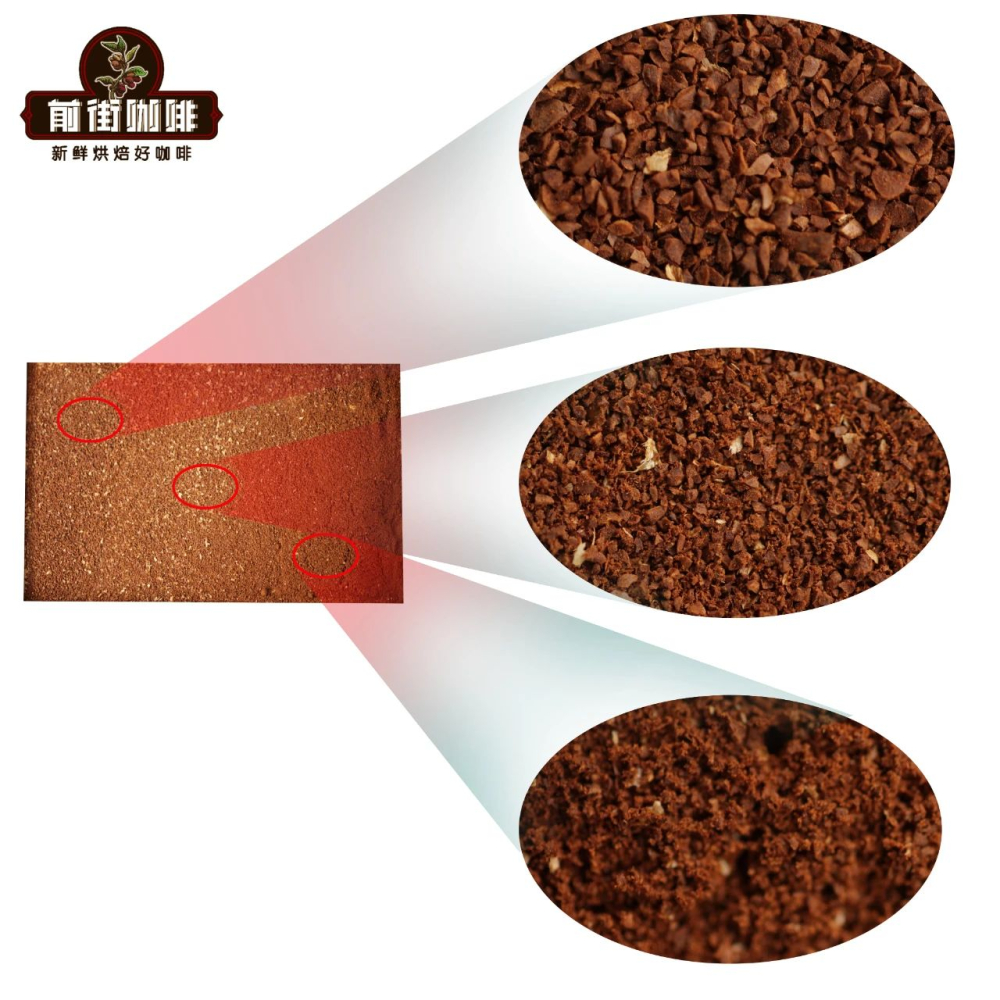
A good cup of coffee, from green bean harvest to completion of roasting, always exists in bean form; grind size is like a watershed, turning coffee beans into powder and also turning coffee beans into a cup of flavorful coffee. Precisely because of this, Front Street has always believed that grind size is an extremely critical step. The right grind size allows coffee to fully express the flavor characteristics brought by the origin's terroir and processing method; the wrong grind size makes people doubt that this cup is even coffee at all, just an undrinkable beverage.
Of course, for experienced baristas or players who have long brewed pour-over and possess a certain theoretical background, grind size is only a reference on paper. Through extensive practice, they have long formed their own pour-over logic and conclusions. For example, if the coffee grounds are ground fine, they can use low temperature and fast brewing to balance the taste; if ground coarse, they switch to high temperature and slow brewing to gradually bring out the flavor—this is also a viable pour-over approach. But for coffee novices just starting out, it's better to first build a solid foundation, at least being able to consistently brew the basic flavor of coffee, before summarizing their own pour-over method.
For beginners, Front Street recommends getting a No. 20 sieve, priced at about 40 yuan—cheap and practical. For medium-light roasts, a No. 20 sieve pass rate of 75-80% is suitable; for medium-dark roasts, a No. 20 sieve pass rate of 70-75% is suitable. Controlling within this range will present the coffee's flavor relatively completely.
Front Street places great importance on the entire pour-over brewing process—it looks simple, but in fact has many subtleties. From selecting the coffee bean variety and controlling grind size, to water temperature and water quality, to filter material choice and extraction time control, and even the pouring technique and timing—every step has a significant impact on the final flavor. Therefore, brewing a delicious cup of pour-over coffee is actually quite difficult. There are many kinds of pour-over techniques—three-stage, one-cut, drip method, volcano pour, agitation method, and so on—each with its own followers. Front Street Coffee recommends beginners use the three-stage pouring method to brew; this technique is suitable for light-roasted, medium-light-roasted, and medium-roasted coffee beans. The staged extraction method can clearly present the flavor layers of the coffee's front, middle, and back segments, and can relatively ensure consistency of the output.
Pour-over coffee is somewhat similar to cooking a dish—ingredients, knife skills, seasoning, and heat must all be handled properly, requiring long-term practice and refinement. This is also why pour-over is called the path that can most completely showcase coffee's flavor. When brewing a single-origin specialty bean, Front Street selects the appropriate roast level based on the bean's characteristics to obtain the best flavor expression. Taking Ethiopian washed Yirgacheffe as an example, considering that this bean uses a light roast, Front Street adjusts its grind size to medium (the specific value depends on the grinder brand), paired with a water temperature of 91-90 degrees, 15 grams of coffee, a 1:15 coffee-to-water ratio, and the three-stage pouring method. When tasting, Ethiopian washed Yirgacheffe's signature lemon-citrus notes emerge very clearly.
Among customers buying beans at Front Street, Front Street usually suggests grinding coffee fresh right before brewing as much as possible, so as to better preserve the coffee's freshness. If a large amount of coffee powder is ground all at once, the aroma will dissipate faster, resulting in a less vivid flavor when brewed.
In addition, Front Street recommends using freshly roasted coffee beans for brewing, so as to experience the coffee's rich flavor layers to the greatest extent. The coffee beans shipped by Front Street Coffee all have a roasting time controlled within 5 days, because Front Street deeply understands how much freshness affects flavor. Front Street's roasting motto is "Freshly roasted good coffee," so that every customer who places an order receives the freshest coffee upon delivery. Coffee's resting period is about 4-7 days, so when the customer receives it, it happens to be at the stage of optimal flavor.
Pour-over coffee first appeared in Germany. This brewing method was born in the early 20th century, invented by a German woman, Ms. Melitta. At the time she was making coffee at home and had a sudden inspiration to use her son's blotting paper as a filter to brew coffee grounds, unexpectedly obtaining a cup of coffee with a flavor different from before, and she registered a trademark for it. However, according to Front Street's understanding, not many people actually know that pour-over coffee originated in Germany; most people think pour-over first appeared in Japan. This actually also shows from another angle that pour-over truly developed as an industry starting from Japan. In the 1950s, Japan was extremely obsessed with pour-over coffee, absorbed in how to brew a simple yet delicious cup with pour-over.
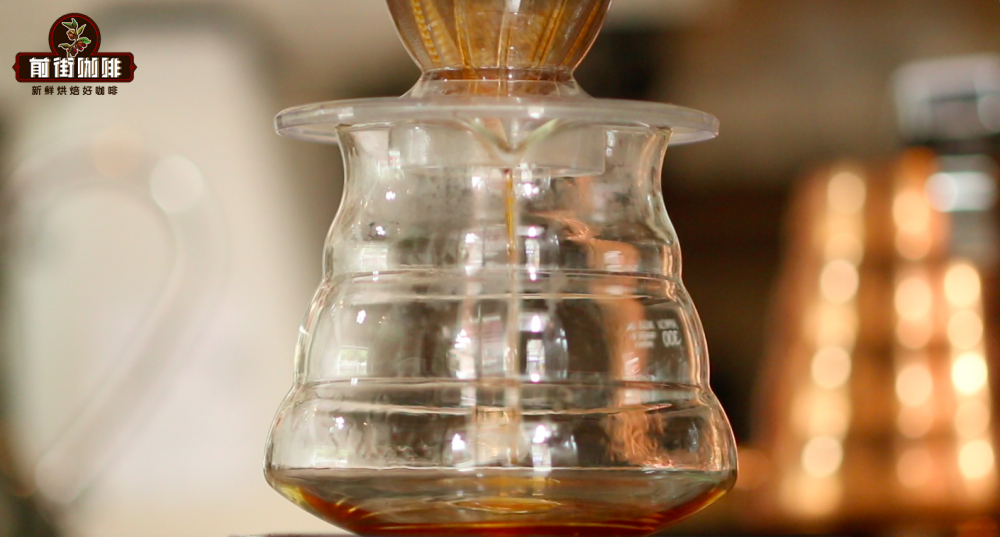
Thus, Japan developed an entire industry around pour-over coffee, with filter papers, coffee utensils, and more emerging one after another; coffee utensils began to sprout and rapidly grew into brands. Japan's single-origin brewing method, with the aim of expressing coffee's original qualities, is also regarded as a perfect interpretation of the pour-over coffee concept.
In this fast-paced era, being able to calm down and brew a coffee bean you like brings you a moment of peace and focus. Grind the coffee beans into powder, gently pour them into the already moistened filter paper, and use a gentle motion to level it so the coffee bed is evenly distributed. Then quietly wait for the water to boil, let it sit for a moment, and once the water temperature is right, pour the hot water in a focused and slow manner. Wait patiently during the bloom, and you will smell a faint coffee aroma; pour water slowly again, wait for the coffee to drip into the pot, and let your tired heart immerse itself in this process. If you have some understanding of pour-over coffee techniques, you can also brew a good cup according to pour-over coffee pouring techniques—this is probably where the charm of pour-over coffee lies.
Professional coffee knowledge exchange For more coffee bean information, please follow Coffee Workshop (WeChat public account cafe_style)
For more specialty coffee beans, please add private WeChat Front Street Coffee, WeChat ID: qjcoffeex
The above content is compiled by CoffeeHunters, a coffee news website.


