





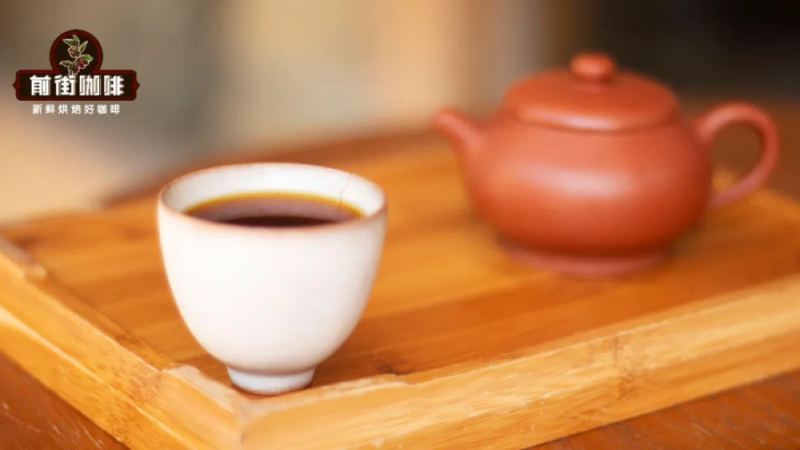
Can purple bean coffee brewing work in a Yixing teapot?
Brewing coffee in a 150ml Yixing clay pot instead of a dripper does work, but the cup comes out thin. Front Street Coffee brewed 8 to 9 grams of a medium-dark roasted washed bean and a honey-processed bean, measuring TDS and tasting each batch. The results showed prominent sweetness and a clean entry, yet the body and complexity that a dripper usually delivers were largely missing.
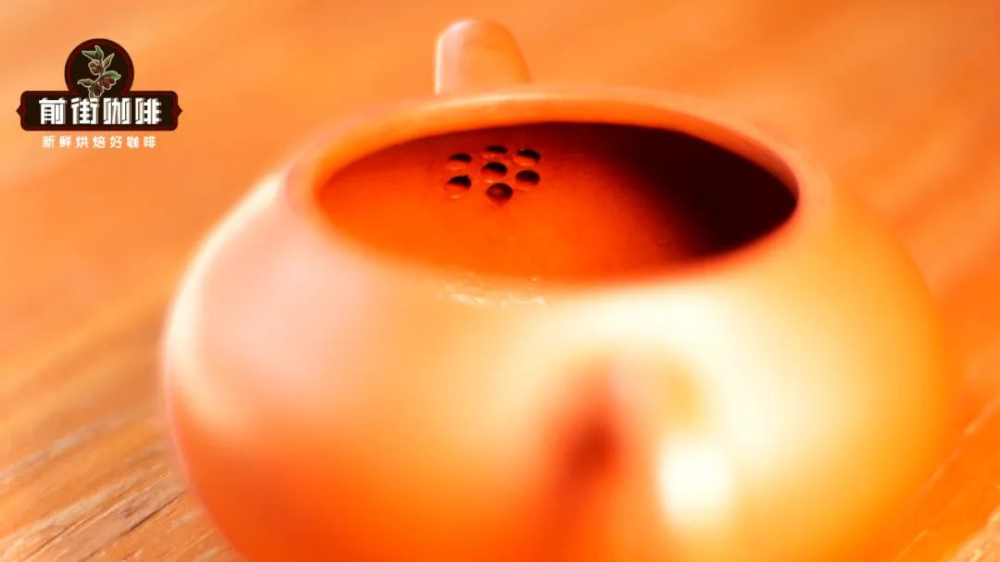
Because a Yixing pot is an immersion brewer, it follows the same logic as french coffee in a press. The clay's double-pore structure adsorbs stale and off-flavors and softens bitterness, while the narrow spout and small opening slow heat loss. The internal multi-hole outlet, however, is too coarse for coffee grounds, so fines pass through and a second filtration is needed for a cleaner cup.
When teaware crosses over into the coffee world, is brewing coffee with a Yixing clay pot just a novelty gimmick or a viable approach? Front Street Coffee decided to put this question to the test. Yixing pots are often believed to absorb off-flavors and soften bitterness thanks to their double-pore structure and slow heat dissipation, and coffee's immersion extraction happens to share the same logic as a French press. This article documents the entire process of using a 150ml Yixing pot to brew a medium-dark roasted Bird of Paradise, a washed bean, and a honey-processed bean, covering parameters such as coffee-to-water ratio, water temperature, grind size, and steeping time, along with TDS readings and flavor descriptions. The results showed prominent sweetness and a clean entry, but a general lack of body and complexity. If you're curious whether a teapot can replace a dripper, read on.
While scrolling through the phone at night, Front Street Coffee came across yet another method that was both amusing and exasperating—brewing coffee with a Yixing clay pot. They say this not only preserves the aroma but also absorbs off-flavors in the coffee and noticeably reduces bitterness. Sounds far-fetched? Don't rush to judge—you won't know until you try it yourself.
Yixing clay pots are made from clay rich in iron that has undergone geological sedimentary lithification and possesses a crystalline, sandy texture. The properties of the clay directly determine how the pot performs. This type of pot has a fine double-pore structure with strong adsorption capacity, which can weaken stale and off-flavors when brewing tea. Additionally, the narrow spout and small opening slow down heat loss, giving it superior heat retention.
The Yixing pot Front Street Coffee has on hand isn't particularly large—about 150ml, which suits a small brew of 8–9 grams of coffee. The pot has a multi-hole structure inside that can block most fine tea leaves, but for coffee grounds, the outlet holes are still too coarse, and fines easily mix into the liquid, affecting the cleanliness of the cup. That's why a second filtration is needed after extraction.
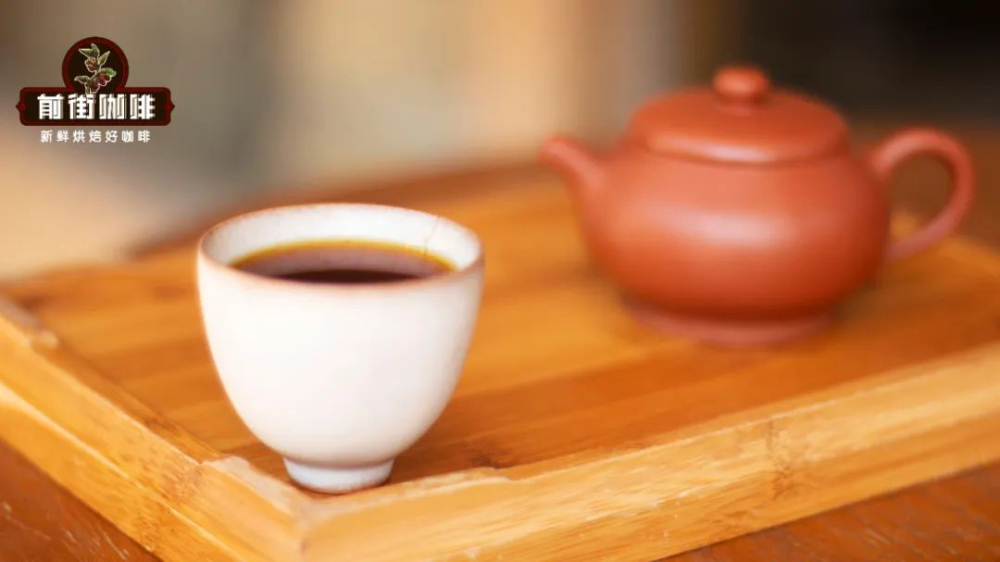
Sharp-eyed readers have probably already caught on: this is immersion extraction. In principle, it works exactly like a French press, so the parameters don't need to be rigidly fixed. The key is choosing the right beans, controlling water temperature, grind size, and coffee-to-water ratio, and not letting the steeping time drag on too long.
For the first round, to play it safe, Front Street Coffee chose a bean with a balanced flavor profile to test the waters—a medium-dark roasted Bird of Paradise, with toasted bread aromas, a sugarcane-like high sweetness, and a hint of mild fruit acidity, overall soft and delicate.
Coffee bean: Papua New Guinea · Bird of Paradise Dose: 9g Coffee-to-water ratio: 1:15 Water temperature: 88℃ Grind size: EK43s setting 10.5 (75% pass rate on China Standard No. 20 sieve)
Steeping time: 3 minutes
(The barista's dedication: circular pouring)
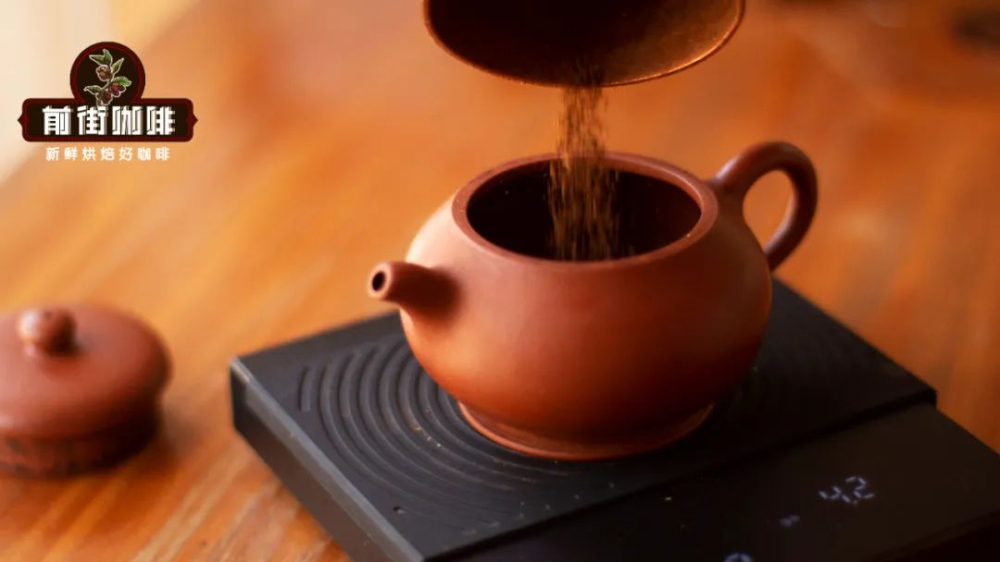
The steps before filtration are actually quite similar to brewing tea: first pour the ground coffee into the Yixing pot (without preheating), then pour in 135ml of hot water all at once and start timing. Since there's no stirring throughout the process, you need to rely on the water flow to break up and saturate the entire coffee bed as much as possible, then cover the pot and let it steep quietly for three minutes.
Three minutes up, Front Street Coffee used filter paper with a dripper to strain out the grounds. Along the way, particles clogged the outlet, so the pot had to be shaken from time to time before continuing to pour, ensuring all the coffee liquid could be decanted.
The final cup of Bird of Paradise brewed in the Yixing pot measured a TDS of 1.00%. On the palate, there was a distinct oolong tea character, with aromas of roasted nuts and almond cookies, a clear sweet aftertaste, and virtually no perceptible bitterness—but each flavor was somewhat weak, which Front Street Coffee attributed to insufficient extraction.
Since brewing medium-dark roasted beans in the Yixing pot didn't go wrong, the next step was to try fruity, acidic beans—picking one washed and one honey-processed—to compare how each performed.
With the first round's experience in hand, Front Street Coffee wanted to extract the aromatic compounds more fully this time for a richer mouthfeel, so minor adjustments were made to grind and temperature: water temperature raised by 1–2℃, and the grinder set half a notch finer. (Grinding finer tends to produce more fines, which during immersion can actually cause over-extraction, so Front Street Coffee recommends not adjusting the grind setting too drastically each time.)
Coffee beans: Colombia · Finca La Esperanza Geisha & Ethiopia · Kochere Dose: 9g Coffee-to-water ratio: 1:15 Water temperature: 94–95℃ Grind size: EK43s setting 9.5 (80–82% pass rate on China Standard No. 20 sieve)
Steeping time: 3 minutes
The results: Finca La Esperanza honey-processed Geisha measured a TDS of 1.21%, while the washed Kochere came in at 1.11%.
In terms of flavor, the Finca La Esperanza Geisha showed a vivid fruit character, with aromas of dried fruit, orange, and black tea, fresh fruit acidity, and a clean finish—the candy-like sweetness in particular left a deep impression on Front Street Coffee. The Kochere was more balanced, dominated by citrus acidity, with flavors of tangerine, honey, roasted sweet potato, and a green-tea-like sweet finish.
Overall, all these cups brewed in the Yixing pot had excellent sweetness and a clean, tea-like entry. The downside, however, was a lack of body—compared to a regular pour-over, they seemed to fall short in "punch"—and the flavor complexity was somewhat thin.
Enough playing around—before anyone notices, Front Street Coffee will thoroughly wash the Yixing pot and put it back where it belongs. If you've read this far and are interested in this method, and there happen to be no adults at home, why not find a teapot and give it a quiet try~🤫
- END -
The above content is compiled by CoffeeHunters, a coffee news website.


