







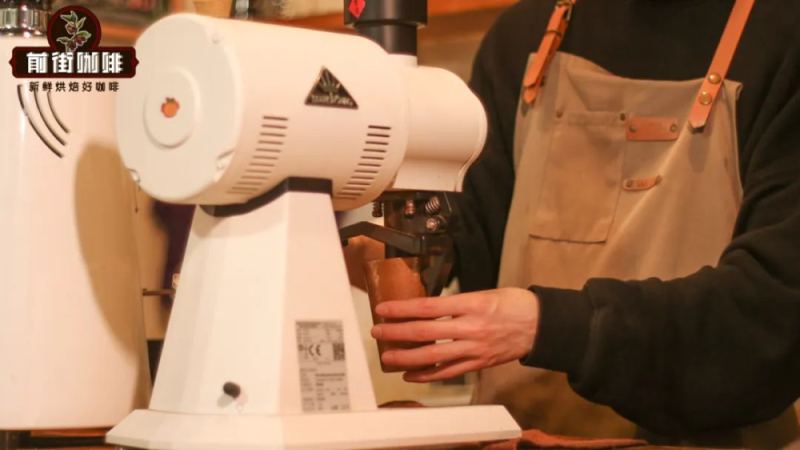
How do you judge pour-over grind size by coffee particles?
Front Street Coffee uses a No. 20 sieve to calibrate pour-over grind size, because descriptions like coarse sugar mean different things to different people. The method measures what share of coffee particles passes through the sieve, with a target pass rate of about 80 percent, giving brewers a repeatable reference instead of a guess.
No grinder produces evenly sized coffee particles, so the goal is to keep most grounds within roughly 0.6 to 0.85 mm. When the grinder is low quality, brewing time and the state of the coffee bed help confirm whether the grind is right. The same logic applies to any setup, from entry-level to high-end.
The grind size for pour-over coffee has always been a vexing issue for many enthusiasts—even when everyone says "coarse sugar size," different people may interpret it vastly differently, and communication deviations directly lead to flavor differences. To solve this problem, Front Street Coffee adopted a "sieve calibration method," using a No. 20 sieve to quantify the grind degree. This article will detail the steps of this method: how to choose a sieve, how to calculate the pass-through rate, why it is recommended to control it at 80%, and when the grinder quality is poor, how to use brewing time and coffee bed state to assist in judging whether the grind is appropriate. Regardless of what grinder you use, this method can help you find a relatively stable grind reference.
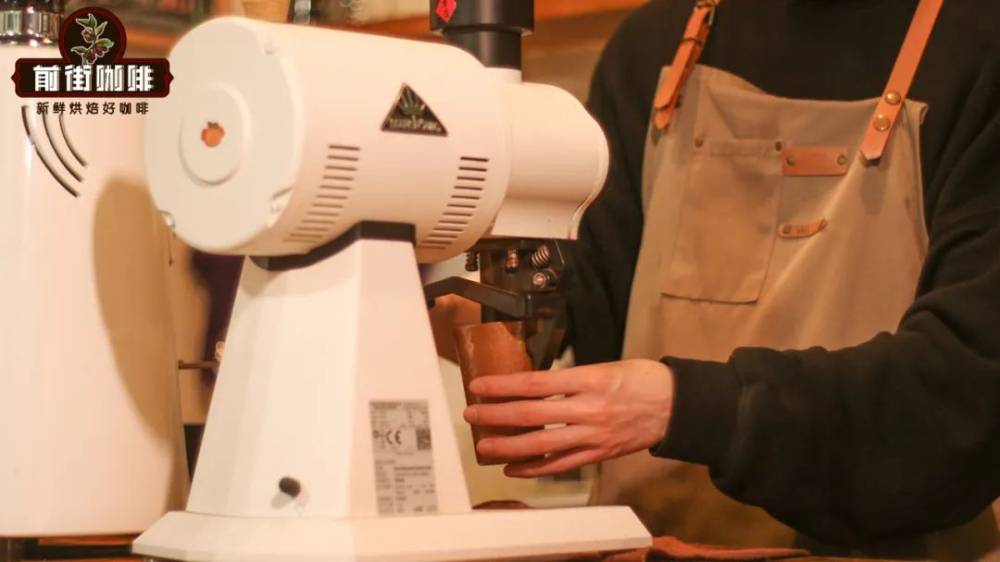
As mentioned earlier, everyone's perception of particle coarseness is not the same. The same description, such as "particles like coarse sugar," may seem closer to fine sugar to someone else. As a result, accurately conveying the grind size to another person becomes very difficult. Once communication deviates, even with the same beans, different grind parameters will extract completely different flavors.
Therefore, Front Street Coffee introduced this "sieve calibration method." Although it is not omnipotent, it can at least ensure that everyone uses a roughly similar grind level when brewing, minimizing differences between individuals. Next, Front Street Coffee will discuss how to use this sieve specifically.
Sieve Calibration Method
First, it must be made clear: with any grinder, whether high-end or entry-level, the coffee particles it produces cannot be absolutely uniform. In other words, a portion of coffee grounds may contain particles of various sizes from 0.1mm to 1mm at the same time. We cannot make all particles maintain exactly the same size; all we can do is try to make most particles fall within the ideal range.
This ideal range is best controlled between 0.6~0.85mm. Even if a small number of other particles exceed this range, the impact will not be too great. After understanding this premise, we can begin learning the sieve calibration method.
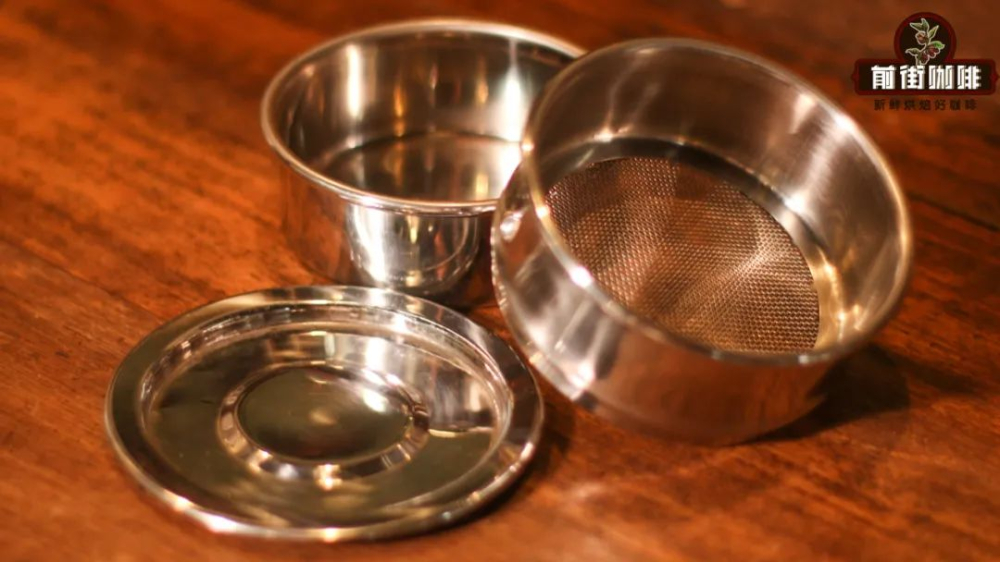
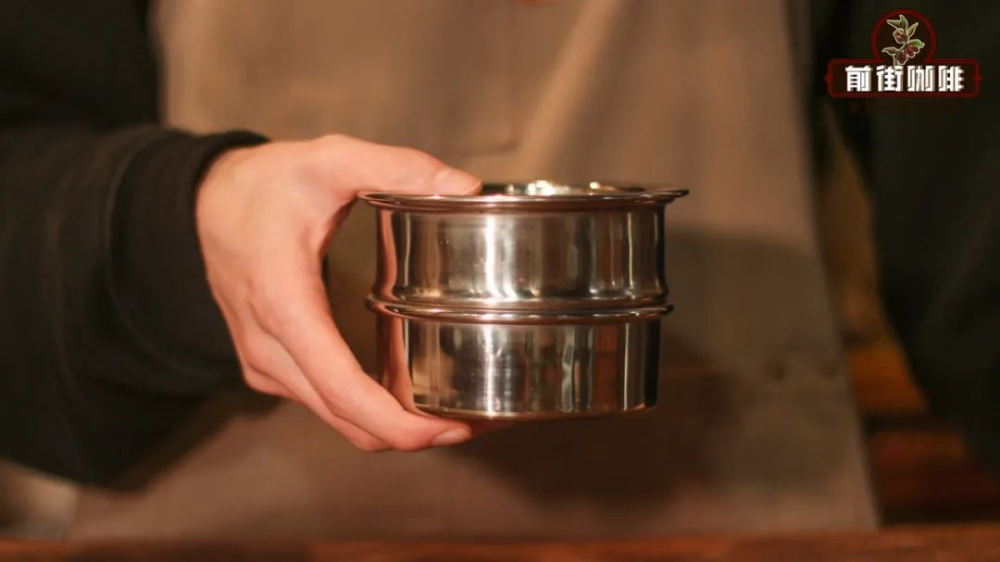
First, prepare a No. 20 sieve, which can be purchased on major e-commerce platforms and is very affordable. However, note that many sellers sell the sieve and the grounds receiving tray separately. It is recommended to buy an integrated one; buying only the sieve will be more troublesome to use.
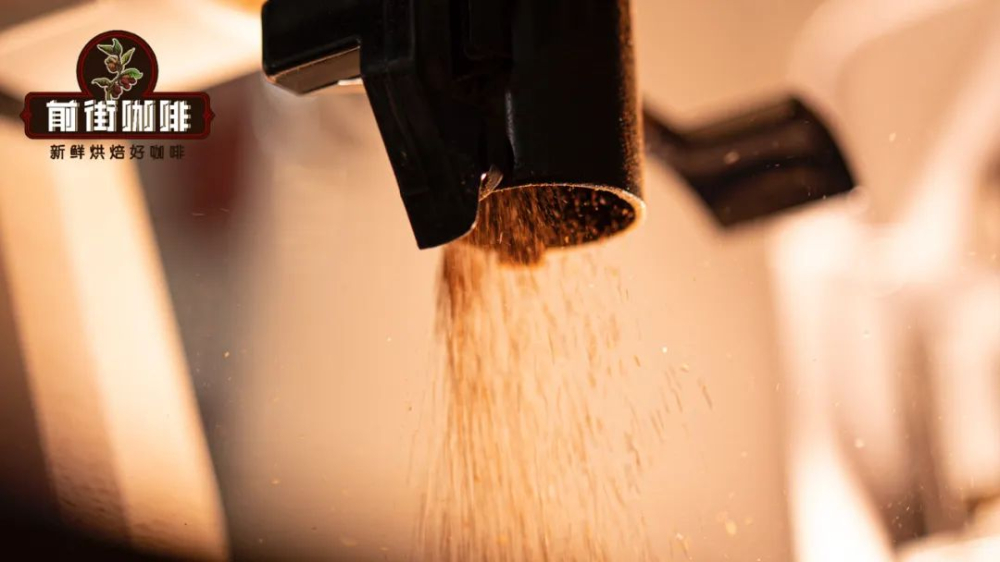
The aperture of the sieve is 0.85mm, and its core function is to separate coffee particles larger than 0.85mm from those smaller than 0.85mm. The value we need is the amount of grounds that can pass through the sieve. Front Street Coffee recommends that the grind coarseness standard for pour-over be an 80% sieve pass-through rate—that is, of a portion of coffee grounds, 80% can pass through the sieve.
The calculation of the sieving rate is actually very simple: weigh 10g of coffee beans, choose a setting you think is appropriate for grinding, pour the ground coffee into the sieve after grinding, and shake it horizontally until no more particles fall through (this takes about 5 minutes, and your hands will get tired).
Then weigh the fallen grounds and divide by the total grounds weight to get the sieving rate. For example, if the fallen grounds weigh 7g, the sieving rate is 70%. If you want to reach 80%, you need to adjust the grind finer and measure again until it approaches the target value.
The reason the sieving rate is set at 80% is that this value can adapt to the brewing of most coffee beans and has a relatively large margin for error. Even if the roast level of the beans differs, it can try to avoid common failures, such as clogging or draining too quickly. However, Front Street Coffee also said that this method has certain limitations.
The limitation is that the sieve pass-through rate is set based on a grinder of reliable quality. If the grinder is of poor quality and insufficient precision, the particles produced will be very uneven, with too many fines and also quite a few coarse particles.
In this situation, Front Street Coffee recommends using brewing time to judge grind coarseness instead. Taking Front Street Coffee's three-stage brewing as an example, under normal parameters (15g grounds, 1:15 ratio, appropriate grind), the brewing time is about 1 minute 50 seconds to 2 minutes 10 seconds. If it exceeds this range, it indicates that the grind is too coarse or too fine, and adjustments should be made according to the actual situation.
Of course, in addition to time, the state of the coffee bed is also worth observing. During normal brewing, the coffee bed should sink evenly. If the water level drops too quickly, it indicates the grind is too coarse; if it drops too slowly and clogging occurs, with the coffee bed looking muddy, then it is caused by too fine a grind. Only by making corresponding adjustments based on these signals can the grind return to the normal range and brew a good cup of coffee.
Front Street Coffee (FrontStreet Coffee)
No. 10, Baoqian Street, Yandun Road, Dongshankou, Yuexiu District, Guangzhou, Guangdong Province
The above content is compiled by CoffeeHunters, a coffee news website.


