







How Can You Check Grind Size for Pour-Over Coffee?
Grind size controls how fast water moves through the coffee bed. Too coarse and the cup tastes weak; too fine and it turns bitter. A practical reference is granulated sugar: pour-over grounds are usually slightly finer than table sugar, which gives a quick visual check before you brew.
For precision, a Chinese Standard No. 20 sieve with 0.85 mm openings separates fine particles from coarse ones. Extraction time confirms the result, and roast level changes the target setting, with medium-light and medium-dark beans needing slightly different grind sizes on the same grinder.
The flavor expression of pour-over coffee largely depends on whether the grind size is appropriate. Grind size directly affects the speed at which water passes through the coffee bed and the amount of coffee compounds released. If too coarse, the taste is weak; if too fine, the taste is strong or even bitter. This article begins with the mechanism by which grinding affects flavor, introduces the method of using granulated sugar particles as an intuitive reference, and further provides operational details for precisely checking grind size with the Chinese Standard No. 20 0.85 mm sieve. It also includes Front Street Coffee's specific grind setting recommendations for medium-light and medium-dark roasted beans. In addition, it reviews extraction time as a reference standard for judgment, as well as key factors affecting pour-over taste such as coffee bean selection, making it suitable for coffee enthusiasts who want to systematically master grinding techniques.
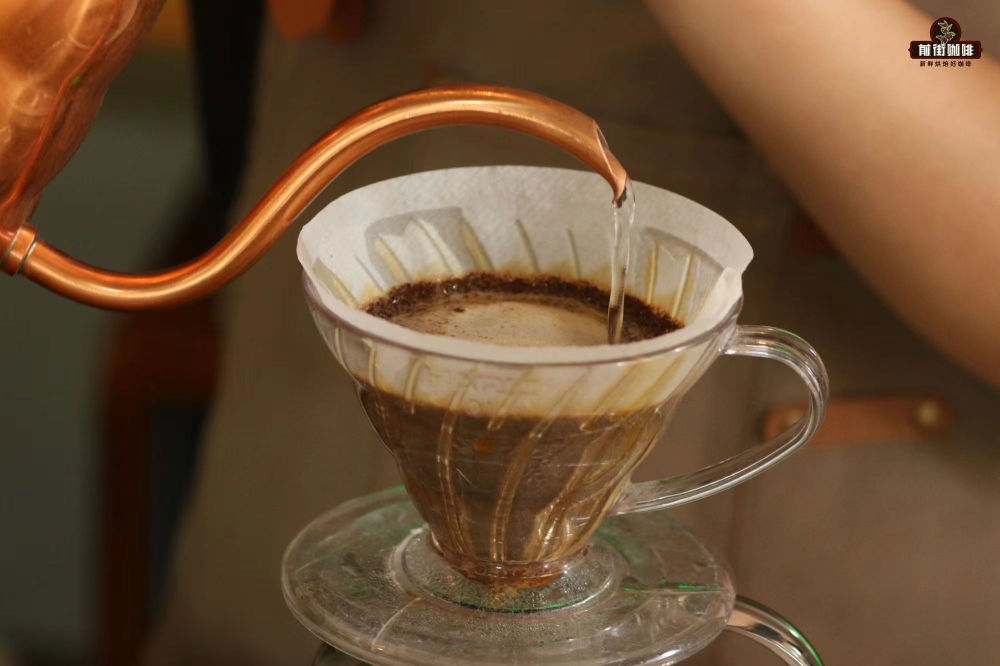
Nowadays, more and more people are making coffee at home, and pour-over brewing has become popular along with it, setting off a trend of "brew it yourself whenever you want to drink it." However, for beginners, even with high enthusiasm, they often still cannot grasp the essentials in actual practice. As a result, the coffee they brew is either bland in flavor or has obvious off-flavors, making it hard to bring out the good taste the beans should have.
How exactly does the coarseness of ground coffee beans influence the direction of flavor?
The essence of pour-over is to use water as a medium to bring out the soluble flavor components from coffee grounds, ultimately obtaining a cup of black coffee. In the whole process, grind size can be called the core variable, and the coarseness of the particles directly determines the amount and speed at which various substances are released.
When visiting cafes, you can observe that espresso usually has its own dedicated grinder, because it needs to extract a rich espresso within a few dozen seconds, so the grounds must be ground extremely fine and sufficiently uniform. Although pour-over is not this demanding, to achieve positive flavor expression, it also needs to balance grinding uniformity and an appropriate coarseness setting.
The coarser the particles, the less resistance water encounters, the shorter the time it takes to pass through the coffee bed, and the taste is lighter; the finer the particles, the greater the water flow resistance, the longer it takes to penetrate the coffee bed, the contact time between grounds and water is prolonged, and the concentration naturally rises. If the grind size is inconsistent, hot water acts for different lengths of time on particles of different sizes, resulting in uneven extraction, and the final flavor will also be affected.
How fine exactly should pour-over coffee be ground to be appropriate?
Only about 30% of a coffee bean consists of soluble substances, and among this 30%, only a portion is the positive flavor we desire, while the rest brings bitterness and miscellaneous sensations. Therefore, when adjusting various parameters in pour-over brewing, the goal is to keep extraction within a reasonable range. According to summaries by industry peers, the effect is relatively ideal when the extraction yield is between 18% and 22%.
When brewing, many people directly ask Front Street Coffee how coarse the grind should be, but grind size, unlike water temperature, cannot be precise to a specific degree. The level of coarseness can only be observed and compared through experience. Front Street Coffee generally uses granulated sugar as an analogy to help everyone establish a reference. For example, when Front Street Coffee brews medium-light roasted beans, because light-roasted beans have weaker water absorption capacity, in order to increase extraction efficiency, it chooses a medium-fine grind, roughly equivalent to the particle size of fine granulated sugar, as shown in the figure below;
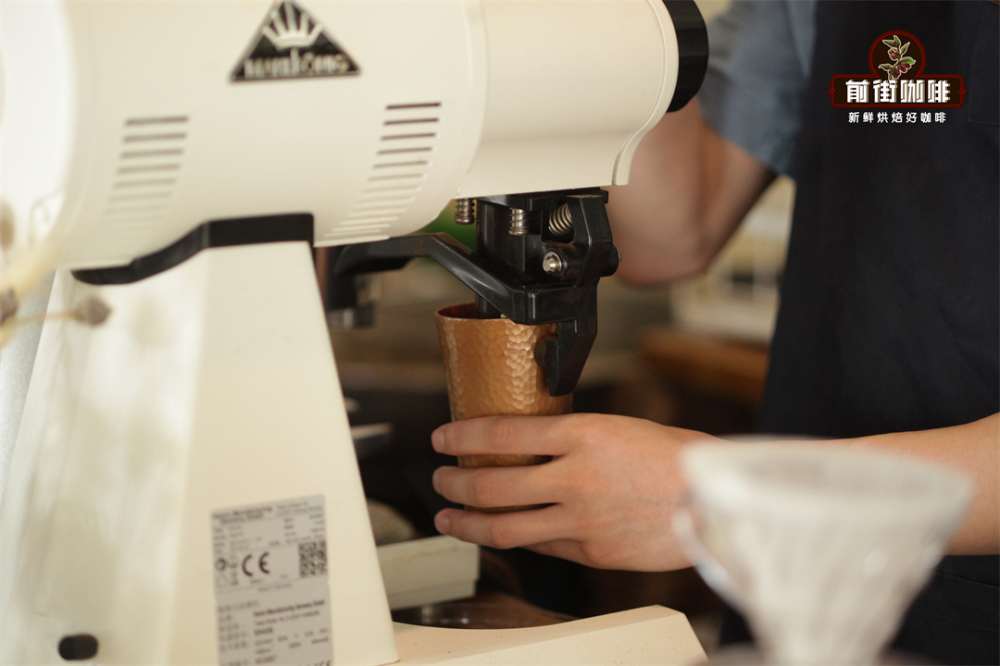
If brewing medium-dark roasted beans, as the roast level deepens, the bean body becomes porous and has stronger water absorption capacity. To avoid over-extraction, Front Street Coffee recommends using a medium coarseness, that is, a particle size like coarse granulated sugar.
For friends who require more rigor, describing it only by granulated sugar particle size is no longer enough. If you want to accurately find the grind setting corresponding to your own grinder, Front Street Coffee recommends using a professional testing tool—the Chinese Standard No. 20 0.85 mm aperture sieve. When sifting, fine powder smaller than 0.85 mm will fall into the powder bowl below, while coarse particles larger than 0.85 mm will remain on the mesh surface. The proportion of coffee powder falling into the bowl relative to the total amount of powder is the sieve pass rate. The grind size for medium-light roasted beans corresponds to a No. 20 sieve pass rate of 75% to 80%, corresponding to a setting of 10–10.5 on the Front Street Coffee EK43s grinder; the grind size for medium-dark roasted beans corresponds to a No. 20 sieve pass rate of 70% to 75%, corresponding to a setting of 10.5–11.
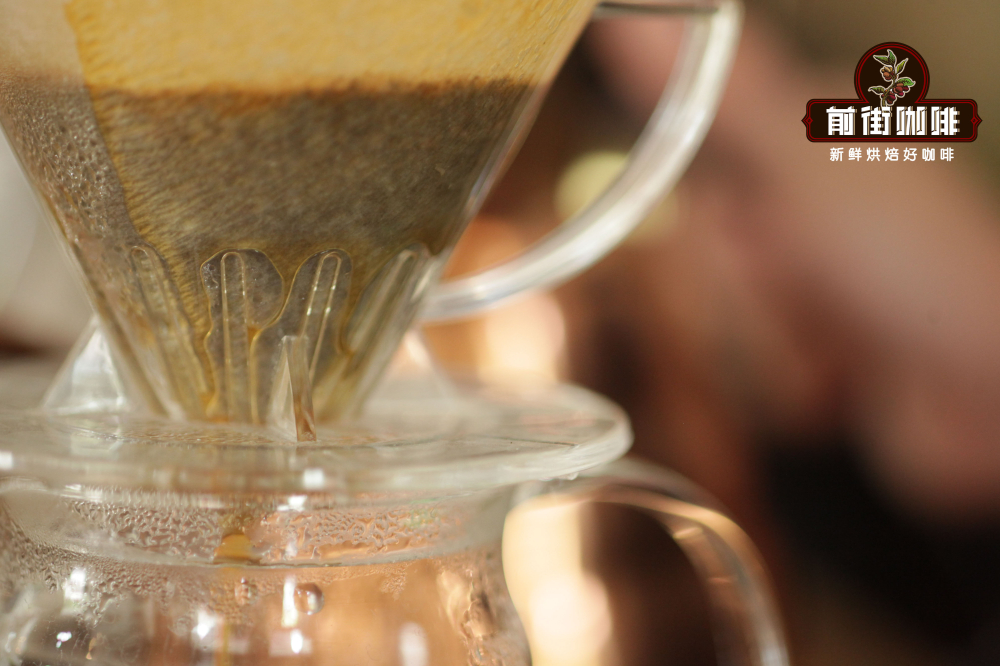
In addition to the above two judgment methods, you can also directly observe the pour-over process to confirm whether the grind is appropriate. At this time, extraction time should be used as a reference indicator. According to Front Street Coffee's brewing parameter standards, the normal extraction duration for a cup of coffee is about 1 minute 50 seconds to 2 minutes 10 seconds. If the grind is too fine, the extraction time will be prolonged; if the grind is too coarse, the time will be shortened. With the help of extraction duration, you can make a preliminary judgment as to whether the grind size is appropriate.
What other details of pour-over coffee are worth paying attention to?
The taste of a cup of pour-over coffee is affected by many factors, among which the larger proportions include the coffee beans themselves, grind size, water temperature, coffee-to-water ratio, brewing technique, and extraction time. As the source of flavor, coffee beans carry the highest weight. A bag of high-quality beans can directly determine the quality of the coffee in the cup, so the step of choosing beans is very critical.
Front Street Coffee's bean list includes nearly fifty types of coffee beans, covering multiple major producing regions, so everyone can choose according to their preferred flavor type. In order to give every customer a better tasting experience, Front Street Coffee only ships coffee beans roasted within 5 days. Counting transportation time, by the time they arrive, they are basically in their optimal tasting period.
For professional coffee knowledge exchange and more coffee bean information, please follow Coffee Workshop (WeChat public account: cafe_style)
For more specialty coffee beans, please add the private WeChat of Front Street Coffee (FrontStreet Coffee), WeChat ID: qjcoffeex
The above content is compiled by CoffeeHunters, a coffee news website.


