







How does grind size affect coffee extraction?
Grind size is the variable that decides whether coffee extraction succeeds or fails, and each brewing device calls for a different particle diameter. Ordering grind from coarse to fine: French press, pour-over, cold brew ice drip, then espresso machine. The industry uses cupping standards and No. 20 sieve pass-through rate as calibration references, with specific scale marks given for the EK43s grinder.
Bean density and roast level shift the actual particle size produced at any single grinder setting, so the same beans should be used to confirm adjustments repeatedly. A comparison of French press and espresso requirements shows how far apart the two ends of the scale sit, which is why matching grind to brewer matters more than chasing one universal setting.
Grind size is the key variable that determines the success or failure of coffee extraction, and different brewing devices have significantly different requirements for particle diameter. This article systematically sorts out the grind-size correspondence from French press to espresso machine, introduces the industry-recognized cupping standard and No. 20 sieve pass-through rate as calibration basis, and gives specific scale references for the EK43s grinder. Whether you prefer immersion or drip filtration, you can find suitable grind parameters here. The article also specifically reminds: coffee bean density and roast level will affect the actual particle size at the same setting, so it is recommended to repeatedly confirm with the same beans. Several Front Street Coffee beans are also used as examples throughout to help readers understand the grind adjustment logic more intuitively.
For more specialty coffee knowledge, please follow the WeChat official account: Front Street Coffee (FrontStreet Coffee)
No matter which brewing tool is chosen to handle coffee, the step of grinding coffee beans is indispensable, and the fundamental purpose is to promote the faster release of flavor components into the water. However, not all solubles in coffee are pleasant. If you want to extract as much positive flavor as possible while suppressing the emergence of negative flavors, you need to precisely control the degree of extraction, and the particle size of the coffee grounds plays a decisive role here.
The grind sizes corresponding to various coffee devices are not the same
Due to differences in extraction principles, the grind sizes matched to different coffee devices are also different. Taking the most common types in daily life—pour-over, French press, espresso machine, and cold brew ice drip—the required grind degrees, from coarse to fine, can be arranged as [French press > pour-over coffee > cold brew ice drip > espresso machine].
Although we know which extraction methods should use coarse grinding and which should use fine grinding, the specific values are often vague—how coarse is coarse, how fine is fine, and what is used as the reference for so-called "coarser" or "finer"?
A reliable reference system
Although different brewing schools have their own opinions, there is a widely accepted benchmark in the coffee world—cupping. Cupping was originally used to evaluate green bean quality, and its extraction logic is also worth borrowing. The grind size required for cupping is a No. 20 sieve pass-through rate of 70-75%, equivalent to an electric grinder EK43s setting of 10.5.
[Popular science: The aperture of the No. 20 Chinese standard test sieve is 0.85 mm. It is a tool used to classify and detect the particle size of substances. As long as the standard sieve meets factory standards, it is accurate. Coffee grind calibration is also very simple. Just pour the ground coffee powder into the sieve, cover it with the lid, shake horizontally until no particles fall through, and then weigh the particles that pass through the sieve. In this way, you can know the degree of grind fineness. For example, if 20 g of coffee powder is ground and 15.2 g passes through, then this grind size has a No. 20 sieve pass-through rate of 76%. The higher the pass-through rate, the finer the coffee grind.]
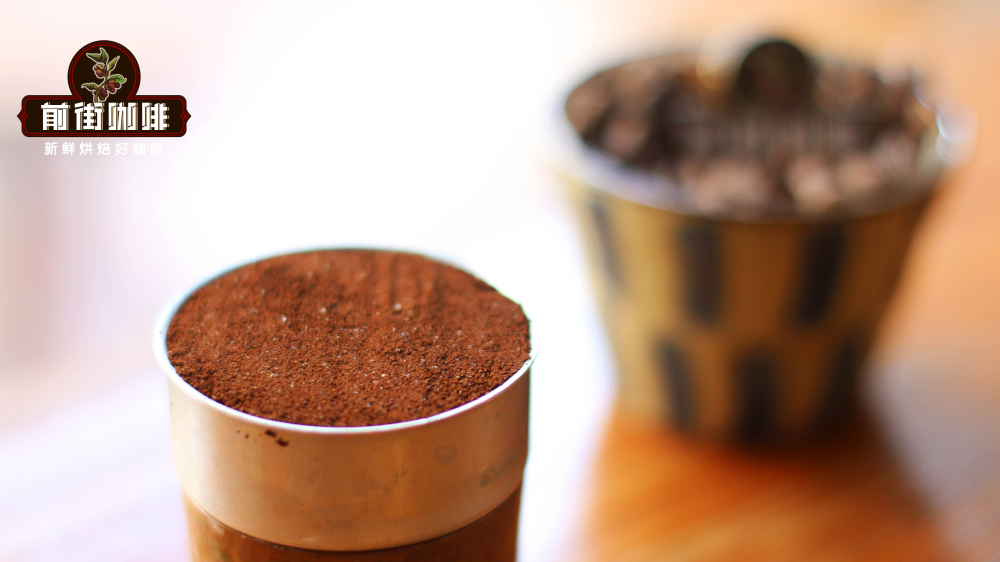
Since the cupping grind size can be verified and determined with the help of a standard sieve, the grind parameters corresponding to various brewing devices used daily can naturally also be listed one by one with specific data.
French press (No. 20 sieve pass-through rate 68-75%)
The extraction logic of the French press is quite close to cupping, also dominated by immersion, so the grind size it uses is highly consistent with the cupping standard. There is also another reason that pushes it toward coarser grinding—the French press uses a metal filter, and the gaps in the mesh are visible to the naked eye. Only when the particles are coarser can a more ideal filtration effect be achieved. Of course, different roast levels of coffee beans require corresponding adjustments in grind size: medium-light roasted beans can be ground finer (pass-through rate 72-75%, corresponding to EK43s setting 10.5), such as Front Street Coffee Fruit Ding Ding and Front Street Coffee Kenya; medium-dark roasted beans are suitable for a coarser grind (pass-through rate 68-71%, corresponding to EK43s setting 11), such as Front Street Coffee Golden Mandheling.
Pour-over coffee (No. 20 sieve pass-through rate 70-80%)
Pour-over is mainly a drip filtration method. Compared with immersion, water passes through the coffee bed in a shorter time, roughly between 1 minute 30 seconds and 2 minutes 30 seconds. If the grind is too coarse, it is easy to underextract and produce a weak flavor. Therefore, the particles required for pour-over should be finer than for cupping in order to fully release the coffee's flavor layers. Roast level also affects the choice: medium-light roast is suitable for a finer grind (pass-through rate 75-80%, corresponding to EK43s setting 10), while medium-dark roast is suitable for a coarser grind (pass-through rate 70-75%, corresponding to EK43s setting 10.5).
Cold brew ice drip coffee (No. 20 sieve pass-through rate 80-85%)
Cold brew and ice drip use cold water throughout. Cold water has weak penetrating power and extremely low extraction efficiency, so the coffee needs to be ground finer to compensate. But be sure to note that finer is not always better: if the powder is too fine, the cold brew liquid will become cloudy, and filtration difficulty will also increase; when used for ice drip, it will also cause water to accumulate in the coffee bed, preventing water from passing through smoothly. Therefore, a No. 20 sieve pass-through rate of 80-85% is a relatively suitable range—choose 85% if you want a rich taste, and 80% if you prefer a lighter one.
Note: Due to differences in coffee bean density and roast level, even when two beans with a large density difference are processed at the same setting on the same grinder, the resulting particle size may not necessarily be the same. For example, when grinding Front Street Coffee Yirgacheffe, the sieve pass-through rate corresponding to EK-43s setting 10 is 80%; while for Front Street Coffee Colombia Pink Bourbon, the pass-through rate at the same setting 10 is only 75%. So once you feel the grind size is not quite right, it is best to reconfirm the setting with the same beans.
Espresso machine
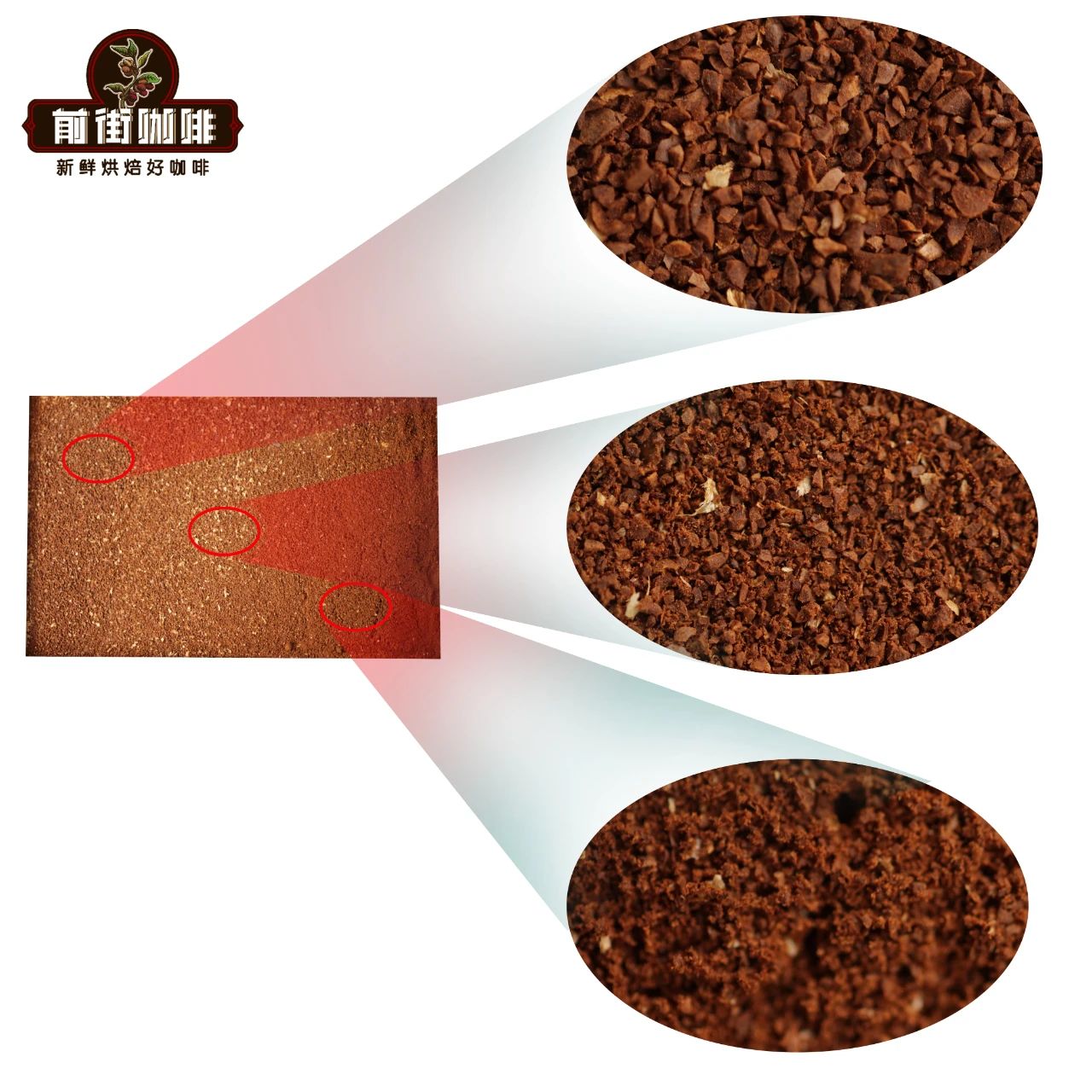
The grind size required by an espresso machine is extremely fine, and using a sieve to test it is not practical. Judging whether the grind is suitable mainly relies on extraction tests. Before opening every day, cafes need to dial in espresso, and a very important part of this is correcting the grind size. Espresso machines are extremely sensitive to changes in powder fineness. Sometimes a difference of only 0.1 setting can produce obvious differences in extraction time and flavor performance.
Therefore, determining the grind size for an espresso machine requires first establishing a stable espresso extraction recipe. Taking Front Street's approach as an example, its espresso extraction recipe is 20 g of coffee powder extracting 40 g of coffee liquid within 28 seconds (with an error controlled at plus or minus 1). First fix this recipe, then adjust the grind size to achieve it, and finally decide based on the flavor tasted whether further fine-tuning of the parameters is needed.
The above content is compiled by CoffeeHunters, a coffee news website.


