








How Much Does Brewing Temperature Change Coffee Extraction?
Front Street Coffee brewed four pots to test whether a 2°C difference matters: a light-roasted Ethiopian Yirgacheffe at 91°C and 93°C, and a dark-roasted Brazilian Queen's Estate at 86°C and 88°C. Each pot was measured for concentration, with extraction yield calculated, then compared by tasting. The ranges quoted in brewing guides are not arbitrary, since the endpoints of a range can pull a cup in different directions.
Results were judged on the balance of acidity and sweetness, layering and body, with higher and lower temperatures shifting each. The light roast and dark roast behaved differently, which is why Front Street Coffee recommends a temperature range per roast level rather than one fixed number. Daily production uses the roast level of the beans to pick the setting. The Yirgacheffe used came from the Gedeb Guddina processing station, dosed at 15g with a 1:15 ratio in a V60.
When brewing coffee, should the water temperature be 91°C or 93°C? Does this seemingly tiny difference really determine the flavor direction of a cup of coffee? Front Street Coffee often receives similar questions, because when we share extraction parameters, the water temperature is usually given as a range rather than a fixed value. To clarify this issue, we brewed a light-roasted Ethiopian Yirgacheffe and a dark-roasted Brazilian Queen's Estate separately using the lowest and highest values of the recommended water temperature, for a total of four pots of coffee, and measured the concentration one by one, calculated the extraction yield, and then compared the flavor differences through tasting. This article will fully present the experimental results, analyze the specific effects of higher and lower water temperatures on the balance of acidity and sweetness, layering, and body, and share how Front Street Coffee chooses the appropriate water temperature based on the roast level of the beans in daily production.
A friend once asked Front Street Coffee on the backend: "Is the brewing water temperature you mention 91°C or 93°C? With just a difference of two or three degrees, will it taste very different?"
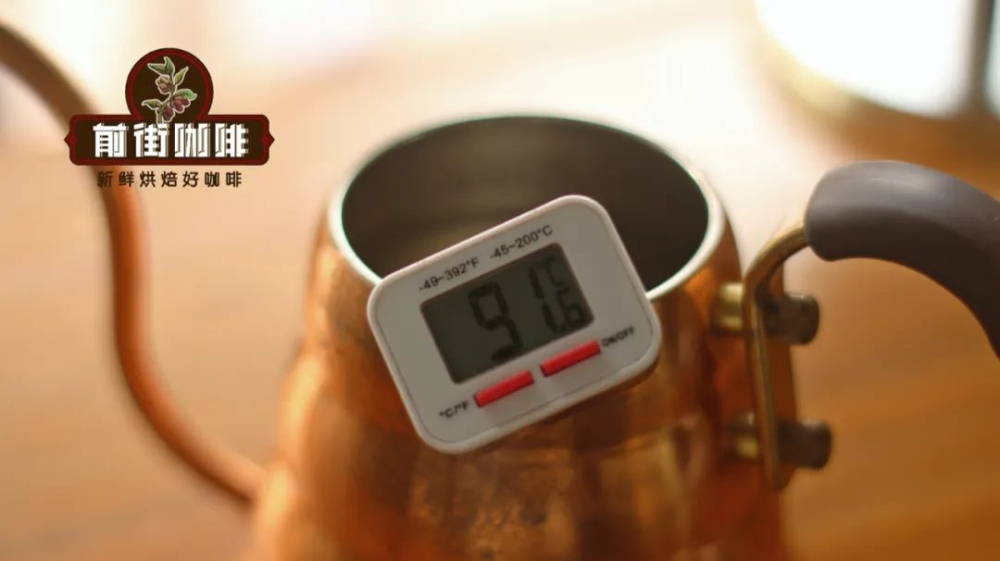
Friends familiar with Front Street Coffee may have noticed that when we share coffee extraction parameters, the water temperature is usually given as a range rather than a number precise to a single digit. For example, when brewing medium-light roasted beans, the range is 91°C–93°C; when brewing dark roasted beans, it is 86°C–88°C.

So does that mean any temperature within the range is fine? The highest and lowest temperatures differ by two or three degrees. Wouldn't the brewed coffee be noticeably different? With this question in mind, we immediately conducted an experiment to compare.
This experiment was divided into two groups for discussion. Using the minimum and maximum values of the generally recommended water temperature, we brewed one light-roasted bean (91°C and 93°C) and one dark-roasted bean (86°C and 88°C), for a total of four pots. The light-roast group used Yirgacheffe from the Ethiopian Gedeb Guddina processing station, while the dark-roast group used Brazilian Queen's Estate.
Guddina (light roast) brewing parameters:
Dose 15g; water-to-coffee ratio 1:15; grind size 80% passing a No. 20 sieve (ek43s 10 setting); V60 dripper; three-stage brewing method.
Brazilian Queen's Estate (dark roast) brewing parameters:
Dose 15g; water-to-coffee ratio 1:15; grind size 75% passing a No. 20 sieve (ek43s 10.5 setting); kono dripper; three-stage brewing method.
Samples were taken separately to test the concentration of the four cups of coffee and calculate the extraction yield:
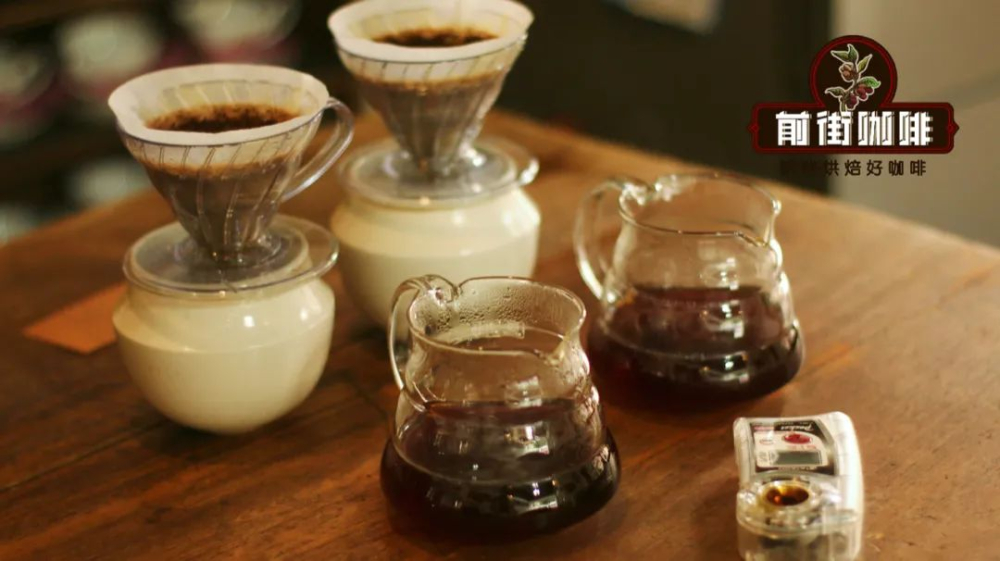
From the data, compared with the lowest water temperature, the highest water temperature increased the concentration by 0.04% (light roast) and 0.05% (dark roast), respectively, while the extraction yield increased by 0.56% (light roast) and 0.7% (dark roast), respectively. After reviewing the data, let us taste and compare the flavor performance of the two groups separately.
First, looking at the light-roast (Guddina) group, both the 91°C and 93°C cups showed a similar citrus profile, with soft citric acidity; the difference is that the 93°C cup had a more prominent sweetness, richer layering, and drank more like tea.
Now looking at the dark-roast (Queen's Estate) group, both cups had nutty and creamy flavors. The 86°C cup showed a faint,不明显 acidic note when hot, and was overall crisper than the 88°C cup; the 88°C cup had a fuller body and more sweetness, though it brought out a slight smoky note during the hot stage.
This difference occurs because the higher the water temperature, the easier it is to extract flavor substances from the coffee. That is to say, the higher the water temperature is raised, the faster soluble substances dissolve (just like dissolving granulated sugar in water at different temperatures). At the same time, an increase in temperature also makes flavor substances more active, and extraction efficiency rises accordingly.
Therefore, when brewing the vast majority of medium-light roasted coffee beans, Front Street Coffee chooses a water temperature of 91°C. Under the same parameters, this can greatly reduce the probability of accidents and ensure consistency in production. Of course, this is not absolute. In daily production, we have also found that under the same extraction parameters, brewing Kenyan coffee beans at 93°C can display richer layering and solid acidity.
For dark-roasted beans such as Indonesian Mandheling, Blue Mountain, and Brazilian Queen's Estate, which focus on a full-bodied mouthfeel and alluring sweetness, Front Street Coffee does not recommend using too "aggressive" a temperature. A water temperature of 86°C–88°C makes the coffee gentler, makes it less likely for bitterness to be extracted in large amounts, and will not make people drink a "pain mask."
- END - Front Street Coffee
No. 10 Baoqian Street, Yandun Road, Dongshankou, Yuexiu District, Guangzhou, Guangdong Province
The above content is compiled by CoffeeHunters, a coffee news website.


