







How Does Coffee Bean Density Change Your Grind Setting?
Coffee bean density and brittleness explain why one grinder setting yields different particle sizes across beans. Dense, low-brittleness beans from high altitudes and light roasts resist the burrs and shed fewer fines. Brittle, low-density beans from lower altitudes and darker roasts shatter easily into fines. Testing with a No. 20 sieve showed the same EK43 setting 10 giving 75 to 80 percent passing on one bean and 78 to 82 percent on another.
Adjust grind size bean by bean rather than trusting a single number. A denser bean such as a light-roasted Yirgacheffe needs a coarser setting or more burr force to reach a target passing rate, while a brittle medium-dark bean like Golden Mandheling may need a finer setting. Checking passing rates with a sieve keeps pour-over extraction consistent when the coffee changes.
Many pour-over enthusiasts have discovered when testing grind size with a sieve that the same grinder setting produces different passing rates across different bean varieties. Front Street Coffee recently received a similar question: why does particle size vary under the same grind setting? The core reason lies in the difference in bean density and brittleness—high-altitude, light-roasted beans tend to be harder and denser, producing fewer fines during grinding; low-altitude, dark-roasted beans are more brittle and easily shatter into fines. Only after understanding this principle can one adjust grind size for different beans. This article combines Front Street Yirgacheffe Gute Gute, Front Street Ethiopia Flower Queen, Front Street Granada Geisha and other medium-light roasted beans, as well as Front Street PWN Golden Mandheling, Front Street Brazil Queen's Estate Yellow Bourbon, Front Street Jamaica Blue Mountain No.1 and other medium-dark roasted beans, to provide specific EK43 settings and No. 20 sieve passing rate recommendations, helping coffee lovers achieve consistent results.
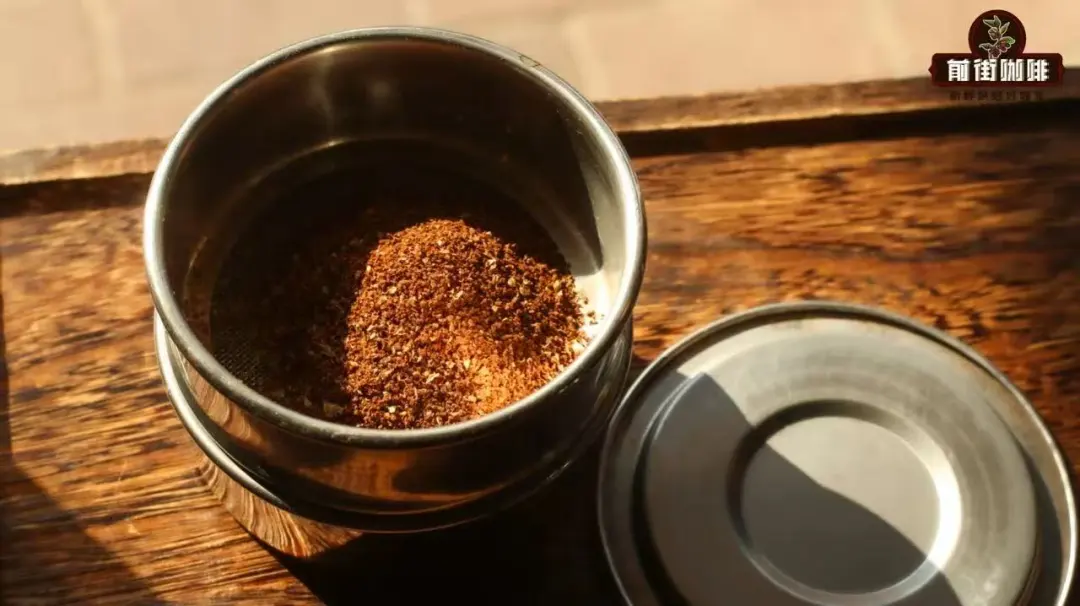
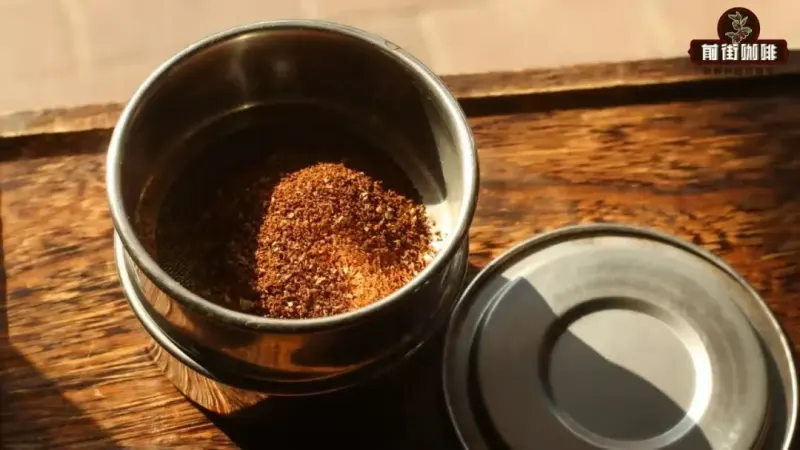
Recently a friend encountered a situation while using a sieve to test coffee grounds: with the same grinder and the same setting, grinding two different coffee beans yielded mismatched values. He used an EK43 at setting 10 to grind Bean A, and the No. 20 sieve passing rate fell between 75% and 80%; switching to Bean B while keeping the same setting, the passing rate rose to 78%–82%. With this question, he approached Front Street Coffee to figure out what factor was causing the discrepancy.
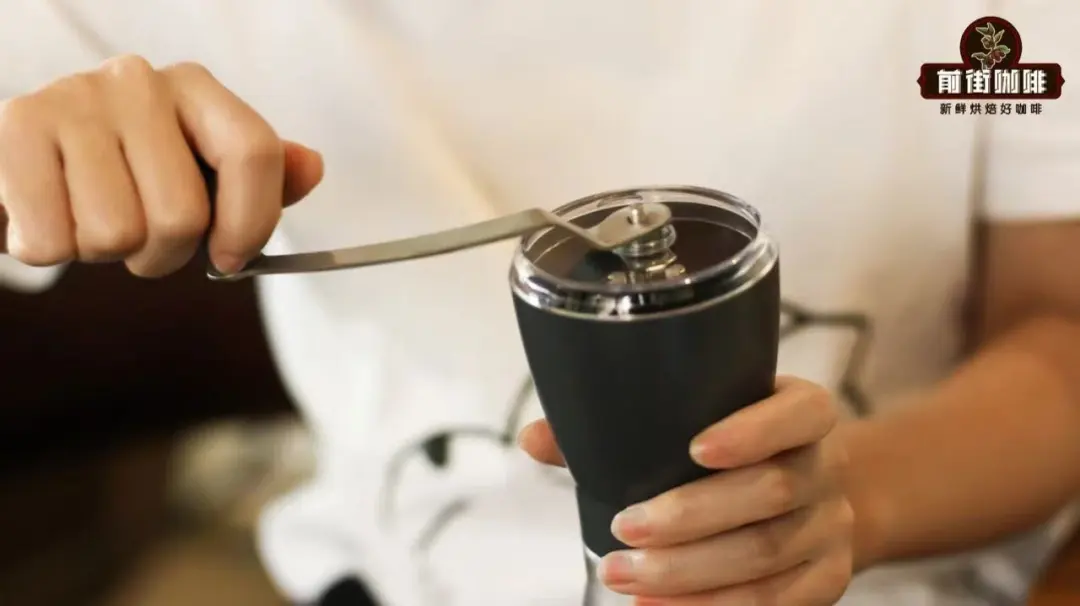
The reason for this deviation is that every bean has different density and brittleness. Density refers to the total amount of matter contained in a unit volume—the more matter in the same volume, the higher the density; the less matter, the lower the density. Brittleness can be understood simply as how easy it is to break a coffee bean apart: the higher the brittleness, the easier the bean breaks; the lower the brittleness, the more it withstands external force. As Front Street Coffee has always emphasized, different coffee beans differ in these two indicators. When a bean has high brittleness and low density, grinding becomes effortless; conversely, beans with low brittleness and high density are tough to grind. Those who use hand grinders should feel this deeply.

For example, grinding a bean with high brittleness and low density, the burrs turn without any effort; but switch to a bean with low brittleness and high density, and you need to exert all your strength to get the burrs moving. So a new question arises: how exactly do brittleness and density influence the particle size produced by grinding?
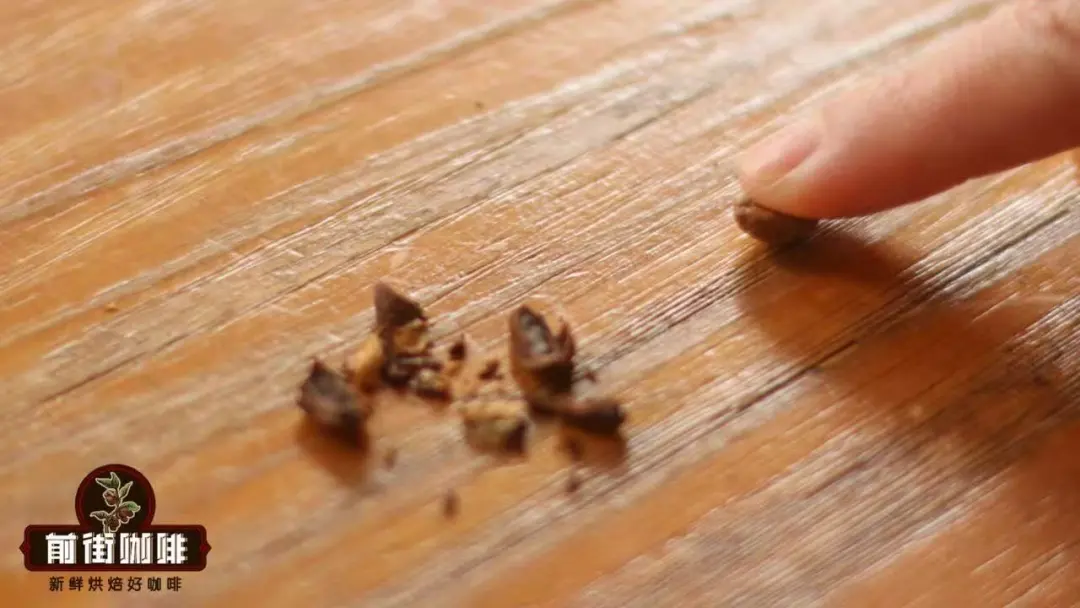
This principle is actually not hard to understand. Front Street Coffee uses cookies as an analogy. Different cookies have inherently different levels of brittleness. Bite into a particularly crispy cookie, and crumbs easily scatter everywhere; bite into a cookie that isn't as brittle, and far fewer crumbs fall. Ultimately, a highly brittle cookie shatters upon biting, naturally producing more debris; a less brittle cookie has stronger toughness and doesn't break easily, so biting it doesn't send out many crumbs. The grinding process of coffee beans follows the same logic.
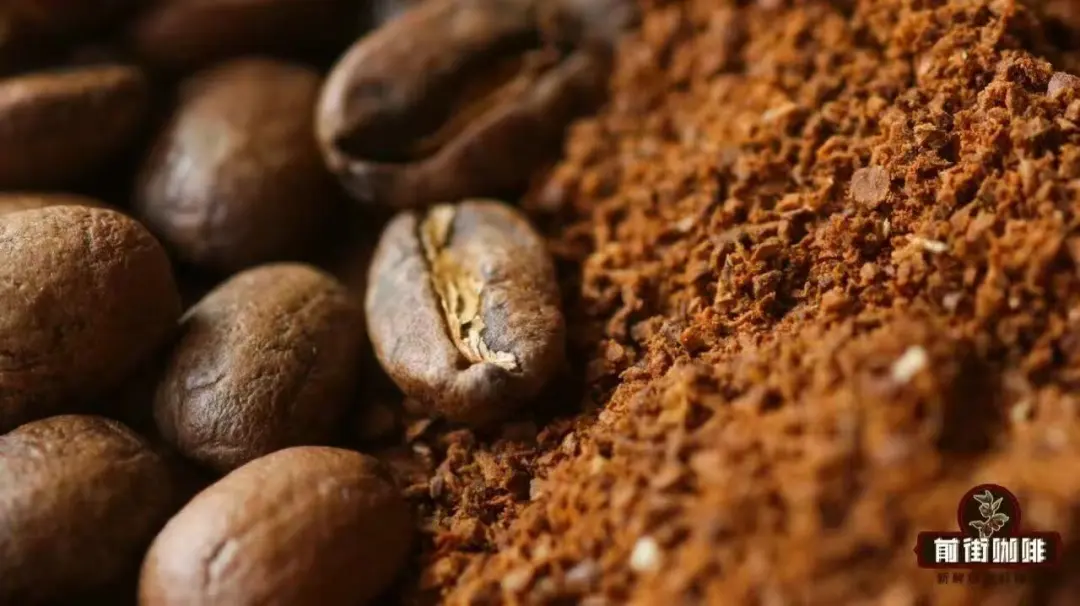
Therefore, with the same grind setting, when beans have higher brittleness and lower density, the ground particles tend to be finer—such beans break easily and produce more fines during grinding. Conversely, beans with lower brittleness and higher density produce ground particles that are slightly coarser overall.
The density and brittleness of coffee beans are influenced by multiple factors, including growing environment, processing method, and roast level. Generally speaking, the higher the growing altitude, the lighter the fermentation during processing, or the lighter the roast level, the higher the bean's density and the lower its brittleness; conversely, density decreases and brittleness increases.
Based on the above analysis, it becomes clear why the same setting produces particles of varying coarseness, and this is precisely one reason why different coffee beans require different grind sizes. When grinding medium-light roasted, high-density, fruit-forward beans such as Front Street Yirgacheffe Gute Gute, Front Street Ethiopia Flower Queen, and Front Street Granada Geisha, Front Street Coffee adjusts the EK43 to setting 10, corresponding to a No. 20 sieve passing rate of 75%–80%. This is done to increase the contact area between coffee grounds and hot water, allowing hot water to more fully extract the difficult-to-dissolve flavor compounds in high-density coffee grounds.
For medium-dark roasted beans with rich chocolate, hazelnut, and caramel notes, a full-bodied taste and almost no acidity—such as Front Street PWN Golden Mandheling, Front Street Brazil Queen's Estate Yellow Bourbon, and Front Street Jamaica Blue Mountain No.1—Front Street Coffee widens the grind to EK43 setting 10.5–11. The purpose is to control the proportion of fines while reducing the surface area of coffee grounds exposed to water, thereby lowering the possibility of over-extraction.
That concludes today's sharing from Front Street Coffee. If you have any other questions, feel free to leave a comment in the comment section. If you'd like to purchase specialty coffee beans, you can also visit Front Street Coffee's online Taobao and Tmall flagship stores for more details~
- END -
The above content is compiled by CoffeeHunters, a coffee news website.


