







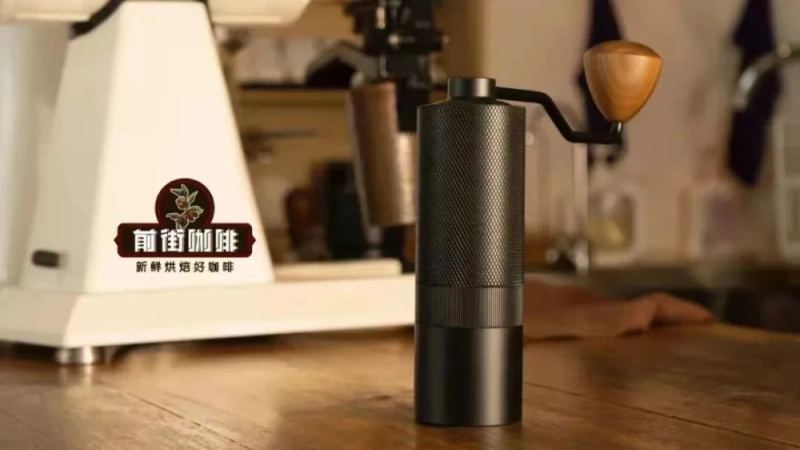
Grind size is one of the core variables in pour-over coffee extraction, directly affecting water flow rate, extraction yield, and the final flavor profile. But with conical burrs, flat burrs, ghost teeth, and other burr types on the market, along with the complex distribution of coarse, fine, and ultra-fine particles, how can you find the right grind size for your coffee beans? Front Street Coffee starts from how burr structure affects particle size, combines it with the practical method of standard test sieves, and systematically sorts out the grind pass-through rate standards for different roast levels and brewing methods, helping you determine grind parameters in a quantifiable way so every brew is more stable and controllable.
How fine should coffee beans be ground? This question directly relates to the quality of pour-over results. This time, Front Street Coffee starts with grinder selection and explains what role grind size actually plays in the pour-over process.
How do we choose a coffee grinder?
The burr is the most core component of a grinder, and different burr types directly change the particle size distribution of coffee grounds. There is a type of machine on the market that carries the name of a grinder but actually only has two blades, commonly known as a "bean chopper," which will not be discussed here. Currently, common burrs are mainly divided into three categories: conical burrs, flat burrs, and ghost teeth.
Conical burrs:
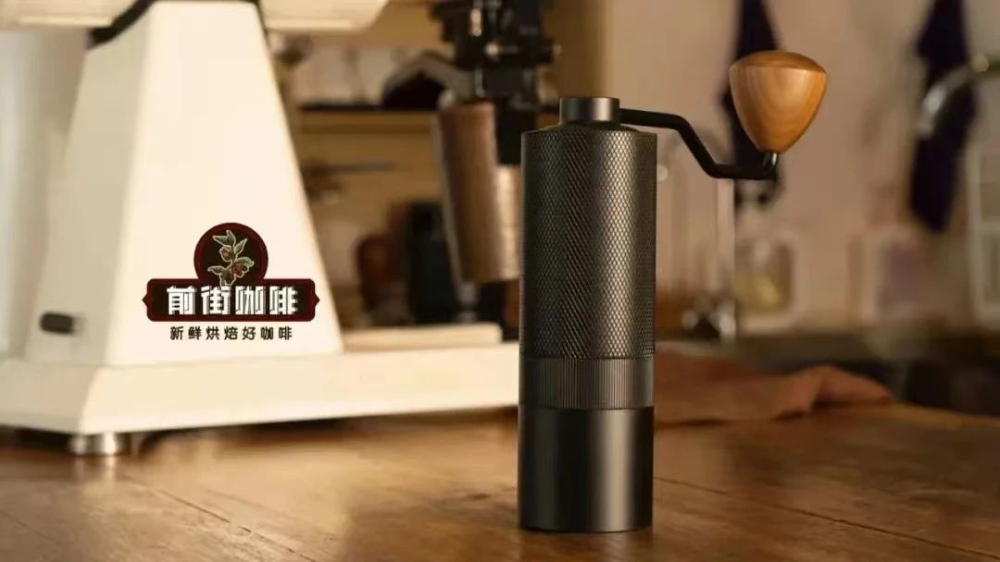
Conical burrs crush coffee beans into particles by grinding and pressing, so the grounds they produce are more block-shaped in appearance. Most manual coffee grinders use this type of burr. Because they work by "grinding," the moment the coffee beans are cracked, a lot of dust-like fines are produced, while the normal coffee particles are also irregular blocks, though overall uniformity is still acceptable. The grounds from conical burrs are closer to granular, and water has a longer path to penetrate, requiring more time to contact the coffee, so fewer soluble substances are released in the early stage of extraction and the concentration does not rise all at once; however, as extraction time lengthens, the woody part does not absorb much water, making it less likely to bring out off-flavors and astringency, so it is suitable for pour-over coffee grinding. It should be noted that the grinding performance gap between high-priced conical burrs and low-priced conical burrs is quite large.
Flat burrs:
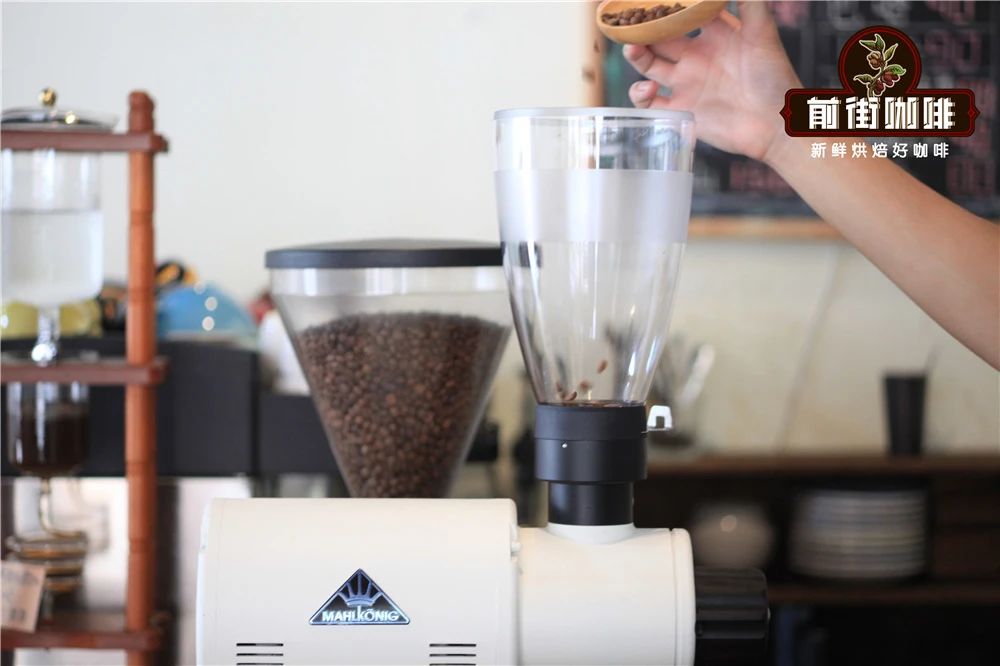
Flat burrs grind coffee beans into particles by cutting, mainly in flake or strip shapes. Their structure consists of two parallel burrs placed one above the other, with the bottom burr rotating to push coffee beans into the grinding zone. The weight of the coffee beans above affects the uniformity of feeding into the burrs, and during the pushing and squeezing process the beans collide with one another, increasing the proportion of fines. However, the flake-shaped grounds produced by flat burrs expose a large cell wall area and can raise coffee concentration and extraction yield in a relatively short time, with aroma release also being fast. Because the flat flakes are small in volume, the woody part is less likely to absorb too much water during long extraction, making off-flavors and astringency relatively controllable. Flat burrs are suitable for espresso grinding and can also handle pour-over.
Ghost teeth:
Ghost teeth break coffee beans into particles by grinding, and the shape is relatively close to spheres. They can grind one bean into several small spherical particles, but at the same time also produce more edge pieces, that is, fines. Overall, however, the variation among large particles is the smallest. Ghost teeth are suitable for pour-over grinding.
FrontStreet Coffee stores currently use the Baratza BG flat burr grinder and the Baratza Vario flat burr grinder for grinding single-origin coffee beans, while espresso beans are ground with the Pegasus 900n conical burr grinder.
The impact of coffee bean grind size on coffee extraction
Through multiple sets of brewing experiments, Front Street Coffee has verified a rule: the finer the coffee beans are ground, the denser the gaps between coffee grounds on the filter paper, the greater the resistance water encounters when passing through the coffee bed, the slower the flow rate, and the longer the extraction time. As a result, the extraction yield of soluble substances in the coffee increases, and the brewed coffee tastes stronger. Conversely, the coarser the coffee beans are ground, the larger the gaps in the coffee bed, the lower the water resistance, the faster the drip rate, and the lower the extraction yield, resulting in a flatter, less layered flavor performance.
How do we adjust the grind size for pour-over coffee?
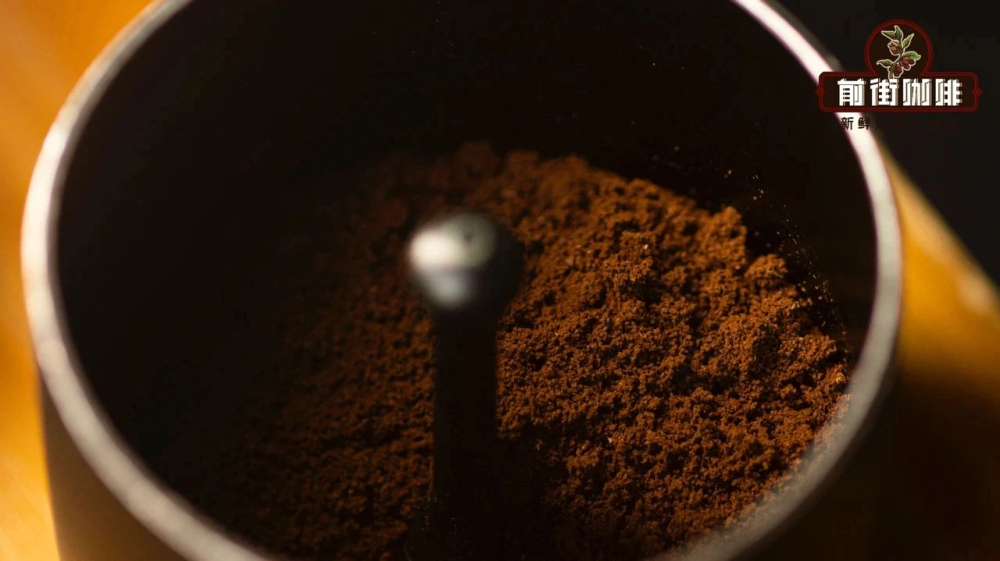
When grinding coffee daily, even coffee grounds that look uniform have a difference between the largest and smallest particles of at least 0.6 mm. Particles larger than 0.85 mm are usually classified as coarse grounds, and those smaller than 0.25 mm as ultra-fine grounds. If the proportion of these two types exceeds 40% of the total grounds, then that batch is not suitable for pour-over. Every time Front Street Coffee roasts a new batch of beans, when doing cupping and brewing comparisons, it uses a standard test sieve with a 0.85 mm aperture to sift, thereby determining the grind size to use for cupping and brewing. FrontStreet Coffee's reference sieve pass-through rates for grind size standards are as follows: cold drip > pour-over, siphon 80% > moka, American drip 75-80% > cupping 70-75% > French press 65-70%.
How do you use a standard test sieve to determine the appropriate grind size?
First prepare 10 g of coffee beans and do a rough grind. After grinding, pour them into the sieve, hold the three parts of the sieve firmly and shake left and right, letting the coffee grounds pass through the sieve into the collection container until no more grounds pass through.
Take another clean, dry container and place it on the electronic scale, then tare it to zero. Pour the coffee grounds from the collection container into it and weigh. A sieve pass-through rate of 70%-75% (7.0-7.5 g sifted from 10 g of grounds) corresponds to the most suitable grind size for cupping; a pass-through rate of 75%-80% (7.5-8 g sifted from 10 g of grounds) corresponds to the most suitable grind size for medium-light roasted coffee beans; and a pass-through rate of 65%-70% (6.5-7.0 g sifted from 10 g of grounds) corresponds to the most suitable grind size for medium-dark roast.
For more specialty coffee beans, please add the private WeChat of FrontStreet Coffee, WeChat ID: kaixinguoguo0925
The above content is compiled by CoffeeHunters, a coffee news website.


