







How Do Coffee Particles Affect Pour-Over Extraction?
Grind size sets the size and uniformity of coffee particles, which changes how fast water moves through the bed and how much flavor is extracted. Finer particles pack together on the filter, slow the drip, and raise extraction for a stronger cup; coarser particles let water pass quickly and leave a lighter, weaker brew.
Front Street describes judging the bed and drip, then calibrating with a 0.85mm test sieve to measure the pass-through rate. That reading helps set a suitable setting for Starbucks beans at different roast levels instead of guessing, since grind works alongside water temperature and coffee-to-water ratio.
Many coffee enthusiasts, after buying Starbucks coffee beans, often find themselves at a loss when faced with the grinder settings, worried that grinding too coarse or too fine will ruin the coffee's flavor. In fact, the grind size directly affects the speed at which water passes through the coffee bed and the extraction efficiency, making it a key variable that determines the success of a pour-over. Starting from Front Street's brewing practice, this article first explains the underlying logic of how grind size affects extraction, then describes the appearance of the coffee bed and the drip performance when the grind is too fine or too coarse, and finally provides specific steps for using a 0.85mm test sieve to measure the pass-through rate and precisely calibrate the grind setting, helping you find the right grind parameters for Starbucks beans of different roast levels.
Many people, after getting Starbucks coffee beans, find themselves in a quandary at home—not knowing how coarse or fine to grind, staring at the grinder settings and hesitating, afraid that grinding too coarse or too fine will make the coffee taste bad, so they ask Front Street how to judge. Front Street always mentions when discussing pour-over coffee that the key variables affecting extraction and flavor direction include water temperature, grind size, and coffee-to-water ratio. Among these, the grind size determines the size and uniformity of the coffee particles, directly changing the efficiency with which water extracts flavor substances from the coffee grounds. So how do you find the right grind size for different coffee beans during daily brewing? Below, Front Street will discuss how to adjust the grind size for pour-over coffee.
How Grind Size Affects Coffee Extraction
Through multiple brewing comparisons, Front Street has found that the finer the grind, the more easily the coffee grounds form a dense pile on the filter paper, increasing the resistance water encounters, slowing the flow rate, and prolonging the extraction time. As a result, the extraction yield of soluble substances in the coffee is higher, and the brewed flavor is more intense. Conversely, the coarser the grind, the larger the gaps between particles, the less hot water contacts the coffee grounds, the resistance decreases, the coffee liquid drips faster, the extraction yield is lower, and the flavor is naturally weaker. So what happens during brewing when coffee beans are ground too fine or too coarse?
What Happens When Pour-Over Coffee Beans Are Ground Too Fine?
In terms of particle appearance, the coffee grounds are overall smaller, the particles are closer together, and it is difficult for water to pass through, so the drip time is significantly prolonged. A finer grind makes the particles smaller, and the coffee grounds tend to become mushy after absorbing water. After brewing, the coffee bed often lacks clear particle outlines and appears mostly sticky.
What Happens When Pour-Over Coffee Beans Are Ground Too Coarse?
In terms of particle appearance, the coffee grounds are overall larger, the particles are more widely spaced, and water passes through the bed more easily, so the filtration time is shortened. A coarser grind makes the particles larger, and after brewing, the coffee particles in the bed are clearly visible, and it is difficult to form a flat, complete coffee bed, often resulting in gaps.
The Impact of Grind Size on Coffee Extraction
The grind size not only determines the shape and size of the crushed coffee but also the surface area. The finer the coffee is ground, the larger the total surface area, the greater the contact area between water and coffee, and the more substances can be extracted. The increased surface area also provides more channels for carbon dioxide inside the coffee beans to escape.
How to Adjust the Grind Size for Pour-Over Coffee
During daily grinding, what appears to be uniformly ground coffee can have a difference between the largest and smallest particles of at least 0.6mm. Typically, particles larger than 0.85mm are classified as coarse, and those smaller than 0.25mm as extra fine. If these two types account for more than 40% of your total coffee grounds, they are not suitable for pour-over. If you don't understand, it's okay! Front Street Coffee (FrontStreet Coffee) suggests buying a test sieve with a 0.85mm aperture.
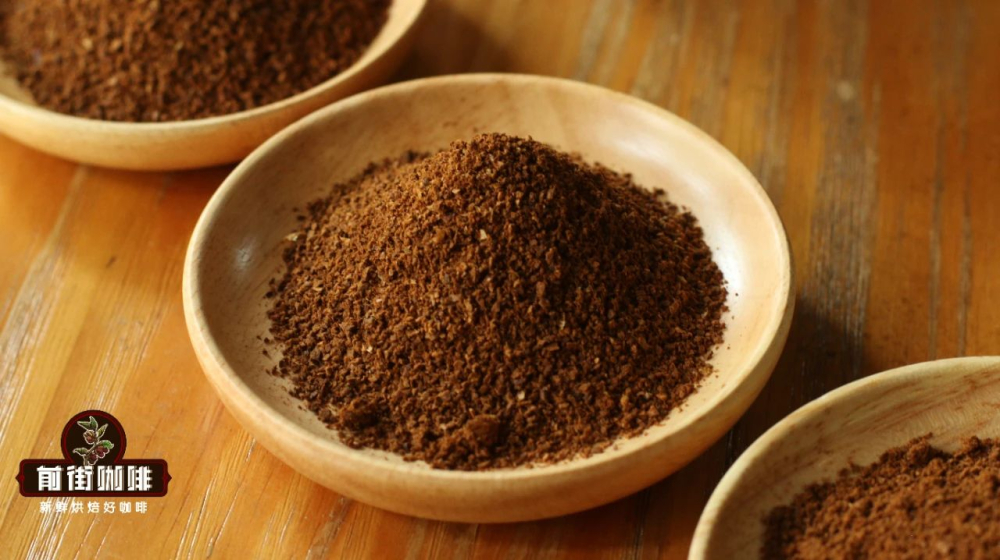
How to Determine Coffee Grind Size with a Sieve?
Weigh 10g of coffee beans, first adjust to an approximate grind size and grind into powder, pour into the sieve and sift, weigh the sifted powder (be sure to sift until no more powder passes through), a pass-through rate of 75%-80% (10g of powder yields 7.5-8g) corresponds to the most suitable grind size for medium-light roasted coffee beans, and a pass-through rate of 65%-70% (10g of powder yields 6.5-7.0g) corresponds to the most suitable grind size for medium-dark roasts. If it exceeds the suitable pass-through rate, adjust the grind coarser; if it falls short of the suitable pass-through rate, adjust the grind finer.
The above content is compiled by CoffeeHunters, a coffee news website.


