







Search Results for: multilayer heart

From Heart to Swan: An Advanced Coffee Latte Art Tutorial, Mastering the Shaping Techniques of Multi-Layer Heart, Rosetta, and Tulip
Want to make coffee-shop-quality latte art at home? This tutorial will take you from the basics to advanced techniques. The article first emphasizes the importance of steaming milk, and points out that integration is the key step that determines whether the milk coffee has an even texture. Then, we break down the specific techniques for five classic patterns—heart, layered heart, rosetta, tulip, and swan. From choosing the pour point and controlling the flow to the timing of bringing the cup back and the finishing motion, every step is explained in detail. Whether you are a complete beginner or an advanced player looking to break through a plateau, you will find practical tips and practice directions here. [more…]
From Surfactants to Foam Stability: A Beginner's Guide to Latte Art and the Principles of Fluid Dynamics
Latte art is a romantic expression of a barista's skill, with white milk foam blooming into heart or leaf patterns on the surface of dark brown espresso. Latte art is divided into two types: free-pour latte art and etched latte art created after pouring. The wonder of the former lies in the pattern forming simultaneously with the pour, while the latter offers a wider range of designs because the stable foam allows for leisurely drawing. From a physics perspective, the core of latte art lies in surfactants—molecules that possess both hydrophilic and hydrophobic groups, capable of stabilizing the interface between air and liquid to form lasting foam. Milk proteins and coffee lipids act together as surfactants, enabling the two micron-scale foams to remain clearly separated for a long time after mixing, thereby allowing the pattern to persist. This article will guide you from the basic principles of surfactants to understand espresso's crema, the formation of hot milk foam, and why foam mixing rather than liquid mixing is the key to successful latte art, while also revealing the widespread applications of surfactants in daily life and industry. [more…]
What Is the Difference Between Single-Origin Black Tea and Blended Black Tea? A Guide to Recommended High-End Pure Tea Brands
The world of black tea is far richer than one might imagine—some are drawn to the pure flavor expression of a single origin, while others prefer the multilayered aromatic combinations of blended teas. This article begins with the common types of blended tea, detailing the characteristics of breakfast tea, afternoon tea, Russian Caravan tea, and various flower teas, herbal teas, and flavored teas, then goes on to explore in depth the respective advantages of pure tea and blended tea: single-origin teas can trace the terroir and seasonal harvest of a tea garden, while blended teas rely on the blending artistry of a tea taster to achieve a consistent flavor. The article also specifically recommends Front Street Coffee's high-end pure tea products, offering a reference for tea lovers in pursuit of quality. [more…]

Kenya AA Washed Coffee Bean Grade Classification and Pour-Over Flavor Analysis: From the K72 Processing Method to Brewing Parameters in Detail
Kenya AA is a star grade among African specialty coffees, renowned for its vivid flavors of cherry tomato and dark berries, juicy acidity, and multi-layered mouthfeel. This article will begin with Kenya's coffee grading standards, the terroir conditions of its producing regions, and the signature K72 double washed processing method, systematically analyzing the characteristics of AA-grade coffee beans. Using a specific Front Street Kenya Asaliya coffee bean as an example, it will share pour-over parameters and extraction techniques for light-roasted Kenyan beans, helping coffee enthusiasts fully understand the flavor logic of Kenyan washed AA from green bean to cup. [more…]

Panama Hacienda La Esmeralda Geisha Cold Drip Brewing Guide: Green Label Flavor Analysis and Price Reference
Geisha coffee is renowned worldwide for its elegant floral aroma and complex fruity notes, but its high price also deters many enthusiasts. From the perspective of Front Street, this article reviews the historical origins of the Geisha variety, the grade differences between Emerald Estate's Red Label and Green Label, and the reasons why Geisha prices remain so high. At the same time, Front Street will use Emerald Green Label Geisha as an example to demonstrate in detail the brewing parameters and operating steps for cold drip coffee, and share the white floral, orange, blueberry, and green tea flavors this bean presents under low-temperature extraction. If you are planning to buy a high-quality Geisha, or want to try making cold drip at home, this article is worth reading. [more…]
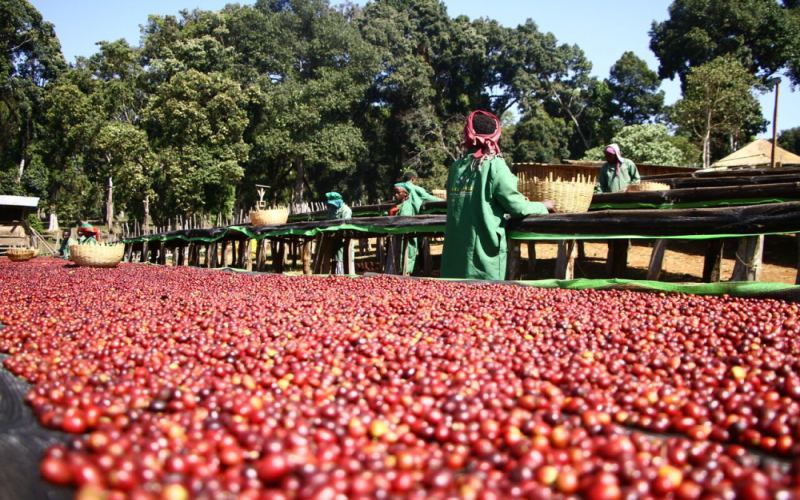
Ethiopia Guji Hambela Natural G1 Flavor Analysis: Hualgui Coffee Pour-Over Taste and Origin Background
Geisha—this Ethiopian natural bean that has drawn countless coffee lovers into the specialty world—what is its true origin and flavor? This article begins with the evolution of the Sidamo and Guji growing regions, sorts out the background of the Hambela farm and METAD, and explains in detail how Geisha went from a TOH champion to being named by batch. At the same time, Front Street Coffee brings the cupping and pour-over performance of the latest harvest Geisha 8.0: guava, jackfruit, and floral notes in the dry aroma; dried mango, passion fruit, and a juicy mouthfeel on the palate; and, as the temperature changes, the clean sweetness of peach and a black tea finish. Whether you are a beginner just getting into single-origin coffee or a veteran eager to understand batch differences, you will find useful information here. [more…]

Kenyan Coffee Bean Grading and Variety Analysis: Flavor Differences Between AA and AB Grades and Brewing Guide for Two Front Street Coffee Beans
Kenyan coffee is renowned for its multilayered mouthfeel and juicy acidity, with its flavor core stemming from the two major varieties SL28 and SL34, as well as the unique K72 washed processing method. This article systematically reviews the history of variety selection and breeding, cultivation patterns, trading methods, and flavor differences across producing regions of Kenyan coffee, and provides a detailed interpretation of the origin information, flavor characteristics, and brewing parameters of Front Street Coffee's two Kenyan beans, Sathini and Azalea, helping coffee enthusiasts gain a more comprehensive understanding of the allure of Kenyan coffee. [more…]

Sidamo Flower Queen Coffee Bean Grade Analysis: Guji and West Arsi Region Pour-Over Flavor and Brewing Parameters
In Ethiopia, besides Yirgacheffe, the Sidamo region has also attracted much attention in the specialty coffee circle in recent years. In this article, Front Street Coffee sorts out the terroir conditions and processing methods of the Sidamo region, and focuses on the Guji Hambela Haru series and West Arsi coffee beans. From the origin of the 2017 TOH champion Haru to the flavor performance of Haru 8.0, and then to the G1 grade natural processing of Arsi, it also discloses the roasting curves and V60 brewing recipes for both beans, helping coffee lovers fully understand the flavor levels and brewing approaches of these two Sidamo coffees. [more…]

Geisha Coffee Roasting Curve and Flavor Analysis of Processing Methods: From Hacienda La Esmeralda to Front Street Brewing Parameters
Geisha coffee is renowned for its jasmine aroma, citrus-honey sweetness, and clean, delicate mouthfeel, often described as a coffee that doesn't taste like coffee. This article centers on roasting approaches for Geisha coffee, explaining why Front Street Coffee chooses a medium-light roast to preserve the fine acidity and floral-fruity aromas, and detailing the flavor differences of Geisha from producing regions such as Panama, Costa Rica, and Colombia. It also outlines the process characteristics of washed and natural processing methods, shares Front Street's grinding size, water temperature, coffee-to-water ratio, and three-stage pouring technique for brewing Geisha, along with practical advice on coffee bean freshness and the resting period, making it suitable for coffee enthusiasts to gain a systematic understanding of Geisha coffee. [more…]

A Complete Guide to the Flavor Profile and Pour-Over Techniques of Guatemala Antigua La Flor del Café Coffee Beans
Guatemala, as a star coffee-producing origin, nurtures layered specialty coffees through its volcanic soil and microclimates. Among them, the Flor de Guatemala coffee beans from the Antigua region, under strict quality control by Raminita, are known for floral aromas, citrus acidity, and honeyed sweetness. This article starts with a brief history of Guatemalan coffee, explains in detail the terroir conditions of the Antigua region, the variety and processing method of Flor de Guatemala beans, and includes Front Street Coffee's roasting analysis and V60 brewing parameters, taking you through a comprehensive understanding of this bean's flavor code, so you can brew a delicious Guatemalan coffee at home too. [more…]

What Is the Connection Between Arabica and Mandheling? An Analysis of the Quality of Golden Mandheling
In coffee shops, we often hear the word "Arabica," but what exactly does it represent? The world's commercial coffee is mainly divided into three major categories: Arabica, Robusta, and Liberica, and Mandheling actually also belongs to the Arabica category. From the perspective of Front Street Coffee, this article systematically sorts out the origin of Arabica, the characteristics of major varieties such as Typica, Bourbon, Catimor, and heirloom varieties, and provides an in-depth analysis of Golden Mandheling's varietal classification, place of origin, and wet-hulling process, helping coffee enthusiasts clarify the relationship between Mandheling and Arabica, while also answering the question of whether Golden Mandheling can really be considered a good coffee. [more…]

Flavor Characteristics of Major Coffee Regions Around the World: A Guide to Tasting Profiles and Mouthfeel from Africa to the Americas
Even different plots within the same estate can produce coffees with distinct flavors, let alone major regions spanning continents. The three great specialty coffee belts—Asia, Africa, and Central & South America—nurture vastly different flavor profile characteristics due to terroir differences: Ethiopia's floral and citrus notes, Indonesia's rich herbal undertones, and Central America's balanced chocolate character, each with its own following. Before deciding to put a coffee on the shelf, Front Street Coffee repeatedly roasts and cups samples from each region, selecting the most representative lots before recommending them to consumers. This article systematically organizes the flavor characteristics and taste descriptions of major coffee-producing countries worldwide, covering Ethiopia and Kenya in Africa; Indonesia and India in Asia; Guatemala, Costa Rica, and Panama in Central America; and Colombia and Brazil in South America, providing coffee lovers with a complete flavor profile reference. [more…]

Latte Art Layered Heart Tutorial: A Detailed Guide to Milk Foam Thickness, Flow Control, and Pitcher Movement Techniques
The multi-layered heart is a variation pattern within heart-shaped latte art that boasts a strong sense of layering. Its operational foundation is very close to that of the large桃心, but it has stricter requirements in details. In this article, Front Street Coffee will guide you through the process of creating the large桃心 and focus on breaking down the key differences of the multi-layered heart in milk foam thickness, milk pouring flow rate, and pitcher manipulation techniques. Through the combination of pictures, text, and video explanations, we aim to help coffee enthusiasts who have mastered the large桃心 to smoothly advance to the multi-layered heart latte art with fine lines and distinct layers. [more…]

Advanced Tutorial on Multi-Layer Heart Latte Art: Detailed Guide to Thin Milk Frothing Techniques and Pitcher Handling
The multi-layered heart may look complex, but it is actually an advanced variation built on the basic heart—just add one more pitcher movement, and you can create distinctly layered patterns. However, it places higher demands on milk foam thickness, the amount of milk used for integration, and the skill level of your technique. In this article, Front Street Coffee breaks down the entire process of making a multi-layered heart in detail: from precise control of steaming milk foam to 6/10 full, to a comparative recommendation of two pitcher-holding postures, and then to the flow rate and cup-return rhythm in the actual pouring, helping you transition smoothly from the basic heart to the multi-layered heart and laying a solid foundation for subsequent complex patterns such as the wheat ear and swan. [more…]

Latte Art Beginner Tutorial: Detailed Guide to Milk Foam Requirements, Pouring Techniques, and Step-by-Step Instructions for the White Heart Pattern
Latte art is one of the techniques that many coffee enthusiasts are most eager to master after stepping into the world of espresso. Common patterns include the solid white heart, multi-layered heart, swan, tulip, and rosetta, among which the solid white heart is regarded as the most basic yet most skill-testing design. Based on the latte art teaching experience of Front Street Coffee, this article systematically explains the two major prerequisites for making a solid white heart—a qualified espresso and milk foam suitable for pouring—and breaks down in detail the key steps such as the amount of milk used for incorporation, the pouring point for forming the pattern, and the injection technique. It also introduces how espresso beans such as Front Street Classic Blend perform in latte art practice, helping beginners stably produce espresso with golden crema at home and laying a solid foundation for subsequent latte art. [more…]

Latte Art Basics Tutorial: Step-by-Step Guide to Making a Large Heart Pattern and Detailed Explanation of Common Mistakes
Want to learn latte art but don't know where to start? In this issue, Front Street Coffee brings you a tutorial on the most basic and classic pattern: the large heart. The large heart is the first pattern that most beginners successfully pour, and it is also the foundation for many complex designs. Mastering it requires first getting through several fundamentals: espresso extraction, milk frothing, pitcher holding, and integration. This article will break down in detail the milk foam thickness, the amount of integration, the choice of pouring point, the milk-pouring technique, and the finishing touches, and will also include multiple photos of failed cases with cause analysis to help coffee lovers avoid detours and pour a beautiful, centered, full heart. [more…]
Beginner Latte Art Lesson 1: A Detailed Guide to Milk Foam Thickness, Pouring Integration, and Finishing Techniques for the Large Heart Pattern
If you want to learn latte art, the large heart is the most suitable first pattern for beginners, and it is also the foundation for many complex patterns that follow. In this tutorial brought to you by Front Street Coffee, we break down the key points of making a large heart one by one, from the standards for steaming milk foam and controlling the amount of blending, to choosing the pouring point and the finishing technique. The article also includes images of common failure cases and analysis of their causes to help beginners quickly identify problems. Whether you are just starting out with latte art or always fall short at the finishing stage, this content will give you clear guidance. [more…]

Latte Art Tutorial: Operational Differences Between Leaf Patterns and Layered Hearts, and a Detailed Guide to Creating Latte Art
After mastering the basic heart and the more advanced multi-layered heart, the leaf pattern is another hurdle to overcome in latte art practice. It may look similar to the multi-layered heart, but in reality there are clear differences in milk foam condition, the amount of integration, the pour point, and the swinging method. This article will break down the key points of making leaf latte art one by one, from milk foam thickness, the amount of milk used for integration, the pour point for creating the pattern, and swinging techniques to the complete hands-on steps. It will also explain the impact of different pitcher capacities on the process, and how to find the right position for creating the design by adjusting the amount of integration. Front Street Coffee suggests first practicing repeatedly with dish soap and soy sauce, and once the technique is proficient, then using milk and espresso for real practice, so you can pour a leaf pattern with clear stripes and a beautiful finish. [more…]

From Basics to Advanced: Practical Latte Art Techniques and Key Points for Tulip, Leaf, and Multi-Layer Heart Patterns
Latte art may seem difficult, but by mastering key details you can significantly improve your success rate. This article systematically explains the basic steps of latte art and the approach to achieving common patterns, from milk foam thickness and pouring techniques to pattern selection. Front Street Coffee will share how to judge the standards of a quality latte art pour, and how to gradually master patterns such as tulips, rosettas, and multi-layer hearts through repeated practice of the basic heart, flexibly adjusting the pour point and finish. Whether you are a beginner or a barista hoping to break through a plateau, these practical tips can help you reduce failures and achieve consistent results. [more…]
Coffee Latte Art Basics: Analysis of the Pouring Techniques and Practical Key Points for the Rosetta and Layered Heart Patterns
Front Street Coffee's latte art class continues, and this session focuses on creating the leaf pattern. Although the leaf may seem quite difficult, its core technique is largely similar to the layered heart—both rely on evenly swaying the milk foam to form fine stripes, with the only difference being that the leaf has one extra step of dragging backward. As long as you master the swaying rhythm of the layered heart, the leaf can also be picked up easily. Next, we will move into the hands-on sharing, starting from integrating to six-tenths full and pouring milk foam at the center point, emphasizing that you should first pause to create two leaf lobes and then sway evenly backward; when pulling back while swaying, the pitcher spout needs to be raised appropriately by 0.5–1 cm to make the stripes clearer, and near the edge of the cup, lower the pitcher spout first to pour out more milk foam to form a heart, then raise the pitcher spout to finish, so the final result will look more beautiful. [more…]