







What Makes Antigua Coffee From Guatemala Taste So Distinct?
Antigua coffee from Guatemala is grown in volcanic soil at high altitude, which shapes a cup with floral aroma, citrus acidity, and honey sweetness. The La Flor del Café beans are quality-controlled by La Minita and processed to highlight that balance. Brewing them as pour-over, a V60 with medium grind and steady pours, brings out the layered flavor most clearly.
Coffee reached Guatemala around 1750 and became a major cash crop by 1845, with German colonists expanding the industry in the late 19th century. Today most production sits in the south, where the volcanic slopes of the Madre range give Strictly Hard Bean lots their plump size, pleasant mouthfeel, and balanced acidity.
Guatemala, a star origin in the coffee world, nurtures layered specialty coffees thanks to its volcanic soil and microclimates. Among them, the Flora coffee beans from the Antigua region, tightly quality-controlled by La Minita, are known for floral aromas, citrus acidity, and honey sweetness. This article starts with a brief history of Guatemalan coffee, details the terroir of the Antigua region, the varieties and processing methods of Flora beans, and includes Front Street Coffee's roasting analysis and V60 brewing parameters, giving you a comprehensive understanding of this bean's flavor code so you can brew a delicious Guatemalan coffee at home.
Every coffee-producing region in Guatemala exudes a distinctive flavor, and the president of Maruyama Coffee once publicly stated that if he could only choose coffee beans from one country, he would choose Guatemala without hesitation. The reason Front Street Coffee continues to explore coffee from origins around the world stems from one belief: only through continuous tasting and comparison can one more thoroughly understand the flavor differences between regions, thereby helping coffee lovers more clearly find the taste they prefer.
A Brief History of Guatemalan Coffee Beans
In 1750, coffee trees were introduced to the land of Guatemala, and by 1845, coffee had risen to become an important cash crop for the country. In the late 19th century, German colonists promoted the development of the local coffee industry. Today, coffee production is mainly concentrated in southern Guatemala. The slopes of the Madre volcano provide excellent natural conditions for growing high-quality coffee beans, and coffee trees grown at high altitudes are full of vitality. Compared with other coffee varieties, tasters prefer this spicy mixed flavor. The strictly hard coffee beans produced locally are especially precious, with plump beans, a pleasant mouthfeel, and balanced acidity. In addition, the large bean size also makes Guatemalan coffee highly regarded. The coffee industry once brought prosperity to this country and still occupies a dominant position in the national economy. Unfortunately, the domestic political situation is not friendly to coffee growers, while high yield is usually regarded as a symbol of a country's overall economic prosperity.
Guatemala is home to numerous volcanoes, high mountains, and plateaus, producing high-quality Central American high-grown strictly hard beans. The country's main coffee regions include Antigua, Huehuetenango, Atitlan, Coban, Fraijanes, San Marcos, Acatenango, and others, and all the coffee beans produced are Arabica varieties.
The coffee industry has always been Guatemala's economic lifeline, with half of the country's workforce engaged in agriculture-related work. The country's coffee regions possess tropical rainforests, volcanic geology, and highland valleys, and with proximity to both the Atlantic and Pacific Oceans, they interweave more than 300 microclimates, creating unique flavor expressions in each region. Among them, the coffees of Antigua and Highland Huehue are the most famous. Because the coffees from these regions enjoy exceptional climatic and geographic conditions, their fine fruit acidity and multilayered rich flavors are widely praised. Most Guatemalan coffee is graded by altitude, and the green beans are mostly washed.
Introduction to the Antigua Coffee Region
The Antigua area is considered the birthplace of Guatemalan coffee. Antigua sits in a valley surrounded by three volcanoes (Agua, Fuego, and Acatenango), among which Volcan Fuego is an active volcano whose irregular eruptions bring abundant minerals to the soil of this region; at the same time, a large amount of primary forest is preserved in the region, making the soil rich in potassium ions. Together, these factors give the coffee trees in the Antigua region a steady supply of nutrients and healthy growth. The climate here is mild year-round, and humidity remains stable at 65%. Such conditions make Antigua the most suitable place for growing coffee, and because the local transition between dry and rainy seasons does not bring extreme climate changes like those in other regions, coffee can grow slowly in the valley at altitudes above 1,500 meters. Because the Antigua region is a closed valley, it avoids severe soil erosion. All these exceptional environmental factors have allowed Antigua to maintain consistently excellent quality.
Front Street Guatemala Antigua coffee has volcanic soil, and the special soil gives this coffee a distinctive flavor, with an extremely alluring smoky note and a weave of rich acidity and excellent sweetness. The coffee beans have exceptional growing conditions and can produce a complex and delicate volcanic coffee, with the aroma of ripe berries, strong and thick, with a slightly acidic mouthfeel, while a smooth bitterness and a charming tobacco note make the overall taste even richer and fuller.
Altitude: 1,500–1,700 meters
Annual rainfall: 800–1,200 mm
Average temperature: 18–22°C
Relative humidity: 65%
Harvest season: January to mid-March
Soil: volcanic pumice
Main drying method process: sun drying
Shade tree species: Gravilea
Main terrain: volcanoes, valley areas
Coffee profile: elegant and balanced in aroma, with abundant fragrance and an extremely sweet taste
La Minita Coffee Cultivation
La Minita is known for excellent cultivation techniques, processing craftsmanship, and extremely strict quality control. Following these standards, they entrust the largest local washing station in Antigua, Las Pastores, to process the green beans, and name this coffee Flora. In addition to retaining the original regional flavor, the dry aroma of this Front Street Guatemala Flora coffee has a strong floral and tea fragrance; on the palate it presents lime-like acidity and berry notes, then turns into a honey finish. Excellent cleanliness and rich layering are the characteristics of this Flora.
La Minita does not use insecticides, and thanks to the climate and altitude formed by the estate's geographic advantages, local conditions limit the number of pests, and the few pests do not have much impact on the coffee trees. At the end of the rainy season, the coffee cherries also ripen soon after; the green fruit begins to turn red, but the ripening process of coffee cherries is very slow and uneven, unlike flowering, which is rapid and uniform, so harvesting must be handled more carefully, picking only fully ripe dark red cherries.
The fruit produced by one tree may be harvested in as many as 5 pickings depending on ripeness. The estate conducts soil tests twice a year to decide how to fertilize. La Minita Estate is very cautious when using products that can increase yield, and fertilizes about 3 times a year.
In addition, the application of trace elements such as zinc, boron, and copper can provide more nutrients to the coffee trees and prevent disease. Such scientific cultivation management has created the excellent flavor performance of Flora coffee and its reputation for consistent quality over the years. Following La Minita's famous gatekeeping procedures, the entire process of Flora coffee from planting to packaging is strictly supervised. These complicated procedures are all to ensure that the Pastores processing station provides only the best quality and to strictly control the estate's standard operating procedures.
Flora is a brand bean under La Minita, with its producing region located in Antigua, Guatemala, a highland surrounded by active volcanoes at an altitude of 1,850 meters, and it is the country's most awarded and most famous producing region.
Coffee Variety
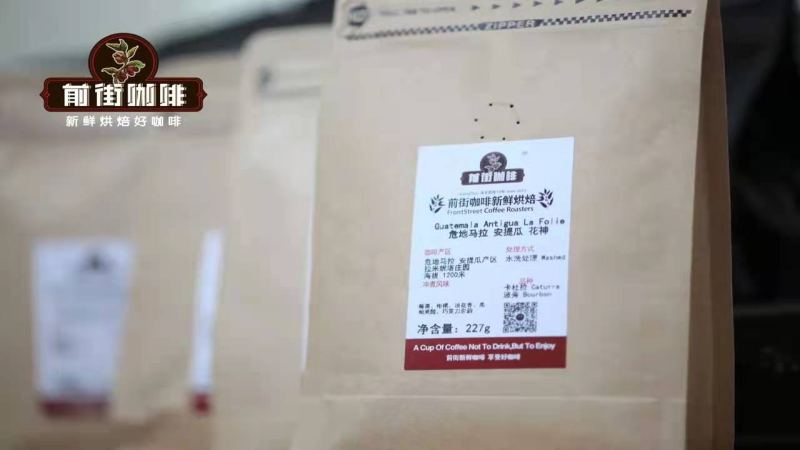
The variety of this batch of Front Street Flora coffee purchased by Front Street Coffee is Bourbon and Caturra. Bourbon is a natural mutation of Typica and, alongside Typica, is ranked as an old, high-quality variety. The beans are slightly smaller and rounder than Typica. Caturra is a natural mutation of Bourbon, with a fresh lemon-citrus acidity on the palate, and in terms of sweetness it is slightly inferior to Typica and Bourbon.
Caturra has a lemon or citrus acidity on the palate, and in terms of sweetness it is inferior to Typica and Bourbon, because Caturra's sweetness depends on the number and dosage of fertilizers applied by the grower. It has high productivity, but to maintain productivity it must be continuously fertilized and pruned, so the tree is short with many branches. Although productivity is increased, because the harvest period requires 2 years, the care cost is relatively high, which still limits production to some extent.
Processing Method
1. This batch of Front Street Guatemala Flora purchased by Front Street Coffee is washed. First, pour the picked coffee cherries into a large water tank. Underdeveloped defective beans will float to the surface, while ripe, plump fruit will sink to the bottom. At this point, remove the defective beans (fruit) floating on the surface.
2. Then use a pulping machine to remove the outer skin and pulp of the coffee fruit. At this point, the coffee beans are still covered with a slippery layer of mucilage.
3. Then put the coffee beans with mucilage into a fermentation tank for 16–36 hours, during which microorganisms break down the mucilage. After fermentation is complete, use plenty of clean water to remove the residual mucilage from the coffee beans.
4. Finally, dry the washed coffee beans in the sun until the moisture content drops to 10–14%. Then use a huller to remove the parchment layer, completing the processing.
Roasting Analysis
This batch of Front Street Guatemala Antigua Flora coffee green beans is round, green with a yellow tint, with relatively good uniformity and medium moisture content. Front Street Coffee's roasting target is medium roast, on the one hand to preserve bright acidity and display floral and fruity aromas, and on the other hand to enhance richness and balance.
In the first batch of roasting, the drop temperature was relatively high, with a charge temperature of 200°C, and the heat was also relatively strong. During roasting, it was found that this Front Street Guatemala bean was from a higher altitude and had a harder bean structure. In order to retain more acidity and aroma, a roasting approach of pulling up the rate of rise and bringing first crack earlier was adopted. The heat was reduced separately when the beans entered the yellowing point, completed dehydration, and before first crack, to avoid scorching the bean surface, and the beans were dropped 1 minute 50 seconds after the end of first crack, shortening the caramelization reaction time and preserving more of the lingering floral and fruity notes.
Brewing Parameters
Grind size: 80% passing a No. 20 sieve
Dripper: V60 dripper
Dose: 15 g coffee
Water temperature: 90°C
Coffee-to-water ratio: 1:15
Brewing Method
Pulse pouring extraction
Use 30 g of water for a 30-second bloom, then pour in a small stream in circles until 125 g for a pulse, and when the water level drops and is about to expose the coffee bed, continue pouring until 225 g and stop. When the water level drops and is about to expose the coffee bed, remove the dripper. (Start timing at the beginning of the bloom.) The extraction time is 2 minutes.
Flavor Description
This Front Street Guatemala Antigua Flora washed coffee has relatively obvious citrus acidity, a juicy acidity, rich floral aromas, pleasant sweetness, medium body, and a slight caramel note and smoky flavor in the finish. Overall it is clean, gentle, smooth in texture, balanced, and lively with a varied layering.
For professional coffee knowledge exchange and more coffee bean information, please follow Coffee Workshop (WeChat public account: cafe_style)
For more specialty coffee beans, please add the private WeChat of Front Street Coffee: kaixinguoguo0925
The above content is compiled by CoffeeHunters, a coffee news website.


