







Why Is Kenyan Coffee Among the Famous Coffees?
Kenya's reputation rests on SL28 and SL34, two varieties identified at Scott Labs after the government commissioned the program in 1930, plus the K72 washed process. SL28, descended from Bourbon, shows blackcurrant-like acidity, ample sweetness, and notes of citrus and smoked plum. SL34, from Typica, brings bright fruit and a soft, clean mouthfeel.
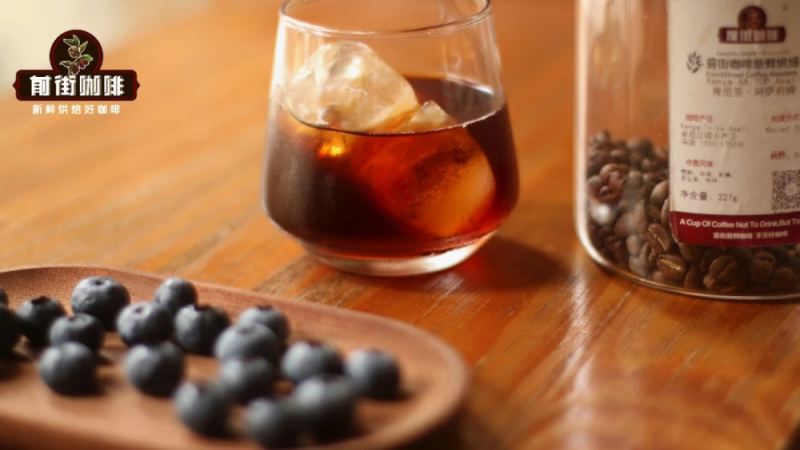
Together the two varieties account for about 90 percent of Kenya's coffee production and are treated as benchmarks, with South America also introducing SL28. Kenyan coffee beans origin details matter for grading: AA and AB separate by bean size, not by cup quality. Two beans from Front Street, Sasini and Azalea, carry this layered acidity and juicy character.
Kenyan coffee is famous for its multi-layered mouthfeel and juicy acidity. Its flavor core stems from two major varieties, SL28 and SL34, as well as the unique K72 washed processing method. This article systematically reviews the history of Kenyan coffee variety breeding, cultivation models, trading methods, and flavor differences among producing regions, and explains in detail the origin information, flavor characteristics, and brewing parameters of Front Street Coffee's two Kenyan beans, Sasini and Azalea, helping coffee enthusiasts gain a more comprehensive understanding of the charm of Kenyan coffee.
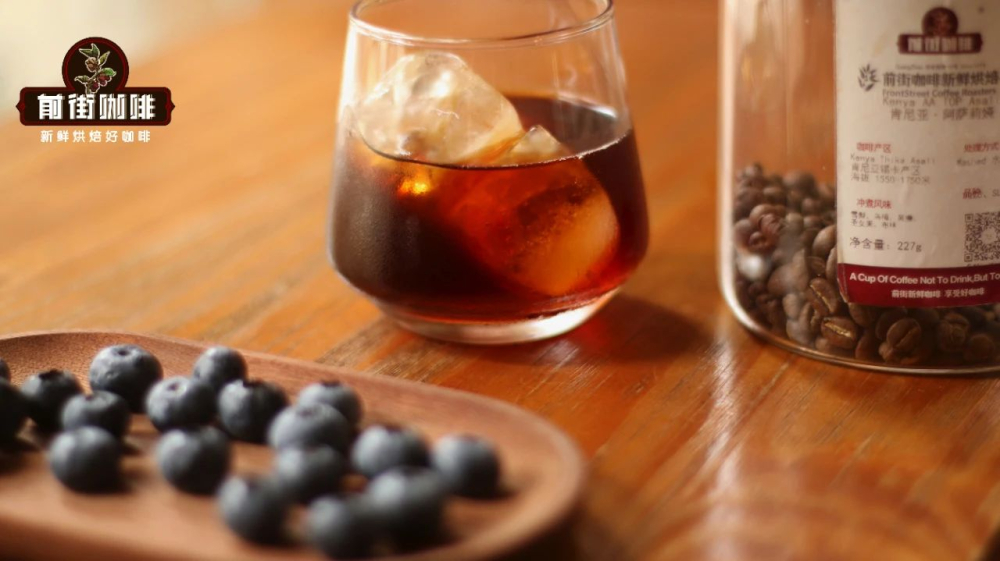
When people talk about Kenyan coffee, the first thing that comes to mind for many is that layered mouthfeel and freshly squeezed juice-like acidity. After swallowing, the lingering aftertaste of grapefruit and red wine stays in the mouth for a long time. The two Kenyan beans launched by Front Street, Sasini and Azalea, happen to have this impressive taste experience, and have therefore become the favorite single-origin choice for many coffee professionals.
Coffee Varieties
In 1930, the Kenyan government commissioned the establishment of Scott Labs, with the goal of cultivating coffee varieties that combined high yield, high quality, and disease resistance. After screening 42 breeding numbers one by one, researchers ultimately identified two varieties, SL-28 and SL-34. The former originated from Bourbon, while the latter came from Typica, and the two do not belong to the same line. At present, these two varieties account for about 90% of Kenya's coffee production and are widely regarded as the benchmarks for Kenyan coffee varieties. South America is also actively introducing SL28.
SL-28
SL-34
Although they belong to different lines, these two varieties show a high degree of similarity in flavor, both possessing layered acidity and excellent sweetness. However, according to Front Street's observations, during later development, SL28 gained more advantages in both environmental adaptability and flavor performance. SL28 has blackcurrant-like acidity, ample sweetness, and excellent balance and complexity, with very distinct characteristics of citrus and smoked plum. SL-34 is known for its bright fruit notes, with a soft and clean mouthfeel. One Kenyan bean under Front Street Coffee comes from Sasini Estate, and it contains not only SL-28 and SL-34, but also a relatively special variety - Ruiru 11.
Ruiru 11 is a high-yield hybrid variety developed under the leadership of the Kenyan government during the large-scale global outbreak of coffee leaf rust. It focuses on yield at the expense of quality, and its flavor is far inferior to SL28 and SL34, so it has not been promoted in the specialty coffee field. However, many suppliers of imported famous coffees will blend it into blends to reduce costs.
Cultivation Models
Kenyan coffee is mainly distributed in the volcanic belt around the Kenyan highlands from the capital Nairobi at altitudes of 1,600 to 2,100 meters. There are two local cultivation systems: one is large estates, with more than 3,000 large farms, accounting for about 25% of Kenya's coffee planting area; the other is the cooperative model, composed of 270 cooperatives and about 700,000 smallholder farmers, covering about 75%. Large estates are expansive and equipped with independent processing facilities; cooperatives hire dedicated managers to supervise members' coffee processing procedures, even down to the daily management of each coffee tree, so coffee quality is relatively better.
Processing Methods
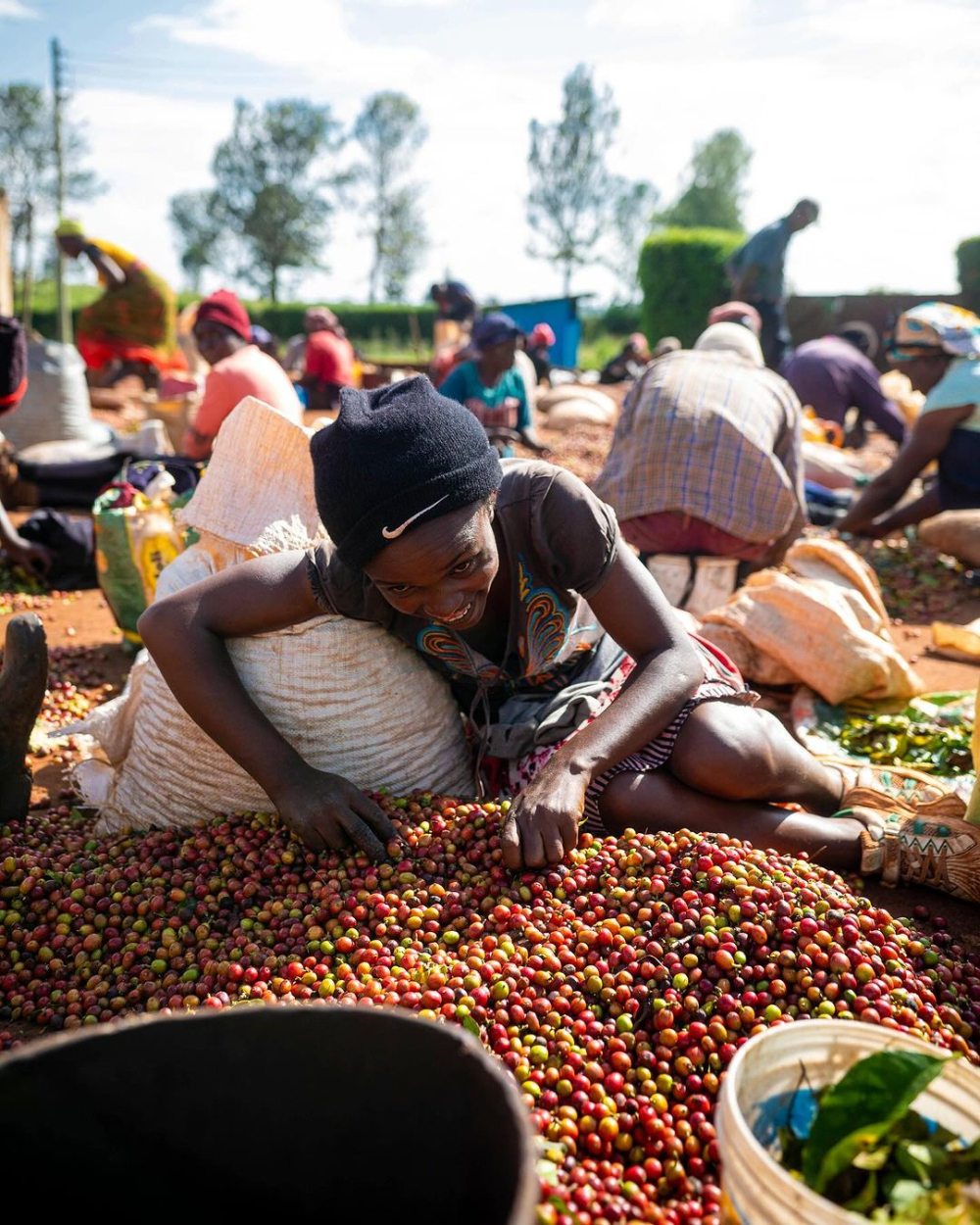
Kenya is located in a tropical producing region and has two rainy seasons a year, so it can also harvest two coffee seasons, of which 60% is concentrated from October to December and the other 40% from June to August. Kenyan coffee cherries are usually washed processed, but unlike the general washed method, the local method uses the famous K72 processing method.
Compared with the fermentation time of conventional washed processing, Kenya's fermentation time is as long as 72 hours, commonly known as 72-hour washed, also called the double washed method. The specific process is: harvest when the coffee cherries reach ripeness at a sweetness of 21, select the best cherries and depulp them, place them in a tank to soak and ferment for 24 hours, using clean river water in the tank; after 24 hours, wash them, then immerse them in clean river water to continue fermenting for 24 hours, wash again, ferment again, repeating this 3 times, for a total fermentation time of 72 hours. Ordinary washed fermentation lasts no more than 36 hours at most. This repeated fermentation and washing process gives Kenyan coffee beans strong acidity and a delicate mouthfeel. It should be noted that during fermentation, the water must be changed every few hours, otherwise the coffee beans are prone to becoming foul-smelling. At present, the two Kenyan coffees launched by Front Street are both processed this way, with relatively strong acidity and a heavier sourness reminiscent of cherry tomatoes and smoked plum.
Trading Models
There are mainly two trading channels for Kenyan green coffee beans: one is auction at the Nairobi Coffee Exchange (the central auction system), through which about 85% of coffee beans are sold; the other is direct trade, usually called the "second window," through which only 15% of coffee beans are traded.
Main Producing Regions
Kenya has many producing regions. Front Street will focus here on introducing the source regions of its two Kenyan beans. Sasini Estate is located in the Kiambu producing region, at an altitude of 1,500 to 2,000 meters, and is the highest coffee-growing area in the region. The local scenery is beautiful, the climate is comfortable, and sunshine is abundant. The soil is fertile acidic red soil with a loose texture, deep soil layer, and good drainage, and the water pH is between 5.5 and 6.5.
Front Street's Azalea coffee comes from the Asali processing plant in Kenya's Thika producing region. The Thika producing region is located in central Kenya and has the highest coffee-growing altitude in the region. Thika is a secondary area within this growing region, located at the foot of the Aberdare Range, with red volcanic soil rich in organic matter.
In addition, Kiambu and Muranga are relatively bright and full in acidity.
Nyeri presents bright citrus and floral aromas. Although slightly inferior to Ethiopia's Yirgacheffe, it has a full berry-like acidity.
Kirinyaga's acidity also tends to be bright and full, with a delicate sweetness.
Embu's acidity is not as full and powerful as the previous producing regions, and its flavor tends to be balanced with a long aftertaste.
Machakos is also outstanding in acidity, with a delicate mouthfeel and long finish, and is gradually attracting the attention of coffee buyers.
The biggest difference between Kisii and Bungoma and other producing regions is that they are known for fruit sweetness, with soft acidity and nutty flavors.
When Front Street Coffee roasts this Kenyan bean, in order to highlight its bright acidic profile, it chooses a light roast. Below is the basic information on these two Front Street Kenyan coffees.
1. Front Street Coffee: Sasini Coffee Beans
Origin: Kiambu producing region
Estate: Sasini Estate
Altitude: 1,680 meters
Varieties: SL28, SL34 Ruiru
Processing method: washed processing
Flavor: distinct smoked plum, cherry tomato, honey, with slight nuttiness after cooling, juice-like mouthfeel, bright acidity.
2. Front Street Coffee: Azalea Coffee Beans
Producing region: Thika
Processing plant: Asali Honey Processing Plant
Altitude: 1,550-1,750 meters
Varieties: sl-28, sl-34
Processing method: 72-hour washed
Grade: AA TOP
Flavor: The wet aroma has ripe tomato and floral notes. When hot, the entry is caramel and yellow sugar sweetness. After the temperature drops slightly, the acidity of cherry tomato and smoked plum emerges, with bright acidity, a clean mouthfeel, prominent mid-palate sweetness, and a juicy feel.
Front Street Brewing Sharing
Front Street chooses coffee 4 days after roasting for brewing, 15 grams of coffee powder, paired with a V60 dripper, using a relatively fast flow rate to highlight the coffee's original flavor while making clogging less likely. The powder-to-water ratio is 1:16, and the water temperature is controlled at 90 degrees to avoid extracting bitter substances at high temperatures and also to prevent lower temperatures from overemphasizing acidity.
This time, a staged brewing method is used: first pour 30g of water and bloom for 30 seconds, at which point the coffee powder expands quite fully. In the second stage, pour 120g of water by drawing small circles from the center, with a pouring height of 5cm, gently, without deliberately stirring. When the water level drops to 1/2 of the coffee bed, begin the third stage of pouring. In this stage, gently circle from the center outward, with a flow rate of about 4g/s, until pouring reaches 240g and then stop. After all the coffee liquid in the dripper has dripped through, end the extraction. The time is about 1 minute 50 seconds.
Flavor: bright berry acidity, small tomato. Round and full mouthfeel, smooth. The aftertaste has a light tea aroma.
For more specialty coffee beans, please add the private WeChat of Front Street Coffee. WeChat ID: kaixinguoguo0925
The above content is compiled by CoffeeHunters, a coffee news website.


