








What Does the Coffee Belt Reveal About Regional Flavor?
The coffee belt stretches across Asia, Africa, and the Americas, and each zone tends to produce a recognisable flavor profile. Ethiopian and Kenyan coffees often show floral and citrus acidity, Indonesian and Indian beans lean rich and herbal, while Central American coffee such as Guatemala, Costa Rica, and Panama is generally balanced with chocolate character.
Terroir explains much of the difference: soil, altitude, and microclimate vary not only between countries but between plots on one estate. South American origins like Colombia and Brazil round out the picture with nutty and sweet profiles. Roasters typically cup repeated samples from each region before selecting representative lots, so a single-origin recommendation reflects tested, consistent flavor.
Even coffee from different plots of the same estate can differ in flavor, let alone regions separated by entire continents. Asia, Africa, and Central and South America—the three great specialty coffee belts—nurture strikingly different flavor profiles thanks to their distinct terroirs: Ethiopia's floral and citrus notes, Indonesia's rich herbal depth, and Central America's balanced chocolate character each have their own devotees. Before deciding to stock a bean, Front Street Coffee roasts and cups samples from various regions repeatedly, selecting the most representative lots to recommend to consumers. This article systematically organizes the flavor characteristics and tasting descriptions of the world's major coffee-producing countries, covering Ethiopia and Kenya in Africa; Indonesia and India in Asia; Guatemala, Costa Rica, and Panama in Central America; and Colombia and Brazil in South America, providing coffee lovers with a complete flavor reference.
For more specialty coffee knowledge, please follow: Front Street Coffee ( Frontsteet Coffee )
Even within the same coffee estate, beans from different plots can show subtle flavor differences; and across countries, terroir differences make coffee beans display even more distinct regional characteristics. The three major specialty coffee regions—Asia, Africa, and the Americas—produce coffees with notably different flavor tendencies. For example, Ethiopian beans often show floral and citrus acidity, while Asian coffees tend toward richness and depth. Because of this, when recommending coffee beans to customers, Front Street matches suitable single-origin coffees based on their taste preferences— for those who prefer pronounced acidity, Front Street Kenya Small Tomato or Front Street Yirgacheffe are good choices; for those who like a rich mouthfeel, Front Street Jamaica Blue Mountain and Front Street Golden Mandheling are recommended. Currently, Front Street has stocked more than 200 specialty coffee beans. Before any bean is listed, it undergoes roasting tests and cupping evaluations, selecting representative lots from various countries, regions, or estates, and repeatedly optimizing the roasting curve before introducing it to consumers. The following content is a summary of coffee flavor characteristics compiled by Front Street after multiple roasts and cuppings of common coffee regions worldwide.
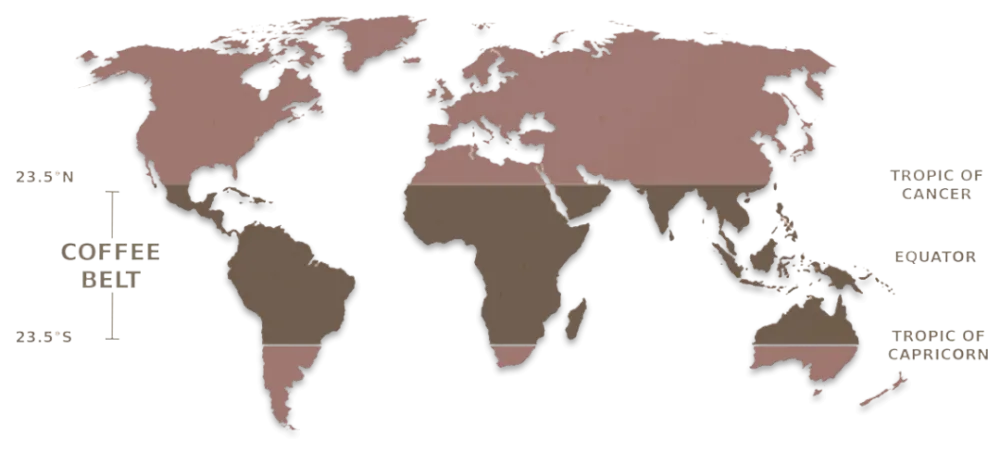
Map of 53 coffee-producing countries and regions worldwide; colors indicate the main coffee varieties of each region.
I. Africa
Ethiopia
Well-known representative coffees: Mocha Harra, Yirgacheffe, Sidamo.
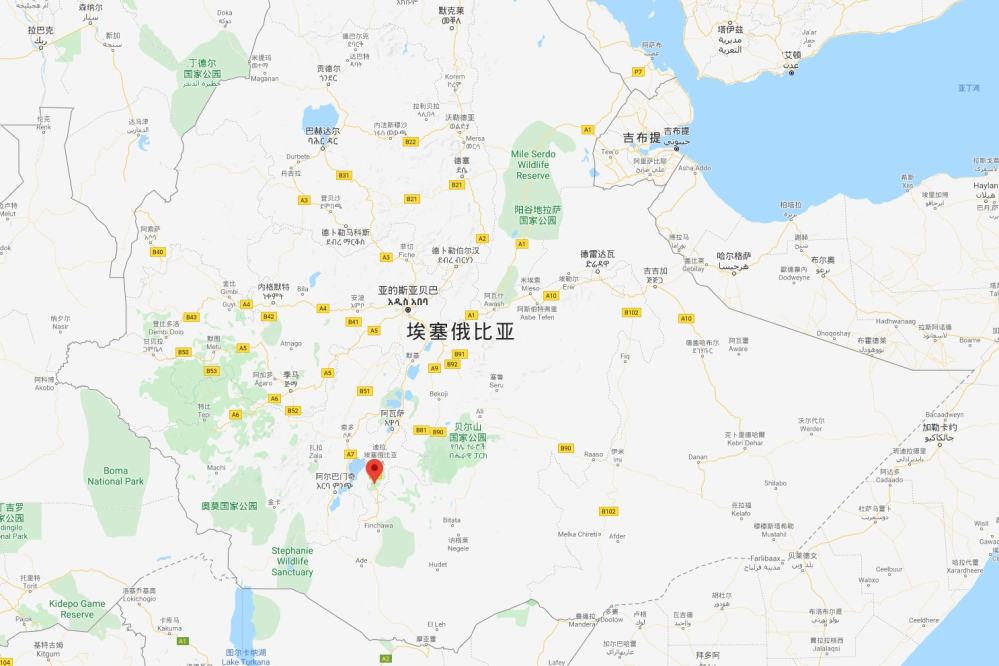
Ethiopia's nine major production regions: Gimma, Sidamo, Yirgacheffe, Harar, Limu, Ilubabor, Gimbi (Lekempti), Tepi, Bebeka.
Flavor descriptions of coffee beans from Ethiopian coffee regions:
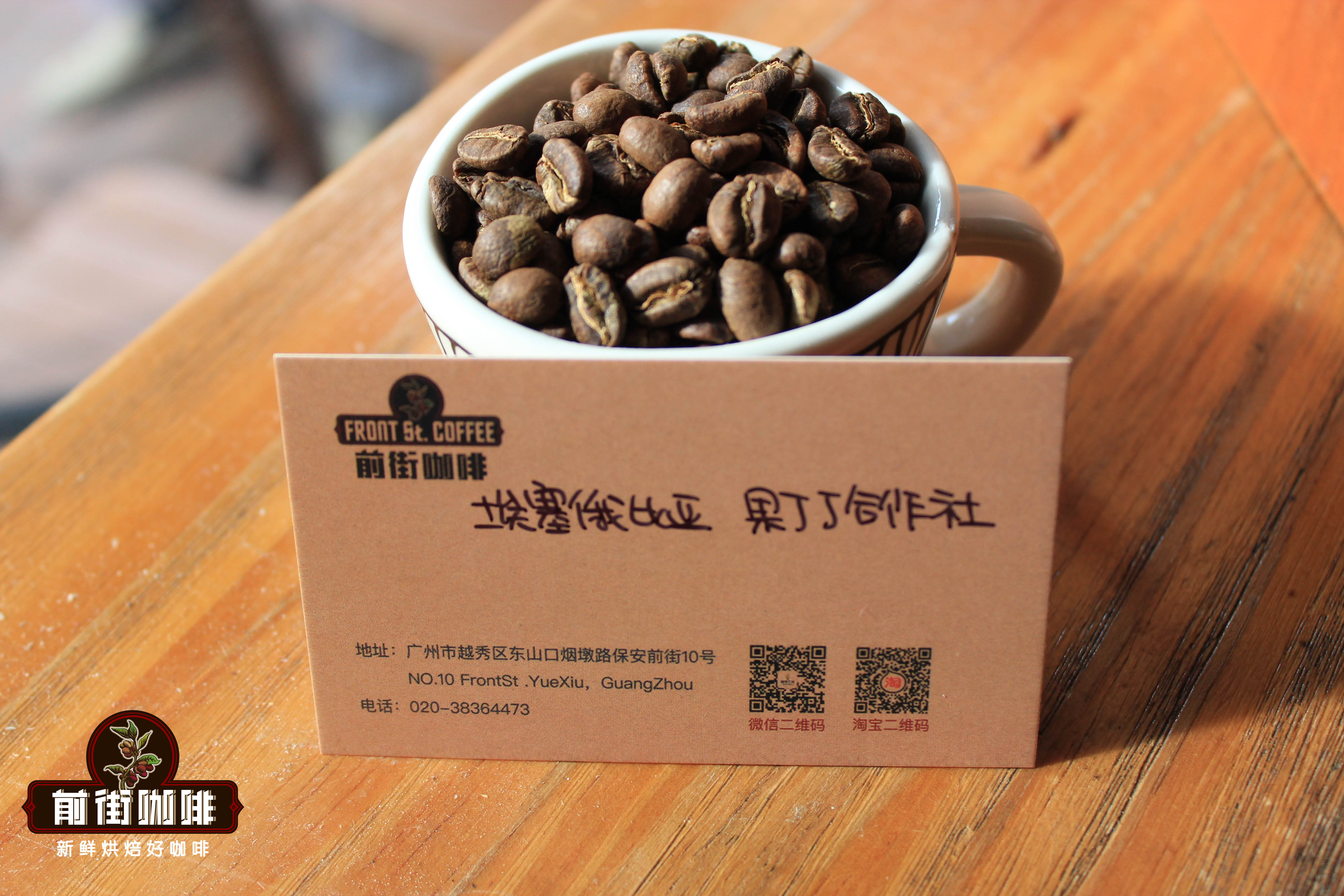
Yirgacheffe: smells of ginger flower; on the palate there are citrus, lemon, and fruit candy notes; mid-palate has cedar wood and honey sweetness; the finish has oolong tea character and a lasting creamy aftertaste. Recommended tastings: Front Street Fruit Ding Ding Coffee, Front Street Red Cherry Coffee.
Sidamo: slightly acidic, floral and fruity, grape, rich aromas of various tropical fruits, obvious floral, lemon, and citrus tones, lime-like acidity; after cooling, peach aroma appears. Recommended tastings: Front Street Huakui Coffee, Front Street Alo Coffee.
Harar: Slightly pleasant fermented wild aroma, with rich jasmine fragrance.
Limu region coffee: viscosity is noticeably lower, and the expression of flowers and citrus is also inferior to Yirgacheffe and Sidamo, but it has an extra grassy note and brown sugar aroma, with bright fruit acidity.
Gimma region coffee: Gimma is better in flavor than Brazil's large commercial Santos beans; a decent mid-to-low-priced blend bean; washed Gimma has low acidity.
Tepi large commercial bean region coffee: western Tepi beans are noticeably larger, with stronger wild notes but lower fruit acidity.
Bebeka commercial bean region coffee: Bebeka is close to Tepi, so the flavor difference between the two places is not large.
Ilubabor coffee region: coffee fruit acidity is relatively low, with good body and viscosity, balanced flavor, and overall good cleanliness.
Gimbi and Lekempti coffee regions: obvious fruit acidity and fruity notes; these are common natural-process beans in the U.S. specialty coffee scene.
Gesha Village Estate : Gori Forest is the birthplace of the Gesha variety, with bright and complex floral and fruity aromas, multilayered high-sweetness fruit tones, and delicate soft acidity .
Kenya
Well-known representative coffee: Front Street Kenya AA Small Tomato
Kenya is located in East Africa, right on the equator, with the Indian Ocean to the east, Ethiopia to the north, and Tanzania to the south. It is mostly planted in the highland areas of the southwest and east. The varieties are all washed Arabica, commonly including four varieties: Bourbon, Typica, Kents, and Riuri 11.
Kenyan coffee flavor description:
Kenyan coffee: obvious fruity aroma and fruit acidity, with lemon and citrus acidic aromas. Compared with Ethiopia's light acidity, Kenya's acidity appears fuller, and the rich mouthfeel also has a hint of wine aroma.
Kiambu: solid acidity (relative to Ethiopia).
Nyeri: blackberry, floral and fruity aroma.
Kirinyaga: bright fruit acidity, sweetness.
Machakos: refreshing fruit acidity.
Bungoma: medium sweetness.
Kirinyaga coffee region: intense dry and wet aromas of lemon and plum; when sipped at a light roast, it has many stunning aromas such as floral and lemon, plus a sweet-and-sour, juicy quality like grapefruit green tea and citrus juice; with a slightly darker roast, it immediately shows flavors of honey and black raspberry plum; the aftertaste is a pleasing sweet-and-sour taste of Yakult green tea.
Zimbabwe
Well-known representative coffee: Zimbabwe
Zimbabwe is located in southern Africa and is a landlocked country without a coastline, bordering Mozambique on the right. Zimbabwe's coffee cultivation is mainly concentrated in the eastern highlands near Mozambique. The highlands are mainly formed by the Chimanimani Mountains and the Nyanga Mountains to the north, and the Nyanga Mountains are further sheltered by Inyangani Mountain. The best coffee comes from the area of Chipinge.
Zimbabwe coffee flavor description:
Zimbabwe coffee: the acidity, fruitiness, and other flavors in the coffee are similar to Kenyan coffee, but the concentration is higher than Kenyan coffee, and the winey flavor and aroma are heavier, with a pepper-like taste.
Malawi
Well-known representative coffee: Malawi
Malawi is a small country in southeastern Africa and also a landlocked country without a coastline. Its coffee is mostly grown in the northern highlands, but production is not large. Although it has no coastline, on the map you can see a very large lake to its northeast—Lake Malawi—which is also the natural boundary separating Malawi from neighboring countries. Compared with Kenya, Malawi coffee also has considerable sweetness and aroma, while its acidity presents another, lower-pitched style.
Malawi coffee flavor description:
Malawi coffee: citrus, floral, ripe fruit, berries, cantaloupe, honey, rose peach, wild ginger flower, floral finish, soft fruit acidity.
Rwanda
Some of Rwanda's outstanding coffees mostly come from the south and west. In the southern Huye mountainous area and Nyamagabe region, due to higher altitude, the coffee has floral and citrus flavors; while in the western Nyamasheke region by Lake Kivu, rich, aromatic, and juicy high-quality coffee is abundant.
Rwanda coffee flavor description:
Rwanda coffee: the taste is described as "grassy aroma," with tropical climate characteristics.
Lake Kivu: cherry notes, floral and herbal aromatic flavors.
Maraba region coffee: floral, honey.
Burundi
Burundi's geographical environment is very suitable for coffee cultivation. It borders Rwanda to the north, Tanzania to the east and south, the Democratic Republic of the Congo to the west, and Lake Tanganyika to the southwest. The country has many plateaus and mountains, mostly formed by the highlands on the eastern side of the East African Rift. The national average altitude is 1,600 meters, and it is known as the "Land of Mountains," with more than half situated along the famous Lake Tanganyika. Production regions include: Buyenzi, Kirundo, Buyeru, Gitega, Bubanza.
Burundi coffee: citrus acidity, lemon, orange, almond aroma, tangerine peel note, clean, round, balanced, with a long aftertaste.
Yemen
Well-known representative coffee: Mocha Mattari
Yemen is located at the southwestern end of the Arabian Peninsula, adjacent to Saudi Arabia and Oman, and borders the Red Sea, Gulf of Aden, and Arabian Sea. Yemen Mocha coffee is the oldest coffee in the world, and Yemen is one of the earliest countries in the world to cultivate coffee. Yemeni coffee flavor description:
Yemeni coffee: flavor resembles Ethiopian Harar and natural Yirgacheffe, but Yemeni coffee flavor is more mysterious, with a faint wild note; it generally presents nutty chocolate notes. In recent years, due to war, it is rarely sold on the market.
Mocha Mattari coffee: Mattari tastes fuller, with stronger fruit acidity and cocoa notes.
Mocha Sanani coffee: the mouthfeel is thinner than Mattari, with lower acidity, but good fruity aroma, and it often has better ripe fruit and wild notes than Mattari.
Mokha Ismaili: has very good red wine aroma, dried fruit notes, a solid mouthfeel, and often shows chocolate bittersweetness at dark roast.
Mokha Ismaili: solid mouthfeel, high complexity; generally, it often performs beyond Mattari.
Mokha Rimi: Mokha Rimi usually has a slightly heavier fermented flavor, and occasionally astonishingly intense raisiny sweetness. If roasted properly, the coffee beans smell like opening a bottle of rich jam.
Mokha Yafeh: produced in Yemen's southern Yafeh (also called Yaffe) province; it is an uncommon Yemeni Mocha and Yemen's only "southern taste." Production is also small, and it is almost all sold to the neighboring United Arab Emirates, so it is rarely seen in the international specialty coffee market.
Arabian Mocha: a single-origin coffee from the mountainous regions of Yemen at the southwestern end of the Arabian Peninsula bordering the Red Sea. It is the world's finest cultivated coffee, famous for its high viscosity and distinctive rich, wine-like acidity.
Cote d’Ivoire / Ivory Coast
Cote d'Ivoire is a country in West Africa and a major coffee producer in Africa, located beside Guinea and Liberia. Almost all of Cote d'Ivoire's coffee is Robusta, with only a few experimental Arabica coffees.
Cote d'Ivoire coffee flavor: As mentioned above, due to its special taste and characteristics, Robusta coffee is mostly used for blended instant coffee or canned coffee and is rarely drunk directly as specialty coffee, so it does not often appear in the list of coffee-producing countries we commonly mention.
Tanzania
Well-known representative coffee: Front Street Kilimanjaro
Tanzania is a typical East African country, bordering Kenya and Uganda to the north, Malawi, Mozambique, and Zambia to the south, and Rwanda and Burundi to the west. Coffee is not Tanzania's most important agricultural product, and most is small-scale. Coffee is mostly grown on the slopes of Mount Kilimanjaro near Kenya in northern Tanzania. About 70% is Arabica, processed by the washed method, while the remaining 30% Robusta is processed by the natural method.
Tanzanian coffee flavor description:
Tanzanian coffee: it lacks a bit of bright acidity and shows a softer, gentler beauty, with more sweet aroma; a strong red wine note is also a characteristic of Tanzania.
Kilimanjaro coffee: relatively strong acidity, but slightly weaker than Kenya's; the mouthfeel is similar to Kenya's, rich in texture with a strong sweet aroma.
Mount Kilimanjaro coffee: smoked plum, plum, red currant, wine-like texture acidity, with lemon aroma; fruity aroma is rich and lasting; the overall flavor is balanced, the acidity is smooth, the body is high, with date pit sweetness, malt chocolate, and complete floral layers; the latter stage has a rich caramel sweetness; as the temperature drops, the fruit acidity becomes smoother, and the sweetness and caramel aroma become more obvious; balanced body, smooth and mild acidity.
II. Asia
Vietnam Coffee
Well-known representative coffee: Vietnamese coffee
The vast majority of coffee trees in Vietnam are Robusta. Due to the higher extraction ratio, these coffee beans are often used to make instant coffee, canned coffee, or blended into 3-in-1 coffee. The most common preparation is a mix of strong Vietnamese beans, condensed milk, and ice, which is a good choice as a beverage.
Vietnamese coffee: unique aroma and bitterness.
Weasel coffee: the coffee is brown, with a light mouthfeel.
Trung Nguyen coffee: mellow aroma without sourness, astringency, or bitterness.
Highlands coffee: elegant and mellow mouthfeel.
Moss coffee: rich and full-bodied, sweet with slight bitterness, full and smooth mouthfeel.
Saigon coffee: relatively mellow, with a slightly clearer coffee color, and a smooth, rich mouthfeel.
Indonesia
Well-known representative coffees: Front Street Java, Front Street Sumatra Mandheling.
The main coffee-growing areas in Indonesia are Java, Sumatra, and Sulawesi, all of which are volcanic terrains.
Indonesian coffee flavor description:
Indonesian coffee: strong aroma with low acidity, with a slight note reminiscent of Chinese medicine and earth.
Java coffee: produced on Indonesia's Java Island, it belongs to Arabica coffee and has a unique aroma. Because of its rich oils, it is often used as one of the components in espresso blends.
Sumatra Mandheling coffee: moderate acidity with an extremely heavy, rich aroma.
Golden Mandheling: green beans of Mandheling screened by PWN at 18 mesh or above. Because the green beans come from the same production region and are uniform in size, the flavor is cleaner than general Mandheling.
Tiger Mandheling: round texture, rich mouthfeel, prominent herbal and dark chocolate notes, accompanied by prominent caramel sweetness.
Sulawesi coffee: plump beans and rich aroma. Robusta coffee accounts for 90% of total production, and its quality is said to be the world's best.
Civet coffee: also called cat poop coffee; the taste is mellow and rich, with abundant round sweetness and a smooth mouthfeel that has a viscous texture.
India
Well-known representative coffee: Monsooned Malabar India's coffee-growing areas are mainly in southern India between the Western Ghats and the Arabian Sea. Better-known coffees are sold under names such as Mysore and Malabar.
India coffee flavor description :
Indian coffee: mild, balanced, low acidity, and spicy.
Monsooned Malabar coffee: smooth and delicious, strong in taste, spicy, with plump beans.
III. Central America
Guatemala
Well-known representative coffees: Antigua, Huehuetenango
Guatemala is located at around 15 degrees latitude, with the Pacific Ocean to the left and the Caribbean Sea to the right. The Sierra Madre mountain range on the Pacific side is Guatemala's main coffee-growing area. Because the mountain range stretches very long and regional climate changes greatly, it has created the country's seven major coffee-producing regions.
Antigua coffee region: distinctive tobacco notes and milk chocolate sweetness; the characteristic of Guatemalan highland beans is that at a light roast they give off stunning tropical floral aromas.
Coban coffee region: coffee beans are known for elegant, lively acidity, clean flavor without off-notes, distinct layers, and green apple acidity, berry aroma, jasmine aroma, orange peel aroma, green pepper aroma, fruity sweet-and-sour notes, chocolate sweet aroma, and even a smoky finish.
Atitlan coffee region: the aroma is refreshing, the acidity is bright, and the coffee has a full body.
Huehuetenango coffee region: bitter yet aromatic and strong, with a good mouthfeel.
Fraijanes coffee region: bright, consistent acidity, ample aroma, and a delicate body.
Oriente coffee region: the coffee has a balanced mouthfeel, full body, chocolate charm, and flavors of passion fruit, strawberry sandwich cookies, and blueberry.
San Marcos coffee region: the coffee flavor is mainly caramel nut tones, bright acidity of California plum, and herbal notes.
Costa Rica
Well-known representative coffee: Tarrazu
Like other Central American countries, Costa Rica generally grows Arabica coffee. Its coffee is mainly planted in two highland areas: one near the capital San Jose, and the other in the Tarrazu mountains southeast of San Jose.
Costa Rican coffee: varieties include Bourbon, Caturra, Catuai, Villa Sarchi, Villalobos, etc.
Tarrazu region coffee: the coffee has plump beans, ideal acidity, a light and pure profile, pleasant aroma, and special flavors of fruit plus some chocolate or nutty notes, making it one of the coffees very much loved by coffee tasters.
La Minita region: the flavor has rich chocolate aroma, with appropriate acidity making the mouthfeel more lively and rich, and a solid body leaving an endless aftertaste.
Central Valley coffee region: balanced body and fruity taste, subtle chocolate, and a trace of honey in the aroma.
Western Valley coffee region: the flavors of coffee grown in the Western Valley are diverse, ranging from simple classic chocolate to more nuanced flavors including fruits such as peach, orange, vanilla, and/or honey.
Other production regions include Tres Rios, Brunca, and Orosi.
Musician Series coffee: includes Mozart Coffee, Beethoven Coffee, and Bach Coffee. In 2019, its sweetness and berry aroma will absolutely amaze you! The sweetness, viscosity, and body are all quite good, with a ripe-fruit sweetness similar to dried banana; in the 2018 batch, it had an obvious Cantonese sausage flavor.
Beethoven coffee: sweet and colorful various fruits—strawberry, apple, lemon, grape, and citrus—show diverse flavors; honey and toffee notes are unforgettable. It has a silky, creamy, delicate richness, with a long finish like top-grade Indian Darjeeling black tea.
Megalith Estate coffee: fermented aroma, fruity aroma, red wine, raisin, strawberry, jackfruit, nuts, hazelnut, caramel.
Nicaragua
Well-known representative coffee: Nicaragua
Nicaragua's coffee is mainly produced in the central and northern parts of the country. Shade growing is its characteristic, and the coffee beans are washed and sun-dried. ⟦122⟦Nicaraguan coffee flavor description:
Nicaraguan coffee flavor description:
Nicaraguan coffee: deep aroma; on the palate it resembles dried papaya and dried lemon; the mid-palate shows almond, caramel, and cocoa flavors; the sweetness returns strongly, with a long aftertaste of licorice and dried plum. Overall, this coffee has a relatively special mouthfeel.
Jinotega coffee: its geographical location is in a long valley. Because it is surrounded by mountains, the climate is cool, and it is 142 kilometers north of Nicaragua's capital, Managua. This area produces 80% of Nicaragua's coffee, mainly exported to the United States, Russia, Canada, and Europe.
Maragogipe coffee: the flavor is relatively balanced, with a clear mouthfeel and excellent aroma and mellowness.
Nueva Segovia coffee: annual rainfall here is about 1,460 mm, with an average temperature of 22°C, making it a high-quality production region.
Mierisch Estate coffee: the flavor has rich body and a refreshing aroma; the mouthfeel is solid, with a strong, full wine aroma and rich fruit flavors that are intoxicating; it is highly regarded by international coffee connoisseurs.
Mama Mina Estate coffee: from the first sip you can feel rich wine aroma, berries, blackberry, cantaloupe, and other sweet, juicy flavors; the mid-to-late palate has whiskey chocolate and raisin flavors; the mouthfeel is solid, with a strong, full wine aroma and rich fruit flavors that are intoxicating.
Honduras
Well-known representative coffee: Honduras
Honduras is located in northern Central America, bordering the Caribbean Sea to the north, the Gulf of Fonseca of the Pacific Ocean to the south, Nicaragua and El Salvador to the east and south, and Guatemala to the west. It is mostly mountainous and plateau terrain. Its area is 112,492 square kilometers, and its coastline is about 1,033 kilometers long. Except for coastal plains, the entire territory is mountainous, with the highest altitude in the northwest reaching 3,000 meters and the south also reaching more than 2,400 meters.
Honduran coffee flavor description:
Honduran coffee: in taste, the acidity is relatively weak, while the caramel sweetness is heavier.
Marcala coffee: the floral aroma is as clean and clear as a lotus emerging from water; the mouthfeel is neither heavy nor rich; the coffee texture is firm and clear; the nutty almond note common in Central American coffee is absent, replaced by delicate fruity aroma.
Montecillos coffee: lemon and fruity aromas are its important characteristics, especially peach and orange; the acidity is lively and bright, with a velvety texture and a lasting aftertaste.
Opalaca coffee: the overall performance is balanced; the mouthfeel has tropical fruits such as grape and mulberry; the aftertaste is sweet and sour, showing a strong lemon flavor, neutralized by the sweetness of honey and caramel, with obvious fruity flavor.
Copan region coffee: chocolate flavor, fused with the sweetness of honey and caramel; compared with other coffee varieties, the fruity flavor is relatively light.
Comayagua coffee: mainly lemon flavor, with obvious sweet fruity aroma; the mouthfeel is more creamy and rich, while also having citrus sweetness and giving off sweet and chocolate notes.
Agalta coffee: citrusy with subtle yet obvious acidity.
El Paraiso coffee: mainly gentle fruit acidity, caramel aroma, and a balanced mouthfeel.
Panama
Well-known representative coffee: Panama coffee
Panama borders Costa Rica to the west and Colombia in South America to the east. Its coffee is mostly planted in the mountainous areas on the western side near Costa Rica.
Panamanian coffee flavor description:
Panamanian coffee: mouthfeel clean and clear, bright and gentle; the medium body is striking, with a character quite similar to Blue Mountain.
Panama · Elida Estate: on entry, the tip of the tongue feels obvious fruit acidity; in the mouth it is mild and round; the fruity sweetness and returning sweetness are strong, refreshing to the heart. The lower the temperature, the more delicate the acidity.
Elida Estate coffee: tropical fruit, spices, nuts, milk chocolate.
Casa Ruiz Estate: clean and fresh fruity flavor, elegantly charming floral fragrance, slight citrus acidity, bright and delicate mouthfeel, full fruity sweetness.
Panama · Hacienda La Esmeralda Geisha coffee: oolong tea aroma, peach aroma, honey aroma, fresh and comfortable, bright and balanced; the aroma has extremely strong layering; the entire aroma and caramel sweetness are wrapped together; on entry, the tip of the tongue feels obvious fruit acidity, while in the mouth it is mild and round; the fruity sweetness and returning sweetness are strong, like swallowing a sip of fresh fruit tea, refreshing to the heart.
Finca La Esperanza: dry and wet aromas carry nutty and berry aromas; acidity is not high and is soft; sweetness is very high; the body is delicate and mellow; the finish stays in the mouth for a very long time; the overall impression is somewhat similar to baby Geisha and sweet Geisha. Hartmann Estate coffee: dark chocolate, dark fruit aroma, bright citrus acidity, round juicy mouthfeel, stone fruit tones, honey, citrus, apple, with delicate floral notes.
Carmen Estate coffee: melon, brown sugar aroma, slight acidity, juice-like viscosity, citrus tones, stone fruit, pear.
El Salvador
Well-known representative coffee: El Salvador
El Salvador is located between Honduras and Guatemala, with the Pacific Ocean to the south. Its terrain is mainly mountains and plateaus, and the volcanic zones are rich in minerals. In addition, El Salvador's coffee farms mostly use shade growing.
El Salvadoran coffee flavor description:
El Salvadoran coffee: excellent balance, with taste characteristics of equal acidity, bitterness, and sweetness.
El Salvador Pipil coffee: this is the Aztec—Mayan name for coffee, and it has been recognized by the Organic Certified Institute of America.
El Salvador Pacamara coffee: a hybrid variety of the Typica mutant Maragogipe and the Bourbon mutant Pacas. El Salvador produces the best-quality Pacamara, and its most distinctive feature is obvious acidity.
El Salvador's six major specialty coffee regions are as follows:
Alotepec: located in western El Salvador. Coffee flavor: has an excellent aroma.
Cacahuatique: located between San Miguel province and Morazán province. Coffee flavor: has a delicate juice flavor and almond aroma.
Chichontepec: located in central El Salvador. Coffee flavor: has chocolate sweetness and orange aroma.
Bálsamo-Quezaltepec: located in the mountainous area of southwestern El Salvador. Coffee flavor: has creamy flavor, excellent concentration, and a smooth mouthfeel.
Tecapa-Chinameca: located between San Miguel city and the Lempa River and Grande River. Coffee flavor: the coffee has a rich mouthfeel, with sweetness of chocolate and ripe fruits such as cantaloupe, apple, and grape.
Apaneca-Ilamatepec: located in the mountainous area of western El Salvador. Coffee flavor: the coffee has flavors of peach, cream, and chocolate, with slight citrus acidity and a delicate mouthfeel.
Mexico
Well-known representative coffee: Mexico
Mexico borders the United States to the north. Its coffee production ranks fourth in the world, with the main production areas in the southeast near Guatemala's Huehuetenango highlands.
Mexican coffee flavor description:
Mexican coffee: acidic, aromatic and smooth, mellow, with lively sweet-and-sour notes and a strong aroma.
Coatepec coffee: sweet aroma, with a slight grassy note, slightly acidic, and medium oily viscosity.
Huatusco coffee: on the palate, slight plum acidity, rich caramel sweetness, and a finish with dark chocolate depth.
Chiapas coffee: has medium viscosity; the mouthfeel is mild but with a fresh sweet flavor; the dry aroma has slight banana and cocoa nut notes; the wet aroma has obvious honey-like sweetness and aromas of walnut and almond brittle; the most obvious flavor on the palate is a sucrose-like note.
IV. South America
Peru
Well-known representative coffee: Peru
Peruvian coffee is famous for organic coffee. Peru (Spanish: Perú; Quechua, Aymara: Piruw), officially the Republic of Peru (Spanish: República del Perú), is a country in western South America. Peru is a country rich in coffee—only 10% of Arabica coffee can be called specialty coffee.
Peruvian coffee flavor description:
Peruvian coffee: high quality and balanced, with palatable acidity, suitable for blended coffee. Northern Peru coffee: has higher acidity, a strong taste, abundant aroma, and moderate body and flavor.
Central region coffee: just the right acidity, light and mild aroma, smooth yet not overly heavy body, quietly awakening your taste buds.
Southern Peru coffee: a production area with excellent body, and a unique taste with a slight returning sweetness.
Colombia
Well-known representative coffee: Colombia
Colombia is the world's second-largest coffee exporter, accounting for about 15% of global production. Its coffee trees are mostly planted in the three mountain ranges running north-south, and only Arabica is grown.
Colombia Cauca coffee: with berry, honey, and vanilla flavors, and juicy fruity sweetness.
Colombia Popayan coffee: originally distinctive for its rich fruit acidity; it is quite balanced and full in all aspects, and has the reputation of a "Blue Mountain-like" flavor.
Manizales coffee: the taste is quite rich and heavy, the aroma is very pure, and the sweet-and-sour balance is moderate.
Huila coffee: the dry aroma has citrus and caramel notes. When sipped, one can feel the fresh aromas of citrus fruits such as lemon, orange peel, grapefruit, and orange, with the sweet-and-sour taste of lime and citrus juice. The mid-palate shows obvious green tea character and delicate coffee flower notes; the acidity turns into soft malic acid; the overall flavor is round, delicate, and balanced.
Medellin coffee (also translated as Mandelin coffee): plump beans, rich nutrition, strong aroma, and moderate acidity.
Armenia coffee: balanced flavor, with a relatively smooth mouthfeel.
Narino coffee: delicious taste, very good quality.
San Agustin coffee: with bright high-quality acidity, high balance, sometimes nutty, and endlessly memorable.
Huila coffee: coffee from the Huila region is characterized by a full aroma; the dry aroma is berries, pasture grass, and nutty freshness; when sipped, it has a rich hazelnut flavor with a slight oily smoothness; the mouthfeel is warm and smooth, with high sucrose returning sweetness.
Narino coffee: in this production region, the temperature difference between hot days and cold nights can slow the growth rate of coffee beans, allowing natural sugars to fully develop and forming a complex and elegant taste.
Brazil
Well-known representative coffee: Santos
Brazil is the world's largest coffee-producing country, ranking first in total production and accounting for about one-third of global output. The main production areas are concentrated in the central and southern provinces. Brazil's average annual coffee production is about one-third of the world's, with seven states producing the most, accounting for 98% of the country's total output. These seven major regions include São Paulo (Mogiana, Centro-Oeste), Paraná (Norte Pioneiro do Paraná), Bahia (Planaltoda Bahia, Cerrado da Bahia, Atlantico Baiano), Espírito Santo (Montanhas do Espírito Santo, Conilon Capixaba), Minas Gerais (Sul de Minas, Cerrado Mineiro, Chapada de Minas, Matas de Minas), Rondônia, and Rio de Janeiro. These coffee regions grow a variety of varieties, including both Arabica and Robusta. Brazil's main coffee varieties are mainly Bourbon, Mundo Novo, Icatu, Catuai, Iapar, and Catucai.
Brazilian coffee flavor description:
Brazilian coffee: the beans are neutral in nature and can be enjoyed as a single origin (though somewhat monotonous), or blended with other types of coffee beans into a blend. It is generally considered an indispensable bean in blending, and the flavor of this region is bitter coffee.
Santos coffee: among Brazilian varieties, Santos is relatively famous, named after its export port Santos. Santos is suitable for ordinary roast levels and for brewing by the most popular methods. It is the best raw material for making espresso and various fancy coffees.
Ecuador
Well-known representative coffee: Galapagos
Ecuador is one of the few countries in South America that produces both Arabica and Robusta coffee. Located between Colombia and Peru in South America, Ecuador has a very long history of coffee cultivation.
Ecuadorian coffee flavor description:
Intag Valley coffee: in the western foothills of the Andes south of Guayaquil and the coastal hilly areas of Manabí Province, this place is known for growing Arabica coffee beans. The beans have a perfect balance of acidity, sweetness, and bitterness.
Pichincha Province coffee: located in northwestern Ecuador, mainly growing Robusta coffee beans.
Loja region coffee: one of the highest coffee-growing regions in the world.
Galapagos Islands coffee: rich mouthfeel, sweet with acidity.
V. Oceania
New Guinea
Well-known representative coffee: New Guinea
Papua New Guinea is an island country in Oceania. In Malay, "Papua" means "curly hair." It is said that in 1545, explorer Retes reached the island and found that most of the islanders had curly hair, so he called it the "Island of Curly-Haired People," and the name has been passed down ever since. Papua New Guinea is east of Indonesia and has a standard island climate. Located between the equator and 10 degrees south latitude, it has tropical rainforest, volcanic rock, and plateau terrain, with altitudes between 1,200 and 2,500 meters, making it a paradise for growing coffee.
New Guinea coffee: although Papua New Guinea is close to Indonesia, its coffee taste is completely different from Indonesian Mandheling. Papua New Guinea beans have a clean mouthfeel, full of floral aroma and aftertaste.
Kimel Estate Peaberry coffee: on the palate there is a slight spice note; after entry it has the sweet, refreshing taste of nuts and sugarcane, with a creamy, milky smoothness. Peaberry has a more solid mouthfeel, and the overall performance is balanced and smooth. The flavor is rich and the aroma is pleasant, without herbal or earthy notes; its texture is as intense and mellow as a Van Gogh painting.
Australia
Well-known representative coffee: Australian coffee
Australia began growing coffee around 1900. It has both Robusta and Arabica, mainly in eastern Australia, roughly distributed in northern New South Wales, around Queensland, and on Norfolk Island.
Australia coffee: the quality of Australian coffee beans is quite good, with the characteristics of island beans—mellow with mild acidity. Unlike Central American coffee beans that usually have bright acidity, its aroma has a slight chocolate note. It is good both as a single origin and in blends.
VI. Others
China
Yunnan's coffee-growing areas are mainly distributed in Lincang, Baoshan, Simao, Xishuangbanna, Dehong, and other prefectures.
Yunnan small-bean coffee: Catimor, slightly woody; Typica, tea-like, with brown sugar aroma after cooling;
Alishan coffee: appearance quality is good, and moisture content and water activity are both standard. Disadvantages: few beans, and bean size is very uniform. In sensory evaluation, the average quality is good. Although the quality is not very unique, it has no contamination or defects.
Puerto Rico coffee
Puerto Rico's finest coffee is Yauco Selecto, where "Selecto" means "selected." Grand Lares-Yauco is produced in the southwest of the island, and Lares coffee is produced in the south-central area. Yauco Selecto coffee is grown on only three farms in the southwest of the island country. Its taste is aromatic and intense, with a long aftertaste. This coffee sells at a high price, and its aroma can rival any other coffee variety in the world. In the Yauco region, the coffee is owned and operated by local plantation owners.
Puerto Rico: Yauco is rich in high-quality coffee. Yauco coffee has the characteristics that specialty coffee should have: plump beans, rich aroma, smooth mouthfeel, stable acidity, and complete flavor. Some people compare it to the coffee best able to attract the tongue. In the 1860s, emperors, queens, and popes across Europe regarded Yauco coffee as the finest of coffees, and when choosing coffee they even recognized only Yauco coffee.
Haiti coffee: plump beans, rich flavor, medium-to-low acidity, and a relatively mild mouthfeel, especially suitable for brewing drip coffee.
Port-au-Prince coffee: Port-au-Prince is the largest city in the country and a famous good port in the West Indies, with a population of about 2 million. Port-au-Prince was founded in 1749 and replaced Cap-Haitien as the capital of the French colony of Saint-Domingue in 1770. In 1804, Haiti became independent, and Port-au-Prince became the capital. It is carefully grown in high mountain areas and then exquisitely processed. Such coffee is mostly called "SHG coffee" (meaning coffee grown at altitudes above 1,600 meters), and some is also called "Port-au-Prince coffee" or "Blue Haiti coffee."
Jamaica
Well-known representative coffee: Blue Mountain
Jamaica is a small republic located in the Caribbean. Its Blue Mountain coffee is famous for its mild mouthfeel and high standard of low acidity, and it is currently one of the most expensive and most popular coffees in the world.
Jamaica Blue Mountain coffee: Jamaica is a small republic located in the Caribbean. Its Blue Mountain coffee is famous for its mild mouthfeel; rich, balanced flavor; and high-standard fruity and acidic expression.
Cuba
Cuban coffee: Cuba's coffee export destinations are mainly Japan, France, Germany, Ireland, and Canada. It is a typical Caribbean-style coffee. The coffee cherries are entirely hand-picked at just the right ripeness, with bean size between 17 and 19 screen, and are carefully washed and processed. The defect rate is almost zero, making it one of the world's top coffees.
Cuba Crystal Mountain coffee: Cuba Crystal Mountain coffee is a typical island bean. The mouthfeel is clean and delicate; the slight acidity is not strong but lasting; the aftertaste carries sweet melon and fruit aromas.
Hawaii
Well-known representative coffee: Kona
Hawaii spans latitudes 19 to 22 degrees, south of the Tropic of Cancer. The Hawaiian Islands, brushed by trade winds, are a naturally perfect coffee-growing region. This 50th U.S. state, 2,400 miles from the U.S. West Coast, is the only U.S. state that produces coffee. Hawaii's coffee is also internationally renowned and hailed as one of the best coffees in the world.
Hawaii Kona coffee: freshly ripe apple aroma, vanilla, elegant floral aroma, walnut, roasted chestnut, and nutty aromas, cream and caramel aroma. And with different roast levels, the above aromas also differ. In the United States, another good Hawaiian coffee can also be found—Hawaii Kai Farm coffee.
Venezuela
Venezuela's best coffee names include: Montebello from San Cristobal in Tachira, Miramar from Rubio in Tachira, Ala Granija from Santa Ana in Tachira, and Granija from Timotes in Merida. Other high-quality famous names include: Maracaibos (this is the name of the coffee export port), Merida, Trujillo, Santa Filomena, and Cucuta.
Dominican Republic
Well-known representative coffee: Santo Domingo
The Dominican Republic is located on the island of Hispaniola in Central America, just above Martinique mentioned earlier (in the Puerto Rico section).
Dominican coffee: Dominican coffee, like Puerto Rican and Jamaican coffee, is Caribbean coffee with a similar profile, but its fame is not as good as the other two, mainly because of the coffee processing method rather than the quality of the coffee cherries. The coffee beans have a rich aroma, a mellow mouthfeel, and moderately bright acidity.
Zambia
Zambian coffee is mainly grown in the northern Kasama area and in the Nakonde and Isoka areas near the capital Lusaka.
Zambia Kasama region coffee: the coffee aroma is sweet, with raisin notes, a relatively long-lasting aroma, a long aftertaste, and a mouthfeel lighter than Kenya's.
Flavor Summary
African bean flavor:
Among them, Ethiopian coffee has a relatively strong orange aroma, while Kenyan coffee has a rich berry aroma, plus the acidic aroma of smoked plum juice and grapefruit, and the clear sweetness of sugarcane. The orange aroma of Ethiopian coffee and the berry aroma of Kenyan coffee are the greatest characteristics of African beans and are also what coffee fans most love to explore.
Central and South American bean flavor:
Overall, the flavors are relatively conventional. Among them, Brazilian coffee is smooth and lightly sweet; Costa Rican coffee is mild and smooth, blending acidic aroma, sweet aroma, and chocolate aroma in an extremely balanced way. Panamanian coffee has rich citrus aroma, jasmine aroma, almond, mango, and nectar sweetness, with bright and varied fruit acidity, very similar to Ethiopian Yirgacheffe. Pacamara coffee has a pleasant spice aroma, a slight ginger note, and acidic aroma plus floral and fruity notes. The biggest characteristic of Nicaraguan coffee is its charming almond flavor, and it tastes relatively subdued in aroma.
Asian beans and island flavors:
The body is higher than Central and South American beans and African beans, but the acidity is lower. The flavor has slight wood, herbal, spice, and earthy notes, with a low, subdued aroma rather than rising acidic fragrance. Island beans are relatively light and mild, with an elegant tone.
For more specialty coffee knowledge, please follow: Front Street Coffee ( Frontsteet Coffee )
The above content is compiled by CoffeeHunters, a coffee news website.


