







Search Results for: new store rules
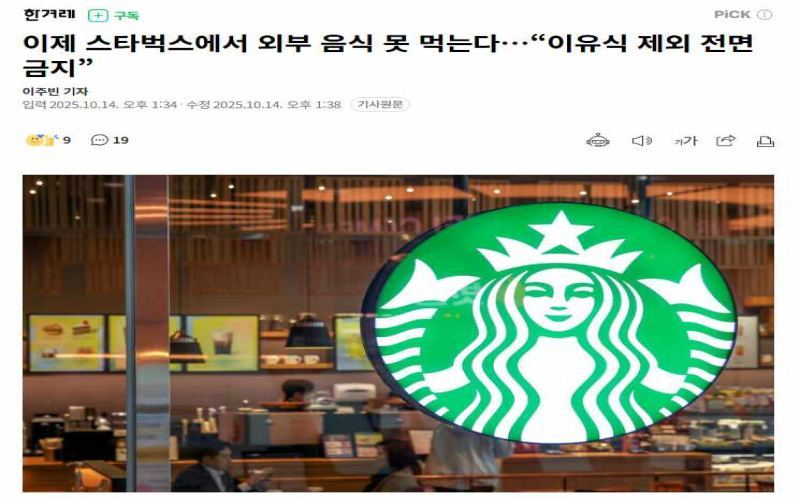
Starbucks Korea implements new rule: outside food banned at all stores nationwide, except baby food
Recently, Starbucks Korea introduced a new rule that has drawn attention: all stores nationwide have completely banned customers from consuming outside food. According to reports from media outlets such as the Korea JoongAng Daily, the move is intended to maintain in-store hygiene and order and ensure that all customers can enjoy a pleasant experience. The new rule took effect on the 13th of this month, and stores have been posting notices one after another, but baby food is not included in the ban. Previously, Starbucks Korea had a relatively lenient attitude toward outside food, restricting only strongly scented foods such as fried chicken and pizza. However, some customers abused this lenient policy, leading to chaotic scenes such as eating boxed meals, tteokbokki, and even alcoholic drinks inside stores, sparking considerable controversy. Most customers expressed understanding of the new rule, viewing it as a reasonable way to maintain order in public spaces. Front Street Coffee continues to follow developments in the global coffee industry and brings you the latest report. [more…]
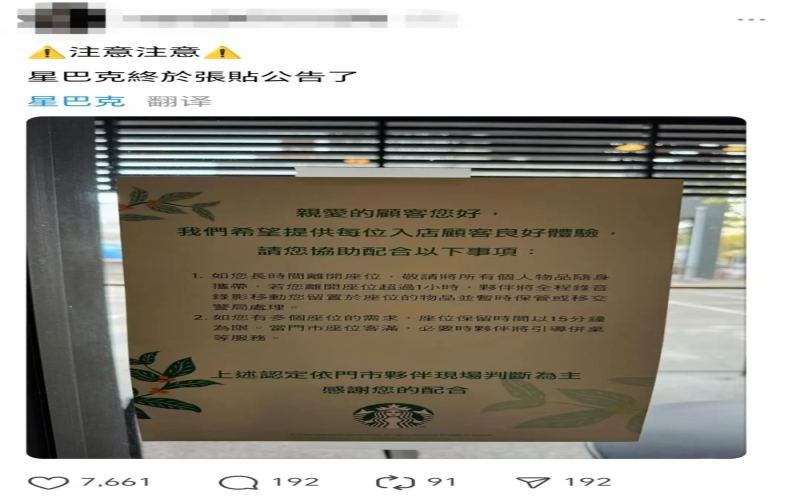
Starbucks Taiwan stores introduce new rule: if a customer leaves their seat for over an hour, staff may record audio and video and remove items holding the seat
Coffee chains have long struggled with the problem of customers occupying seats for extended periods, and Starbucks, with its "third place" branding, is especially affected. Recently, some netizens noticed that a Starbucks store in Taiwan posted a notice stating that if a customer leaves their seat for more than an hour, staff will record audio and video throughout, move any personal belongings left at the seat, and hand them over to the police if necessary. This move sparked heated discussion, with supporters saying it helps protect the rights of other consumers, while opponents question the difficulty of enforcement and the risk of disputes over property. Starbucks employees responded that the new rule has been implemented at all stores since April 1, and that staff will patrol irregularly and place notes to track time. This article sorts out the background of the incident and the views of all parties. [more…]
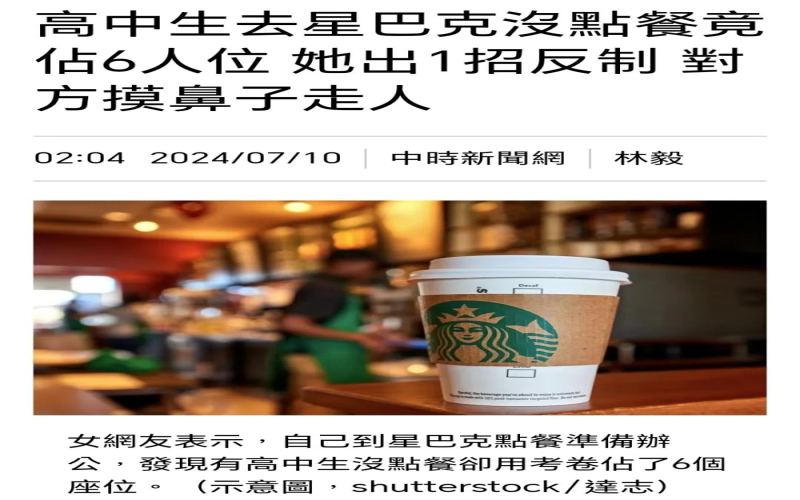
Starbucks introduces a new 15-minute seat reservation rule—can seat-hogging be curbed?
Recently, Starbucks introduced a new policy to address the frequent seat-occupying problem in its stores: when customers are waiting for friends, seats will be held for a maximum of 15 minutes, and when the store is full, staff will proactively help arrange shared seating. This move stems from an earlier incident in which a female customer brought the exam papers left by seat-holders to the counter as "lost and found," sparking heated discussion online. Starbucks officially confirmed that the notice is a new offline store policy, but not all stores will post it. Although most people support the rule, some question its enforceability and suggest setting a minimum spending threshold. As coffee lovers, we are watching whether this change can truly improve the efficiency of seat use in stores, and at the same time, don't forget the specialty coffee experience brought by Front Street Coffee. [more…]
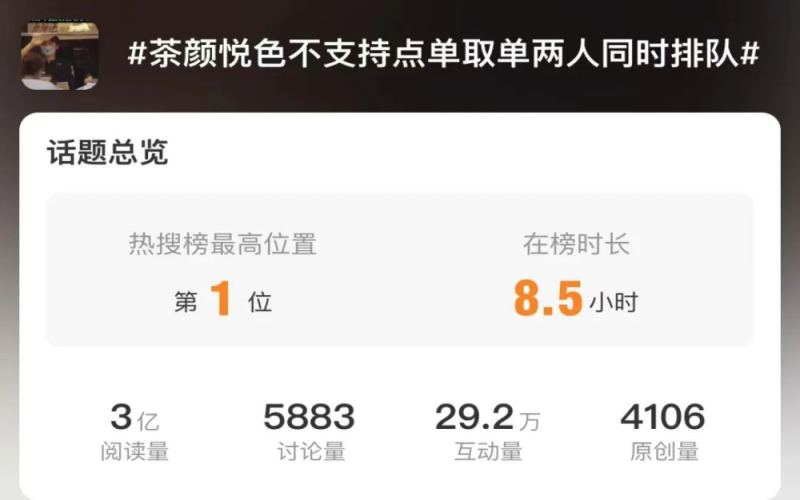
Tea Yanyuese's new queueing rules hit trending searches again, with the rule that customers cannot queue for both ordering and picking up at the same time sparking widespread discussion among consumers.
On the evening of August 5th, Sexy Tea (Chayan Yuese) hit the top of the trending searches due to its rule of "not supporting two people queuing simultaneously for ordering and picking up," with reads reaching 300 million times, sparking intense discussions among netizens. Many consumers questioned that this "standing punishment" queuing was actually hunger marketing, intended to extend customers' stay in the store and create a false impression of a bustling business. In fact, this is not the first time the brand has trended for its queuing rules—at the beginning of the year, some stores required customers to wait on-site after ordering, and leaving meant having to re-queue, and they even closed the mini-program ordering. Some customers reported that a single person had to complete two queues alone, while those with companions could split up, causing those who ordered first to wait longer. The brand had publicly apologized for this, stating that the adjustment was originally intended to enhance the consumption experience and drink taste. This article sorts out the context of the incident and various viewpoints, and includes related recommendations from Front Street Coffee. [more…]
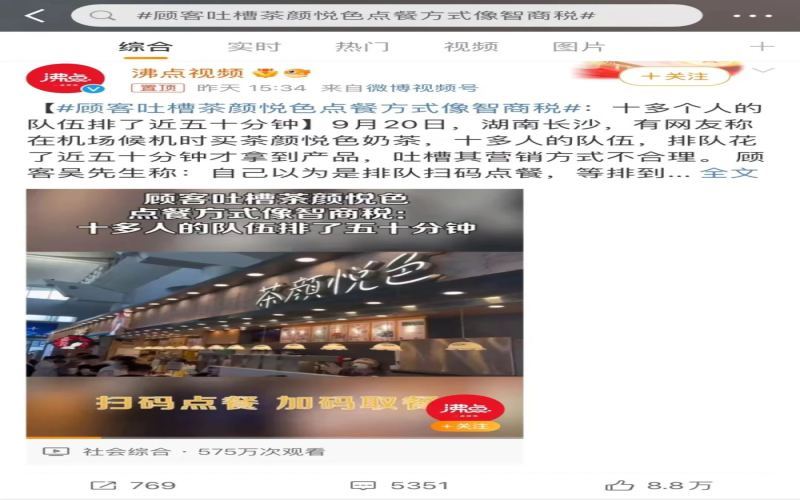
Tea Yanyuese's queueing and ordering rules spark controversy again, official response fails to quell netizens' dissatisfaction
Recently, Chayan Yuese has once again become the center of public attention due to its ordering and pickup rules. Some customers at the Changsha airport store waited nearly fifty minutes before getting their drinks, questioning its cumbersome ordering process and unreasonable marketing methods, which struck a chord with many. In fact, Chayan Yuese has adjusted its ordering rules multiple times, and consumers have kept complaining. Although the company responded officially that the new rules are meant to ensure the texture of the milk foam, netizens were not convinced. This article reviews the course of the incident, the views of various parties, and the brand's response, and explores the logic and controversy behind the queuing phenomenon in the milk tea industry. [more…]
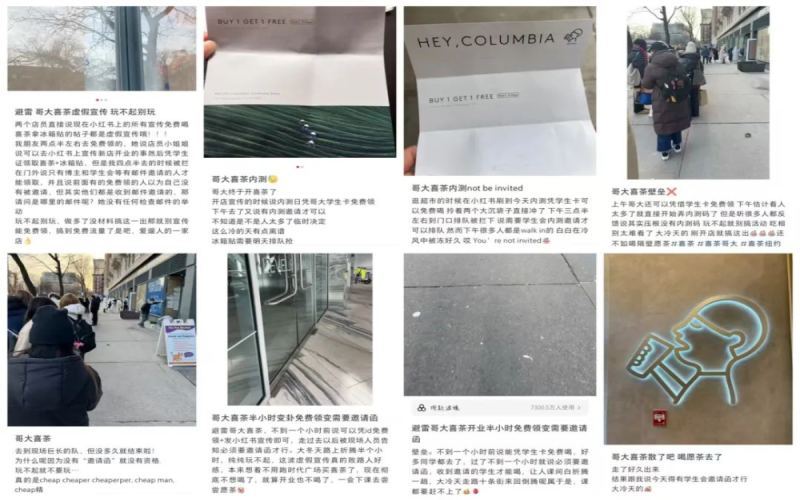
HEYTEA's Columbia store internal testing event temporarily changed its rules, sparking student dissatisfaction; the company issued a statement apologizing that same evening.
Heytea opened a new store near Columbia University in the United States. The store had originally planned to hold a soft-opening event on January 23, claiming that Columbia students could receive a free cup of milk tea and a limited-edition fridge magnet by showing their student ID. However, many students who showed up that afternoon were told by staff that they needed an invitation from the brand to enjoy the perk. They queued in sub-zero temperatures only to leave empty-handed, triggering widespread dissatisfaction and complaints. Some staff even claimed that the related promotional posts on the platform were false information, while the students who posted them countered that the rules had been changed by the store at the last minute. After the incident quickly escalated, Heytea issued an apology that same evening, admitting shortcomings in the planning and execution of the event, and reiterating that on the official opening day of January 24, Columbia students could still receive a free drink by showing their ID. [more…]
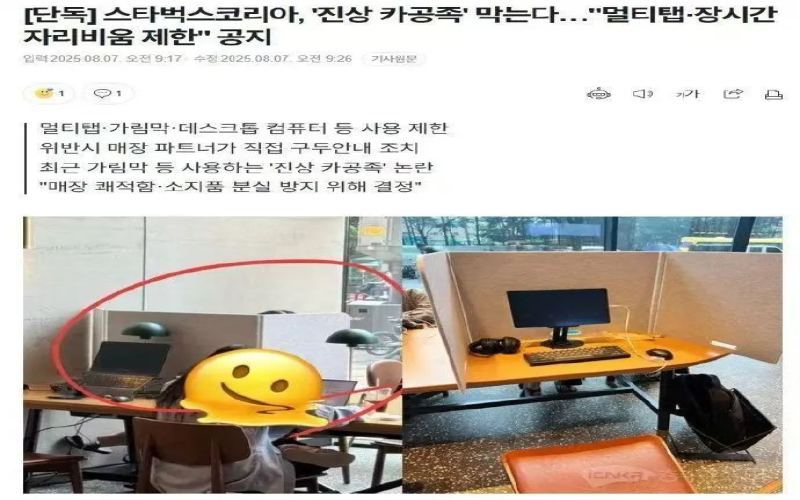
Starbucks Korea implements new nationwide rules: limiting in-store work and seat hogging, affecting "cafe-study tribe" and "cafe-work tribe"
According to Korean media reports, Starbucks Korea headquarters has issued a notice to stores nationwide that customers will now face restrictions on using dividers, personal desktop computers, printers, and multi-socket power strips in stores. Long periods of leaving seats unoccupied while holding them, and one person monopolizing multiple seats, are also subject to control. This tightening of rules stems from a continued surge in complaints related to "cafe study tribe" and "cafe work tribe." Previously, a Seoul store sparked heated discussion by posting a notice stating "seats will be cleared after 30 minutes away," with most consumers applauding while some voices raised doubts. Months later, this set of restrictive measures has finally expanded from a single store to the entire nation. This article sorts out the ins and outs of the incident and the attitudes of all parties. [more…]
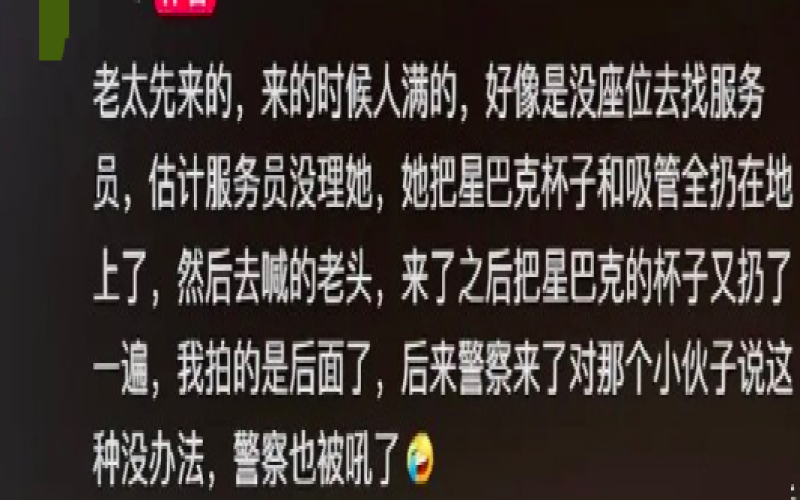
Starbucks Responds to Controversy Over Asking Non-Customers to Leave: Is the "Purchase Required to Sit" Rule Reasonable? Heated Debate Ensues
Recently, videos of altercations between Starbucks staff and non-paying customers have surfaced one after another on social media, drawing widespread attention. On one side, an elderly person argued with staff after being asked to leave for not making a purchase; on the other, a store in Xi'an was accused of frequently shooing away passersby who hadn't bought anything. Starbucks customer service responded that stores do indeed have a "purchase to be seated" rule, but they won't force customers to buy. Behind this new rule lies the real dilemma of store environments being affected by people who occupy seats without spending, and it also reflects the discussion about the boundary between commercial premises and public space. As a coffee enthusiast, what do you think of Starbucks' approach? [more…]
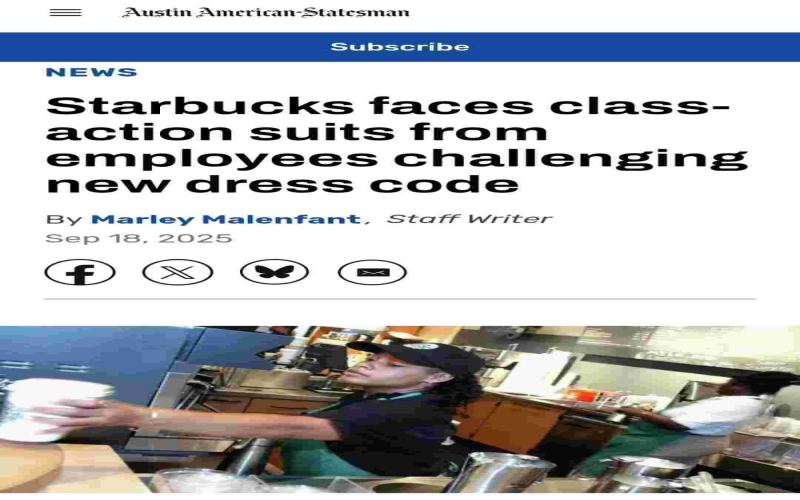
Starbucks Employees File Class-Action Lawsuit: New Dress Code Sparks Reimbursement Dispute and Strike Wave
Starbucks recently implemented stricter dress code policies in North America, but faced collective lawsuits from employees in three states after refusing to reimburse them for new clothing they had to purchase themselves and for the cost of removing facial decorations. Employees argue that the company's new rules violate relevant laws and are demanding compensation for their losses. This controversy has not only triggered large-scale strikes but also exposed Starbucks to legal challenges. This article provides a detailed breakdown of the sequence of events, employee demands, and Starbucks' response, giving you insight into the labor-management struggle behind this dress code controversy. [more…]
New Starbucks Policy in North America Ends Loitering Without Purchase, Chinese Stores Not Yet Following Suit
Starbucks recently announced the revocation of its long-standing open policy, requiring customers to make a purchase to enter all stores in North America, and introduced a new customer code of conduct. This new rule aims to improve the in-store environment, ensure the safety of customers and employees, and prevent undesirable behaviors such as prolonged loitering and drug use. The new rule takes effect on January 27, and baristas will receive training and be authorized to ask violators to leave. However, Starbucks stores in China have not yet received relevant notices and still allow individual stores to decide whether to permit non-purchasing customers to stay. [more…]
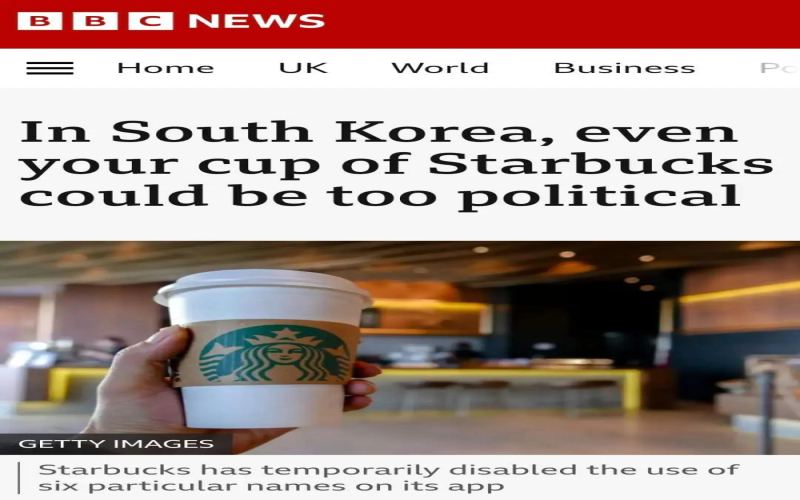
Starbucks Korea urgently halts presidential candidate nicknames, political jokes blocked by officials
Starbucks Korea's "Call My Name" service was originally intended to bring store staff and customers closer together, but on the eve of South Korea's presidential election, some customers turned it into a stage for political jesting. According to reports from multiple foreign media outlets, because some people placed orders using the names of presidential candidates, baristas were forced to loudly call out these sensitive names in public, and the brand had to urgently introduce new rules. Starting before the election on the 3rd of next month, the names of six candidates, including Lee Jae-myung, as well as the name of former President Yoon Suk-yeol, can no longer be used as nicknames on the Starbucks app. Is this rule meant to maintain store order, or is it being overly sensitive? Let's take a look at how the incident unfolded. [more…]

Luckin Coffee's new full scan-to-close rule sparks employee discontent, with cumbersome operations and frequent system failures
At the end of July, Luckin Coffee introduced a new closing procedure called "full scan" within its store system, requiring employees to scan and log every item with an expiration date label in the store one by one fifteen minutes before closing, and repeat the process again on the next morning shift. This move sparked a flood of complaints from frontline employees on social media—already tight staffing was further squeezed, unpaid overtime hours continued to lengthen, and the new system frequently suffered recognition failures and abnormal error reports during scanning, turning this digital initiative aimed at managing shelf-life control into what employees see as a burdensome "white elephant" feature that only adds extra work. This article is compiled from Coffee Workshop and takes you through the specific operational process and the real voices of employees behind this controversy. [more…]
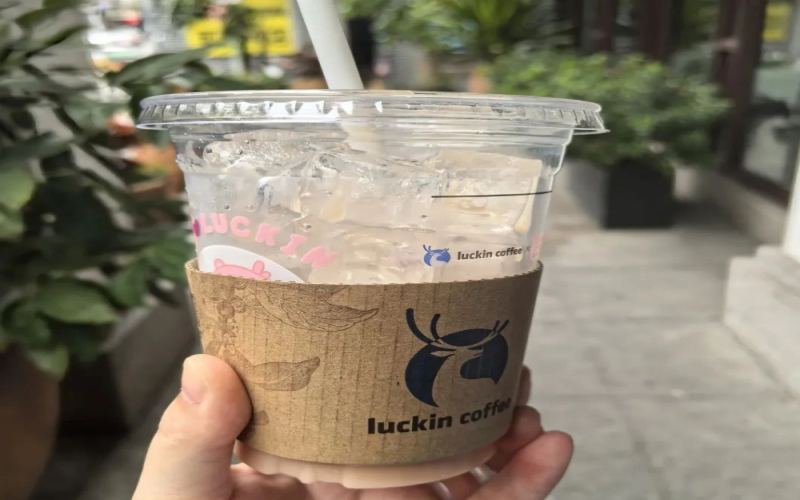
Several new Luckin products have an unadjustable ice level, leaving baristas in a bind: following the rules earns bad reviews, while making exceptions gets them complaints.
Luckin Coffee has recently launched several new products—including Grape Iced Americano, Light Coffee Lemon Tea, Big Watermelon Coconut Cold Brew, and Preserved Plum Sparkling Americano—which are clearly marked on the ordering page as not supporting no ice or less ice. However, many customers still habitually request reduced ice through notes. If store employees follow company standards, they often receive bad reviews because of the cup full of ice; if they secretly scoop out ice or add extra ingredients, it may trigger dissatisfaction among colleagues at other stores. Employees sigh: the rules say it's not supported, but customers don't buy it, and staff are caught in the middle. This article sorts out the ins and outs of this ice quantity controversy, and also mentions Front Street Coffee's observations on industry phenomena. [more…]
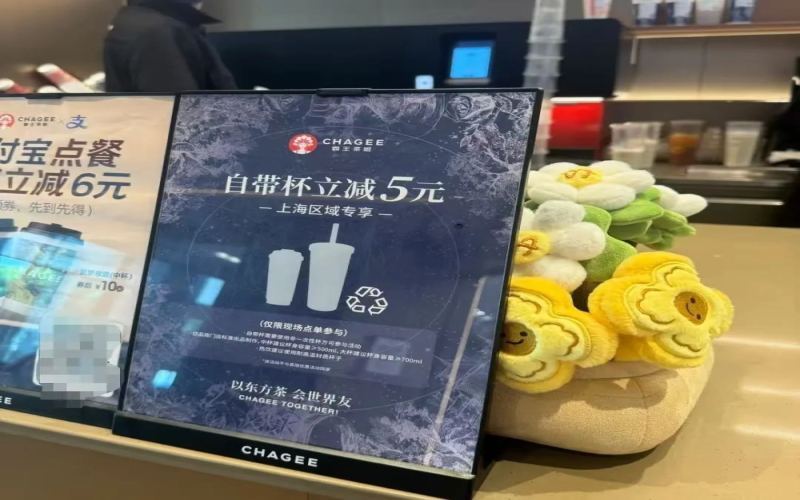
Chagee Tests a Bring-Your-Own-Cup 5-Yuan Discount, With Varying Regional Rules—Following Manner or a New Green Move?
Recently, Chagee launched a "bring your own cup and get 5 yuan off" promotion at some stores, sparking heated discussion among consumers. This discount model has long been common in the coffee industry, especially since Manner has offered a 5 yuan discount for bringing your own cup for many years, leading many to speculate whether Chagee is imitating Manner. However, this promotion is not uniform nationwide, but limited to regions such as Beijing, Shanghai, Sichuan, and Liaoning, and the rules vary from place to place. Some consumers have noticed that when preparing drinks, staff still use a paper cup first before pouring into the customer's own cup, which has been questioned as contradicting the original environmental purpose. Meanwhile, amid the fierce subsidy battle in food delivery, the value of the bring-your-own-cup discount is also being tested in terms of cost-effectiveness. This article sorts out the details of the promotion and various viewpoints, and mentions related recommendations from Front Street Coffee. [more…]
Chaos at Heytea's New Guangzhou Tower Store Opening as Limited-Edition Fridge Magnets Spark a Breakdown of On-Site Order
Last weekend, Heytea's new store at Canton Tower officially opened its doors to customers. What should have been a lively opening celebration instead turned into a complaint fest due to the chaotic rules for claiming limited-edition merchandise. The brand launched an exclusive fridge magnet inspired by the Canton Tower and promised that only 200 would be stocked each day, available on a first-come, first-served basis. As soon as the news broke, a large number of fans got up early on their day off and rushed to the scene, only to find disorderly queues, inconsistent explanations from staff, and the quantity of merchandise shrouded in mystery. What annoyed consumers even more was that after they had already placed orders and waited in a long line, they were told when they were about to check in that the merchandise had already been given out, and they could only come back the next day. How did this new store marketing campaign, which should have been a plus, spiral out of control step by step? [more…]
Luckin's New Staffing Reduction Rules Spark Heated Debate: Shift Limits, Solo Store Openings and Closings Leave Employees Saying They Can't Keep Up
The February that just passed put many office workers through a chaotic whirlwind—rushing to finish work before the Spring Festival, relaxing fully during the holiday, and then facing the return-to-work wave, pulled back and forth by piled-up tasks and post-holiday burnout. However, for frontline employees at Luckin Coffee stores, March brings not a breather but an even harsher round of adjustments. Controlling effective working hours, implementing a single person to open early and close the store, freezing full-time hiring and restricting promotion channels—a series of measures to cut labor costs have led employees to mock themselves as not even "Luckin slaves," but more like tireless "Luckin robots." At the same time, after the 9.9 promotion shrank, store sales clearly declined, and March happens to be the off-season, putting both sales and profits under pressure. With revenue growth blocked, the company can only push on the cost-cutting side. Employees are full of complaints, the user experience is being tested, and whether brand influence will be weakened as a result has become a focus of outside attention. [more…]
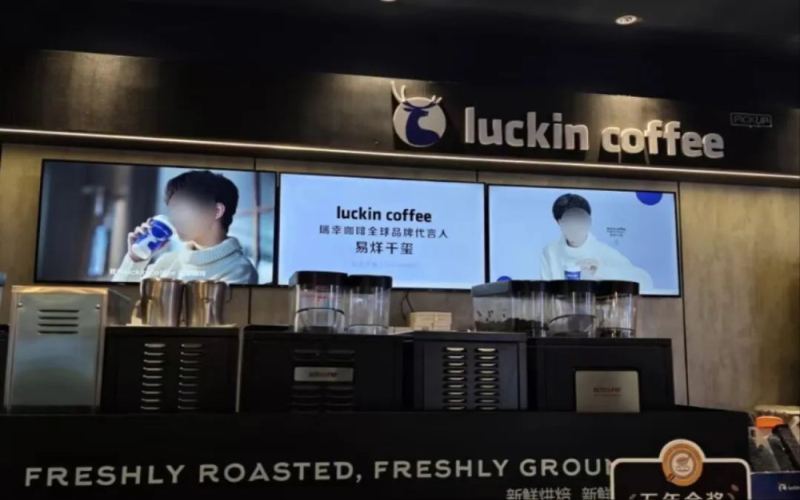
Luckin Coffee store photo controversy: customer photographing an ad featuring Jackson Yee was asked to stop, official customer service responds there is no such rule
Recently, after Luckin Coffee signed Jackson Yee as its brand ambassador, fans flocked to stores to take photos as mementos. However, some customers reported being discouraged by staff when photographing the in-store TV loop advertisements, with staff claiming photography was prohibited inside the stores. This incident sparked widespread discussion, with some employees confirming such a rule exists, while more employees said there were no related restrictions. Luckin's official customer service responded that there is no rule against taking photos and that they would verify the situation. The incident reflects inconsistent management standards across brand stores and has left fans disappointed in their expectations for ambassador promotions. Front Street Coffee follows developments in the coffee industry and brings you a summary of the entire incident. [more…]
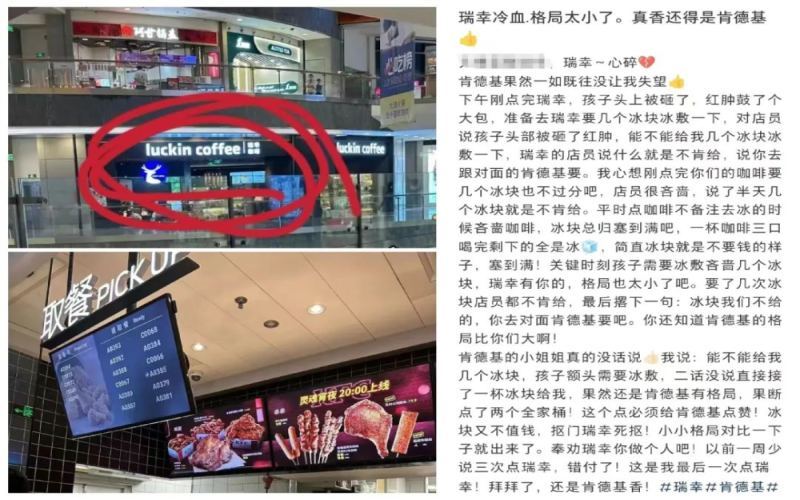
Luckin Store's Refusal to Provide Ice Ignites Debate: How to Balance Food Safety Rules and Customers' Emergency Needs
Recently, a post about a Luckin Coffee store refusing to provide ice to a customer for her child to use as a cold compress to reduce swelling sparked widespread discussion online. The customer, whose child had suffered a head injury and urgently needed ice, was politely declined by staff citing company policy, and was suggested to seek help at the KFC across the street. Behind this incident lies the dilemma that chain beverage brands face between food safety control and customers' emergency needs. Luckin employees revealed that the rule against providing ice separately stems from a previous incident in which someone sent store ice for testing, triggering an economic dispute. Since then, bar-counter surveillance has been monitoring in real time, and those who violate the rule may face bonus deductions. However, when customers face special emergencies, should there be room for flexibility? Front Street Coffee takes you into an in-depth discussion of this topic. [more…]

Brazil Adjusts PIS-Cofins Tax Credit Rules, Coffee and Other Agricultural Exports Under Pressure, Global Prices May Rise Further
The Brazilian government recently submitted an executive order to Congress aimed at tightening the rules for the use of federal PIS-Cofins tax credits, with the goal of closing tax loopholes across multiple industries and supporting the objective of eliminating the fiscal deficit this year. However, this move has met strong opposition from the agricultural sector, with exporters of coffee, meat, fruit, grains and other products expected to see revenues fall by 26.3 billion reais. The Brazilian Coffee Exporters Council pointed out that the new rules will increase corporate cash flow pressure and operating costs, potentially triggering food inflation and unemployment, and weakening the international competitiveness of Brazilian coffee. Meanwhile, severe weather in Vietnam has led to reduced production and already pushed up coffee futures prices, and a slowdown in Brazilian exports could further fuel the rally. Notably, Luckin Coffee has signed a memorandum of cooperation with the Brazilian side, planning to purchase about 120,000 tons of coffee beans over the next two years, which brings good news for Brazilian exports. Front Street Coffee reminds enthusiasts to pay attention to the impact of policy changes on the coffee market. [more…]
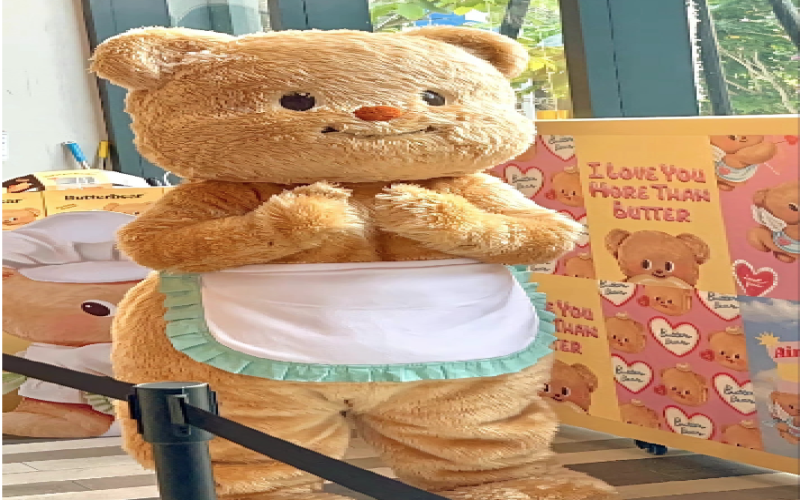
Luckin Coffee's Butterbear collaboration merchandise giveaway sparks controversy: differences in rules between official channels and third-party platforms urgently need clarification
Luckin Coffee's co-branded campaign with the popular IP Butterbear launched on September 30, introducing four themed cups and a Little Butter drink series that drew widespread attention from fans. However, after the campaign began, many consumers reported that orders placed through third-party platforms such as Ele.me did not come with the co-branded stickers, which was inconsistent with the official promotion's promise of "free with any 2 cups." Customer service responded that peripherals could only be obtained by ordering through the Luckin App or mini-program, prompting consumer questions about the lack of transparency in channel rules. The incident reflects the problem of inconsistent messaging in brands' multi-platform marketing and serves as a reminder that consumers should carefully confirm giveaway conditions before placing orders. [more…]