







When Was Coffee Introduced to Europe? Starbucks Korea Limits Seats
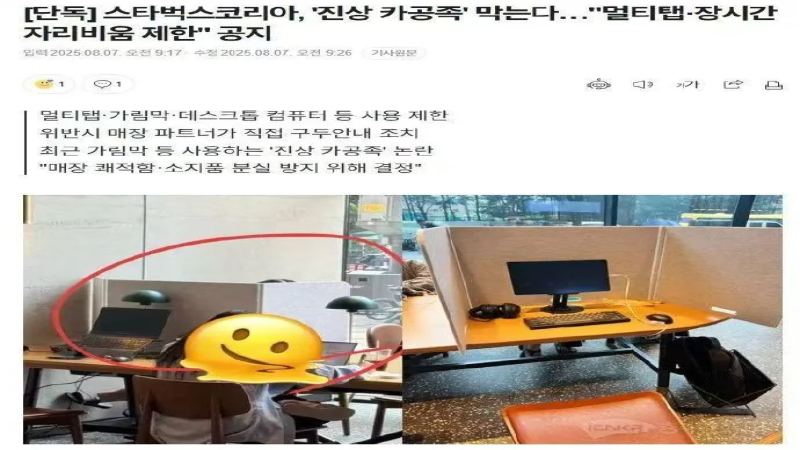
Starbucks Korea has told stores nationwide to restrict customers from using dividers, personal desktop computers, printers, and multi-socket power strips, and to control long absences from occupied seats or one person holding several seats. Staff will first give verbal reminders. The move follows a surge in complaints about cafe study-ers and cafe workers, after a Seoul branch posted a notice clearing seats left unattended for over 30 minutes.
The policy expanded from that single store to the whole country after related posts spread through online communities. Most consumers welcomed the limits, while some voiced doubts about enforcement. The shift touches a long-running question of what a coffee house is for, a debate that dates back to when was coffee introduced to europe, when cafes became places for reading, talking, and trade rather than long-term desks.
According to South Korean media reports, Starbucks Korea headquarters has issued a notice to stores nationwide that customers will now face restrictions on using dividers, personal desktop computers, printers, and multi-socket power strips in stores, and that occupying seats for long periods while away from them, or one person monopolizing multiple seats, will also be subject to control. This tightening of the rules stems from a continuous surge in complaints related to "cafe study-ers" and "cafe workers." Earlier, a store in Seoul sparked heated discussion by posting a notice stating that "seats will be cleared if left unattended for more than 30 minutes," with most consumers applauding while some voices raised doubts. Several months later, this set of restrictive measures has finally expanded from a single store to the whole country. This article sorts out the ins and outs of the incident and the attitudes of all parties.
▲ Click to follow | Tea Beverage Trends
According to South Korean media reports, industry insiders revealed that Starbucks Korea headquarters has issued a notice to stores nationwide, deciding to restrict customers from using dividers, personal desktop computers, printers, and multi-socket power strips in stores.
It is reported that from now on, in Starbucks stores, anyone using computers, printers, and similar equipment for long periods and at high load via multi-socket power strips, or installing dividers on tables, will first receive verbal reminders from staff. In addition, leaving personal belongings on a table while being away from the seat for a long time, or one person occupying several seats at once, may also be included in the restrictions, considering the inconvenience it brings to other customers visiting the store.
As for why Starbucks Korea headquarters has successively introduced these restrictive rules, the reason lies in the recent sharp rise in complaints targeting two types of customers: "cafe study-ers" and "cafe workers." Previously, in a local Starbucks branch, a customer simply set up a divider on a table in the dining area, enclosing a private territory, and then placed a tablet and keyboard on it to start working. After related content spread to online communities, it triggered widespread discussion. In the view of Starbucks Korea, such behavior inevitably hinders other ordinary customers who come specifically to the store to drink coffee, so it decided to take action against such situations. A relevant person in charge at Starbucks Korea responded: "We implement customer guidance measures, on the one hand hoping that every customer who visits the store can have a comfortable and smooth store experience, and on the other hand to prevent the risk of theft or loss of belongings during long periods away from seats."
The report also mentioned that as early as May this year, South Korean netizens noticed that a Starbucks store in Seoul had posted a notice in the store aimed at "cafe study-ers" and "cafe workers," stating: "If a customer leaves their seat for more than 30 minutes, staff will clear the seat, and their personal belongings will be stored uniformly in the store's lost-and-found box."
At the time, the vast majority of South Korean consumers expressed support for this notice. Some complained: "I once ran into a man and a woman in a coffee shop who just left their backpacks and walked off—really speechless"; some said bluntly: "Honestly, Starbucks has already been quite tolerant toward cafe study-ers. If even Starbucks can't stand it anymore, you can see how excessive it has become"; and some netizens lamented: "I hadn't been to Starbucks for a long time, and when I went in, I found more than 90% of customers were using computers, and many of them would even go out to eat and then come back to continue sitting. The scene was truly absurd."
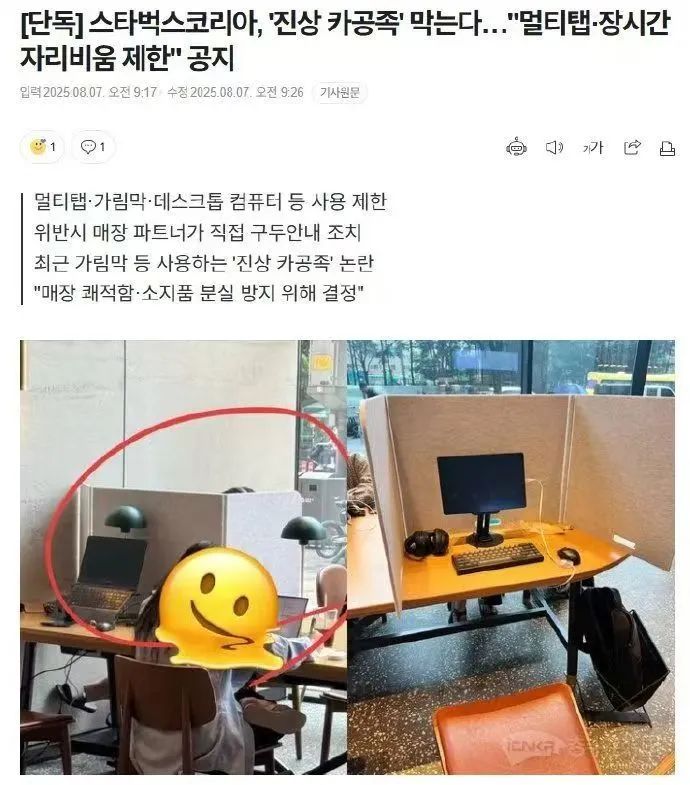
(The picture shows a notice posted in May this year at a Starbucks store in South Korea.)
There were also voices saying: "I hope all coffee shops learn from Starbucks. Leaving for more than 30 minutes—isn't that just going out to eat?" They argued that other coffee brands could likewise follow this practice, crack down on customers who occupy seats for long periods, and return seats to more consumers.
Of course, a small number of netizens disagreed: "It's not like customers didn't order drinks. They spent the money, so why treat them like this?"; "What if someone really has an emergency and has to leave for more than half an hour? Do they have to order another round when they come back?"; "Besides, not everyone is a cafe study-er who refuses to leave. Affecting all customers because of the behavior of a few individuals probably isn't very appropriate."
Because this notice caused considerable controversy online at the time, the Starbucks store that posted it once clarified that the notice represented only the position of that store and could not represent all Starbucks stores in South Korea. However, several months later, Starbucks Korea still decided to roll out this set of restrictive measures nationwide—perhaps the troubles caused to stores by "cafe study-ers" and "cafe workers" have intensified, forcing the brand to formally take action.
Image source: Internet
For more tea-related information, welcome to scan the QR code to follow "Tea Beverage Trends." Follow now to learn tea knowledge and tea art-related content. Long-press to identify the QR code and follow
The above content is compiled by CoffeeHunters, a coffee news website.


