







How does the Starbucks Taiwan seat rule affect coffee is like third space?
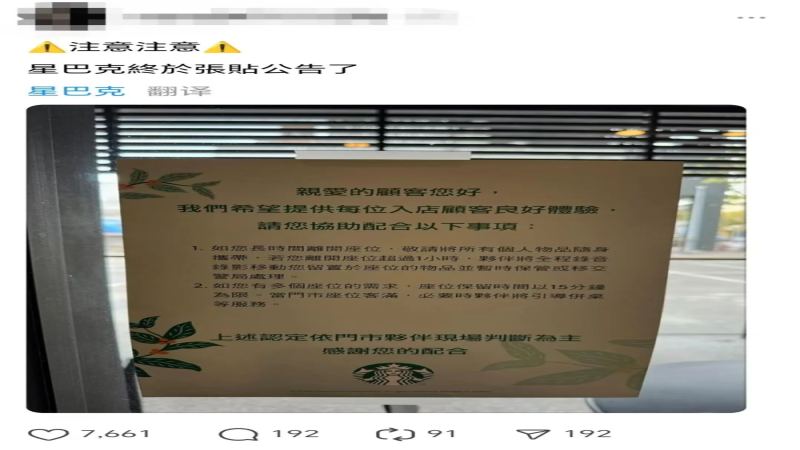
A Starbucks store in Taiwan posted a notice stating that if a customer leaves their seat for more than one hour, staff will record audio and video throughout, move belongings left on the seat, and hand items to police if necessary. Employees said the rule has applied at all stores since April 1, with irregular patrols and notes used to track time.
Long-seat hogging has been a persistent problem for coffee chains, and Starbucks, which markets itself as a third space, feels it most. Regulars leave laptops and bags to hold seats, but some customers vanish for long stretches, leaving others staring at empty spots. Supporters say the rule protects other consumers; opponents question enforcement and dispute risk over belongings.
Coffee chains have long struggled with the problem of customers hogging seats, and Starbucks, which bills itself as a "third space," is especially affected. Recently, a netizen noticed that a Starbucks store in Taiwan had posted a notice stating that if a customer leaves their seat for more than one hour, staff will record audio and video throughout, move the personal belongings left on the seat, and hand them over to the police if necessary. The move sparked heated discussion, with supporters saying it helps protect the rights of other consumers, while opponents question how it can be enforced and the risk of disputes over belongings. Starbucks employees responded that the new rule has been implemented at all stores since April 1, and that staff will patrol irregularly and attach notes to keep time. This article sorts out the background of the incident and the views of all sides.
For a long time, customers occupying seats for extended periods has been a thorny problem for many chain brands, and Starbucks, which sells itself on the concept of a "third space," knows this all too well. To keep store seats from being occupied by a small number of people for long periods and dragging down table turnover, some netizens have noticed that Starbucks appears to have rolled out a new rule to try to turn the situation around.
From photos taken by customers, a Starbucks store in Taiwan posted a notice listing two things it hoped customers would cooperate with, one of which stated: if a customer leaves their seat for more than 1 hour, staff will record audio and video throughout, move the personal items left on the seat, and depending on the circumstances keep them temporarily or hand them over to the police.
Once the post went up, it immediately set off a storm of discussion among netizens. Regular customers said that with its comfortable seats and quiet atmosphere, Starbucks has always been a gathering place for office workers and students, and once they have to step away from their seats for something, they leave laptops, backpacks and the like on the table or chair to signal that the spot is still in use.
However, some customers who are used to reserving seats with personal belongings may put their things down and then vanish without a trace, leaving other consumers who want a seat staring helplessly at empty spots and complaining on social platforms about the poor store experience. Not only that, but the arbitrary behavior of seat-hoggers also disrupts the normal operation of the store, lowers table turnover, and forces staff to divert extra attention to watching over personal belongings on empty seats, for fear of incidents such as theft of property in the store.
Therefore, after hearing that the brand had introduced the new rule, many people gave it their wholehearted support, feeling it might protect other consumers' dining rights. "Finally, every time I go it feels like a library," "Leaving your seat for 20 minutes is already too much, let alone 1 hour?", "People who buy drinks have nowhere to sit, while bags and laptops fill the seats — this really needs to be dealt with."
Some even called on other local chain brands to "follow Starbucks' lead" and introduce rules limiting customers from occupying seats for long periods under various circumstances, to improve the dining environment in stores.
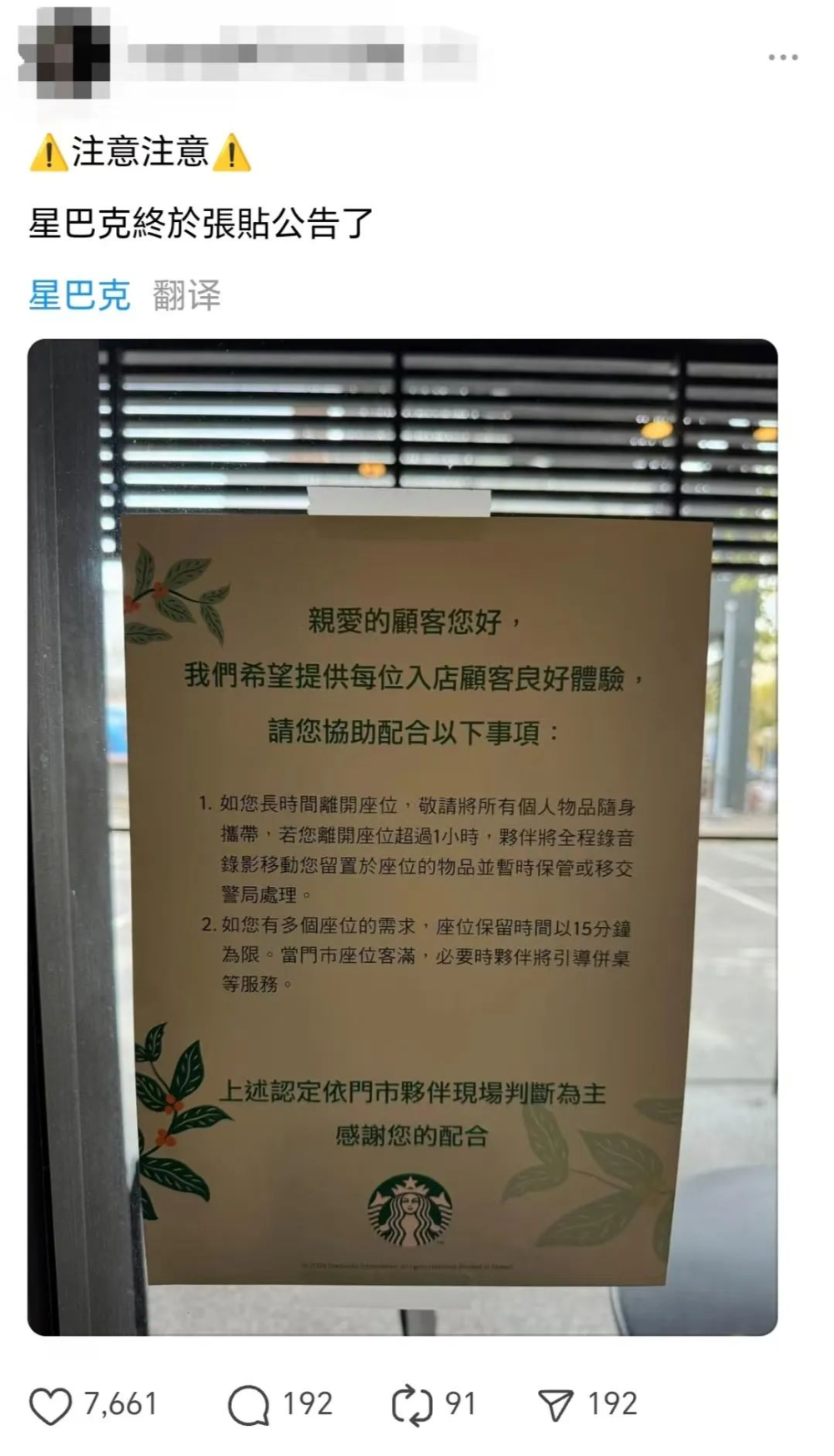
However, back in July last year, Starbucks had already introduced rules for seat-hogging in stores, such as a 15-minute seat reservation time and staff proactively helping to share tables when the store is full. But regular customers reported that these measures had little practical effect, and the seat-hogging in stores did not decrease.
On that basis, some netizens are not optimistic about the new rule Starbucks recently posted, and directly pointed out its flaws: "How do staff determine that a customer has been away from their seat for more than 1 hour?" In addition, some believe that Starbucks staff moving important belongings such as bags and laptops without the owner's permission could invite customer complaints or trigger conflicts between employees and customers.
In response, some media outlets asked Starbucks for clarification. Employees interviewed said the official new rule has been implemented at all stores since April 1, and that store staff will patrol the seating area irregularly. If they find a customer has left their seat for too long, they will first stick a note on the table and record the current time; if they notice the customer has still not returned after more than 1 hour, they will handle it according to the new rule.
Image source: Internet
Disclaimer: Some images in this article are from the Internet, and for some content on the website, such as images, we will respect the original author's copyright and indicate the source. However, due to the large volume, there may be individual images or texts that have not yet been credited in time; please forgive us. If the original author has any dispute, they may contact the website to handle it, and once verified we will correct it immediately. Compiled and edited by "Coffee Workshop"; please indicate the source when reposting. If there is any infringement, please notify us for deletion. Thank you~!
The above content is compiled by CoffeeHunters, a coffee news website.


