







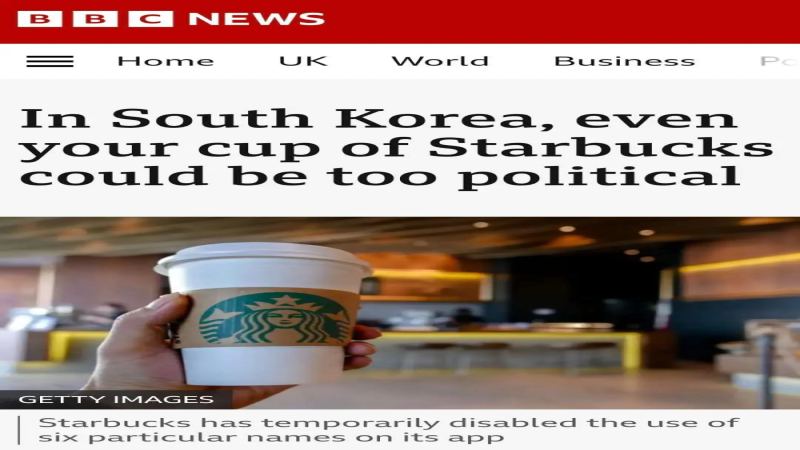
Why does the barista coffee origin service lead to nickname rules?
Starbucks Korea has blocked the names of six presidential candidates, plus former President Yoon Suk-yeol, from being used as app nicknames before next month's election on the 3rd. The "Call My Name" service lets customers set a nickname that baristas call out when a drink is ready, and staff were being forced to shout political names in crowded stores.
The nickname feature was designed to create a warm exchange between staff and customers, but during a tight election race some users set candidate names or clearly political labels, and similar incidents appeared in stores across the country. Starbucks Korea responded by adding input restrictions on the app. The company has not said whether the temporary rule will be lifted after the vote.
Starbucks Korea's "Call My Name" service was originally intended to bring staff and customers closer together, but on the eve of South Korea's presidential election, some customers turned it into a stage for political jesting. Multiple foreign media outlets reported that because some people placed orders using the names of presidential candidates, baristas were forced to loudly call out these sensitive names in public, prompting the brand to urgently introduce new rules. Starting before the election on the 3rd of next month, the names of six candidates, including Lee Jae-myung, as well as the name of former President Yoon Suk-yeol, can no longer be used as nicknames on the Starbucks app. Is this rule meant to maintain store order, or is it being overly sensitive? Let's take a look at how the whole incident unfolded.
▲
Click to follow | Daily specialty coffee culture magazine Coffee Workshop
According to multiple media outlets including the BBC and Asia Daily, Starbucks Korea recently introduced a temporary rule explicitly prohibiting customers from using the names of presidential candidates as personal nicknames when placing orders.
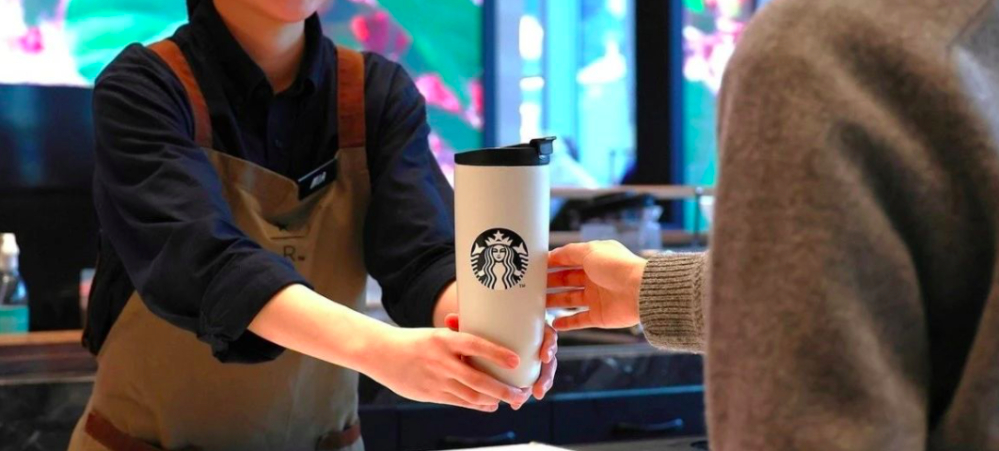
In South Korea, Starbucks has a signature service called "Call My Name." Customers set a nickname through the official app, and once their drink is ready, the barista calls out that nickname to let the customer know their order is up. The original intent of this design was to create a warm sense of interaction between staff and customers. Recently, however, this thoughtful service has been abused by some users, causing no small amount of trouble for store employees.
Reports indicate that South Korea is set to hold its presidential election on the 3rd of next month, and the race is extremely tight. As a result, many customers deliberately set the names of presidential candidates as their nicknames, or used clearly politically inclined labels, when ordering through the Starbucks app during the election period. After orders were completed, employees had no choice but to loudly call out these embarrassing or even uncomfortable names in public, and similar incidents occurred frequently across multiple stores.
Faced with this situation, Starbucks Korea responded quickly. Addressing the misuse of the nickname feature by customers, it adjusted its nickname-setting rules and added input restrictions on the app. It is understood that when South Korean users register or modify their nicknames, they may not include content that violates social norms, demeans others, embarrasses store employees, or may cause discomfort.
The new rules also specifically state that during the presidential election period, users will not be able to register using the names of six presidential candidates, including Democratic Party candidate Lee Jae-myung. At the same time, it is not permitted to attach support or opposition messages to candidate names, and specific words that could cause misunderstanding among employees or customers are also prohibited.
In addition, the name of former President Yoon Suk-yeol has likewise been placed on the banned list. As for the names of other political figures, they are temporarily not subject to this new Starbucks Korea rule.
A Starbucks Korea representative said of this: "We do not take any religious or political stance. We actively monitor and restrict the use of negative language, profanity, or any expressions that would be difficult or inappropriate for our staff to shout out loud."
It can thus be seen that in order to remain neutral on sensitive issues such as religion and politics, Starbucks uses a real-time monitoring system to block profanity, vulgar slang, and other content in user nicknames that is unsuitable for employees to call out in public. Officials also stated that this restriction will be adjusted again after the presidential election ends, at which point users may freely use the names of political figures, though behavior involving attaching inappropriate expressions after names will still be restricted.
However, according to the BBC, although this is not the first time Starbucks has restricted the use of specific words, it is the first time it has banned the names of all presidential candidates. And this targeted new rule seems somewhat overly sensitive to some South Koreans. Some people believe the brand's restrictions could affect the normal purchasing behavior of ordinary citizens who happen to share the same names as the candidates. Others feel that although Starbucks' new rules are too nitpicky, they can understand the reasons behind the company's decision.
Image source: online screenshots
Disclaimer: Some images in this article are sourced from the internet. For some content on the website, such as images, we will respect the original copyright and indicate the source. However, due to the large volume, there may be个别 images and text that have not yet been credited. Please forgive us. If the original author has any disputes, they may contact the website for handling, and once verified, we will correct it immediately. Compiled and edited by "Coffee Workshop." Please indicate the source when reposting. If there is any infringement, please inform us for removal. Thank you~!
(Note: Front Street Coffee reminds you that in coffee consumption settings, respecting the feelings of baristas and other customers is always an important part of enjoying specialty coffee culture.)
The above content is compiled by CoffeeHunters, a coffee news website.


