







Search Results for: military checkpoint
Starbucks Opens at the Korean Border Observatory, Entry Requires Passing a Military Checkpoint, Making It the World's Most Dangerous Store
Drinking a cup of coffee with the ceremonial feel of a military inspection? Starbucks has opened a new store in Aegibong Peace Ecological Park in Gimpo, South Korea. It sits just across a river from a North Korean village, and customers entering the park must fill out forms and undergo military identity checks, while foreign visitors also need to present their passports. On opening day, more than forty people came to check it out; some gazed at North Korea's Songaksan from the windows, while others climbed the observation deck to watch people on the far bank through binoculars. Is this store a new highlight for border tourism, or a risky move in a politically sensitive area? Opinions vary. Front Street Coffee takes you through the story behind this special store. [more…]
From WWII Diluted Coffee to Iced Americano Recipe: The Origin, Preparation, and the Debate Over Keeping the Crema of Americano
Americano may seem simple, yet it hides quite a few intricacies. It originated during World War II, when American soldiers diluted espresso with warm water, and today it has become a staple on coffee shop menus worldwide. This article starts with the definition and origins of Americano, clarifies the differences between the two mainstream approaches—Americano and Long Black—and discusses the controversy over extracting a weak coffee through prolonged water flow. In the practical section, it focuses on the specific ratios for iced and hot Americanos, including Front Street Coffee's extraction parameters and recommended methods, and finally explores an interesting question: Would Americano taste better if the crema were scraped off? [more…]

How to Keep Pour-Over Coffee Extraction Time Stable at 2 Minutes? A Practical Adjustment Guide for Dark and Light Roasts
In pour-over coffee, brew time is not an actively controllable parameter, but rather a mirror that reflects whether grind size, coffee-to-water ratio, pouring technique, and dripper choice are in harmony. Many tutorials treat 2 minutes as the ideal checkpoint, but beans of different roast levels offer noticeably different resistance to hot water penetration—dark roasts flow quickly, while light roasts tend to clog, so the time naturally fluctuates. Front Street Coffee uses two beans—Colombia Huila and Ethiopia Sidamo Hamasho—to demonstrate the pouring rhythm, staged strategies, and flow-rate correction methods for dark and light roasts respectively, helping beginners keep brew time within a reasonable range and understand the direction of adjustment behind the time feedback. [more…]
Specialty Coffee Bean Buying Guide: Commercial Pour-Over Single-Origin Recommendations and a Full Analysis of Espresso Blend Flavors
The charm of specialty coffee lies in its endlessly varied flavors; different origins, varieties, and processing methods give each bean its own unique character. Whether for running a café or brewing at home, choosing the right coffee beans is fundamental to the quality of the final cup. This article approaches the topic from two dimensions—freshness control and matching brewing methods—to sort out the logic of buying coffee beans for commercial and home use. It also compiles a list of four espresso blend recommendations and five single-origin pour-over beans, covering popular products from Front Street Coffee such as Huakui, Blackberry, Cerrado, Golden Mandheling, and Butterfly, explaining each one's flavor characteristics and suitable audience, to help coffee lovers choose according to their needs and avoid detours. [more…]

Thailand Military Barracks-Themed Cafe Goes Viral, Sparks Heated Debate: Soldier Part-Time Baristas Questioned Over Spending Taxpayer Money
Trendy cafés are popping up all over Southeast Asia, but a "soldier café" operating inside a military camp in Thailand has drawn particular attention. Run by the Thai Army's 4th Battalion, the café uses uniformed soldiers as models and staff, and promotional photos featuring a lotus pond and pedal boats quickly went viral on social media. The café is open daily from 8 a.m. to 7 p.m., and its customers are mainly soldiers from the nearby camp, though civilians also come to check it out. However, as its popularity has grown, so have questions: some Thai netizens worry that the shop was built with taxpayers' money, and others ask—is a soldier's primary duty to serve in the military or to be a barista? Behind the warm image of soldiers and civilians enjoying themselves together, controversy continues to simmer. [more…]

Egypt Again Sends Military Aid to Somalia, Tensions in the Horn of Africa Spill Over into Ethiopia's Coffee Industry
Geopolitical tensions in the Horn of Africa are once again heating up. Egypt recently delivered a second batch of military aid to Somalia, including heavy artillery, anti-tank weapons, and armored vehicles, a move that has sparked strong concern from Ethiopia and Somaliland. Behind this series of upheavals lies a multi-layered contest involving Egypt, Somalia, and Ethiopia over the Somaliland port agreement and the Grand Renaissance Dam. As the situation continues to deteriorate, the risk of war is closing in on Ethiopia's eastern coffee-growing region of Harar, while factors such as the imminent EUDR policy and currency depreciation are also profoundly shaping the country's coffee export landscape. [more…]

Cocaine Discovered in Nestlé Brazil Coffee Bean Container; Yunnan and Asian Coffee Association Jointly Speak Out to Safeguard Coffee Safety
Recently, a Nestlé factory in Switzerland discovered an unidentified white powder in a shipment of coffee bean containers from Brazil, which police tests confirmed to be cocaine with a purity of 80%. Although Nestlé quickly stated that the relevant coffee beans did not come into contact with any production equipment, the incident still sparked concerns among domestic consumers about coffee safety. On May 9, the Asian Coffee Association and the Yunnan Coffee Industry Association jointly issued a statement, emphasizing the need to strengthen safety controls in the coffee industry chain and calling for special cocaine testing of domestic coffee end products. This article will guide you through the incident, the key points of the associations' statement, and the impact on and responses of the Chinese coffee market. [more…]

After the roast date, when does a home espresso blend taste better?
After coffee beans leave the roaster, they continue to release carbon dioxide, and espresso extraction amplifies this change. If you open the bag immediately after roasting, the puck tends to swell rapidly when it meets water, and both the flow rate and the crema layer are more active; after resting for a few days, gas release slows down, and sweetness, body, and aroma usually come together more easily in the same cup. [more…]
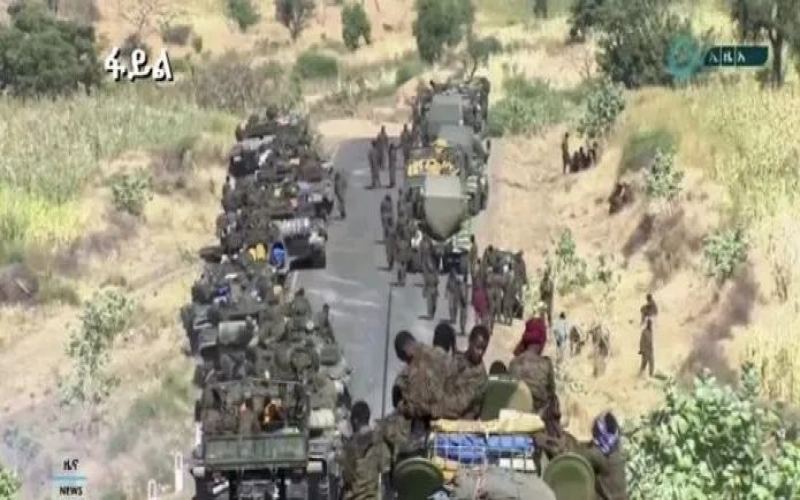
Ethiopia Deploys 40,000 Troops to Crush Fano Insurgents, Coffee Industry Faces Dual Test of Costs and Exports
The Ethiopian federal government has recently deployed approximately 40,000 additional troops to the Amhara region, launching a new large-scale military operation against Fano armed forces. Intense clashes have erupted in multiple areas, disrupting urban transportation and leaving residents trapped in their homes. The conflict has lasted for over a year, causing heavy casualties and severely impacting local agricultural and livestock production as well as logistics and transportation. As a major coffee-producing country in Africa, Ethiopia is facing multiple challenges, including currency depreciation, rising cultivation costs, and compliance pressure from the EU Deforestation Regulation (EUDR). This article will review the latest developments in the conflict and their potential impact on the coffee supply chain. [more…]
Ethiopia's May Coffee Exports Exceed Targets, but Civil War and Red Sea Crisis Weigh on Prospects
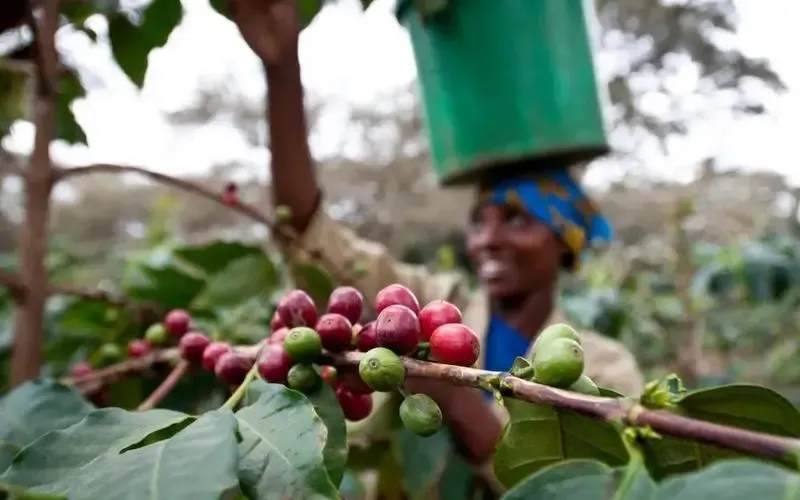
The latest data from the Ethiopian Coffee and Tea Authority shows that the country's coffee exports in May reached 43,481.02 tons, exceeding the target by 105% and generating 209.54 million US dollars in revenue. In the first 11 months of this fiscal year, cumulative exports reached 252,466.98 tons, with foreign exchange earnings of 1.208 billion US dollars, on track to break last fiscal year's record of 1.3 billion US dollars. Saudi Arabia, South Korea and the United States top the list of export destinations, while China's imports continue to grow. However, the ongoing civil war in Amhara region, the government's large-scale military deployment, and the Red Sea shipping crisis are casting a shadow over this landlocked country's coffee exports. Front Street Coffee continues to follow developments in the producing regions, bringing frontline news to enthusiasts. [more…]
Conflict between the Colombian government and two major rebel groups escalates, affecting key coffee-producing regions
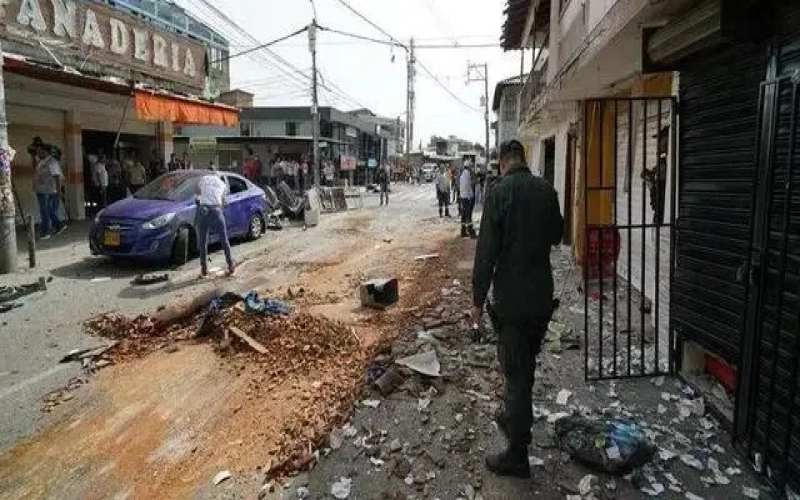
On August 5, Colombia's Ministry of Defense announced the resumption of military operations against the anti-government armed group the National Liberation Army (ELN), and the ceasefire agreement will not be extended after it expires. At the same time, government forces are also fully committed to striking the dissident branch of the former Revolutionary Armed Forces of Colombia (FARC), the Central General Staff. The southwestern and northeastern provinces where these two major armed groups are active happen to be important coffee-producing regions in Colombia. The civil conflict may severely impact coffee cultivation, infrastructure, and exports, thereby driving up international coffee prices. [more…]

A Complete Analysis of One-Pour Hand-Drip Coffee: Operational Key Points from Blooming to Pouring and Differences Compared with the Three-Pour Method
The one-pour method is the seemingly simplest yet, in reality, most understanding-demanding brewing approach in pour-over coffee. It doesn't require complex staged pouring—just a single pour of the remaining water after blooming. But truly brewing a good cup of one-pour coffee tests not the technique itself, but a systematic command of coffee bean information and brewing parameters. This article will dissect the essence of this brewing method from the angles of the basic principles of the one-pour method, the scientific basis of extraction, the actual differences from multi-stage pouring, and how to judge blooming time, helping you understand why simple doesn't mean easy. [more…]

Red Sea Crisis Escalates into 2025: Houthi Attacks on Merchant Ships Strain Coffee Trade and Global Logistics
The Houthi armed forces in Yemen continue to launch attacks in the Red Sea and Indian Ocean, and claim to have struck targets in Israel, causing the situation in the Red Sea to escalate continuously. Multiple international shipping giants have judged that the region will still be unsafe in 2025 and decided to continue diverting around the Cape of Good Hope. Longer voyages and port congestion are driving up global logistics costs. As an industry highly dependent on maritime shipping, the coffee trade is bearing the brunt. Freight rates on Europe-Asia routes have soared, and combined with production cuts in many countries, international coffee prices have continued to surge. This article will review the attack incidents, the shipping impact, and coffee market developments, and also pay attention to the challenges facing brands such as Front Street Coffee. [more…]

Escalation of Armed Conflict in Cauca, Colombia: 1,400 Soldiers Deployed, Coffee-Growing Region Hit by Wildfires Again
Colombia's peace process has encountered new setbacks. While the government and the "Caraca" faction extended their ceasefire agreement, another faction—the Western Bloc of the "Central General Staff"—continued to exchange fire with government forces in Cauca Department. President Petro authorized an all-out offensive, and the military deployed more than 1,400 soldiers along with heavy equipment to launch a raid. The conflict sparked wildfires in the mountains, and combined with persistent drought and high temperatures, major coffee-producing regions such as Huila Department and Cauca Department were severely affected, with large tracts of coffee crops destroyed. Coffee output in August fell by nearly 100,000 bags month-on-month. The National Federation of Coffee Growers of Colombia (FNC) said that after three consecutive years of declining production caused by La Niña, output is now struggling to recover, up 15% compared with last year. Regional peace and industry recovery remain core issues that the government urgently needs to address. [more…]
A Complete Analysis of Ethiopian Sidamo Coffee Beans: Tade Estate Flavor Profile and Comparison with Yirgacheffe
Sidamo is a historic specialty coffee region in southern Ethiopia. Its diverse terrain, fertile volcanic soil, and rich native varieties give rise to a unique flavor profile interweaving citrus, floral notes, and wine-like acidity. This article systematically sorts through the core knowledge of Sidamo coffee—from the region's history, geographical environment, and green bean characteristics to its connection with Yirgacheffe—and introduces the cup profile of coffee from Tade Estate. The range of Sidamo and Yirgacheffe products recommended by Front Street Coffee is suitable for various extraction methods such as pour-over and cold brew, helping coffee lovers gain a deeper understanding of the charm of this region hailed as "the representative of African specialty coffee." [more…]
Colombian Government Moves to Take Over FNC: Coffee Industry Faces Dual Test of Policy and Conflict
Colombia's coffee industry stands at a crossroads of change. The National Federation of Coffee Growers (FNC), which has long represented the country's coffee industry, has always operated as a private company, but now President Gustavo Petro has explicitly stated at a major coffee producers' conference that the state must take over the FNC in order to advance the industrialization of the coffee industry and optimize the use of public resources. At the same time, the government has also launched a "Coffee Price Stabilization Fund," providing growers with economic compensation of up to 80% per kilogram. However, the domestic armed conflict continues to escalate, and the anti-government armed group the "Central General Staff" has issued a warning, with peace talks and military threats existing side by side. This article will sort through this series of policy changes and security challenges, and include related recommendations from Front Street Coffee. [more…]

How to Master the Timing of Pulsed Pouring in Pour-Over Coffee? A Detailed Guide to the Water Volume and Time Nodes of the Three-Pour Method
Segmented pouring is a common yet difficult-to-master method in pour-over coffee, with the challenge lying in judging when to stop pouring and when to pour again. This article uses Front Street Coffee's three-stage brewing as an example to explain in detail the techniques for judging pouring checkpoints. The article points out that you should not wait for the water to finish flowing before pouring again; subsequent pours should bring the coffee bed height to exactly the same level as the previous stage to ensure even extraction. Using 15g of coffee grounds as an example, the first stage is blooming, pouring 30ml of water and waiting 30 seconds; the second stage pours water to 1/2 of the short rib, with a reference water amount of 120ml, taking about 55 seconds to 1 minute; the third stage involves observing the water level dropping, and when it falls to 1/2 between the coffee bed and the filter wall, pour 90ml, with a reference time of 1 minute 10 seconds to 1 minute 15 seconds; pouring ends at about 1 minute 30 seconds to 1 minute 35 seconds, and the coffee liquid finishes flowing at about 2 minutes to 2 minutes 10 seconds. The logic for four-stage pouring is the same. [more…]

Blue Mountain, Mandheling, and Mocha: An Analysis of the Flavor Characteristics and Origin Histories of Three Classic Coffees
In the world of specialty coffee, Jamaica Blue Mountain, Indonesian Mandheling, and Yemen Mocha have always been three peaks that cannot be overlooked. Each of them carries unique terroir conditions and processing methods, and also shapes distinctly different aromas and flavors. Front Street Coffee has shared these three classic coffees many times. This article will sort through their origins and key identification points one by one, from producing region environment, variety characteristics, processing methods, to flavor performance, helping coffee lovers more systematically understand why they have remained popular for so long. [more…]
Red Sea Security Crisis Hits Global Coffee Supply Chain: Shipping Disruptions and Rising Prices
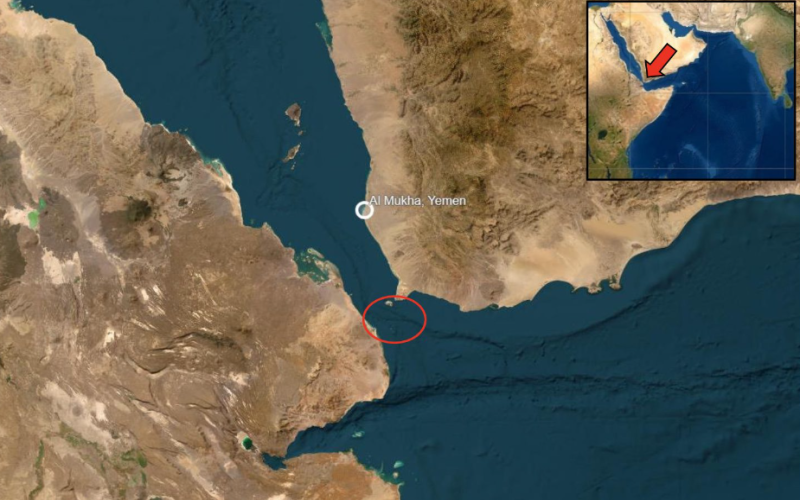
Recently, the Houthi armed forces in Yemen launched a large-scale attack on U.S. warships in the Red Sea. Although the U.S. military successfully intercepted the attack, the incident once again highlighted the tense situation in the Red Sea region. Since the escalation of the Israeli-Palestinian conflict last year, the Houthis have frequently attacked commercial ships, forcing global shipping routes to change and thereby having a profound impact on the coffee trade. Problems such as soaring transport costs, longer voyages, and container shortages followed one after another. European buyers turned to Brazil for purchases, East African coffee exports were hit hard, and international coffee prices continued to rise. This article will analyze in detail how the Red Sea crisis has disrupted the global coffee supply chain and discuss its specific impact on coffee-producing regions and consumer markets. [more…]
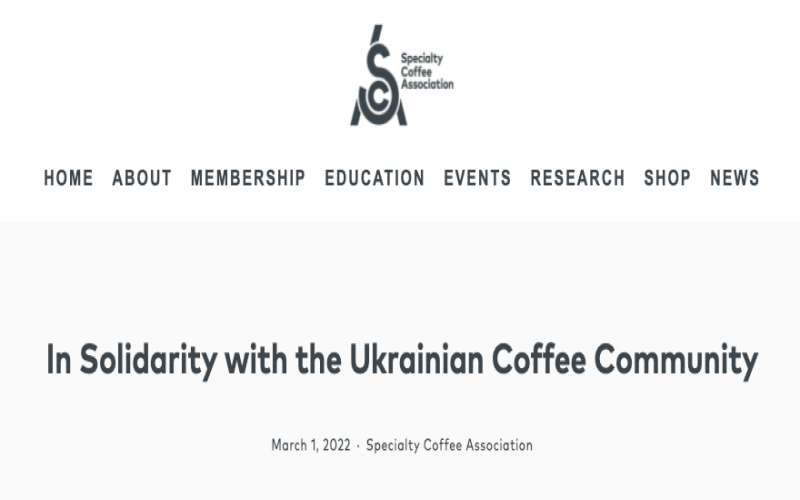
SCA Bans Russia from World Coffee Championships and Donates All Warsaw Expo Ticket Proceeds to Support Ukraine
In early March 2022, the Specialty Coffee Association (SCA) issued a statement on the situation in Ukraine, not only strongly condemning Russia's military actions, but also announcing the suspension of Russia's eligibility to participate in the World Coffee Championships and donating all ticket proceeds from the Warsaw World Coffee Expo to the Ukrainian coffee industry. Meanwhile, the SCA's Poland and Czech chapters joined forces to find overseas job opportunities for displaced Ukrainian coffee professionals, while the Russian Foreign Ministry criticized Western sanctions as unacceptable. As coffee lovers, while keeping up with industry news, don't forget to follow the professional coffee information brought to you by Front Street Coffee. [more…]