







What Does Coffee Extraction Time Tell You in Pour-Over?
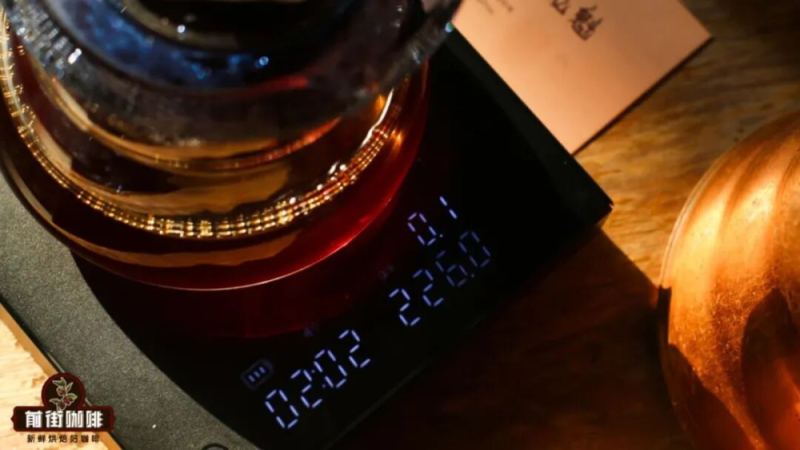
Pour-over extraction time is not a setting you control directly. It reflects grind size, dose, ratio, pouring technique, and dripper. For a 15g dose at a 1:15 ratio, 86-93°C water, granulated-sugar grind, and three-stage pouring, the target is about 2 minutes, give or take 10 seconds. Running far under 1:50 usually means under-extraction and a thin or sour cup.
Overshooting 2:10 signals the opposite problem. Dark roasts drain faster and light roasts tend to stall, so the clock moves on its own and the same recipe behaves differently across lots. Because coffee bean structure differs by roast level, treat time as feedback rather than a fixed rule, and adjust grind, flow, or dripper to bring the range back in line.
In pour-over coffee, extraction time is not an actively controllable parameter, but rather a mirror that reflects whether the grind size, coffee-to-water ratio, pouring technique, and dripper choice are in harmony. Many tutorials treat 2 minutes as the ideal checkpoint, but beans of different roast levels present noticeably different resistance to hot water penetration—dark roasts drain quickly while light roasts tend to clog, so the time naturally fluctuates. Front Street uses two beans—Colombia·Huila and Ethiopia·Sidamo Hamasho—to demonstrate the pouring rhythm, staged strategies, and flow-rate correction methods for dark and light roasts respectively, helping beginners keep brewing time within a reasonable range and understand the adjustment direction behind time feedback.
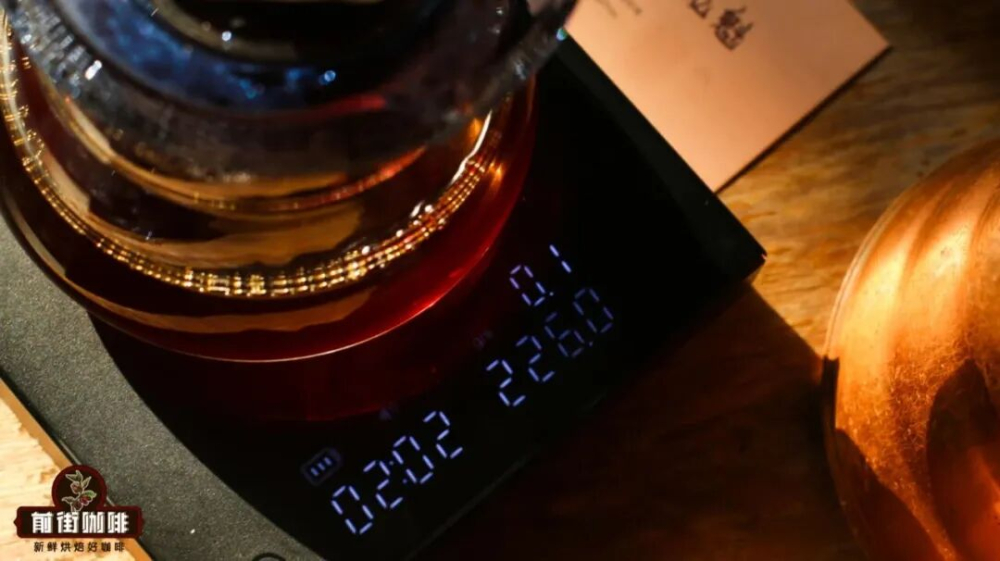
In pour-over coffee, extraction time is actually a rather passive variable, yet it can in turn verify whether the parameters you've set fall within a reasonable framework. The factors affecting it are first grind coarseness, coffee dose, and coffee-to-water ratio; next the pouring technique; and even the dripper's shape can bring subtle differences.
Experienced brewers coordinate based on the interrelationships among parameters, letting the time fall into a preset range. Beginners, however, being less familiar with each factor, find it hard to predict the penetration speed of coffee grounds, and when encountering new beans they often just take it one step at a time, so brewing time is left to chance.
Today Front Street will discuss how beginners can get brewing time to fall within the ideal range.
When brewing coffee, is there an optimal brewing time?
Looking through various tutorials, extraction recommendations usually can't avoid the "2 minutes" checkpoint. For example, Front Street's commonly used hot pour-over formula is 15g coffee, 1:15 coffee-to-water ratio, water temperature 86–93°C, granulated sugar grind size, and three-stage pouring. Under this combination, the ideal brewing time is about 2 minutes ±10 seconds.
Based on Front Street's past experience, when other parameters meet requirements, if the time is far below 1 minute 50 seconds (say only 1 minute 30 seconds to 1 minute 40 seconds), it means the hot water rinses the coffee grounds for too short a time, flavor compounds are insufficiently extracted, and the coffee tends to taste thin or sour. The problem may lie in grinding too coarse, water flow too strong, dripper draining too fast, or coffee grounds absorbing water too efficiently.
If the time noticeably exceeds 2 minutes 10 seconds (say above 1 minute 20 seconds), it means the hot water contacts the coffee grounds for too long, tail-end compounds are released excessively, and the coffee tends to be heavy or even over-extracted. Common causes are grinding too fine, water flow too weak, too many pouring stages, dripper draining too slowly, or coffee grounds absorbing water inefficiently.
Having read this, I believe everyone understands that 2 minutes is not a fixed standard—it is more of feedback information, telling us whether extraction meets expectations and which direction to adjust when the taste is off. Since brewing time can serve as one element for checking extraction conditions, we can turn it into a fixed parameter in the brewing plan, then work backward to adjust other variables.
How should coffee of different roast levels have their time controlled?
Besides the parameters mentioned above, the roast level of coffee beans also affects the penetration speed of hot water.
The darker the roast, the looser the bean structure, and the less resistance produced after absorbing water and expanding, so the coffee liquid flows faster; conversely, light-roasted beans receive heat for a shorter time, have a harder internal structure, produce more fines when grinding, and are heavier in mass, offering greater resistance to hot water, so brewing time naturally slows down.
Based on this, when facing dark-roasted and light-roasted beans, you can control pouring according to their respective characteristics. Here we use Front Street Colombia·Huila (dark roast) and Front Street Ethiopia·Sidamo Hamasho (light roast) as examples for demonstration.
Dark-roasted coffee
Coffee beans: Front Street Colombia·Huila
Coffee grounds: 15g
Coffee-to-water ratio: 1:15
Water temperature: 86–88°C
Dripper: KONO Meimon dripper
Grind size: granulated sugar (75% passing rate on No. 20 sieve)
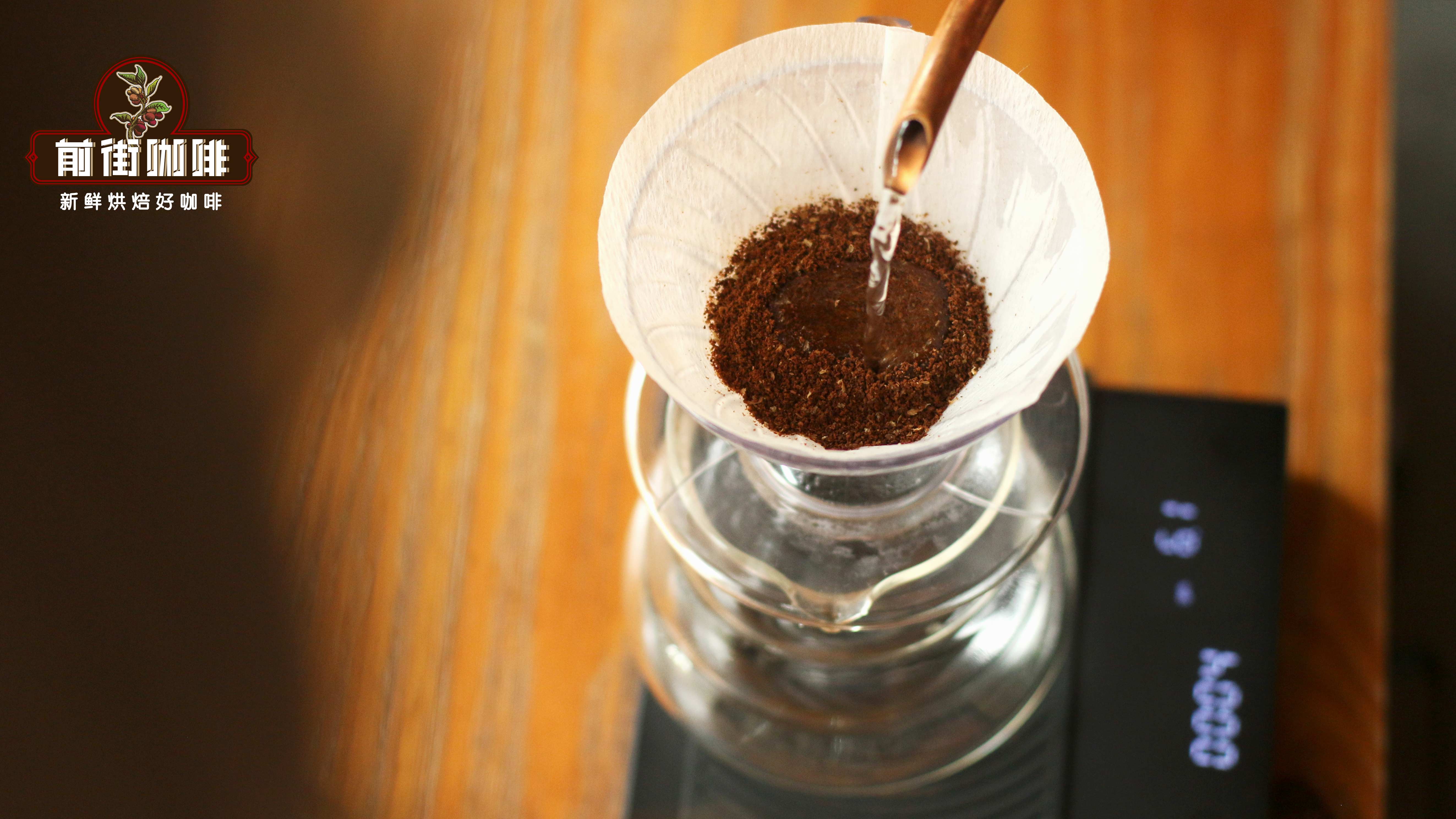
For the first stage, bloom with 30g hot water for 30 seconds; for the second stage, pour 100g hot water in a spiral path with a medium flow, continuously lifting the coffee bed to 2/3 the height of the dripper, being careful not to pierce through the coffee wall, finishing the pour in 45–55 seconds.
Wait for the coffee liquid to penetrate and reveal the bottom, about 1 minute 5 seconds to 1 minute 15 seconds; for the third stage, pour 95g hot water slowly in a small circle at the same flow rate, finishing all pouring at 1 minute 30 seconds to 1 minute 40 seconds.
Brewed this way, the final extraction time for Front Street Colombia·Huila is 1 minute 57 seconds, with a rich and mellow mouthfeel, aromatic without bitterness on entry, carrying caramel and nutty flavors.
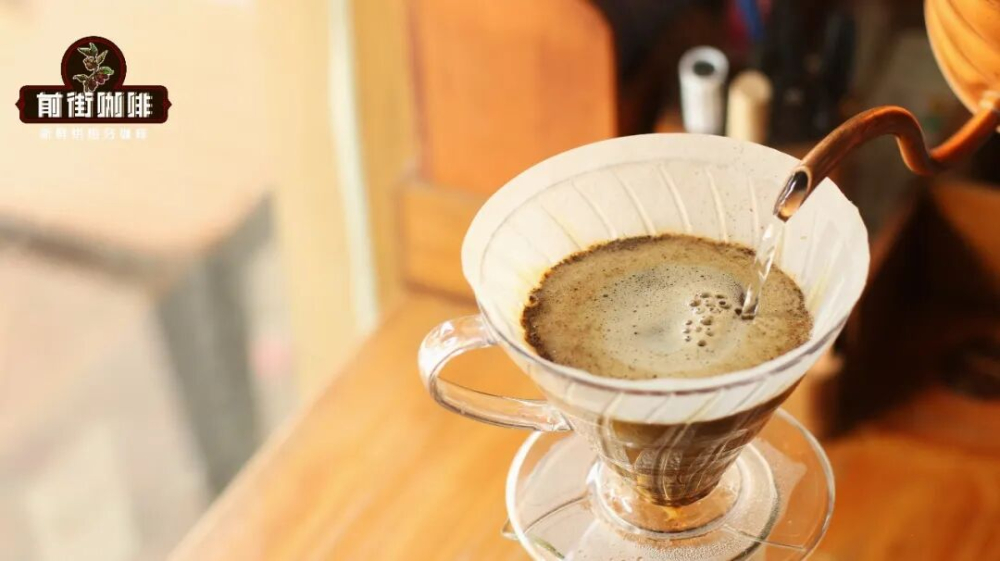
The most common problem with dark-roasted coffee is brewing time being too short. You can observe the coffee liquid's penetration speed at the end of the second pour; if it all drains in under 1 minute, it's advisable to add more stages, splitting the 95g into two parts and pouring with a small flow.
Light-roasted coffee
Coffee beans: Front Street·Sidamo Hamasho
Coffee grounds: 15g
Coffee-to-water ratio: 1:15
Water temperature: 92°C
Dripper: V60 dripper
Grind size: fine sugar (80% passing rate on No. 20 sieve)
The first stage likewise blooms with 30g hot water for 30 seconds; the second stage pours 100g hot water in a circle with a strong flow, lifting the coffee bed as much as possible to 4/5 the height of the dripper, finishing in 45–55 seconds—lifting the coffee bed is to increase the area for hot water to penetrate the coffee grounds.
Wait for the coffee liquid to flow down; when the coffee bed is revealed at about 1 minute 10 seconds to 1 minute 20 seconds, begin pouring the final 95g with a strong flow, ending the pour at 1 minute 35 seconds to 1 minute 45 seconds.
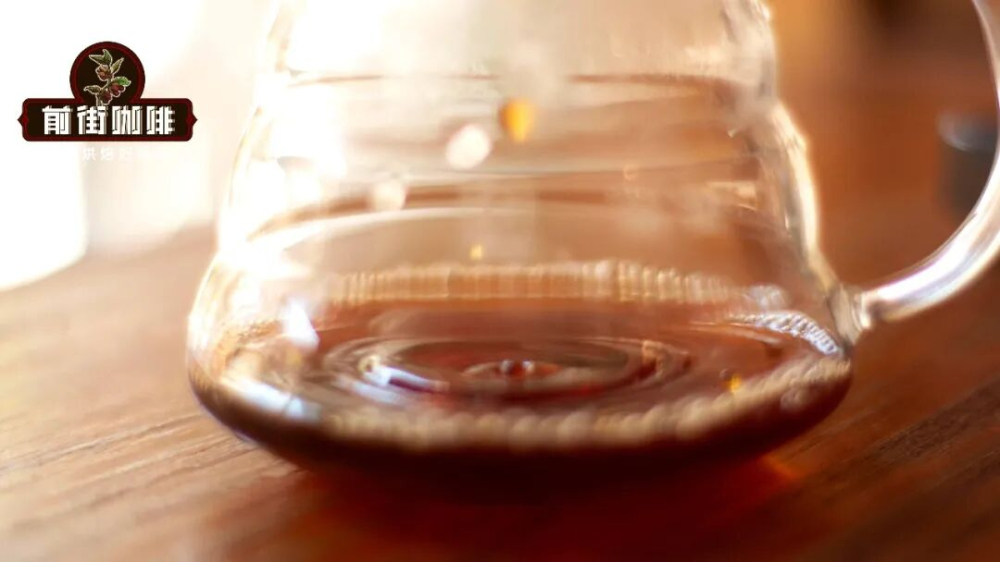
The final pot of Front Street·Ethiopia Hamasho has a total extraction time of 2 minutes 12 seconds, smelling very fresh, with white floral notes on entry and mango, guava, and orange flavors.
Contrary to dark-roasted coffee, light-roasted coffee often pools water because the flow rate is too slow, with extraction time always exceeding 2 and a half minutes. There are two solutions. The first is to increase the flow and pour in circles, letting large particles drive fines to distribute at the dripper's edge, which effectively reduces clogging probability and also favors subsequent even extraction.
The second is to increase the stages of blooming. For example, Front Street's most commonly used 30g hot water bloom for 30 seconds can become 20g water bloom for 20 seconds + 20g water bloom for 20 seconds, then pour 90g and 95g respectively. By supplying water multiple times, you increase the coffee grounds' water absorption rate and promote particle floating, which naturally reduces clogging problems.
The above content is compiled by CoffeeHunters, a coffee news website.


