







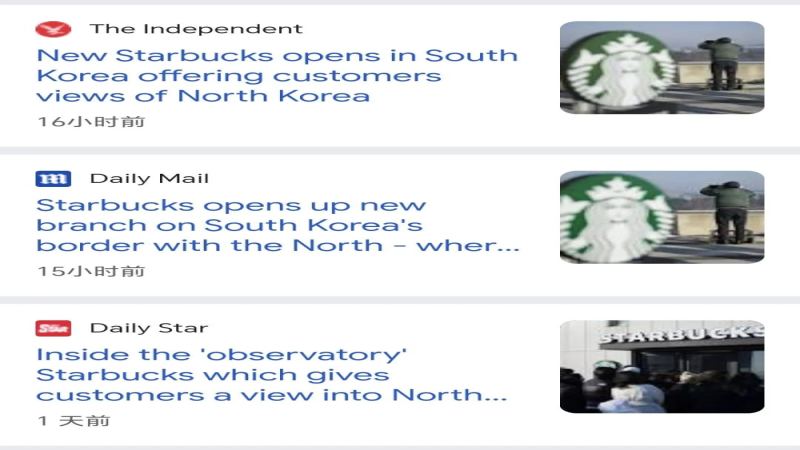
How does coffee culture reach the Korean border?
Starbucks has opened a store inside Aegibong Peace Ecopark in Gimpo, South Korea, about 1.4 kilometers from a North Korean village across the river. Customers must complete an entry form and pass a military identity check, and foreign visitors must also show a passport. On opening day more than 40 people visited, some watching North Korea's Songaksan through binoculars.
The branch is the brand's closest to North Korea and sits in a sensitive border zone where tensions remain high. Coverage by the Associated Press and CNN followed the opening. The store reflects how coffee culture expands into unusual locations, and it also raises questions about whether border tourism and specialty coffee retail belong in such a politically charged setting.
Drinking a cup of coffee with the ceremonial feel of a military inspection? Starbucks has opened a new store inside Aegibong Peace Ecopark in Gimpo, South Korea, just across a river from a North Korean village. Customers entering the park must fill out forms and undergo military identity checks, and foreign tourists must also present their passports. On opening day, more than 40 people came to check it out. Some gazed at North Korea's Songaksan from the windows, while others climbed the observation deck to watch people on the far bank through binoculars. Is this store a new highlight for border tourism, or a risky move in a politically sensitive zone? Opinions vary. Front Street Coffee takes you behind the story of this special store.
▲
Click to follow | Daily specialty coffee culture magazine Coffee Workshop
Yesterday, Starbucks opened a new branch at an observation deck in the South Korean border city of Gimpo. As soon as the news broke, it triggered widespread coverage by local South Koreans as well as multiple international media outlets including the Associated Press and CNN.
According to Yonhap News Agency, the store is located inside Aegibong Peace Ecopark in Gimpo, Gyeonggi Province, and is separated from the nearest North Korean village, Kaepung County, by only a river, with a straight-line distance of just 1.4 kilometers.
Because it is located near the inter-Korean border, customers who want to go in and have a cup of coffee must first fill out an entry application form before stepping into the ecopark and undergo identity verification at a South Korean military checkpoint. Foreign tourists must additionally present their passports.
Although the two Koreas are currently only in a state of armistice, tensions between the two sides remain high, and Kaepung County is believed to be one of the possible launch sites for the thousands of trash balloons North Korea has sent in recent months. Taken together, these factors may make this Starbucks, in the eyes of the outside world, arguably the most dangerous store in the world, and also the brand's closest branch to North Korea to date.
Even so, on opening day this special Starbucks still attracted more than 40 people to come and check in, including quite a few foreign customers who made special trips.
After entering, guests can choose a window seat, gaze out toward North Korea's Songaksan, take in the tranquil pastoral scenery, and leisurely savor a cup of coffee. They can also walk out onto the observation deck and use high-quality binoculars or a camera with zoom to see North Korean residents on the far side of the Han River with their own eyes.
This unique experience drew many visitors to gather on the viewing platform. A local South Korean resident interviewed said, "Now North Korea is right before our eyes. I really want to share this good cup of coffee with the North Korean residents living across the way."
An 80-year-old Vietnam War veteran said at the press conference for the opening of the new Starbucks store: "Drinking a cup of coffee here, I feel I can view North Korea, this country divided from us, with a calmer and more peaceful mindset." He added, "In the past, the concept of security felt rigid and tense, but now with this café, it feels calmer and more reassuring."
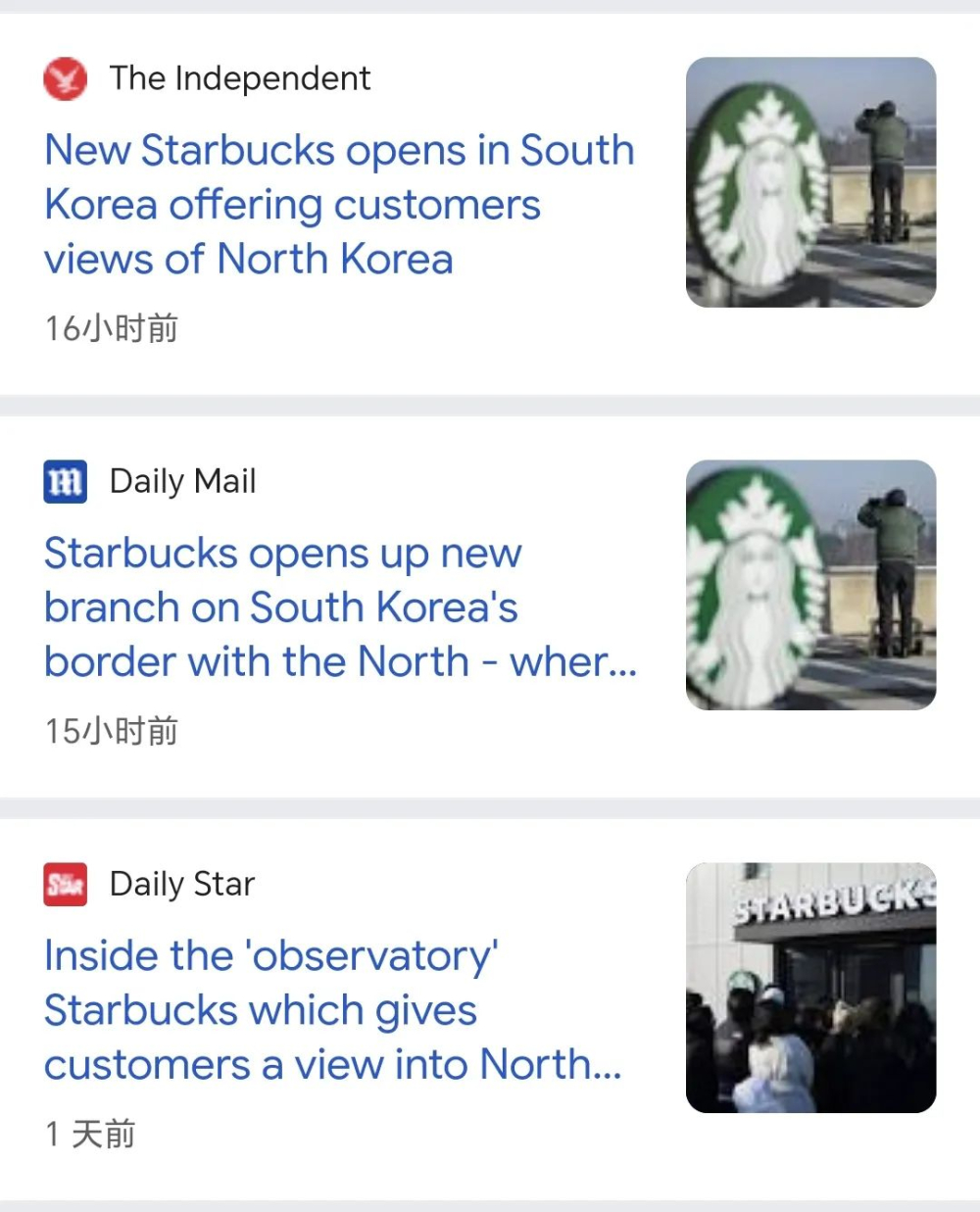
Of course, some people think that at a time of tense political relations between the two countries, Starbucks' choice to open a store on the inter-Korean border is inappropriate. In response, Gimpo Mayor Kim Byung-soo said he is not worried that opening a coffee shop here will provoke North Korea, and that on the contrary it helps change the outside world's stereotypical impression of the inter-Korean border area as originally gloomy and bleak.
In addition, Aegibong, where this Starbucks is located, once saw fierce fighting during wartime. The ecopark currently has facilities such as monuments and exhibition halls. The Gimpo city government hopes to turn it into an internationally famous tourist attraction and plans to jointly develop related commemorative merchandise with Starbucks.
Mayor Kim Byung-soo also pointed out that Starbucks' arrival is part of local efforts to develop border facilities into tourist attractions, and that through the presence of Starbucks, a representative capitalist brand, this store symbolizes that "security on the Korean Peninsula is quite stable."
Image source: Internet
Disclaimer: Some images in this article are from the internet. For some content on the website, such as images, we will respect the original author's copyright and indicate the source. However, due to the large volume, some images and texts may not have been credited in time. Please forgive us. If the original author has any disputes, they may contact the website for handling. Once verified, we will correct it immediately. Compiled and edited by "Coffee Workshop." Please indicate the source when reposting. If there is infringement, please inform us for deletion. Thank you~!
The above content is compiled by CoffeeHunters, a coffee news website.


