







How is the Red Sea crisis affecting coffee production in world trade?
Attacks by Yemen's Houthi forces on merchant shipping in the Red Sea have pushed global coffee logistics off course. Houthi missile and drone strikes, including a large-scale attack on three U.S. warships that the U.S. military said it intercepted, forced carriers to reroute vessels away from the Suez passage. The result for coffee has been longer voyages, higher freight costs, container shortages, and rising international coffee prices, with effects falling unevenly on producing regions and consumer markets.
The disruption reshapes buying patterns among main coffee producing countries and their customers. European buyers have shifted toward Brazil for supply, while East African exporters have been hit hard by diverted routes. Falling back on longer sea lanes adds weeks to delivery times and raises transport costs, which feeds into the price paid at the consumer end. The situation traces back to attacks that intensified after the Israeli-Palestinian conflict escalated.
Recently, the Houthi armed forces in Yemen launched a large-scale attack on U.S. warships in the Red Sea. Although the U.S. military successfully intercepted the attack, the incident once again highlighted the tense situation in the Red Sea region. Since the escalation of the Israeli-Palestinian conflict last year, the Houthis have frequently attacked merchant ships, forcing global shipping routes to change and thereby exerting a profound impact on the coffee trade. Problems such as soaring transportation costs, longer voyages, and container shortages have followed one after another. European buyers have turned to Brazil for purchases, East African coffee exports have been severely hit, and international coffee prices have continued to rise. This article will analyze in detail how the Red Sea crisis has disrupted the global coffee supply chain and explore its specific impact on coffee-producing regions and consumer markets.
According to multiple media reports, three U.S. warships recently came under missile and drone attack by the Houthi armed forces in Yemen in the Red Sea region. The U.S. military said it had carried out interceptions. A U.S. official noted that this was one of the largest-scale attacks experienced by U.S. warships during operations in the Middle East.
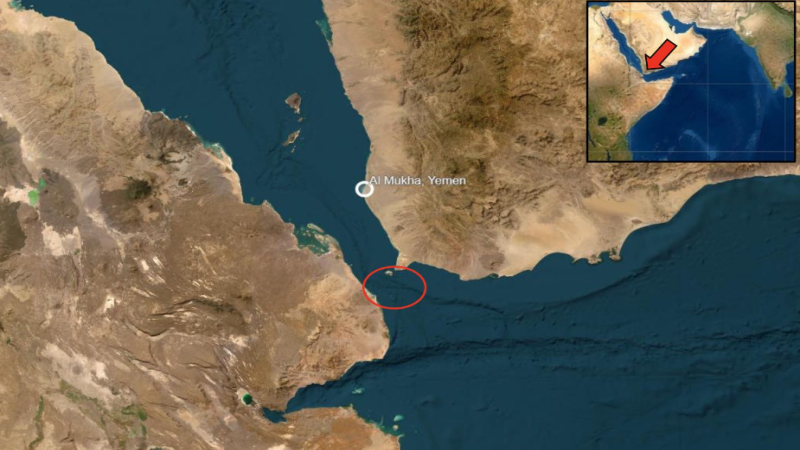
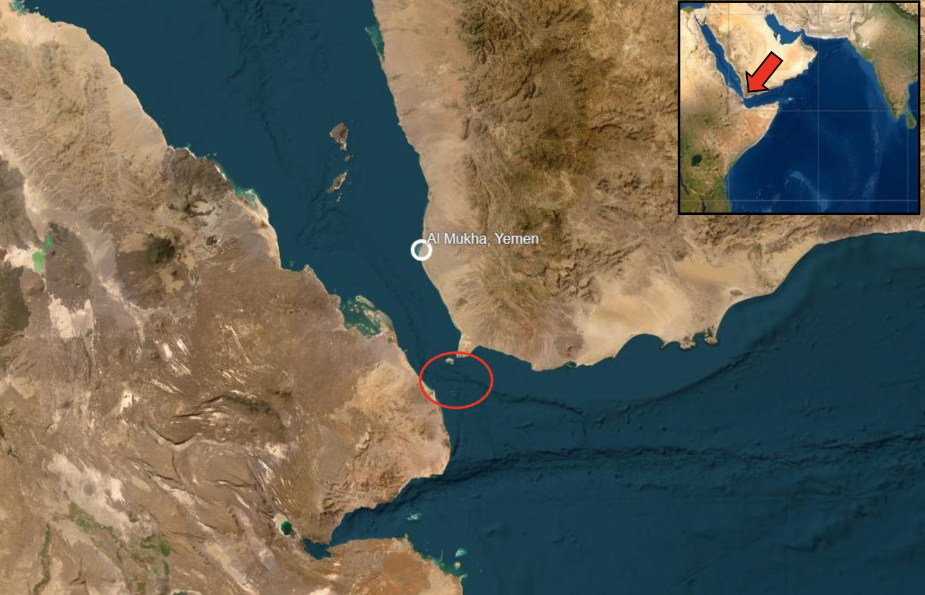
It is understood that the Houthis launched missile attacks on the U.S. destroyer USS Spruance, the U.S. destroyer USS Stockdale, and the U.S. heavy cruiser USS Indianapolis. At the time, these three vessels were heading north from the Gulf of Aden through the Bab el-Mandeb Strait toward the Red Sea.
After the attack, a Houthi spokesperson claimed that its naval, air, and missile forces had fired a total of 23 missiles and drones at the three U.S. warships, and said these vessels were then "heading to support Israel." The Houthis also claimed that all three warships were "directly hit."
However, U.S. officials denied this claim and said the U.S. Navy intercepted multiple projectiles launched by the Houthis. Preliminary information showed that these projectiles included missiles and drones, but they did not damage the three warships, and no damage was reported aboard the vessels.
Since the outbreak of the new round of the Israeli-Palestinian conflict last October, in order to pressure Israel to stop its military operations in the Gaza Strip, the Houthi armed forces in Yemen have frequently attacked foreign merchant ships passing through the Red Sea. According to statistics, as of September, the Houthis had carried out more than 70 attacks in the Red Sea region, causing two ships to sink, another to be hijacked, multiple ships to be damaged, and at least 3 sailors to be killed.
These actions forced cargo ships and merchant vessels from many countries to avoid risk by bypassing the Suez Canal and rerouting around the Cape of Good Hope in South Africa. This has delayed voyages by 10 to 14 days, caused shortages of some products, and indirectly pushed up logistics costs. Shipping giant Maersk said the impact of the Red Sea crisis on the global supply chain has expanded from the Far East-Europe route to the whole world. As the Israeli-Palestinian conflict continues to spill over, the negative effects of the Red Sea crisis keep spreading, severely affecting many aspects of daily life for people in many countries.
The coffee trade is highly dependent on maritime shipping and has therefore also been disrupted. As transportation distances lengthen and costs rise, many European buyers have reduced coffee bean purchases from Asia and turned to Brazil instead. But Brazil's output is limited after all. According to Vietnamese coffee exporter Phuc Sinh Corp, since the outbreak of the Red Sea crisis, shipping costs from Asia to Europe have risen nearly sevenfold, reaching $4,000 per container, leading to a sharp drop in shipments and dealing a heavy blow to coffee farmers' sources of income. At the same time, due to rising freight costs and production declines reported by many countries, international coffee prices have also soared wildly.
In addition, because the Red Sea is located near East Africa, multiple coffee-producing countries in East Africa have also reported being considerably affected. Reports indicate that the port of Djibouti, located on the Gulf of Aden, has been severely hit. The port is mainly dominated by shipping company MSC, which accounts for 80% of the port's transport capacity. Earlier, MSC announced that it would completely suspend services at the port of Djibouti. This has dealt a serious blow to exports of goods such as coffee from Ethiopia, because Ethiopia is a landlocked country and its maritime exports are highly dependent on the port of Djibouti.
At present, according to a report by Swiss coffee trading giant Suncafina, due to the reduction in vessels, goods are piling up seriously at the port of Djibouti, affecting shipping schedules and causing delays. In addition, Uganda, Kenya, and Rwanda in East Africa are currently in their export peak season, but all have reported severe container shortages at Kenyan ports.

It is said that because major shipping companies all need more empty containers to meet market demand, but due to the Red Sea situation, vessels are choosing to detour around the Cape of Good Hope and call at African ports such as Kenya and Tanzania. This has increased cargo handling volumes at Kenyan ports, but port infrastructure has not been correspondingly upgraded, resulting in cargo accumulation and continued congestion of vessels at the ports, ultimately reducing port operating efficiency.
In addition, because the EU Deforestation Regulation EUDR is being implemented annually, many traders believe that many African countries will find it difficult to meet EU requirements, and have therefore increased coffee imports from African countries. However, because the Red Sea situation has led to shipping delays and longer shipping times, it has also caused container shortages. Moreover, the shipping peak season is about to begin, but market demand remains high, and the situation in the Red Sea region is still severe. It is expected that by the end of this year, global supply will continue to come under pressure.
To learn more information about coffee origins, please scan the QR code to follow: Coffee Review
Long-press the QR code to follow:
TRANSLATE with
x
English
Arabic Hebrew Polish Bulgarian Hindi Portuguese Catalan Hmong Daw Romanian Chinese Simplified Hungarian Russian Chinese Traditional Indonesian Slovak Czech Italian Slovenian Danish Japanese Spanish Dutch Klingon Swedish English Korean Thai Estonian Latvian Turkish Finnish Lithuanian Ukrainian French Malay Urdu German Maltese Vietnamese Greek Norwegian Welsh Haitian Creole Persian
TRANSLATE with
COPY THE URL BELOW
Back
EMBED THE SNIPPET BELOW IN YOUR SITE Bing Webmaster Portal
Back
The above content is compiled by CoffeeHunters, a coffee news website.


