








Why Are Arabica Coffee and Shipping Costs Rising?
Houthi attacks on merchant ships in the Red Sea and Indian Ocean continued, with the group claiming strikes on Israeli targets. Several shipping lines judged the region unsafe for 2025 and kept diverting around the Cape of Good Hope. Longer voyages and port congestion raised global logistics costs, and freight rates on Europe-Asia routes soared.
Coffee trade depends heavily on sea freight, so arabica coffee and other origins absorbed the cost pressure. Combined with production cuts in several countries, international coffee prices kept climbing toward the highest coffee price levels seen in the period. The UKMTO reported attacks on vessels including the Olympic Spirit and a Liberia-flagged chemical carrier near Hodeidah.
The Houthi armed group in Yemen continues to launch attacks in the Red Sea and Indian Ocean, and claims to strike Israeli targets, causing the situation in the Red Sea to escalate continuously. Several international shipping giants judge that the region will still be unsafe in 2025, and decide to continue diverting around the Cape of Good Hope. The extended voyages and port congestion drive up global logistics costs. The coffee trade, as an industry highly dependent on maritime shipping, bears the brunt. Freight rates on Europe-Asia routes have soared, and combined with production cuts in many countries, international coffee prices continue to surge. This article will review the attack incidents, shipping impacts, and coffee market dynamics, and pay attention to the challenges faced by brands such as Front Street Coffee.
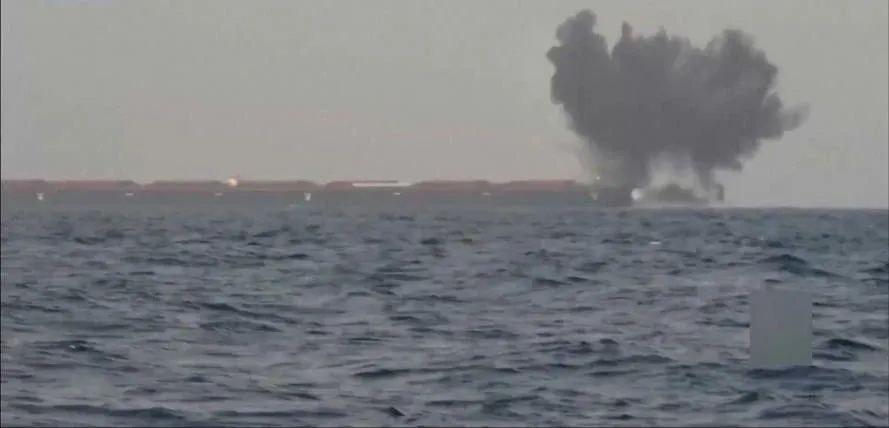
The United Kingdom Maritime Trade Operations (UKMTO) revealed that the Houthi armed group in Yemen claimed responsibility on the 10th for two attacks on commercial ships off the coast of Yemen, one of which caused hull damage but no casualties. Houthi spokesman Yahya Saree said that the "Olympic Spirit" was attacked by 11 ballistic missiles and two drones, was severely damaged, and called the ship an "American oil tanker."
A report from the UKMTO shows that a Liberia-flagged vessel loaded with chemicals, en route from Jeddah, Saudi Arabia, to Muscat, Oman, was hit by an unidentified projectile near the Yemeni Red Sea port city of Hodeidah. It suffered only minor damage, with no reports of fire or casualties, and is currently heading to its next port of call. In addition, the Houthis also claimed to have launched a missile attack on the ship St. John in the Indian Ocean, saying the company that owns it violated the decision banning entry to occupied Palestinian ports, but this claim has not yet been confirmed by the UKMTO.

Recently, a Houthi spokesman issued a statement claiming to have launched two attacks on Israel, and stressed that they will continue to take more military actions and impose a maritime blockade until Israel stops its military operations in the Gaza Strip and Lebanon. It is reported that the first attack launched two missiles targeting two military facilities in the central Israeli city of Tel Aviv; the second used multiple drones to strike multiple targets in Tel Aviv and the southern port city of Eilat.
Since the outbreak of a new round of Palestinian-Israeli conflict last October, the Houthis, in order to pressure Israel to stop its military operations in Gaza, have frequently attacked foreign commercial ships passing through the Red Sea. Statistics show that the group has launched nearly 80 attacks in the Red Sea, causing considerable losses. However, as Israel's military operations in Gaza and Lebanon have recently escalated, the Houthis continue to intensify their actions, further worsening the situation in the Red Sea region. This has forced cargo ships and commercial vessels from many countries to abandon the Suez Canal and reroute around South Africa's Cape of Good Hope to avoid risks, resulting in voyages being extended by 10 to 14 days, shortages of some products, and logistics costs being pushed up in disguised form. Global container shipping giants Maersk and Hapag-Lloyd both expect the Red Sea region to remain unsafe in 2025, and therefore decide to continue diverting around the Cape of Good Hope.
At the same time, recent dock accidents in many countries are also impacting international logistics. For example, in early October, ports on the U.S. East Coast held a three-day strike, and Category 3 Hurricane Milton caused some southern docks to shut down, resulting in a large backlog of ships and containers and affecting the global supply chain. In addition, because ships are diverting around southern Africa, cargo handling volumes at docks in countries such as Kenya and Tanzania have increased, but port infrastructure is relatively outdated, causing cargo piles and continued ship congestion, and reducing port operating efficiency. Port congestion and extended shipping times in many countries have also made the container shortage problem increasingly severe.
For the coffee trade, which is highly dependent on maritime shipping, these shocks are especially severe. Europe-Asia routes are the first to be affected. Some coffee exporters reveal that freight costs from Asia to Europe have risen by nearly 7 times, prompting some buyers to reduce purchases in Asia. Coffee shipments have fallen sharply, and growers' sources of income have been severely hit. Rising freight costs combined with production cuts reported by many countries have sent international coffee prices soaring.
The monthly average of the International Coffee Organization (ICO) composite indicator price for September was 258.90 cents/lb, up 8.4% from August and 69.1% higher than the same period last year. International coffee futures prices were also strong, with Arabica coffee futures reaching their highest level since September 2011, while Robusta coffee futures hit their highest since May 1977. The ICO believes that coffee prices are mainly supported by climate-related production cuts in many countries, the global logistics crisis, and geopolitical factors, and will remain high in the short term.
To learn more about coffee origin news and information, please scan the QR code to follow: Coffee Review
Long press the QR code to follow:
TRANSLATE with
x
English
Arabic Hebrew Polish Bulgarian Hindi Portuguese Catalan Hmong Daw Romanian Chinese Simplified Hungarian Russian Chinese Traditional Indonesian Slovak Czech Italian Slovenian Danish Japanese Spanish Dutch Klingon Swedish English Korean Thai Estonian Latvian Turkish Finnish Lithuanian Ukrainian French Malay Urdu German Maltese Vietnamese Greek Norwegian Welsh Haitian Creole Persian
TRANSLATE with
COPY THE URL BELOW
Back
EMBED THE SNIPPET BELOW IN YOUR SITE Bing Webmaster Portal
Back
The above content is compiled by CoffeeHunters, a coffee news website.


