







What Does the Amhara Conflict Mean for Coffee Production?
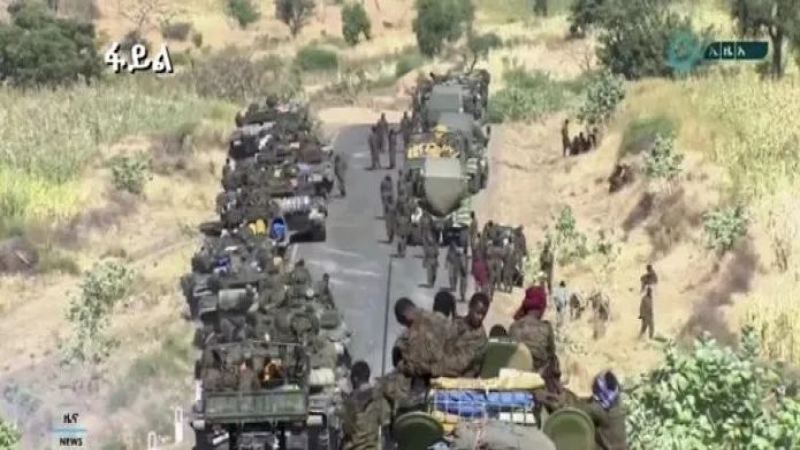
Ethiopia's federal government has deployed roughly 40,000 additional troops to the Amhara region for a new offensive against Fano forces. Heavy clashes have disrupted transport in multiple towns, with residents confined at home and Fano declaring an indefinite ban on vehicle traffic to cut government supply lines. The fighting has lasted more than a year, hitting agriculture, livestock and logistics.
As a major coffee producing country in Africa, Ethiopia now faces currency depreciation, rising cultivation costs and compliance pressure from the EU Deforestation Regulation. Authorities have also arrested several senior Amhara officials accused of being passive in the military operation. Coffee exports and the supply chain could feel the effects if transport routes stay blocked.
The Ethiopian federal government has recently deployed approximately 40,000 additional troops to the Amhara region, launching a new large-scale military offensive against Fano forces. Intense clashes have erupted in multiple areas, disrupting transportation in towns and cities and trapping residents in their homes. The conflict has lasted for more than a year, causing heavy casualties and severely impacting local agricultural and livestock production as well as logistics and transportation. As a major coffee-producing country in Africa, Ethiopia is facing multiple challenges, including currency depreciation, rising cultivation costs, and compliance pressure from the EU Deforestation Regulation (EUDR). This article will review the latest developments in the conflict and their potential impact on the coffee supply chain.
According to local Ethiopian media reports, the government has recently mobilized approximately 40,000 additional troops to launch a new round of clearing operations against Fano armed forces, resulting in severe armed conflicts in multiple locations across the Amhara region and causing significant disruption to economic activity and public safety in the affected areas.
Reports indicate that government security forces and Fano fighters engaged in extremely fierce exchanges of fire in the West Gojjam area of the Amhara region, with heavy weapons even being used in some key towns. Local residents described intense gunfire and artillery sounds around multiple towns early in the morning, which only subsided in intensity by the afternoon.
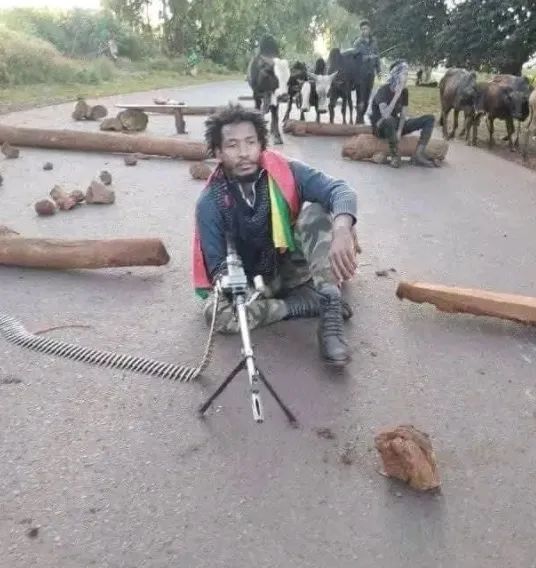
Due to the fierce fighting between the two sides, the movement of people and vehicles in most towns in the area has been largely cut off, and residents are generally afraid to go out. The Fano forces active in the area have unilaterally declared an indefinite ban on vehicle traffic, aiming to cut off the government troops' logistical supply lines. It is said that transport operators and truck drivers are aware of and comply with this ban.
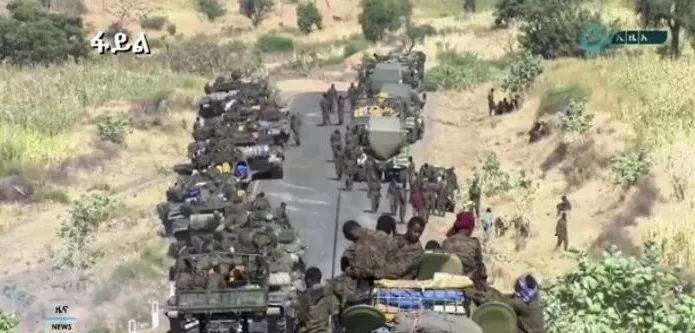
The Ethiopian government has claimed that this military operation against Fano forces in the Amhara region is a "decisive action," for which it has committed as many as 40,000 reinforcements and declared a state of full-scale war in the area. Meanwhile, authorities have arrested multiple senior government officials in the Amhara region on grounds of being passive in military operations against Fano forces and suspected of "supporting Fano forces." More than 600 senior government officials have been detained so far, including doctors, who were also arrested on suspicion of cooperating with Fano forces.
In recent clashes, the government military's operations in the region have been considerable in scale, with multiple drone airstrikes deployed. However, a Fano forces spokesperson revealed that the government military appears to have suffered repeated setbacks. According to their account, recent clashes in the Amhara region have resulted in approximately 293 government soldiers killed, and Fano forces have also seized a large quantity of firearms and ammunition. However, Fano forces themselves also suffered four deaths and five injuries.
It is reported that the fighting in the Amhara region has lasted for more than a year. More than a year ago, the Ethiopian federal government launched a military operation in the Amhara region under the pretext of "disarming Fano forces," causing frequent clashes and heavy casualties in many parts of the state. Although the federal government has repeatedly deployed tens of thousands of troops in an attempt to defeat Fano forces in the state, it has never achieved substantive results, because Fano forces enjoy overwhelming popular support in the region.
The Amhara region is an important agricultural and livestock production area in Ethiopia and a major domestic food supply source. The ongoing internal conflict, combined with road blockades imposed by Fano forces on certain routes, will affect the transportation of goods between regions and may further drive up prices in the country.
The war has had a negative impact on the social and economic functioning of the region. Although the fighting is mainly concentrated in the Amhara region and northern Ethiopia, sporadic clashes occasionally spread to the Oromia region in the central or western parts. Some experts believe that although the largest civil war ended in November 2022, the ongoing conflicts and violence have caused foreign direct investment to shrink significantly.
Currently, the biggest challenge facing Ethiopia's coffee industry is the continuous depreciation of the exchange rate, with local prices and operating costs constantly rising. The reform policies previously implemented by the federal government led to a sharp depreciation of the Ethiopian birr, soaring domestic prices, and consequently rising coffee cultivation costs. The current escalation of conflict may once again drive up local prices, as Ethiopia's long-standing security problems have already disrupted international freight and logistics, further raising costs.
Although Ethiopia's coffee exports have surged in recent months, the main reason is that European coffee traders are concerned that coffee from Ethiopia and other African countries may struggle to meet the requirements of the EU Deforestation Regulation (EUDR), and are therefore rushing to purchase before the regulation takes effect on December 30, 2024.
Although the EU recently stated it will postpone implementation by one year, i.e., until December 30, 2025, some traders still worry that because Ethiopian coffee production is dominated by smallholder farmers, verifying that their products comply with EUDR requirements is extremely difficult. Some reports point out that meeting EU standards will increase production costs by 10%.
Moreover, one year is hardly enough time for most Ethiopian producers to meet the standards, and the Ethiopian government has not taken strong measures to address this. In addition, Ethiopia's coffee cultivation costs are already very high, so many producers or coffee farmers may be unwilling to make the additional 10% investment to meet EU requirements.
To learn more about coffee origin news and information, please scan the QR code to follow: Coffee Review
Long-press the QR code to follow:
The above content is compiled by CoffeeHunters, a coffee news website.


