







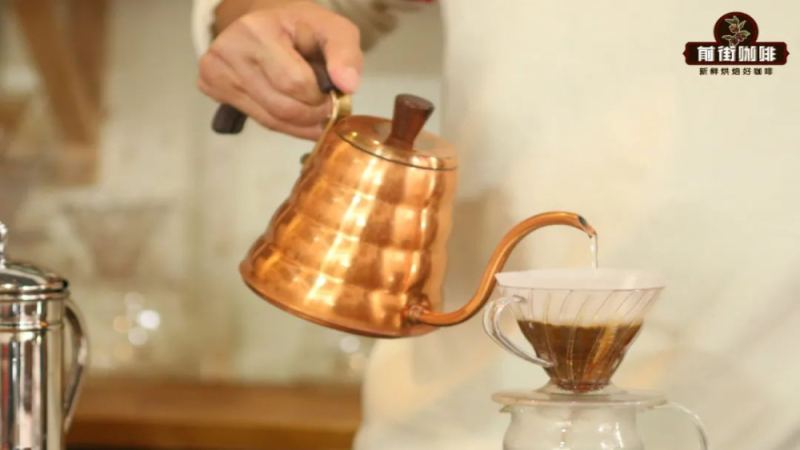
When Should You Pour Again in Pour-Over Coffee Brewing?
Do not wait for the water to drain completely before the next pour. Bring the coffee bed back to the same height as after the previous pour so extraction stays even. With 15 g of coffee, bloom with 30 ml for 30 seconds, then pour to half the short ribs at about 120 ml, around 55 seconds to one minute.
The third stage pours 90 ml once the bed falls to half the coffee wall, at roughly 1 minute 10 seconds to 1 minute 15 seconds, finishing the pour near 1 minute 30 seconds and the drawdown near 2 minutes to 2 minutes 10 seconds. A four-stage pour follows the same logic for timing and volume.
Segmented pouring is a common yet difficult-to-master method in pour-over coffee, and the challenge lies in judging when to stop the water and when to pour again. This article uses Front Street Coffee's three-stage brewing as an example to explain in detail the techniques for judging pouring transition points. The article points out that you should not wait for the water to finish draining before pouring again; the subsequent pour should bring the coffee bed height to exactly the same level as the previous pour to ensure even extraction. Using 15g of coffee as an example, the first stage is blooming with 30ml of water and a 30-second wait; the second stage pours until the water reaches 1/2 of the short ribs, with a reference water amount of 120ml and a reference time of about 55 seconds to 1 minute; the third stage involves observing the water level dropping, and when it falls to the point where the coffee bed reaches 1/2 of the coffee wall, pour 90ml, with a reference time of 1 minute 10 seconds to 1 minute 15 seconds, finishing the pour at about 1 minute 30 seconds to 1 minute 35 seconds, and the coffee liquid finishing its flow at about 2 minutes to 2 minutes 10 seconds. The logic for a four-stage pour is the same.
However, segmented brewing has one common difficulty: how to choose the timing for stopping and restarting the pour. For friends who are new to pour-over, judging these transition points is often not easy to grasp. Front Street will try to explain in a relatively plain way how to judge the timing of the pour.
Segmented pouring actually does not have strict requirements for the pouring flow rate. If you use the one-pour method, a strong stream will raise the coffee bed very high, shortening the extraction time; a weak stream will raise the bed only a little, lengthening the extraction time, making the time hard to control. The advantage of segmented pouring is that it allows us to adjust the total extraction time. For example, if the earlier pour was too strong and the coffee bed has already risen high, you can pause for a moment and wait for the water level to fall a bit before continuing to pour.
To understand when to pour again after stopping, you first need to clarify the following two key points.
First point: It is not recommended to wait until the water has completely drained before pouring again. There are two reasons: first, once the water has drained and you pour again, there has already been an interruption in between, so strictly speaking it is no longer the same extraction process, and the coffee bed temperature and timing will deviate significantly; second, fine particles may settle at the bottom and be easily blocked during the subsequent pour, causing the water to fail to pass through.
Second point: Front Street recommends that during the subsequent pour, the coffee bed height should reach exactly the height of the previous pour. If the later coffee bed is higher than the earlier one, there may not be enough coffee grounds at the edge of the dripper to form a coffee wall, and water will tend to flow away along the ribs beside it. If the later water level does not reach the previous height, the upper part of the coffee wall in the later stage will not be fully extracted, which is what we commonly call uneven extraction.
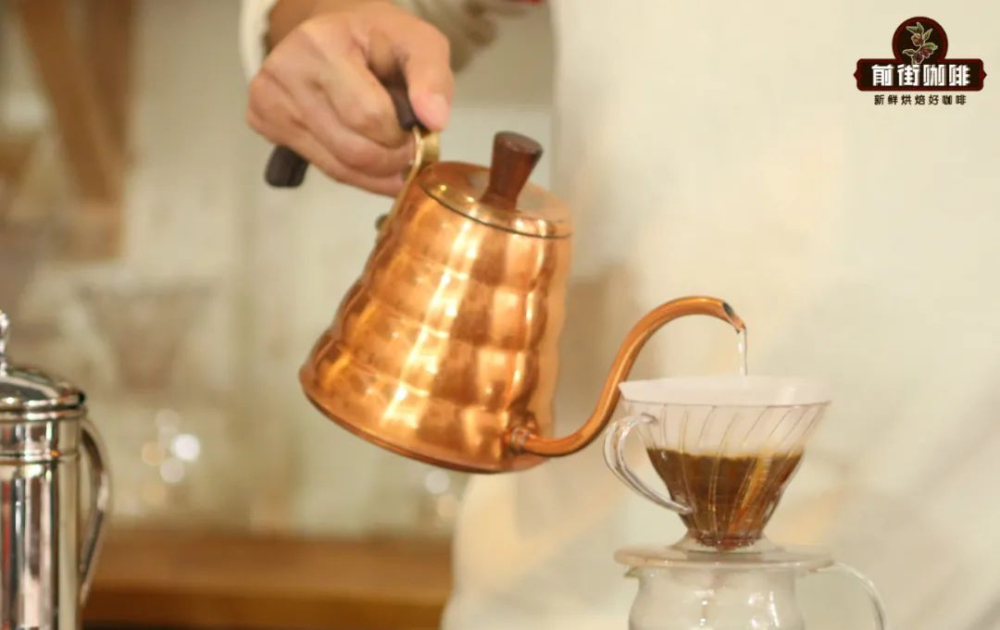
So to sum up: do not wait for the water to finish draining before pouring again, and at the same time reasonably judge so that the subsequent pour just reaches the previous water level.
Next, take the three-stage method used by Front Street as an example. Three-stage pouring requires stopping the water twice in total, but in practice you only need to judge one point for pouring again. Next, Front Street will demonstrate using 15g of coffee (with different coffee amounts, some reference points will also change).
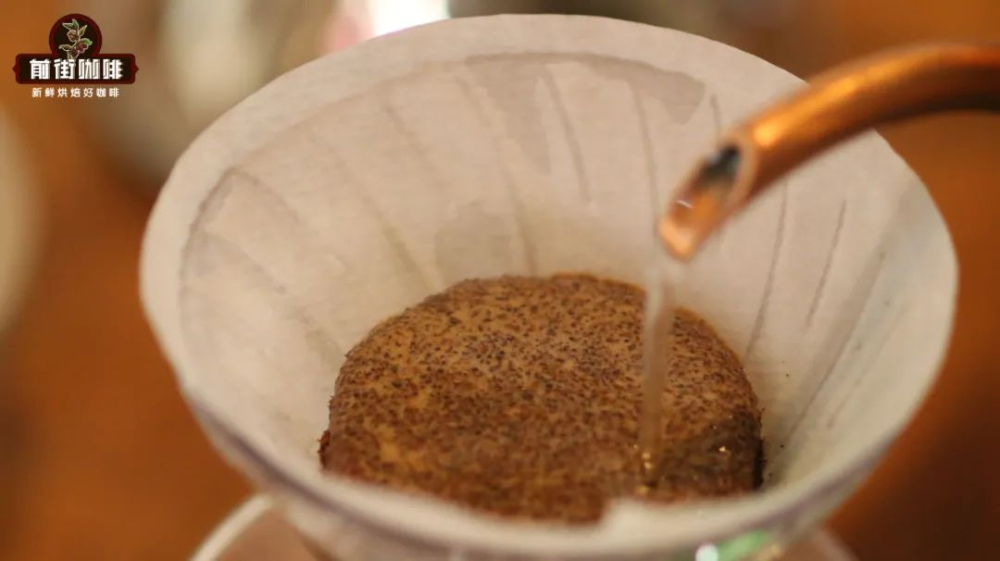
The first stage is the blooming stage, pouring 30ml of water and blooming for 30 seconds. Therefore, the pouring point for the second stage does not require extra judgment; it simply starts pouring at the 30-second mark.
The second pour needs some control over the water level height because it is connected to the later pour. If you are using a size 01 V60 dripper, Front Street recommends pouring the water level to 1/2 of the short ribs. The reference water amount is 120ml, and the reference time point for completing the pour is 55 seconds to 1 minute.
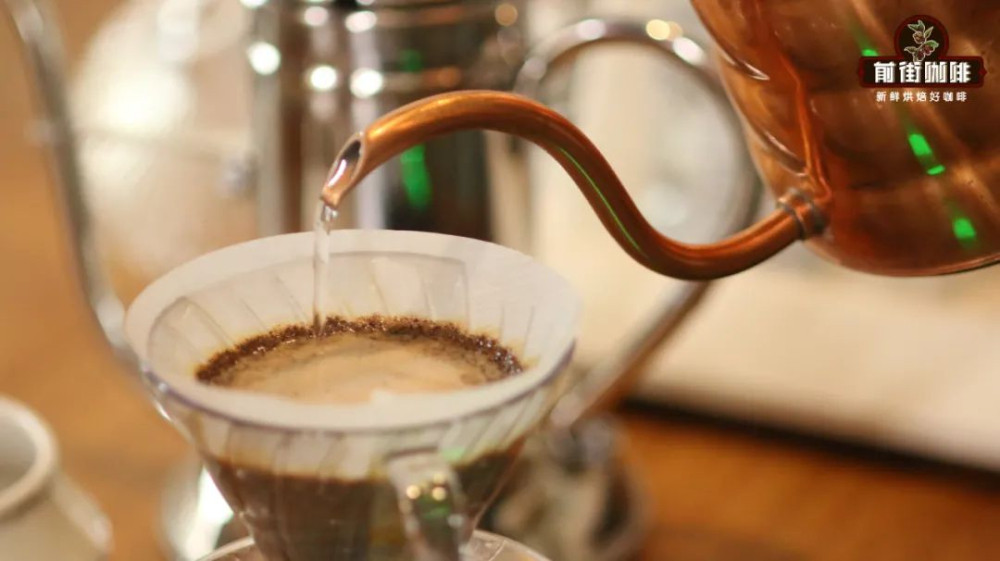
For the third pour, you need to observe the speed at which the water level falls (this varies with different beans and different grinds), and then combine that with the water amount, flow rate, and drainage speed of the final pour to judge so that when the pour is finished, it just reaches the height of the second-stage coffee wall.
At this point, when the water level drops to the short ribs, and then drops another 0.5cm, you can pour the final stage. The reference position Front Street usually uses for judgment is when the water level drops to "1/2 from the coffee bed to the coffee wall," which is about 0.5cm below the short ribs. The final pour is 90ml. When pouring, try to make small circles; if you make large circles according to the surface size of the liquid, you may break through the coffee wall. The reference time point for Front Street's third pour is 1 minute 10 seconds to 1 minute 15 seconds, and the pour finishes at 1 minute 30 seconds to 1 minute 35 seconds. The time for all the coffee liquid to finish flowing is 2 minutes to 2 minutes 10 seconds.
If you divide it into 4 pours, the logic is the same, and it also follows the two points mentioned above. Of course, some friends will say: "The 4:6 brewing method is exactly waiting for the water to finish before pouring again, doesn't that overturn your first point?" "Using the method of pushing the grounds to raise the coffee wall a little each stage, doesn't that overturn your second point?" Indeed, it is precisely because there are so many interesting methods that pour-over coffee is so fascinating. This method shared by Front Street is designed so that even beginners can easily learn it.
"Before learning to run, first learn to walk."
The above content is compiled by CoffeeHunters, a coffee news website.


