







Search Results for: iced pour-over ratio

How to Determine the Water-to-Coffee Ratio for Iced Pour-Over Coffee? An Analysis of Ice Placement Timing and a Complete Brewing Plan
Iced pour-over coffee, with its refreshing and palate-cleansing taste, has become a favorite among many coffee enthusiasts. But to make a delicious iced pour-over, the key lies in setting the water-to-coffee ratio and how you use the ice. Unlike hot pour-over, iced pour-over requires first extracting a highly concentrated hot coffee liquid, then diluting and cooling it with ice, so the coffee-to-water ratio, pouring amount, and ice quantity all need to be readjusted. This article will explain in detail the brewing approach for iced pour-over, suitable coffee bean choices, and the parameter scheme used by Front Street Coffee in actual practice, helping you easily recreate a cup of iced pour-over with complete flavor at home. [more…]

Iced Pour-Over Coffee Brewing Guide: A Practical Guide to Coffee-to-Water Ratio, Ice Amount, and Grind Size Adjustment
On a hot summer day, a glass of iced pour-over coffee is the refreshing first choice for many coffee lovers. But many people find that when they make it at home or in the office, the flavor always seems thin and watery. This article sorts out three key details of iced pour-over coffee: adjusting the coffee-to-water ratio, calculating the ratio of ice to brewed coffee, and subtle changes in grind size, along with alternative solutions for common problems such as grinder limitations and too many fines. At the same time, according to different flavor preferences, it recommends a variety of beans suitable for iced brewing, including Front Street Coffee Fruit Ding Ding, Front Street Coffee Strawberry Candy, Front Street Coffee Xizhua, Front Street Coffee 2013 Sun-Dried Typica, Front Street Coffee Bird of Paradise, Front Street Coffee PWN Golden Mandheling, and Front Street Coffee Queen's Estate, helping you consistently make a delicious glass of iced pour-over in summer. [more…]
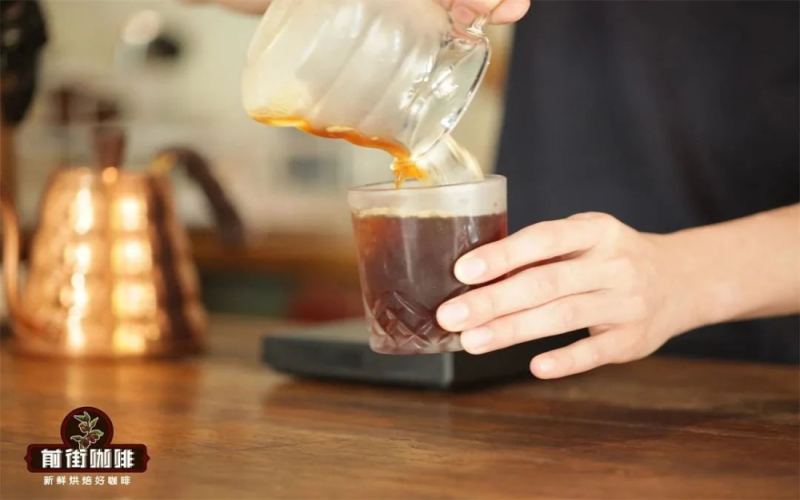
Iced Pour-Over Coffee Parameters Explained: A Complete Guide to Coffee-Water-Ice Ratios, Grind Adjustment, and Pouring Rhythm
The biggest difference between iced pour-over and regular hot pour-over is the introduction of ice as a variable. Ice does not participate in the extraction, so it is necessary to rebalance the grind size, coffee-to-water ratio, and pouring technique. Through brewing practice with multiple beans, Front Street Coffee has summarized an easy-to-control approach of a 1:10–1:12 coffee-to-water ratio and a 1:5 coffee-to-ice ratio. Taking 15 grams of coffee as an example, that means 150 grams of water and 75 grams of ice. The grind size needs to be adjusted finer to compensate for the shortened extraction time. When pouring, reduce the flow rate and increase the number of pours, keeping the total time between 1 minute 40 seconds and 1 minute 50 seconds. In terms of bean selection, light-to-medium roasted flavor-focused coffees better showcase the refreshing quality of iced brewing, while dark-roasted beans tend to produce a thinner mouthfeel and reduced balance. [more…]
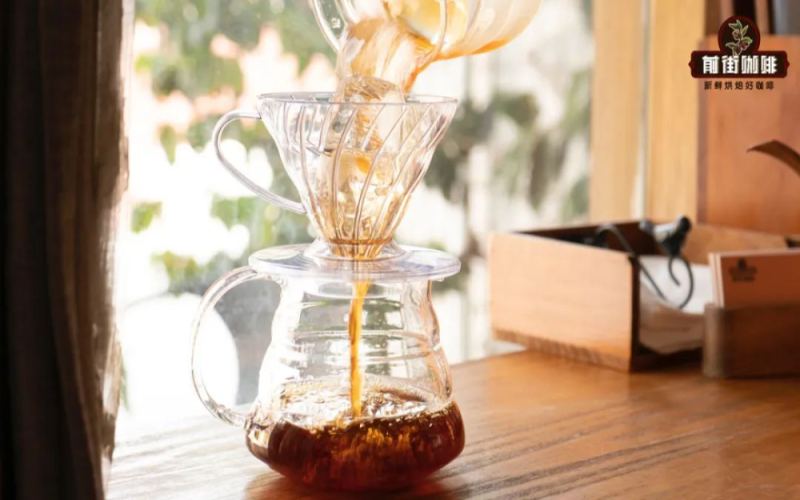
A Complete Guide to Ice Cube Amounts and Coffee-to-Water Ratios for Iced Pour-Over Coffee: A Practical Guide from Bean Selection to Brewing
On a hot summer day, a glass of iced pour-over coffee becomes the favorite of many coffee lovers. But exactly how much ice should be added? And how should the coffee-to-water ratio be adjusted? This article will systematically answer common questions about iced pour-over coffee from multiple angles, including coffee bean selection, the role of ice, specific brewing plans, and the timing of adding ice. Taking 15 grams of coffee, a 1:10 coffee-to-water ratio, and 100 grams of ice as an example, Front Street Coffee breaks down in detail the grind size, actual concentration, and the impact of ice melting on flavor, helping you make a cup of iced pour-over that is both refreshing and not diluted. [more…]
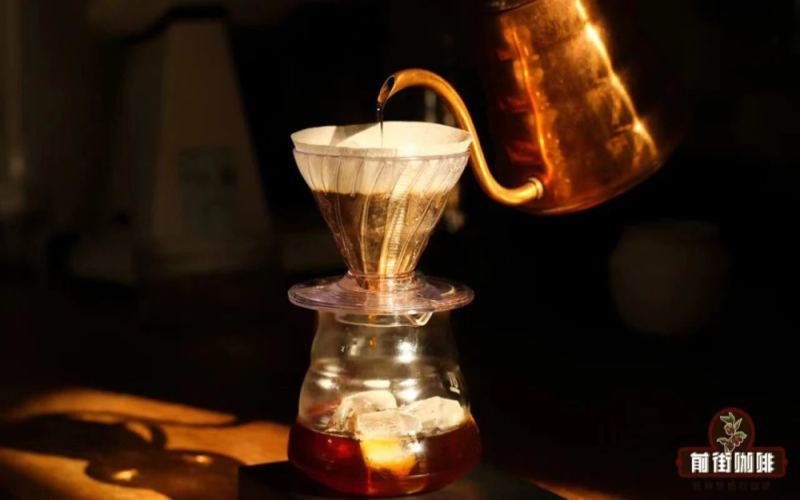
Ice Cube Dosage and Coffee-to-Water-to-Ice Ratio Tips for Iced Pour-Over Coffee: Looking at the Difference Between Aged Ice and Young Ice from Front Street Experiments
When making iced pour-over coffee in summer, the most agonizing decision is often not which beans to choose, but exactly how much ice to throw in. Too little ice and the coffee turns lukewarm; too much and it becomes thin as water. A slight deviation in ratio and it's easy to mess up. This article focuses on the two core functions of ice in iced pour-over—cooling and dilution—breaks down the reasonable ratio range among coffee grounds, water, and ice, and shares a comparative experiment about old ice versus young ice. The experiment uses 15 grams of Emerald Estate Green Label Geisha with a Hario V60 dripper, revealing through actual testing how freezing time affects ice hardness and melting speed. If you also want to consistently make a cup of iced pour-over at home with moderate strength and lasting chill, the following content is worth reading to the end. [more…]

Iced Pour-Over Coffee | Why Does Making Iced Pour-Over Require More Coffee Grounds? What Coffee-to-Water Ratio Is Suitable for Iced Pour-Over Coffee?
I wonder if everyone still remembers that last year Front Street shared a very interesting topic with you all—"Why do some coffee shops charge extra for iced pour-over." The reason was that in some coffee shops, iced pour-over is priced higher than hot pour-over, which has led some customer friends recently, when ordering, to always [more…]
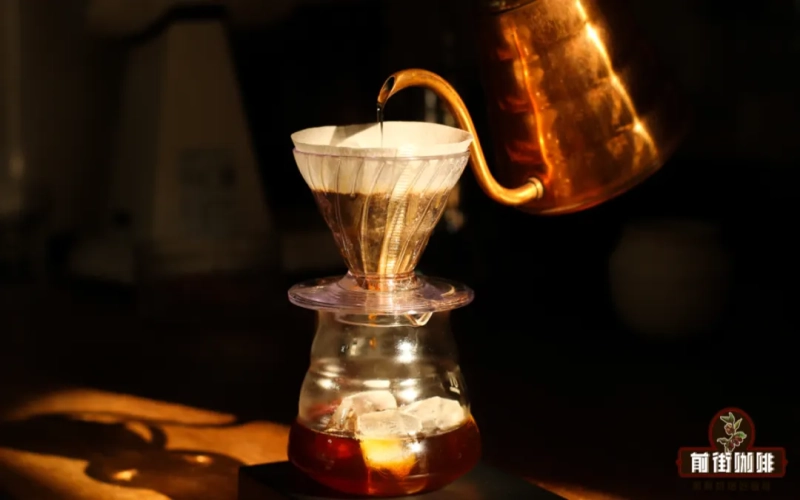
A Practical Guide to Making Iced Pour-Over Coffee at Home: Ice-to-Hot-Water Ratios, Grind Size Adjustments, and Key Stirring Techniques
Iced pour-over is not simply pouring hot coffee over ice; rather, it is an extraction method in which ice rapidly cools and moderately dilutes the coffee liquid, also known as "flash-chilled pour-over." To make a cup that is both refreshingly cold and rich in aromatic layers, you need to readjust parameters such as coffee dose, water volume, ice amount, grind size, water temperature, and timing. This article focuses on ice usage and application, the coffee-to-ice-to-water ratio, grind size adjustments, and two operational approaches—small-stream分段 and the stirring method—to help coffee enthusiasts make a balanced iced pour-over at home. It also provides specific references based on Front Street Coffee's commonly used parameters. [more…]
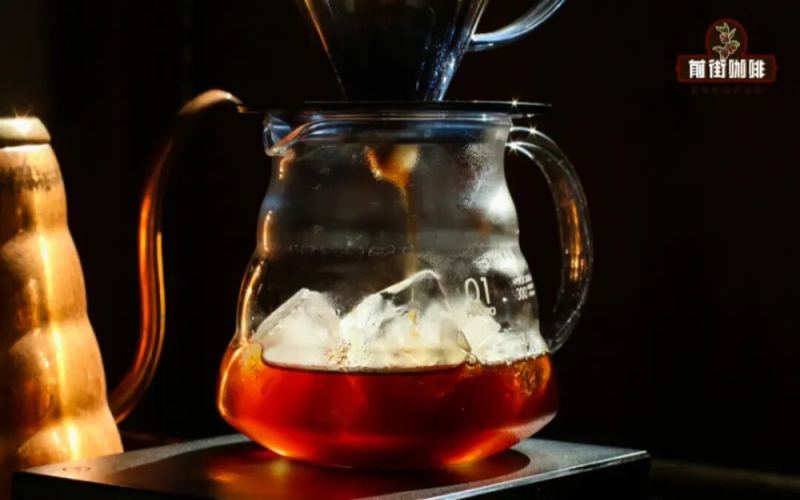
Secrets to Making Iced Pour-Over Coffee: A Comprehensive Guide to Water Temperature, Coffee-to-Ice Ratio, Grind Size, and Pouring Techniques
On a hot summer day, a glass of iced pour-over coffee brings a refreshing treat. But many people end up with an iced pour-over that tastes weak and lacks aroma. So how exactly do you make an iced pour-over with full, rich flavor? This article lays out four key techniques—from the coffee-to-water-to-ice ratio and grind size adjustments to pouring technique and ice selection—to help you avoid common pitfalls. Drawing on everyday brewing experience, Front Street Coffee offers specific parameter recommendations and a universal formula, so whether you're a beginner or an advanced enthusiast, you'll find a practical reference plan that makes iced pour-over more than just hot pour-over with ice added. [more…]

The Complete Guide to Iced Coffee: Extraction Ratios and Practical Tips for Iced Pour-Over, Cold Brew, and Ice Drip
After the summer solstice, iced coffee becomes the most discussed topic in coffee enthusiast groups. This article gathers the hands-on experience of many enthusiasts, focusing on the three mainstream iced coffee brewing methods—iced pour-over, cold brew, and ice drip—with an emphasis on solving the concentration problem caused by ice dilution. It breaks down in detail the calculation logic of coffee-to-water ratios, the direction for grind size adjustments, extraction time, storage duration, and other key aspects. Whether you prefer floral notes, fruity acidity, or a rich, full-bodied taste, you'll find a brewing method and bean recommendation that suits you. [more…]

Can medium-dark roast coffee beans also make a delicious iced pour-over? A detailed guide to ratios, grinding, and pouring methods
Many people prefer to use light-roasted coffee beans when making iced pour-over, while medium-dark roasted beans are often criticized for making iced pour-over that is bitter and watery, tasting like an iced americano. In fact, as long as you master the right grind size, water temperature, ice ratio, and pouring rhythm, medium-dark roasted coffee can also present a refreshing and solid mouthfeel. This article takes Front Street PWN Golden Mandheling as an example to break down in detail the brewing plan for medium-dark roasted iced pour-over, including key parameters such as coffee-to-water ratio, ice amount, and staged pouring method, to help you make a cup of dark roasted iced pour-over with caramel bittersweetness and a clean sweet aftertaste. [more…]

How to determine the ice amount and coffee-to-water ratio for iced pour-over coffee? Recommended beans suitable for making iced coffee
On a hot day, a glass of iced pour-over coffee is refreshing and invigorating. However, many people encounter two core questions when making it at home: how much coffee-to-water ratio and how much ice should be used? Does adding ice first versus adding ice later affect the flavor? This article addresses these two questions, first discussing the types of coffee beans suitable for iced pour-over and Front Street Coffee's specific bean list, then explaining in detail the reference ratios of coffee, water, and ice, as well as the subtle differences in taste between adding ice first and adding ice later. Finally, it supplements two rapid cooling methods that do not dilute the concentration, helping you make a cup of iced coffee that has both aroma and refreshingness. [more…]
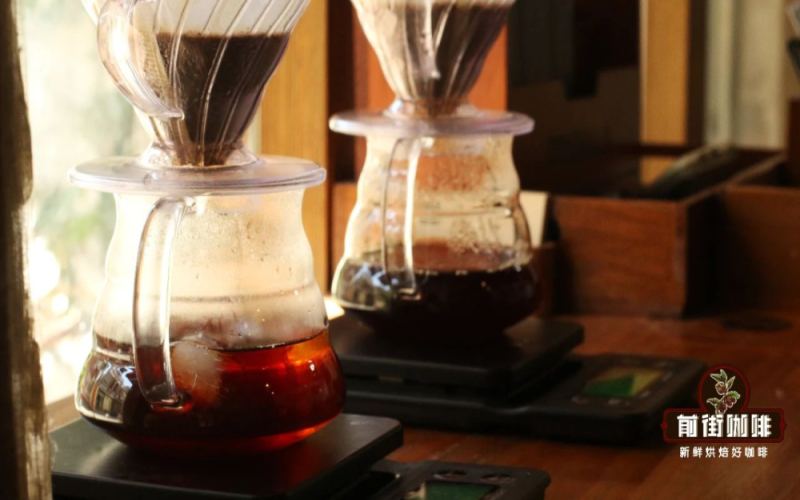
Iced Pour-Over Coffee Brewing Guide: Grind Size, Coffee-to-Water Ratio, and Key Differences from Hot Pour-Over
On a hot summer day, iced coffee becomes the top choice for many people to beat the heat. Although cold brew and ice drip offer outstanding flavor, they take a long time, so making a fresh cup of iced pour-over is undoubtedly a more convenient option. Many coffee enthusiasts, when watching baristas at cafés, are often curious about the coffee dose, ice-to-water ratio, water temperature, and pouring technique. Front Street Coffee has summarized a simple and practical iced pour-over formula for you: coffee grounds (fine grind) paired with 10 times hot water and 5 times ice. Compared with hot pour-over, iced pour-over requires adjusting the grind size to extend extraction because less hot water is used, avoiding insufficient flavor. This article will explain in detail the complete process and key parameters of iced pour-over, helping you easily recreate café-level iced pour-over at home. [more…]
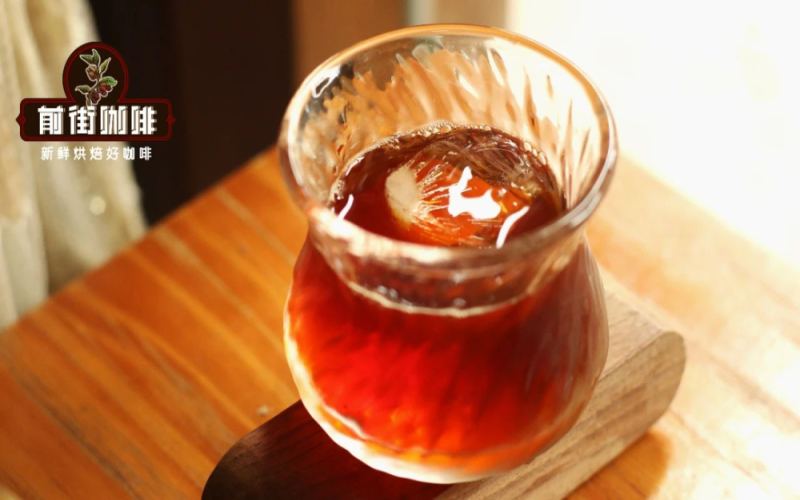
How Is Iced Pour-Over Different from Hot Pour-Over? Coffee-to-Water Ratio, Brewing Logic, and Front Street Coffee Bean Recommendations
As temperatures rise, the choice between iced pour-over and hot pour-over has become a topic of interest for many coffee lovers. The same bean, brewed as a hot drink or a cold drink, takes on completely different flavor directions. Behind this lie two different brewing logics: hot pour-over uses a full coffee-to-water ratio to extract and showcase the bean's original layers; iced pour-over reduces the water amount, increases extraction efficiency, and then relies on ice cubes to dilute and cool it down. Understanding these differences can help you more accurately judge how a bean is best brewed. This article will compare brewing principles, flavor expression, aroma characteristics, and more, and will also include Front Street's bean list recommendations for different taste preferences, so you can still enjoy the cup you love even in the heat of summer. [more…]
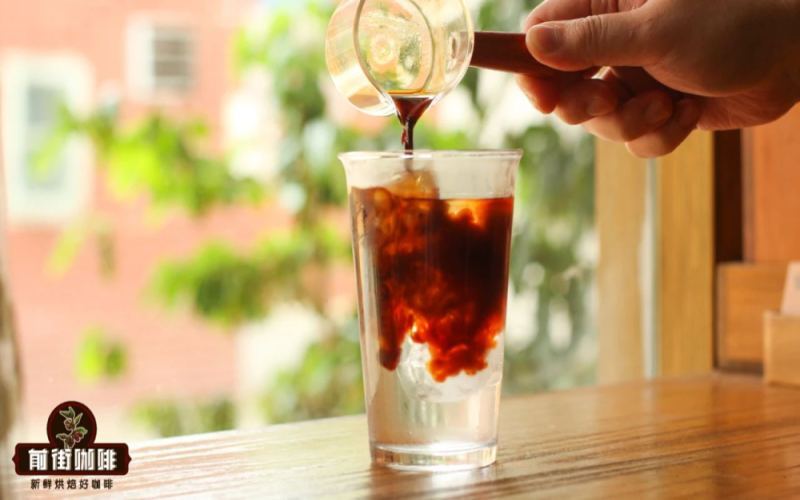
The Complete Brewing Guide to the Four Major Types of Iced Coffee: A Comparison of Methods and Parameters for Iced Pour-Over, Iced Americano, Cold Brew, and Ice Drip
As the weather warms up, iced coffee becomes a favorite for many. The four common types of iced coffee—iced pour-over, iced americano, cold brew, and ice drip—each have their own nuances in extraction method, flavor profile, and brewing parameters. Using Front Street Coffee's production practices as an example, this article breaks down the specific methods for each of the four iced coffees one by one: how to choose the coffee-to-water ratio for iced pour-over, how to control the ratio of espresso to ice water for iced americano, the steeping time and grind size for cold brew, and the flow rate and extraction duration for ice drip. Whether you want to recreate these at home or understand the operational logic of baristas, you'll find practical references here. [more…]

Iced Pour-Over Coffee: Ice First or Ice Last? A Full Breakdown of Coffee-to-Ice Ratios and the Brewing Process
There are mainly two ways to make iced pour-over coffee: one is to pre-place ice cubes in the server before brewing, and the other is to complete the brew first and then add ice cubes to the coffee liquid. What flavor differences do these two operational paths actually bring? Which method better presents the ideal iced coffee taste? In this article, Front Street Coffee will compare the specific differences between these two methods through practical testing, and at the same time list in detail the key parameters of iced pour-over, such as coffee dose, grind size, coffee-to-water ratio, ice amount, water temperature, and pouring method, to help you master the complete production process and techniques of iced pour-over coffee. [more…]
Iced Americano, Iced Pour-Over, Iced Drip, and Cold Brew: A Breakdown of Brewing Essentials and Flavor Differences Among Four Iced Coffees
The world of iced coffee is far richer than one might imagine, with iced Americano, iced pour-over, iced drip, and cold brew each having their own distinctive merits. The baristas at Front Street Coffee have combined their daily brewing experience to share the unique characteristics and specific preparation methods of these four types of iced coffee. From setting the coffee-to-water ratio and adjusting grind size to controlling extraction time and temperature, every step influences the final flavor in the cup. This article will break down one by one the two-stage pouring logic of iced pour-over, the espresso extraction parameters of iced Americano, the key points of low-temperature steeping for cold brew, and the dripping rhythm of iced drip coffee, helping coffee enthusiasts understand the principles while also appreciating the differences in texture and aroma among different iced coffees. [more…]
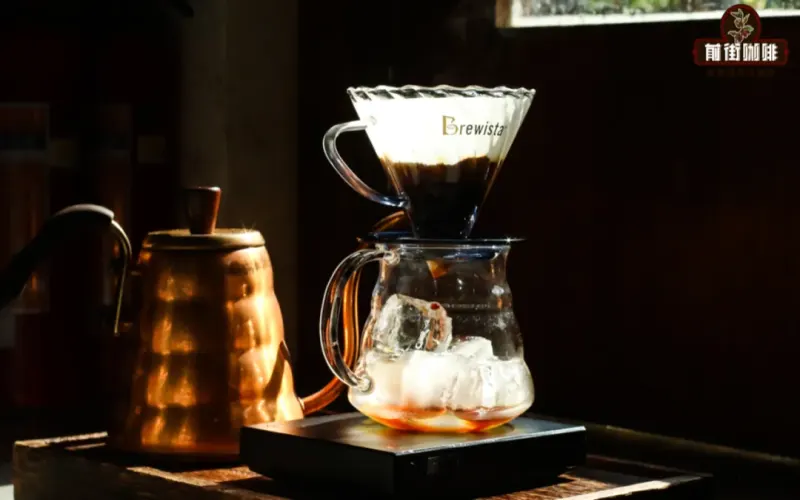
How much coffee powder should be used for iced pour-over? What exactly is the core difference between it and hot pour-over?
Many coffee shops price iced pour-over higher than hot pour-over, and the reason behind this is not that it is more laborious to make, but that it requires more coffee grounds. So why must iced pour-over use more grounds? And how exactly should the dose be adjusted? This article starts with the differences in parameters between hot and iced pour-over shared by Front Street Coffee, explaining the principle that iced pour-over reduces the amount of water poured and increases concentration to offset dilution from ice, while also explaining the flexible changes in the coffee-to-water ratio under different ice melting speeds, as well as the practical impact of adding more grounds on liquid volume and mouthfeel. At the end, it also includes buying considerations for iced pour-over coffee beans and Front Street Coffee's specific bean list recommendations, for friends who want to try it themselves. [more…]
Iced Pour-Over Coffee Brewing Guide: Water-to-Coffee Ratio Formula and Detailed Pulse Pouring Techniques
On a hot summer day, a cup of refreshing iced pour-over coffee that doesn't compromise on flavor is a favorite among many coffee lovers. But to make iced pour-over present a fruity, sweet-and-tart layered complexity, the key lies in mastering the correct ratio of coffee grounds, water, and ice, as well as the extraction technique. This article focuses on the universal iced pour-over formula summarized by Front Street—coffee grounds paired with 10 times hot water and 5 times ice—breaking down in detail the complete workflow from grind adjustment and three-stage pouring to one-pour iced pour-over, and explaining why, once the amount of hot water poured is reduced, the grind must be made finer to compensate for extraction time, helping you easily make a cup of iced pour-over with both the right strength and flavor. [more…]

How to determine the grind size, water temperature, ratio, and ice for iced pour-over coffee? Does pour-over coffee need to be brewed over ice?
When making iced pour-over coffee, should the coffee liquid be allowed to pass through the ice or not? This is a question that many coffee enthusiasts struggle with. Many cafés do indeed use the ice-passing method for serving, but passing through ice also has obvious shortcomings, such as the coffee warming up quickly, not being cold enough, and the degree of dilution being difficult to control. To solve these problems, the key is to start from three aspects: the degree of cooling, pre-treatment of the cupware, and parameter adjustment. Based on the practical experience of Front Street Coffee, this article breaks down in detail the precautions for the ice-passing method and gives specific suggestions for coffee dose, coffee-to-water ratio, grind size, water temperature, and extraction time, helping you consistently make delicious iced pour-over at home. [more…]
Iced Pour-Over, Iced Americano, Cold Brew, and Ice Drip: An Analysis of the Brewing Methods and Flavor Differences of Four Iced Coffees
On a scorching summer day, a glass of iced coffee always brings a refreshing and invigorating effect. But did you know that common iced coffee is actually divided into four major categories: iced pour-over, iced Americano, cold brew, and iced drip? Each uses a different extraction method, and their flavor profiles vary greatly. In this article, Front Street Coffee (FrontStreet Coffee) will walk you through the characteristics of these four types of iced coffee one by one, and share the specific methods our baristas use to make them in-store, including key parameters such as coffee bean selection, coffee-to-water ratio, grind size, and extraction time. Whether you prefer a light, refreshing taste or a rich, intense flavor, you'll find the perfect cup for you. [more…]