








How many types of coffee trees are there for iced pour-over?
Iced pour-over comes down to two numbers: the coffee-to-water ratio and the ice. The ice should at least bring the finished liquid down to 5 to 10 degrees Celsius, but if every cube melts, the coffee returns to room temperature and tastes flat. Adding ice first or later shifts the flavor slightly.
Bean selection decides most of the result. Light to medium roasts with fruity acidity work well, especially Ethiopia, Panama, Colombia and Costa Rica, usually sun dried coffee beans, honey-processed or anaerobically fermented. For floral cups, choose Gesha-style lots; for a fuller juice sensation or rich fruit aroma, pick fruit-forward or berry-sweet options.
A glass of iced pour-over coffee on a hot day is refreshing and invigorating. However, many people encounter two core questions when making it at home: how much coffee-to-water ratio and ice should be used? Does adding ice first or later affect the flavor? This article addresses these two questions, starting with the types of coffee beans suitable for iced pour-over and Front Street Coffee's specific bean list, then detailing the ratio references for coffee, water, and ice, as well as the subtle differences in taste between adding ice first and adding ice later, and finally supplementing with two rapid cooling methods that do not dilute the concentration, helping you make a cup of iced coffee that is both aromatic and refreshing.

Recently, many customers at Front Street Coffee have ordered iced pour-over coffee, and during the brewing process, they have raised some similar questions. Front Street Coffee has sorted out these questions, and the core issues are actually two: first, how to calculate the coffee-to-water ratio and how much ice to put in; second, whether there is a difference between adding ice first and adding ice later.
What coffee beans are suitable for iced pour-over?
As the saying goes, if you choose the right beans, the coffee is more than half successful. When making iced pour-over, Front Street Coffee prefers light to medium roast beans with fruity acidity, and prioritizes Ethiopia, Panama, Colombia, and Costa Rica in terms of origin. These coffee beans are mostly sun-dried, honey-processed, or anaerobically fermented, and when used for iced coffee, they usually present satisfactory aroma and a sufficiently refreshing taste.
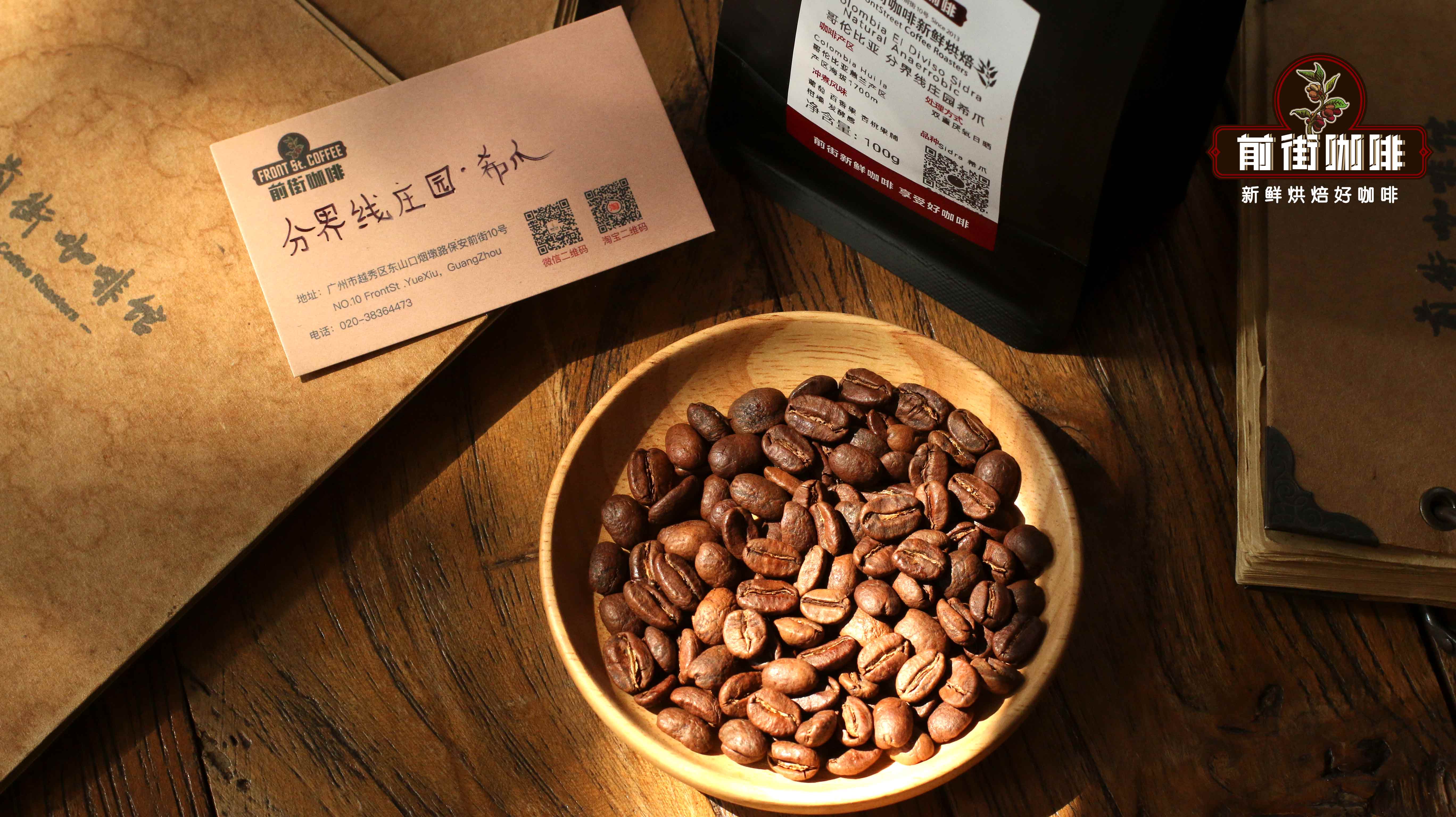
If you prefer floral-style iced pour-over, Front Street Coffee's Gutingding and Front Street Coffee's Huakui are the top choices; for iced coffee with a fuller juice sensation, you can choose Front Street Coffee's Little Tomato and Front Street Coffee's Flower Butterfly; if you seek rich fruity aroma, Front Street Coffee's Xizhao and Front Street Coffee's Strawberry Candy are worth trying.
-How much ice to add?
The role of ice in iced pour-over is to cool down the hot coffee, so the amount should at least bring the coffee liquid to 5 to 10 degrees Celsius. However, note that if all the ice melts, the coffee liquid will return to room temperature, which is not ideal to drink. Therefore, Front Street Coffee's approach is to leave a small amount of ice after the coffee liquid has cooled to maintain a low temperature.
For the iced coffee produced by Front Street Coffee, the ratio of coffee powder, water, and ice is 1:10:6.7. For example, with 15 grams of powder, the total pouring water is 150 milliliters, and then 100 grams of hard ice cubes are added. After brewing, stir or shake repeatedly to cool the coffee liquid, and when the temperature drops to around 5 to 10 degrees, it is done. At this point, there will still be a little unmelted ice in the coffee liquid.

Because the temperature of the coffee liquid has already dropped, the remaining ice melts more slowly, so there is no need to worry about the coffee being diluted to a bland taste.
(Note: Iced coffee reduces the amount of pouring water. To avoid extracting too few flavor substances, other parameters need to be adjusted accordingly. The simplest way is to make the grind finer.)
-Add ice first or add ice later
The second question is the order of adding ice. Adding ice first means putting ice cubes directly in the sharing pot before starting to brew, characterized by the coffee liquid starting to cool as soon as it drips into the sharing pot. Adding ice later means brewing the coffee first, then adding ice cubes, or directly pouring it into a cup with ice cubes, characterized by the coffee liquid fully blending first and then cooling together.
Front Street Coffee has conducted such comparative experiments before. Two groups of coffee were brewed almost at the same time, one group with ice added first, and the other with ice added later. After sufficient stirring and uniform cooling, the two were compared to see if there was a difference in taste.
The conclusion is that the flavor difference between these two cups of coffee is not significant, and the difference is almost negligible. If one must find a difference, the coffee with ice added first appears cleaner and more refreshing, while the coffee with ice added later has a more concentrated and rich aroma, and the layering changes during tasting are also somewhat richer.
Of course, besides directly adding ice cubes to dilute and cool, there are two relatively luxurious rapid cooling methods. The first is the ice-passing method, where the brewed strong coffee is repeatedly passed through ice cubes 2 to 3 times to achieve cooling. In this way, the dilution effect from ice melting into water is much smaller than directly adding ice.
The second is the ice-bath cooling method. Put the brewed hot coffee into a shaker, then place the shaker in ice and quickly rotate it to cool down. The advantage is that it does not dilute the coffee concentration, so it does not affect the coffee's flavor and taste.
The above content is compiled by CoffeeHunters, a coffee news website.


