








What ratio should iced pour-over coffee brewing use?
Iced pour-over works with a simple formula: coffee grounds in a fine grind, plus 10 times hot water and 5 times ice by weight. Because less hot water is poured, the coffee liquid stays concentrated, so it is not diluted into flatness once the ice melts. A three-stage pour keeps extraction even and preserves the fruity, sweet-and-sour layers.
Compared with hot pour-over, iced brewing adds one extra variable: ice. Coffee brewing follows a pattern where early extraction is rich and later stages turn light, so setting aside part of the total water as ice keeps the final cup strong and cold. Grinding finer compensates for the shorter hot-water contact time, and the same approach applies when making coffee in a coffee pot.
On a scorching summer day, a glass of icy and refreshing pour-over coffee that doesn't compromise on flavor is a favorite among many coffee enthusiasts. But to make iced pour-over present a fruity, sweet-and-sour layering like juice, the key lies in mastering the correct ratio of coffee powder, water, and ice, as well as the extraction technique. This article revolves around the universal iced pour-over formula summarized by Front Street Coffee—coffee grounds paired with 10 times hot water and 5 times ice—and breaks down in detail the complete operational process from grind adjustment, three-stage pouring, to the one-pour iced pour-over, and explains why, after reducing the amount of hot water poured, the grind must be made finer to compensate for the extraction time, helping you easily make a glass of iced pour-over with both concentration and flavor.

In the height of summer, iced drinks are almost irresistible to everyone, and pour-over coffee is naturally no exception. For a satisfying iced pour-over, people's requirements are actually not harsh—it just needs to be cold enough to drink while retaining the flavor layers that the coffee itself should have. However, if you want iced coffee to show a sweet-and-sour texture similar to fruit juice, Front Street Coffee's experience is that you still need to pay a little attention to the operation.
Compared with regular hot pour-over, iced pour-over has an extra variable: ice cubes. To ensure the final coffee entering your mouth is rich enough, flavorful, and cold enough, we need to set aside a portion of the total hot water for the ice cubes to make up the difference. According to the rule of pour-over extraction—rich in the early stage and light in the later stage—the less hot water poured, the higher the concentration of the coffee liquid in the cup, so that when it is later mixed with ice, it will not be diluted into insipidity.
When we have the same beans as a coffee shop, there is actually no need to copy all the parameters exactly. To reproduce the glass of iced pour-over you drank in the shop, just remember one "universal formula":
Iced pour-over = coffee grounds (fine grind) + 10 times hot water + 5 times ice.
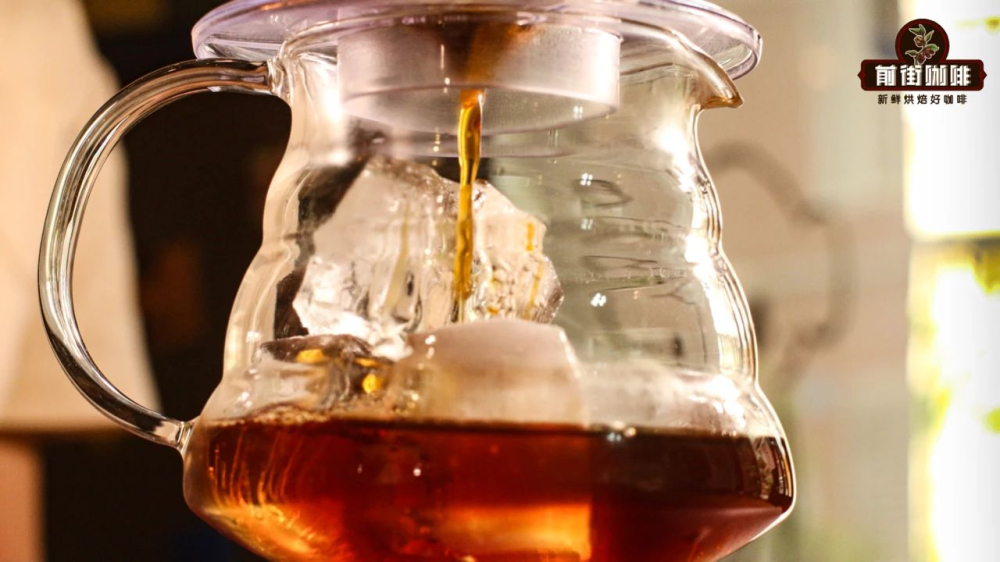
After testing iced pour-over plans for multiple coffee beans, Front Street Coffee concluded that when the ratio of coffee grounds to hot water is maintained at 1:10, the resulting iced coffee has the best concentration performance. Then, after adding ice at 5 times the amount of coffee grounds, the coffee liquid can still present a satisfactory flavor after dilution and cooling. In other words, it is the formula mentioned earlier—taking a single serving of 15 grams of grounds as an example, 10 times hot water is 150 grams, and 5 times ice is 75 grams; if making two servings with 20 grams of grounds, you need 200 grams of hot water with 100 grams of ice.
It should be noted that after the amount of hot water poured is reduced, the entire extraction process will also be shortened accordingly, usually from the original 2 minutes to about 1 minute 20 seconds. This means that the flavor substances in the later stage do not have time to be fully released, and the final glass of iced coffee is very likely to be under-extracted. In other words, although the concentration meets the standard, the flavor is not rich enough! Therefore, in order to restore balance to the release ratio of aromatic substances, we need to make the grind finer, thereby driving the extraction time longer.
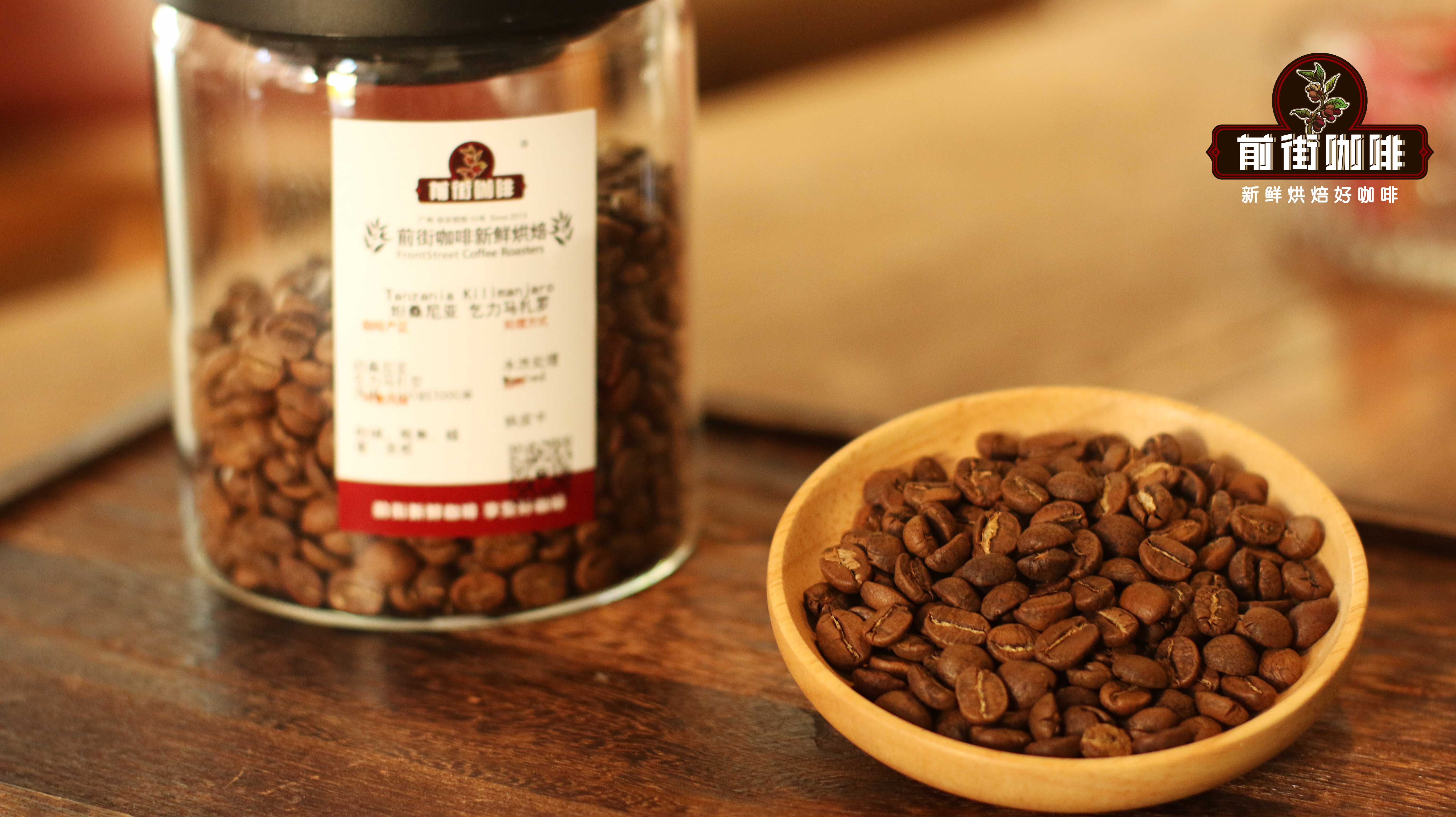
Medium-light roast coffee beans: Tanzania · Kilimanjaro
Technique: Three-stage

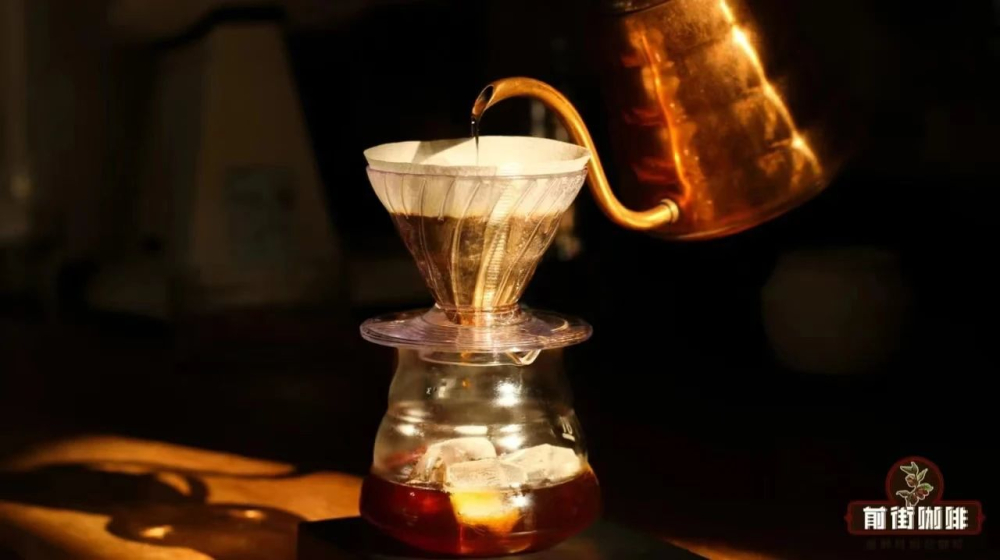
Before pouring, first put the ice cubes into the sharing pot (whether ice is added first or later has little effect on the flavor), then pour in 15 grams of coffee grounds. In the first stage, starting from the center and spiraling outward in small circles, pour 30 grams of water in a fine stream, and bloom for 30 seconds; in the second stage, pour 60 grams of water using the same technique; when the water in the dripper is about to finish dripping, pour in all the remaining 60 grams of hot water. The final extraction time should be controlled between 1 minute 50 seconds and 2 minutes.
After reading this, some people may feel that the steps are still rather cumbersome. Is there no simpler and more direct iced pour-over method that does not require attention to technique? Don't worry, there really is one, and that is the "one-pour iced pour-over" developed by Mr. Tetsu Kasuya.
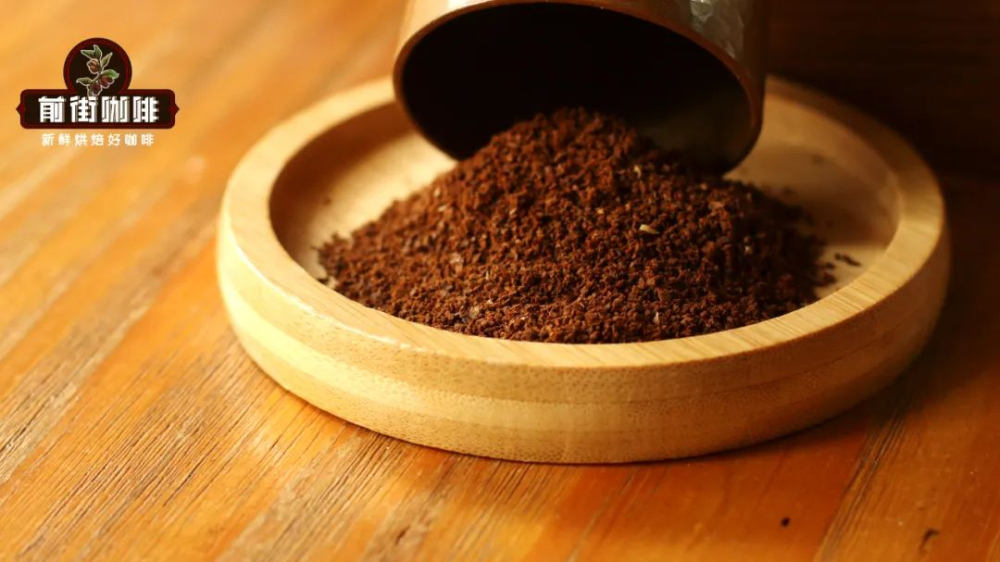
Grind size: EK-43s setting 7 (about 18–19 clicks on C40)
Finally, remove the dripper and shake the sharing pot vigorously until the ice cubes have completely melted into the coffee liquid, then it can be poured into an ice-filled cup and enjoyed (if you feel the concentration is too high, you can appropriately add 1–2 more ice cubes according to personal taste).
The iced pour-over extracted by this one-pour method has a round and smooth mouthfeel, with acidity that is not prominent and a strong sweet aftertaste, while also giving this cup of coffee the aromas of mango, citrus, guava, peach, and Darjeeling black tea.
The above content is compiled by CoffeeHunters, a coffee news website.


