








How much ice should go into iced pour-over coffee?
Ice in iced pour-over does two jobs: it chills the brew fast and it dilutes it, so it must be counted as part of the total water. Front Street recommends a 1:10 to 1:12 coffee-to-water ratio as the most reliable starting range, with the ice weighed in advance rather than added by eye. Too little ice leaves the coffee lukewarm; too much makes it thin.
A Front Street comparison used 15 grams of Emerald Estate Green Label geisha green coffee in a Hario V60 and tested old ice against new ice. Freezing time affects ice hardness and how quickly it melts, which changes how much dilution happens during chilling. Green geisha coffee beans with a lighter roast need enough extracted strength to survive that melting, which is why the ratio range matters.
When making iced pour-over in summer, the most perplexing thing is often not which beans to choose, but how much ice to throw in. Too little ice and the coffee is lukewarm; too much and it tastes thin as water. A slight deviation in ratio can easily ruin the brew. This article focuses on the two core roles of ice in iced pour-over—cooling and dilution—breaks down the reasonable ratio range among coffee grounds, water, and ice, and shares a comparative experiment about old ice versus new ice. The experiment uses 15g of Emerald Estate Green Label Geisha with a Hario V60 dripper, revealing through actual testing how freezing time affects ice hardness and melting speed. If you also want to consistently make an iced pour-over with moderate strength and lasting chill in your own kitchen, the following content is worth reading to the end.

For more specialty coffee knowledge, please follow our WeChat official account: Front Street Coffee (FrontStreet Coffee)
When it comes to the key to making delicious iced pour-over, besides choosing the right coffee beans, the most frequently asked question is probably how much ice to put in. Today we'll specifically talk about the amount of ice.
What role does ice play in iced pour-over?
In iced pour-over, the core duty of ice is cooling. As long as it hasn't fully melted, it can quickly bring hot coffee down to an icy temperature. At the same time, the ice at the bottom of the server also helps dilute the coffee liquid, so when calculating total brewing water, ice must be counted in advance. Combining these two points, judging how much ice to add depends on whether it can quickly bring the temperature down to an iced mouthfeel without diluting the strength to tastelessness.
How should the ratio be allocated?
When determining the ratio of grounds, water, and ice, there's a basic trade-off logic: less water and more ice means insufficient flavor compounds are extracted, prone to under-extraction; conversely, more water and less ice means the coffee liquid is too concentrated, leaving insufficient room for ice to dilute, and before the temperature drops the whole thing is already diluted. After summarizing iced brewing plans for multiple coffee beans, Front Street believes a 1:10–1:12 coffee-to-water ratio is the most reliable, not easily going wrong due to ratio imbalance.
What considerations are there for ice?
Friends who have visited Front Street's store for iced coffee may have noticed that when making iced drinks, Front Street opens the freezer and takes out pre-peeled old ice cubes rather than directly using ice from the ice machine. Does old versus new ice really have such a big impact on extraction results? To figure this out, Front Street specifically conducted a comparative ice experiment. Using the same coffee beans and identical parameters for separate extractions, one group used freshly made new ice, the other used old ice frozen for several days.
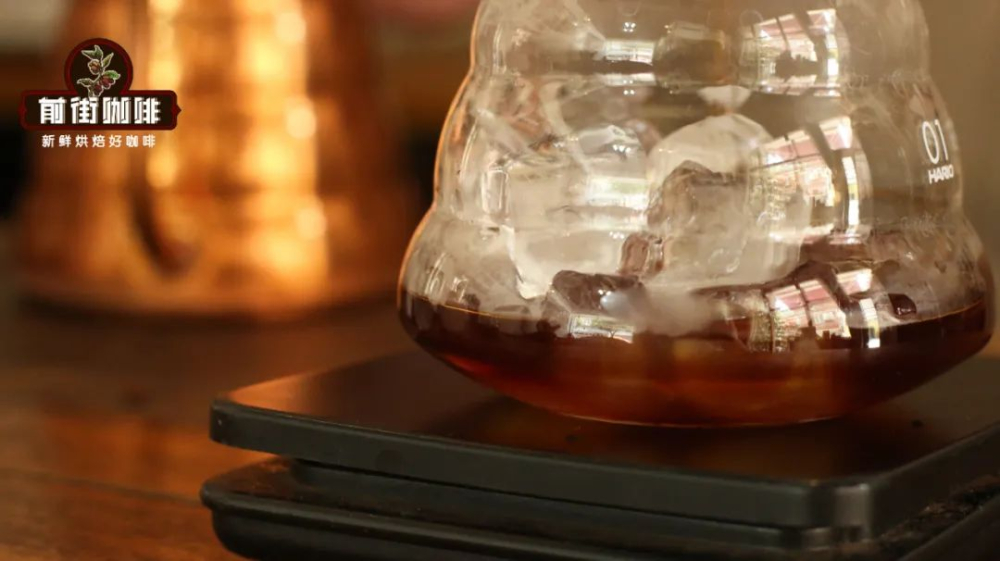
The old ice is homemade from 25 cubic centimeter ice trays, each cube about 30g, using 4 cubes each time, totaling about 120g. The new ice is taken directly from the ice machine, roughly dice-sized, mostly irregular in shape, also weighed to exactly 120g.
Coffee beans: 15g Emerald Estate Green Label Geisha
Dripper: Hario V60
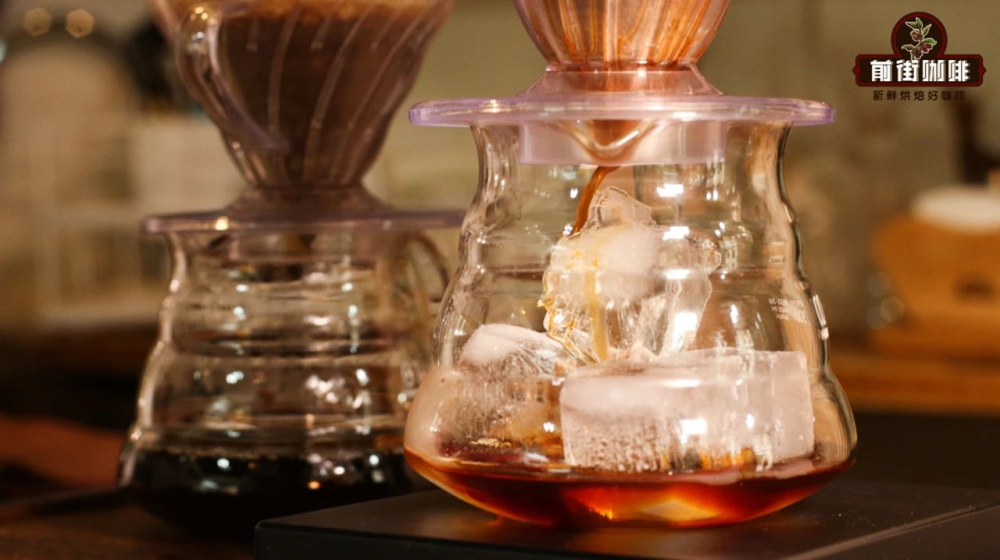
Through this small experiment, it can be observed that old ice frozen for a long time in a low-temperature environment is noticeably harder, and combined with its larger volume, melts much slower than newly made ice cubes, so the coffee's chilling effect lasts longer.
Therefore, if the ice cubes produced by your ice molds are on the small side, when planning to make iced pour-over, you might as well freeze a sufficient amount of old ice in advance. This way, during actual brewing, adding the target amount of ice can both bring the diluted coffee to a moderate strength range and deliver just the right icy mouthfeel.
The above content is compiled by CoffeeHunters, a coffee news website.


