








What water-to-coffee ratio does iced pour-over coffee need?
Iced pour-over brews a high-concentration hot coffee first, then dilutes and cools it with ice, so the water-to-coffee ratio, pouring amount, and ice quantity must all be reset rather than copied from hot pour-over. Any beans work, but fruity lots show passion fruit, grape, and apricot notes, while balanced lots bring out nutty aroma with moderate acidity and bitterness.
Iced pour-over is tasted only at low temperature, unlike hot pour-over, which shifts across the temperature range. That raises a common question, can coffee make you feel drunk, and the short answer is that caffeine is a stimulant, not alcohol, so the sensation differs; anyone asking why does coffee make me feel drunk is likely reacting to caffeine, dehydration, or an empty stomach.
Iced pour-over coffee, with its refreshing and palate-cleansing taste, has become a favorite among many coffee lovers. But to make a delicious iced pour-over, the key lies in setting the water-to-coffee ratio and how the ice is used. Unlike hot pour-over, iced pour-over requires first extracting a high-concentration hot coffee liquid, then diluting and cooling it with ice, so the coffee-to-water ratio, pouring amount, and ice quantity all need to be readjusted. This article will explain in detail the brewing approach for iced pour-over, suitable coffee bean choices, and the parameter scheme used by Front Street Coffee in actual practice, helping you easily recreate a cup of iced pour-over with complete flavor at home.

In hot weather, a refreshing and palate-cleansing iced coffee always lifts the spirits. Cold drip, cold brew, and iced Americano are all common choices, and iced pour-over likewise has a large number of loyal fans.
Pour-over coffee is now one of the most mainstream ways coffee shops serve coffee, and it can be made hot or cold. However, iced pour-over and hot pour-over differ noticeably in the drinking experience—hot pour-over can be enjoyed from high temperature all the way down to low temperature, showing rich layers of flavor changes across different temperature ranges; iced pour-over, by contrast, can only be tasted in its low-temperature state. Below, let's talk about the specific method for making iced pour-over.
What coffee beans should be chosen for iced pour-over?
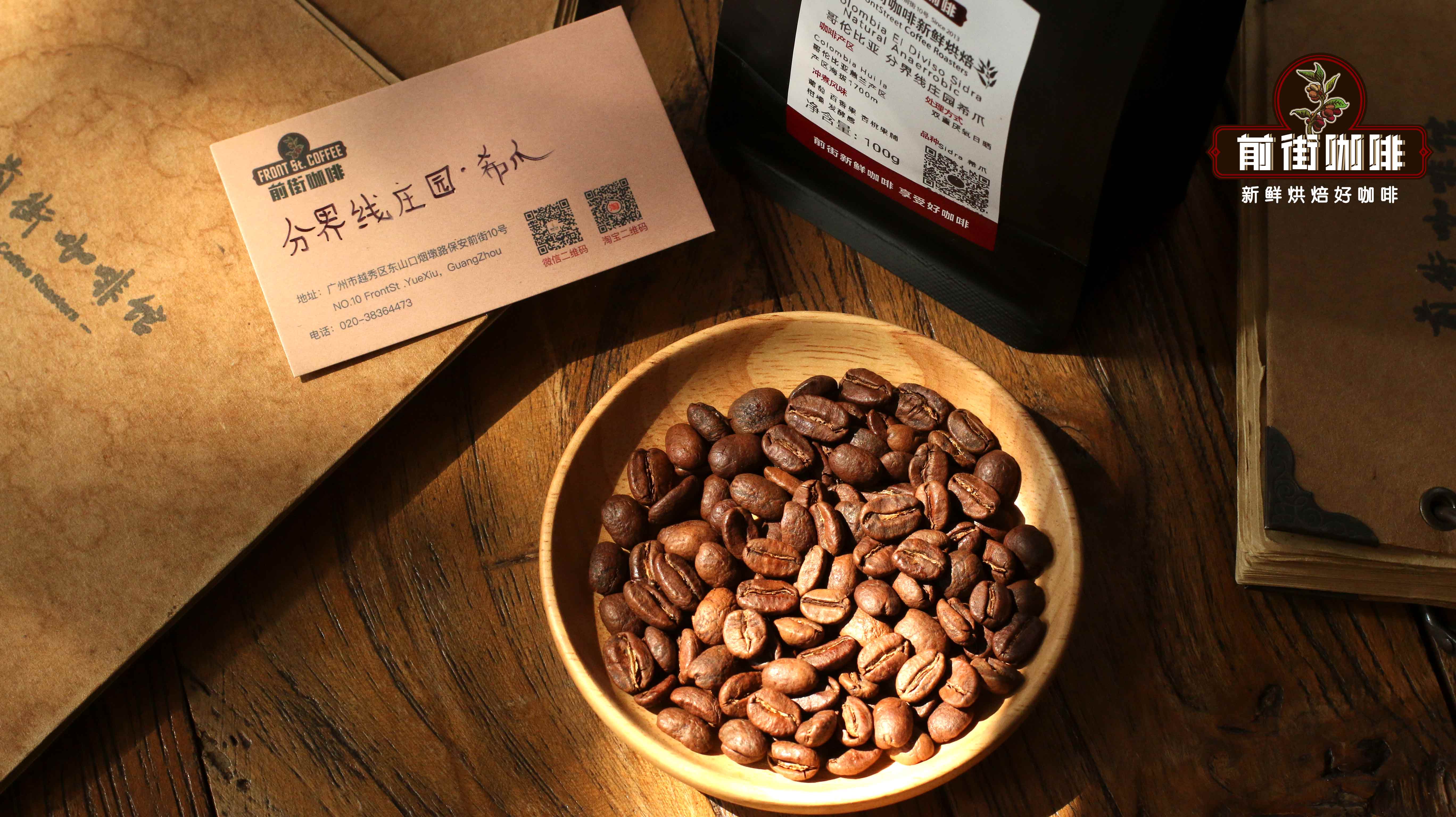
Actually, any coffee beans can be used to make iced pour-over; the key lies in personal taste preference. If you like iced coffee with a prominent fruity profile, Front Street Coffee Strawberry Candy and Front Street Coffee Sidra are good choices, where sweet flavors such as passion fruit, grape, apricot, and floral notes can all be clearly perceived.
If you prefer a balanced style, you can try Front Street Coffee 2013 Sun-Dried Typica and Front Street Coffee Bird of Paradise; after iced brewing, the nutty aroma is very prominent, with moderate acidity and bitterness. If you pursue a richer and more solid mouthfeel, Front Street Coffee PWN Golden Mandheling and Front Street Coffee Queen's Estate are worth trying, with a rich caramel sweetness that lingers long in memory.

What is the brewing logic of iced pour-over?
The core idea of iced pour-over is: first brew a pot of high-concentration hot coffee liquid, then pour it over ice. After the hot coffee liquid contacts the ice, the water produced by melting ice plays a diluting role, ultimately bringing both temperature and concentration into the appropriate range.
But this method has an inherent contradiction—we cannot, as with hot pour-over, use plenty of hot water to fully dissolve the flavor substances from the coffee grounds. We must deliberately reduce the pouring amount and widen the coffee-to-water ratio to obtain a pot of sufficiently high-concentration coffee liquid, so that after the ice melts and dilutes it, the overall body of the coffee is not lowered. The figure below shows the parameters used by Front Street Coffee in both hot brewing and iced brewing, allowing a direct comparison of the differences between the two.
With the same 15g of coffee grounds, the pouring amounts for hot brewing and iced brewing differ greatly. Hot brewing uses a coffee-to-water ratio of 1:15, requiring 225ml of hot water; iced brewing uses a coffee-to-water ratio of 1:10, requiring only 150ml of hot water, together with about 100g of ice.
Compared with hot brewing, iced brewing reduces the pouring amount by a full 75ml, so the final amount of coffee liquid is on the smaller side, but the concentration is correspondingly higher. After being diluted by ice, it becomes exactly a cup of iced coffee with moderate concentration and a reasonable extraction yield, with a cup volume of about 200ml, just right for one person.
However, this ratio used by Front Street Coffee is a relatively small scheme, because the ice used by Front Street Coffee is large in volume and hard in texture, melting relatively slowly, so a smaller coffee-to-water ratio can be used to preserve the coffee flavor as completely as possible.
Some coffee shops, though, use ice that is insufficient in thickness and on the smaller side, so it naturally melts faster. If you directly copy Front Street Coffee's coffee-to-water ratio for brewing, the finished drink will not keep long before becoming overly diluted due to the rapid melting of the ice, tasting weak and thin, as if it were a cup of water with coffee flavor. To avoid this situation, shops need to adopt a larger coffee-to-water ratio and brew a higher-concentration coffee liquid to offset the dilution effect of the ice, such as 1:7 or even 1:8.
The larger the coffee-to-water ratio, the less hot water is poured, and the final amount of coffee liquid will shrink further. If the liquid amount is too small, customers may finish it in two or three sips. Therefore, some coffee shops choose to increase the coffee dose to make up for the liquid volume, keeping the cup volume at a certain level so that customers do not feel it is gone before they have even drunk it.

Of course, some businesses increase the coffee dose purely to enhance the coffee's body. Increasing the coffee dose means more flavor substances are dissolved out, the coffee's taste becomes richer, and the mouthfeel becomes fuller; the overall quality of the iced coffee will rise noticeably as the coffee dose increases.
The above content is compiled by CoffeeHunters, a coffee news website.


