







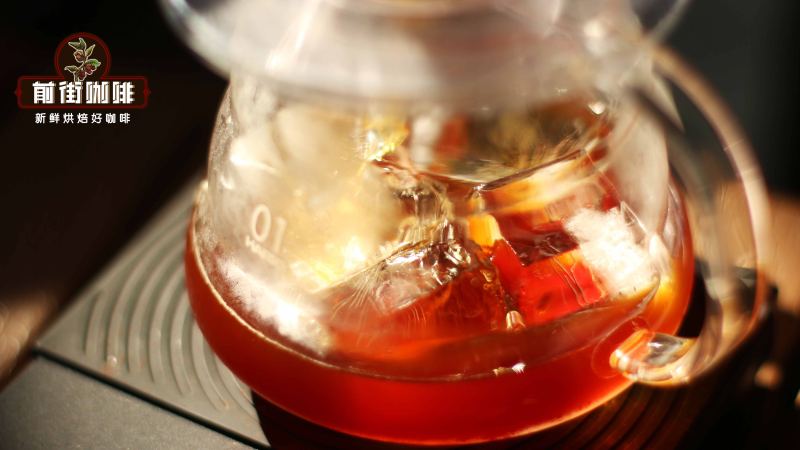
Can medium-dark roast beans make a good iced pour-over?
Medium-dark roasted beans can make a clean, refreshing iced pour-over when the grind, water temperature, ice ratio, and pouring rhythm are set correctly. Without those adjustments, dark roast iced pour-over often turns out bitter and thin, closer to an iced americano. Using PWN Golden Mandheling, a finer grind than hot pour-over and staged pouring keep caramel bittersweetness with a clean finish.
Iced pour-over extracts only the front and middle stages of the brew, then chills the concentrate over ice. Since less water carries the same coffee, the grind is set finer than for hot pour-over so enough soluble material is pulled. Light roasts concentrate their sweet and acidic compounds early, which is why they dominate iced pour-over; medium-dark beans need tighter control to avoid the flat, harsh profile many drinkers associate with american style coffee.
Many people tend to choose light-roasted coffee beans when making iced pour-over, while medium-dark roasted beans are often criticized for making iced pour-over that is bitter and watery, tasting like iced Americano. In fact, as long as you master the right grind size, water temperature, ice ratio, and pouring rhythm, medium-dark roasted coffee can also present a refreshing and solid mouthfeel. This article uses Front Street PWN Golden Mandheling as an example to thoroughly break down the brewing plan for medium-dark roasted iced pour-over, including key parameters such as coffee-to-water ratio, ice amount, and staged pouring method, to help you make a cup of dark roasted iced pour-over with caramel bittersweetness and a clean sweet aftertaste.
For more specialty coffee knowledge, please follow the WeChat official account: Front Street Coffee (FrontStreet Coffee)
When making iced pour-over, most people tend to choose light-roasted beans, and relatively few are willing to use dark-roasted coffee for iced pour-over. When Front Street was chatting with several coffee enthusiasts, some feedback was heard: "Iced pour-over made with dark-roasted beans tastes like iced Americano, bitter and weak."
Indeed, during regular brewing, pour-over iced coffee made with light-roasted beans more easily presents a refreshing, pleasantly acidic, and lightly bitter taste, making it very comfortable to drink. But when switching to dark-roasted beans for iced pour-over, achieving the same satisfying taste is more challenging, and with the slightest carelessness it becomes prominently bitter and thin and watery in mouthfeel.
For this reason, in the field of iced pour-over, the sweet-and-sour profile of light-roasted coffee is clearly more favored than the bitterness of dark roast. However, as long as the brewing plan is reasonable, dark-roasted coffee can also deliver a refreshing and comfortable performance.
Iced pour-over evolved from hot pour-over. The difference from hot pour-over is that only the front and middle stages of coffee are extracted, and then ice cubes are used to quickly cool the hot coffee into iced coffee. In order to extract enough substances with less water, the grind size for iced pour-over is generally adjusted finer than for hot pour-over.
For light-roasted beans, the sweet and sour substances are mainly concentrated in the front and middle stages, so even without the later stage, they can still show a sweet-and-sour refreshing flavor. But the core characteristic of dark-roasted beans lies in their rich mouthfeel and caramel aroma. When making iced pour-over, the aroma will be discounted, and the mouthfeel performance is not advantageous either. Once too much ice is added, the coffee will become bitter and watery, very unpleasant to drink.
Therefore, to brew dark-roasted coffee with a refreshing yet solid mouthfeel, special attention must be paid to the pouring method and ice ratio.
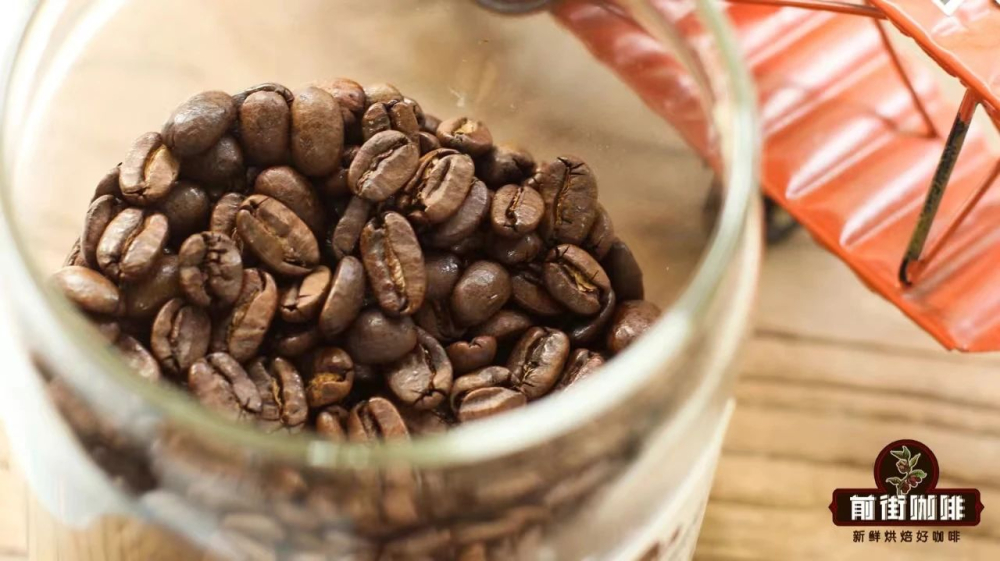
First, prepare a bag of fresh-flavored medium-dark roasted coffee beans. It can be the creamy nutty Front Street Queen Manor, the dark chocolate-style Front Street Colombia Huila, or the outstanding-quality Front Street Blue Mountain No. 1.
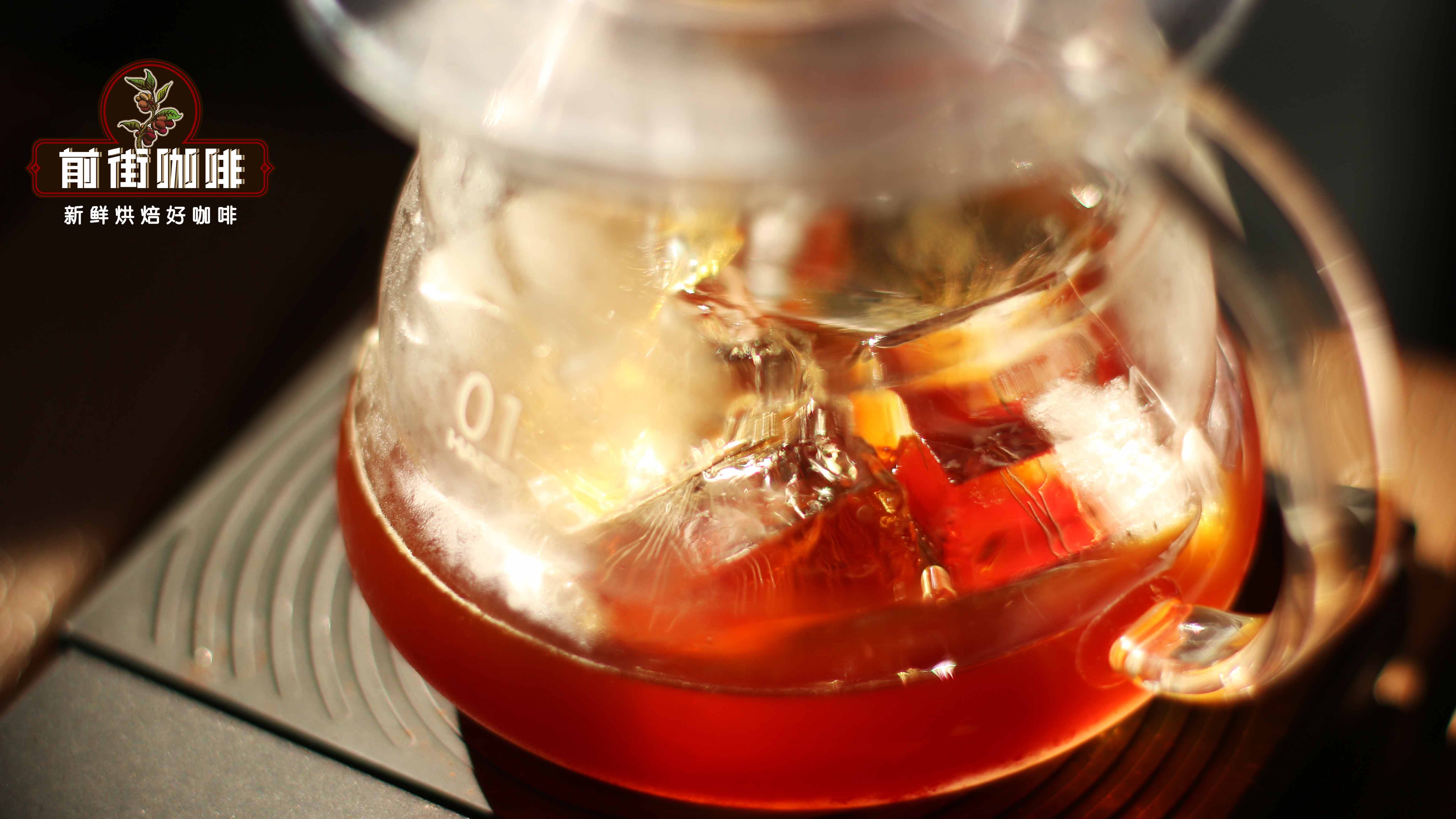
This time Front Street selected Front Street PWN Golden Mandheling for the demonstration. It is the darkest roasted among all Front Street single-origin coffees, with flavor notes of nuts, herbs, caramel, and pine wood, and a rich mouthfeel with high cleanliness.
The coffee dose is still based on 15g, and the grind size uses medium grinding (75% passing through a No. 20 sieve), slightly finer than hot pour-over. The water temperature is set to 88°C (medium-high for dark-roasted beans).
The pouring water amount is 150ml (coffee-to-water ratio 1:10), and Front Street recommends 75g of ice (that is, 5 times the coffee dose). You can also, like Front Street, first use 120g of large ice cubes to cool it, then remove the ice, avoiding residual ice cubes melting and affecting the taste.
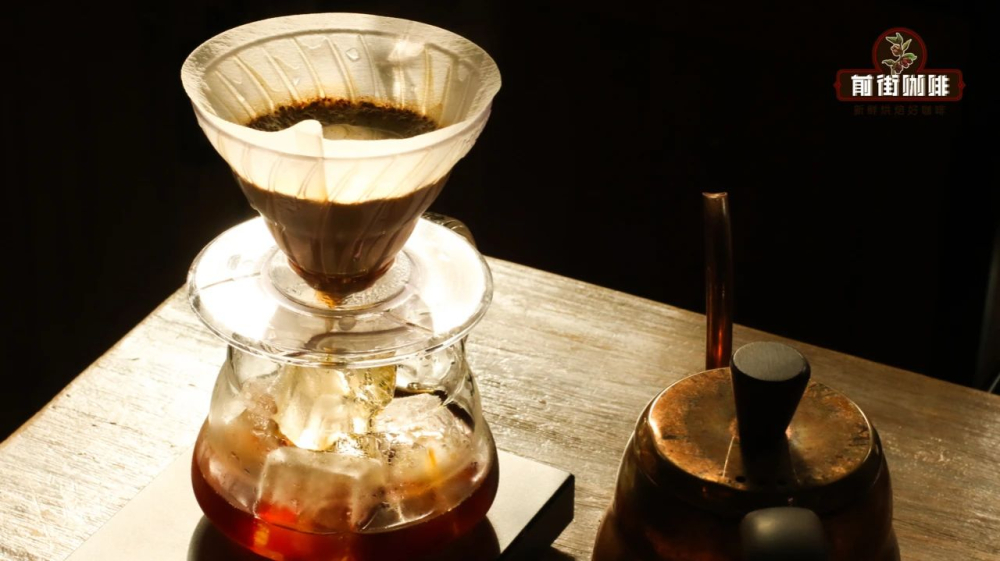
For the pouring method, Front Street adopted the "30-30-30-30-30" staged pouring method, pouring 30ml in each stage, for five stages in total. In the first stage, pour 30ml and bloom for 30 seconds. In the second stage, pour 30ml in a small stream in a small circle around the center. After the coffee bed shows a central depression, continue pouring the third stage of 30ml in the same way, and repeat until the fifth stage is finished.
After the coffee liquid finishes dripping, remove the dripper, shake the sharing pot to let the ice cubes fully blend evenly with the coffee liquid, and at the same time feel the temperature of the sharing pot with your hand. Once the temperature has dropped, separate out the ice cubes and pour the coffee liquid into a cup.
The dark-roasted iced pour-over brewed this way mainly has the bittersweet flavor of caramel and dark chocolate, but after entering the mouth the bitterness quickly dissipates, the mouthfeel is clean and refreshing, followed by a sweet aftertaste. The body is not only high but also does not appear watery.
The above content is compiled by CoffeeHunters, a coffee news website.


