








How do ice and coffee-to-water ratio shape iced pour-over?
Iced pour-over works on a simple setup: 15 grams of coffee, a 1:10 coffee-to-water ratio, and 100 grams of ice. The ice both chills the brew and melts into the final cup, so the amount you add decides whether the coffee lands refreshing or watered down. Light to medium roast, fruit-forward beans hold up well once chilled.
Front Street prefers beans from Ethiopia, Panama, Colombia, and Costa Rica, mostly natural, honey, or anaerobic fermentation lots that stay aromatic over ice. The raw coffee bean meaning here is simple: beans are green and unroasted before the roast, and roast freshness sets the drinking window. The article notes a roughly four-day rest after roasting, a stable phase from 4 to 50 days, and clear aroma loss by 60 days.
On a scorching summer day, a glass of iced pour-over coffee becomes the favorite of many coffee lovers. But how much ice should you actually add? And how should the coffee-to-water ratio be adjusted? This article will systematically answer common questions about iced pour-over coffee from multiple angles, including coffee bean selection, the role of ice, specific brewing methods, and the timing of adding ice. Using 15 grams of coffee, a 1:10 coffee-to-water ratio, and 100 grams of ice as an example, Front Street Coffee breaks down in detail the grind size, actual concentration, and the effect of melting ice on flavor, helping you make a cup of iced pour-over that is both refreshing and not watered down.

The recent weather in Guangzhou is conservative to describe as "scorching"—it rivals the Flaming Mountains. Even the baristas at our shop, who have always been mindful of healthy living, couldn't resist reaching for a cold drink. During this period, the number of customers coming in to ask about iced pour-over has increased noticeably, and the most frequently asked question is: how much ice should you actually put in an iced pour-over?
A Guide to Buying Coffee Beans for Iced Pour-Over
As the saying goes, if you choose the right beans, your coffee is already half successful. For iced pour-over, Front Street prefers light to medium roast fruit-forward coffee beans, with priority given to Ethiopia, Panama, Colombia, and Costa Rica for their origins. These beans mostly use natural, honey, or anaerobic fermentation processing, and when made into iced coffee, they often show outstanding aroma and a particularly refreshing mouthfeel.

If you prefer floral-toned iced pour-over, Front Street Fruit Ding Ding and Front Street Flower Queen are top choices; if you want iced coffee with a richer juicy feel, try Front Street Little Tomato and Front Street Flower Butterfly; if you're after intense fruity aroma, Front Street Xizhao and Front Street Strawberry Candy are worth recommending.
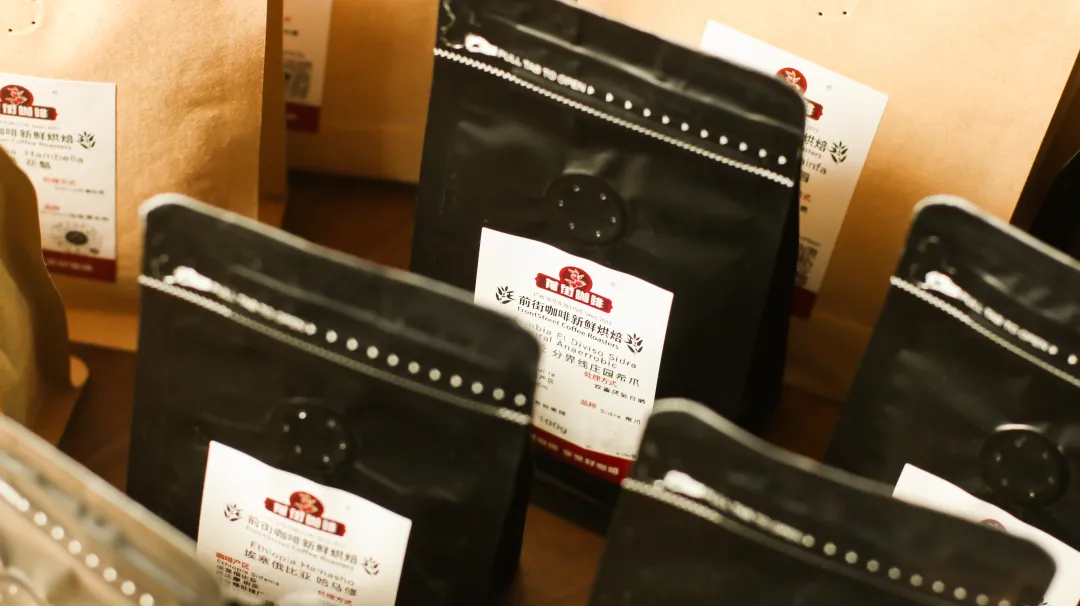
Besides variety, freshness is also a key factor determining flavor. Freshly roasted beans need about a 4-day resting period, and after entering the stable phase, there is a best-tasting window from 4 to 50 days, while by 60 days the aroma will have faded significantly, so be sure to finish them as soon as possible. Front Street coffee beans are all freshly roasted within 5 days and support shipping within 24 hours, so they arrive right when the flavor is at its fullest.
What Role Does Ice Play in Iced Pour-Over?
Iced pour-over is not brewed directly with ice water; like hot pour-over, it is brewed with hot water. After all, the extraction efficiency of hot water is far higher than that of ice water, and many coffee aromas can only be fully released with hot water. Therefore, the primary role of ice is to cool—pour the freshly brewed hot coffee over ice and quickly chill it into iced coffee.

The second role (which can also be called a side effect) is diluting the coffee liquid. Because of this, we need to count the ice into the total brewing water. Imagine brewing according to the coffee-to-water ratio for hot pour-over (1:15) and then adding ice to cool it—the concentration of this iced coffee would be pulled down, and it would taste as bland as water.
So, how much ice to add depends on two things: first, whether the amount of ice can achieve sufficient cooling; second, whether the coffee concentration is still appropriate after the ice melts.
How Much Ice Does Front Street Add When Making Iced Pour-Over?
When Front Street makes iced pour-over coffee, it uses 15 grams of coffee grounds with a coffee-to-water ratio of 1:10, meaning 15 grams of coffee is brewed with 150 grams of hot water, then 100 grams of ice is added for cooling and dilution. As for the ice, Front Street uses homemade ice cubes from a 25-cubic-centimeter ice tray (with Nongfu Spring water as the water source), each weighing about 25 grams, so exactly 4 cubes are added each time.

According to this iced coffee method from Front Street, if the weight of the ice is included, the coffee-to-water ratio is equivalent to 1:16.7—won't that be too weak? Actually, it won't. When brewing iced pour-over, the coffee grounds are ground slightly finer than for hot pour-over, with a No. 20 standard sieve passing rate of 85%, so more coffee substances are extracted. Moreover, 100 grams of ice usually does not melt completely during cooling, with about 20 grams remaining. Therefore, the actual concentration is still within a suitable drinking range.
So should the remaining ice be scooped out? Front Street thinks it's unnecessary. Think back to when you went to a certain global fast-food chain and drank iced cola—after finishing it, there was still a pile of ice left at the bottom of the cup. This shows that when the temperature is low enough, ice melts extremely slowly. And many people share the feeling that iced cola without ice has no soul—the same goes for iced coffee.
When Should the Ice Be Added?
There are roughly two ways to add ice: one is to add ice first, meaning the ice is placed in the server in advance, and during brewing the coffee liquid continuously contacts the ice to cool down; the other is to add ice afterward, meaning the hot coffee liquid is brewed first, and then ice is added to cool it.
The difference between these two methods in coffee flavor is not great. If you insist on examining it closely, coffee with ice added first appears cleaner and more refreshing, while coffee with ice added afterward has a more concentrated and intense aroma, with richer layered changes when tasting. So both methods are fine.
Some friends also ask, to prevent too much ice from melting and making the coffee weak, can you make iced pour-over using the "ice-passing" method?
Of course you can. Front Street has also tried this kind of method, letting the coffee liquid wash over the ice to cool rapidly, which can showcase the coffee flavor very well. However, due to differences in ice hardness and volume, the amount that melts each time is inconsistent, and the consistency of the final product will be affected.
The above content is compiled by CoffeeHunters, a coffee news website.


