







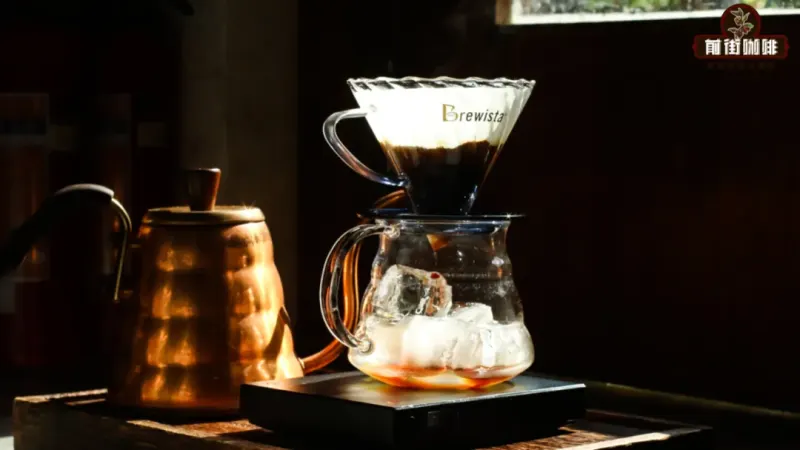
How much coffee powder does iced pour-over need?
Iced pour-over usually calls for more coffee grounds than hot pour-over, which is why some shops charge more for it. The extra dose offsets dilution from melting ice: the brewer pours less hot water, so the coffee must start more concentrated. The exact amount shifts with the coffee-to-water ratio and how quickly the ice melts, and adding grounds also increases the liquid volume and changes mouthfeel.
When learning how to make coffee from coffee powder, the iced method is the clearest example of why dose matters. Because a full amount of hot water cannot be used to dissolve flavour compounds, the grounds are increased and the pour reduced. Brewers adjust the ratio depending on ice melting speed, then check the result in the cup. Bean choice for iced pour-over follows the same logic, favouring lots that hold up when chilled.
Many coffee shops price iced pour-over higher than hot pour-over, and the reason behind this is not that it is more complicated to make, but that it requires more coffee grounds. So why must iced pour-over use more grounds? And how should the dose be adjusted? This article starts with the differences in the hot brew and iced brew parameters shared by Front Street Coffee, explaining the principle that iced pour-over reduces the amount of water poured and increases concentration to offset dilution from ice, while also explaining the flexible changes in the coffee-to-water ratio under different ice melting speeds, as well as the actual impact of adding grounds on liquid volume and mouthfeel. At the end, it also includes buying ideas for iced pour-over coffee beans and specific bean list recommendations from Front Street Coffee, for friends who want to try it themselves.
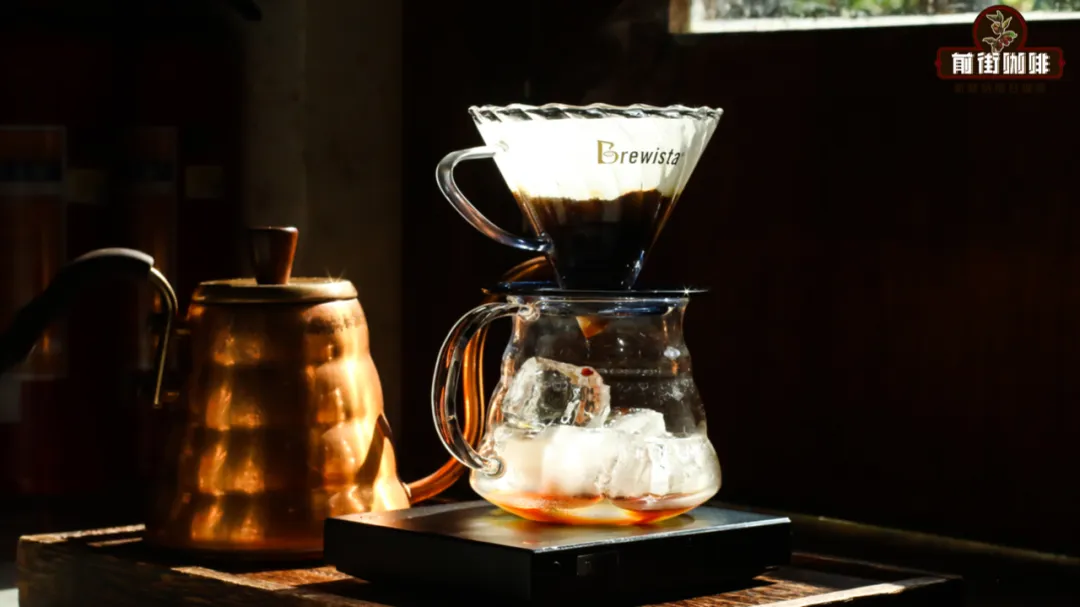
Do you all still remember that last year Front Street Coffee once talked about a rather interesting phenomenon—why do some coffee shops charge extra for iced pour-over? At that time, it was because some stores indeed priced iced pour-over higher than hot pour-over, which made some customers always ask cautiously when ordering: "Does iced pour-over cost extra?" Front Street Coffee thought this phenomenon was worth discussing, so it gave a corresponding explanation.
Many coffee shops sell iced pour-over for more, not because the method is more complex, but because it uses more coffee beans, and once the cost goes up, the selling price naturally rises as well. Right after that, customers asked a second question:
"Then why does iced pour-over have to use more grounds?"
That is a good question. The purpose of adding grounds to iced pour-over varies depending on the brewing method, but in the end it is all to make the cup of iced coffee you get taste better.
Recently, Front Street Coffee published several pieces of content on iced pour-over in succession, and I believe everyone is no longer unfamiliar with how to make it. The most common iced pour-over is the kind Front Street Coffee has repeatedly introduced—directly adding ice to cool the coffee, quickly and conveniently making a pot of icy, refreshing pour-over.
However, this method has a shortcoming: unlike hot pour-over, we cannot use a full amount of hot water to fully dissolve the flavor substances in the coffee. We can only reduce the amount of water poured and widen the coffee-to-water ratio to first obtain a pot of high-concentration coffee, so that the body of the coffee will not be lowered because of melting ice. The figure below shows the parameters used by Front Street Coffee in hot brew and iced brew, and everyone can compare the differences between the two.

Using the same 15g of coffee grounds, the water amounts for hot brew and iced brew are completely different. The coffee-to-water ratio for hot brew is 1:15, pouring 225ml of hot water during brewing; for iced brew it is 1:10, pouring only 150ml of hot water, plus about 100g of ice.
Compared with hot brew, iced brew uses a full 75ml less water, so the total amount of coffee liquid obtained is on the low side, but the concentration is correspondingly higher. After the ice melts and dilutes it, it becomes a cup of iced coffee with normal concentration and a suitable extraction yield, with a cup volume of about 200ml, just right for one person.
However, this ratio at Front Street Coffee is on the smaller side, because the ice used by Front Street Coffee is large and hard, and melts slowly, so a smaller ratio can be used to preserve the coffee flavor as completely as possible.
Some coffee shops, though, have ice that is not so thick and is also smaller in volume, so it melts faster. If they copy Front Street Coffee's coffee-to-water ratio, the brewed coffee will quickly become too light because the ice melts rapidly, tasting thin and bland, like a cup of water with coffee flavor. To avoid this negative result, shops need to use a larger coffee-to-water ratio and brew a stronger coffee to resist dilution by the ice, such as 1:7 or 1:8.
But the larger the coffee-to-water ratio, the less water is poured, and the final amount of coffee liquid also decreases accordingly. If the liquid volume is too small, customers will reach the bottom after just a couple of sips. So some coffee shops add grounds to increase the amount of coffee liquid, keeping the cup volume at a certain level so that it will not be finished in two gulps.
Of course, some merchants add grounds purely to make the coffee's body better. Adding more grounds allows more flavor substances to be dissolved out, making the coffee taste richer and the mouthfeel fuller, and the body of the whole cup of iced coffee also improves as the amount of grounds increases.
For friends who have not tried it yet, Front Street Coffee suggests giving it a go: keep all iced brew parameters except the amount of grounds fixed, then add 2~3g more grounds for brewing.
Finally, here is a buying guide for iced pour-over coffee beans:
In theory, any coffee beans can be used for iced pour-over. Among them, if you want to drink a prominent flavor, give priority to single-origin coffee, that is, beans from a single origin such as Front Street Coffee Blue Mountain, Front Street Coffee Geisha, and Front Street Coffee Flower Queen. There are really too many options, and blindly ordering can easily lead to a messy purchase, so first determine a general flavor direction.

If you like iced coffee with fresh floral aromas mixed with bright acidity, you can choose Front Street Coffee Fruit Ding Ding; if you want pour-over beans with a full juicy feel, Front Street Coffee Little Tomato is the first choice; for friends who can accept fermented flavors, Front Street Coffee Sidra and Front Street Coffee Strawberry Candy are recommended; and if you do not want any acidity at all, choosing Front Street Coffee PWN Golden Mandheling will definitely not go wrong.
The above content is compiled by CoffeeHunters, a coffee news website.


