








Ice First or Ice Last in Iced Pour-Over Coffee Brewing?
Placing ice in the server before brewing is the method most coffee shops use, and it is the simpler of the two iced pour-over paths. Brewing first and adding ice afterward takes more steps but gives the maker more control. Both approaches cool the coffee and even out strength and temperature once the liquid is shaken or stirred.
A tested recipe uses 15g of coffee ground to a fine sugar texture at 9 on the EK43, about 80 percent passing a No. 20 sieve. The coffee-to-water ratio is 1:10 with 100g of ice, 92°C water, a three-stage pour and a V60 dripper. Ice-first is quicker; ice-last lets you brew a full hot pour-over before chilling.
There are mainly two ways to make iced pour-over coffee: one is to pre-place ice cubes in the lower server before brewing, and the other is to complete the brew first and then add ice cubes to the coffee liquid. What kind of flavor differences do these two operational paths actually bring? Which method better presents the ideal iced coffee taste? In this article, Front Street Coffee will compare the specific differences between these two methods through actual testing, and at the same time list in detail the key parameters of iced pour-over, such as coffee dose, grind size, coffee-to-water ratio, ice amount, water temperature, and pouring method, to help you master the complete production process and techniques of iced pour-over coffee.

"Ice first, then brew" is the iced pour-over process used by most coffee shops. But many coffee shops also use a method of "brew first, then add ice." As a result, many friends have begun to study the differences between the two: is pour-over coffee with ice added first better in taste? Or does adding ice afterward produce better results? So today, Front Street will test what exactly the differences are between the two!
What is the difference between them in operation?
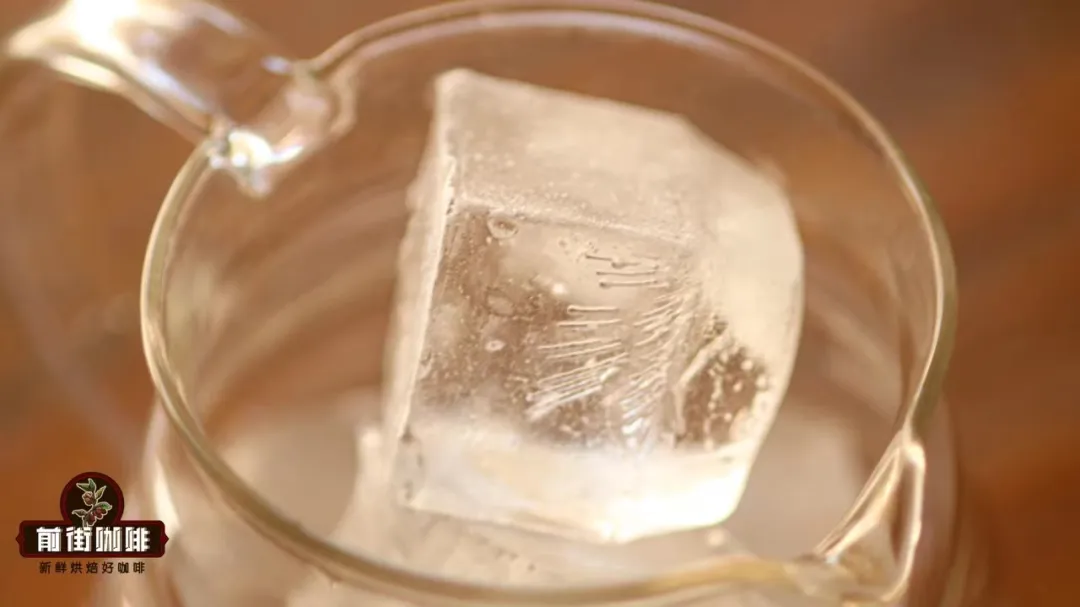
The method of adding ice first is easier to understand, because this method is simply adding ice cubes on top of the original coffee brewing process. Before brewing, we place a certain proportion of ice cubes into the lower server. During extraction, they continuously come into contact with the released coffee liquid, then cool the coffee liquid and melt.
When the coffee liquid has finished extracting, we shake or stir it so that the coffee's concentration and temperature can be more uniform.
The process of adding ice afterward is relatively more cumbersome, because we need to brew the coffee liquid in advance, then pour the coffee liquid into another container with ice cubes in it (or add ice cubes to the coffee liquid) , and then cool it evenly by shaking and stirring.

Coffee dose: 15g
Grind size: ground at 9 on the ek43, fine sugar texture, 80% passing through a No. 20 sieve
Coffee-to-water ratio: 1:10
Ice: 100g
Water temperature: 92°C
Pouring method: three-stage
Dripper: V60
The above content is compiled by CoffeeHunters, a coffee news website.


