







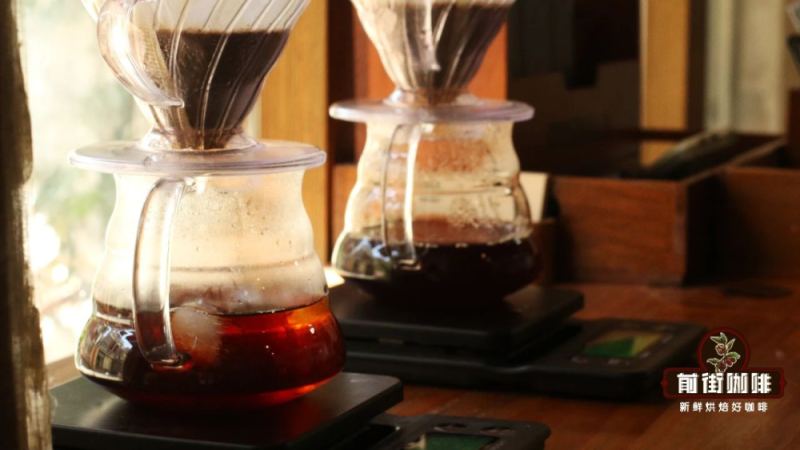
How does iced pour-over brewing differ from the hot method?
Iced pour-over follows a simple formula: fine ground coffee, ten times its weight in hot water, and five times its weight in ice. Because a share of the water is replaced by ice, the hot water available for extraction drops, so the grind has to be finer than for a hot pour-over to reach full flavor.
Ice can go into the server before brewing or be added afterward, but weighing it keeps the final strength predictable. Water temperature, pouring technique and the coffee bed still matter, yet the ratio of hot water to ice is what decides whether the finished glass tastes strong, flavorful and properly chilled.
In the scorching summer heat, iced coffee becomes the top choice for many to beat the heat. Although cold brew and iced drip offer outstanding flavors, they take a long time. At times like this, making a fresh iced pour-over is undoubtedly a more convenient option. Many coffee enthusiasts, when watching baristas at cafes, are often curious about the coffee dose, ice-to-water ratio, water temperature, and pouring techniques. Front Street Coffee has summarized a simple and practical iced pour-over formula for you: coffee grounds (fine grind) paired with 10 times hot water and 5 times ice cubes. Compared to hot pour-over, iced pour-over requires adjusting the grind size to extend extraction due to reduced hot water, avoiding insufficient flavor. This article will provide a detailed analysis of the complete process and key parameters for iced pour-over, helping you easily replicate cafe-level iced pour-over at home.
Summer has arrived, temperatures are soaring, and iced coffee has surely become a daily beverage for everyone. Although cold brew and iced drip taste good, the waiting time is really a bit long. So what should be done? Front Street Coffee thinks that making a fresh iced pour-over is an ideal choice.
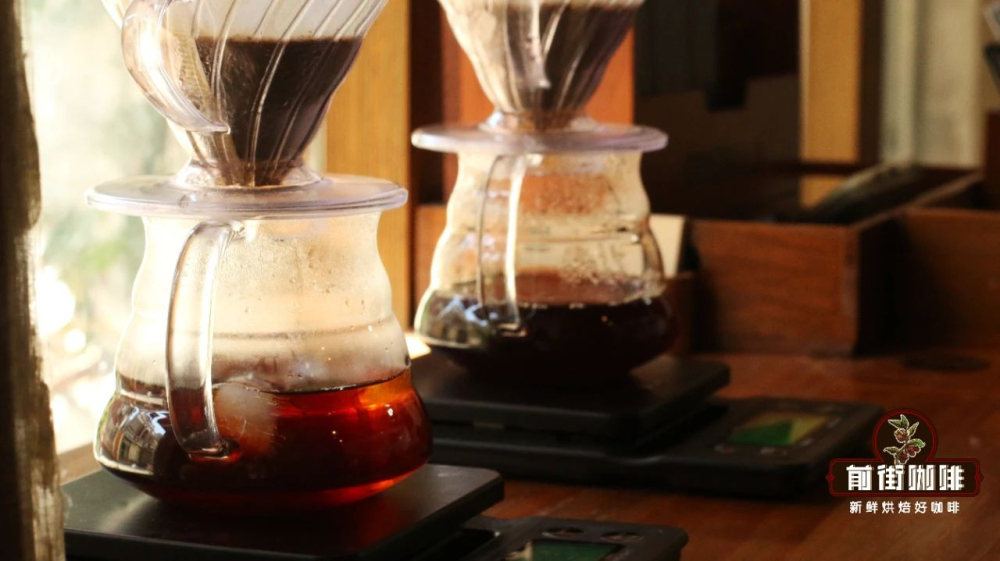
Many friends, when drinking coffee at a cafe, will observe each movement of the barista with a learning mindset, while quietly inquiring about various parameters, hoping to make the same taste at home.
Take Front Street Coffee's bar counter brewing iced coffee as an example: customers who gather around not only carefully watch the pouring kettle and coffee bed, but often curiously ask: How much coffee powder is used here? How much ice and water are added? Is it better to add ice in advance or at the end? What is the water temperature controlled at? Are there any special techniques when pouring?
Actually, when we buy the same coffee beans, we don't need to copy all the parameters home. To make the iced pour-over you drank in the shop, just mastering a "universal formula" is enough:
Iced pour-over = coffee grounds (fine grind) + 10 times hot water + 5 times ice cubes.
Compared to hot pour-over, iced pour-over has the key element of ice cubes. To ensure the final coffee is strong enough, flavorful enough, and icy, we must replace a portion of the hot water with ice cubes to achieve the above ratio. According to the extraction pattern of pour-over coffee—stronger in the front and weaker in the back—the less hot water poured, the more concentrated the coffee liquid obtained, so that after adding ice cubes, it won't be diluted to be too bland.
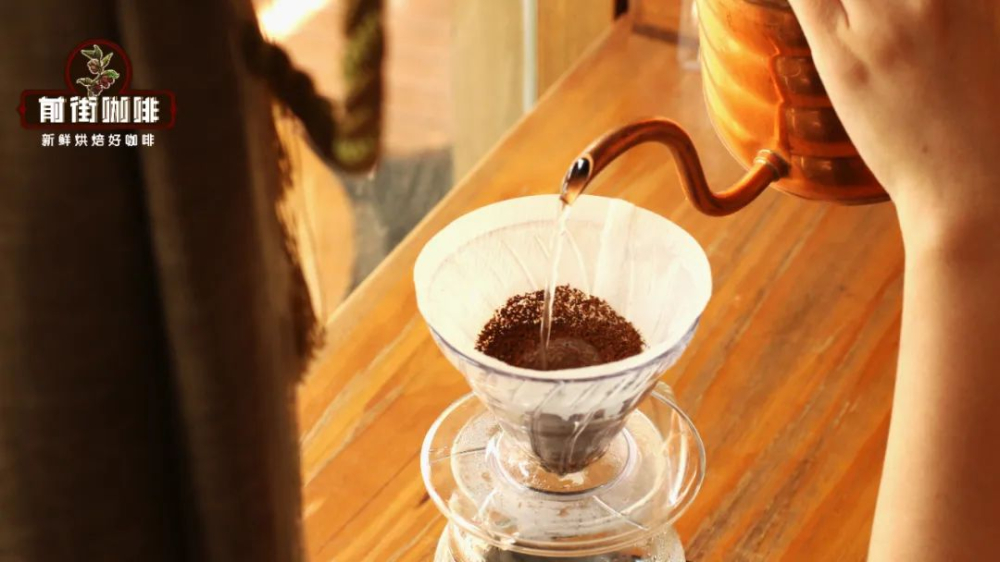
But note that after reducing the amount of hot water poured, the entire extraction time will also shorten accordingly, typically from the original 2 minutes to about 1 minute 20 seconds. This means the flavor substances in the later stage don't have time to release, and the entire cup of iced coffee is likely to be under-extracted. In other words, although the concentration is sufficient, the flavor is not rich enough. Therefore, to balance the release ratio of aromatic substances, we need to grind finer, thereby extending the extraction time.
Technique: Three-stage pouring
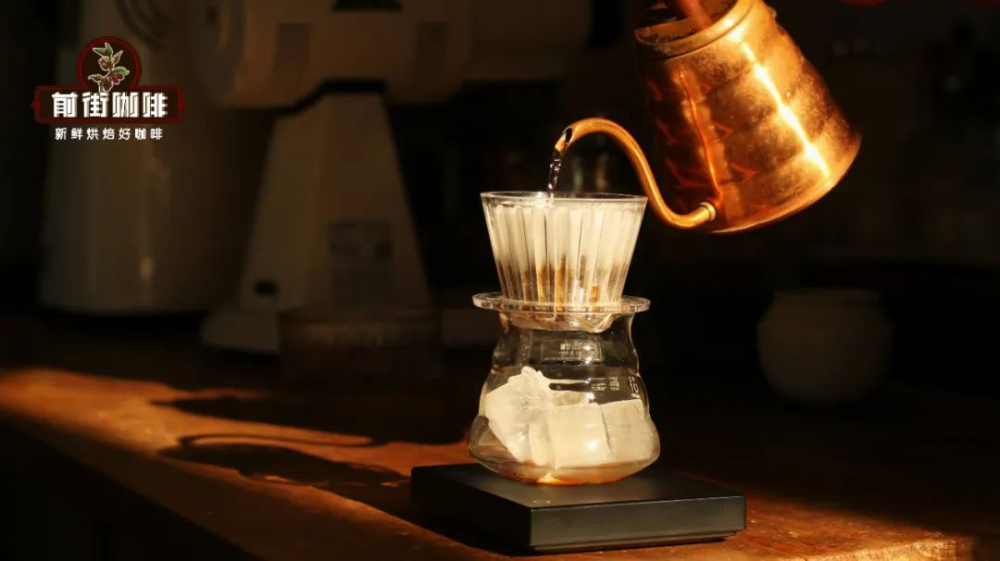
Before pouring, place the ice cubes into the sharing pot (adding ice first or later has little effect on the flavor), then add 15 grams of coffee grounds. Start from the center and spiral outward in small circles, pouring 30 grams of water in a thin stream, and let it bloom for 30 seconds; in the second stage, use the same technique to pour 60 grams of water; when the water in the dripper is about to finish dripping, pour in all the remaining 60 grams of hot water. Control the final extraction time between 1 minute 50 seconds and 2 minutes.
The above content is compiled by CoffeeHunters, a coffee news website.


