







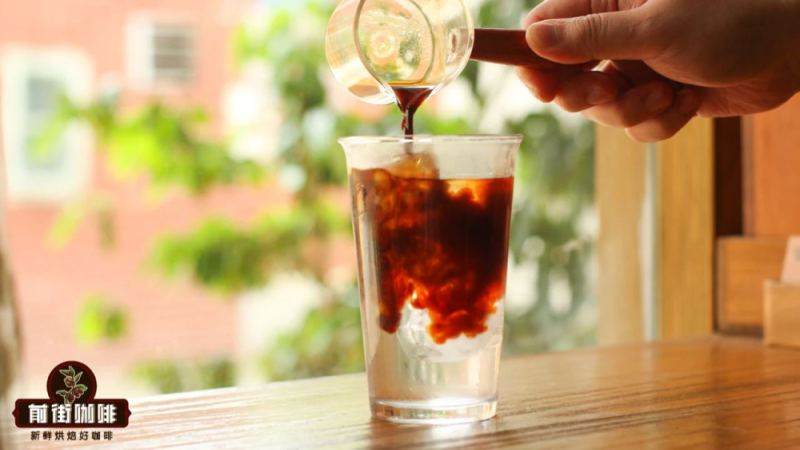
The world of iced coffee is far richer than one might imagine—iced Americano, iced pour-over, ice drip, and cold brew each have their own merits. The baristas at Front Street Coffee, drawing on their daily experience, share the unique characteristics and specific brewing methods of these four iced coffees. From setting the coffee-to-water ratio and adjusting grind size to controlling extraction time and temperature, every step affects the final flavor in the cup. This article will break down, one by one, the two-stage pouring logic of iced pour-over, the espresso extraction parameters for iced Americano, the key points of low-temperature steeping for cold brew, and the dripping rhythm of ice drip coffee, helping coffee lovers understand the principles while also sensing the differences in mouthfeel and aroma among these iced coffees.
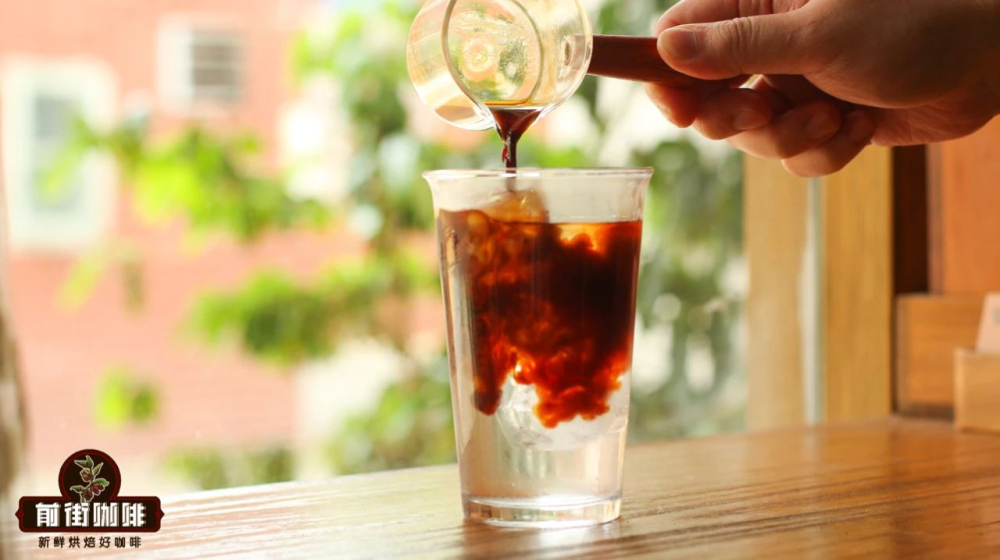
Today, Front Street Coffee will talk about the characteristics of these four iced coffees—iced Americano, iced pour-over, ice drip, and cold brew—and how Front Street Coffee's baristas usually make them.
Iced Pour-Over Coffee
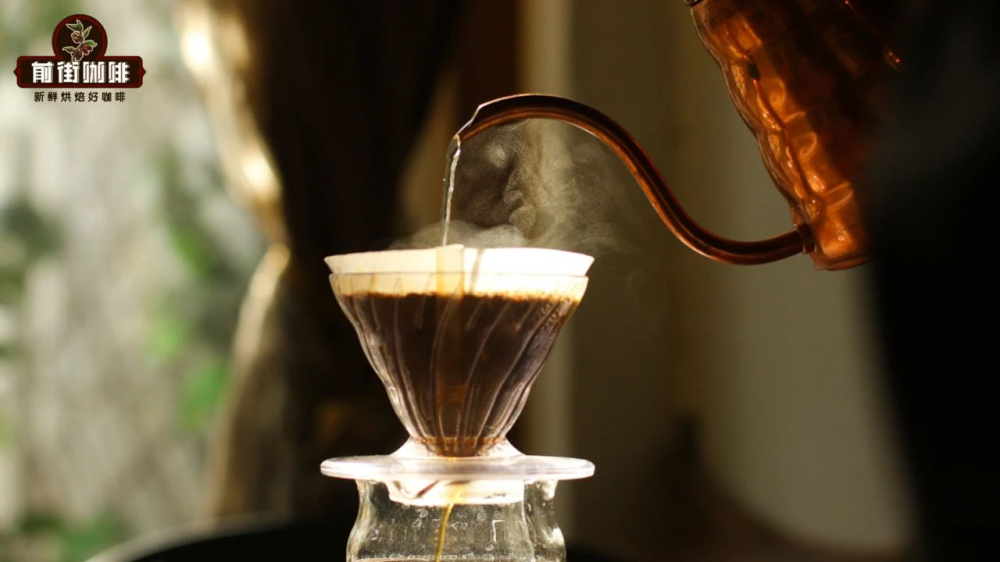
With the rise of the third wave of specialty coffee, pour-over coffee has gradually entered the public eye and is now a core offering on the menus of many independent cafés, and Front Street Coffee is no exception. Pour-over coffee relies on a dripper to separate the coffee grounds, and the extraction process—where pouring and filtration happen simultaneously—is quite visually appealing in itself.
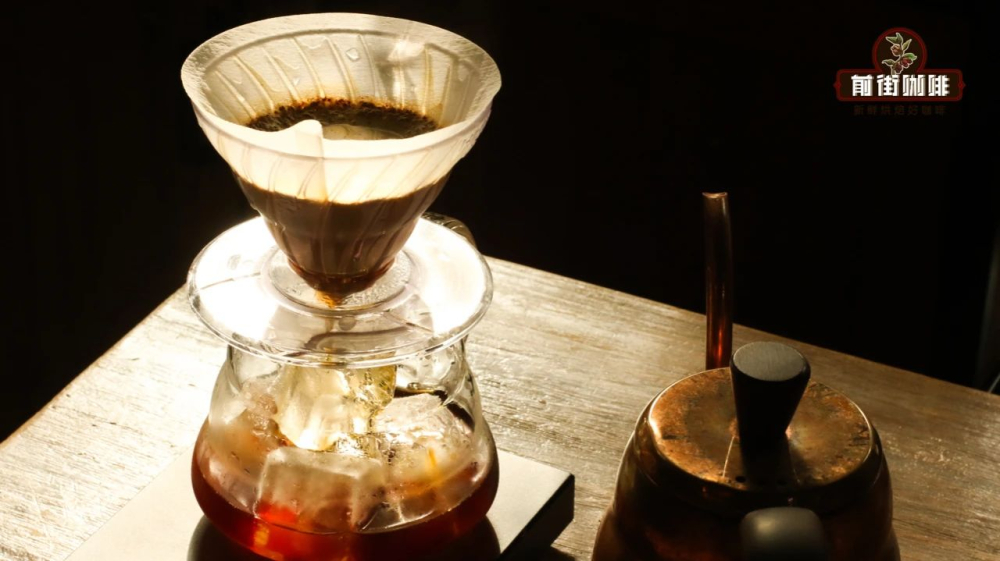
When making iced pour-over, Front Street Coffee's baristas weigh out 15 grams of Front Street Huakui coffee beans. Unlike hot pour-over, the coffee-to-water ratio for iced pour-over is set at 1:10, meaning a total of 150 grams of hot water is poured, yielding approximately 120 grams of coffee liquid. This ratio is used because 100 grams of ice will be added afterward. The ice will gradually melt upon contact with the freshly extracted hot coffee, so lowering the coffee-to-water ratio prevents the coffee from being diluted too much by the ice water and becoming bland.
The brewing process is divided into two stages. In the first stage, 30 grams of water is poured for blooming, the purpose being to allow carbon dioxide in the coffee grounds to escape properly. Freshly roasted beans often contain a large amount of carbon dioxide, and this gas hinders effective contact between water and coffee grounds, so the first step of pour-over usually uses a small amount of water to help with degassing.
In the second stage, water is poured in one go up to the total of 150 grams, with a gentle circular motion to fully extract the flavor compounds. Throughout the brewing process, the water temperature is controlled at 90°C, and the grind is slightly finer than for hot pour-over, with a passing rate of about 85% through a 0.85mm standard sieve. The total extraction time is about 1 minute and 30 seconds.
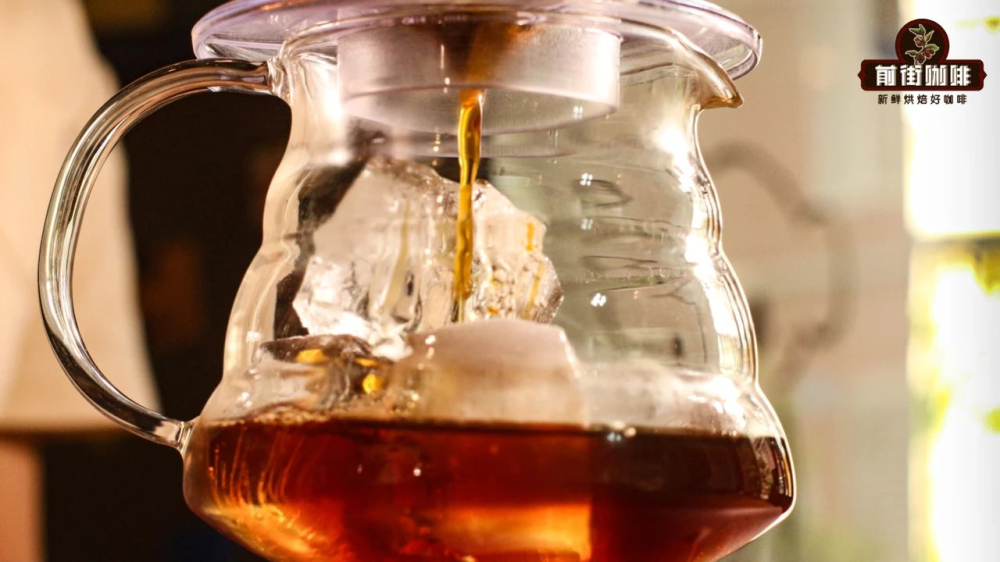
After extraction is complete, the coffee liquid is poured over 100 grams of ice, and the barista shakes the container to mix it thoroughly. This serves two purposes: it evenly blends the early, middle, and late stages of the coffee liquid, and the ice dilutes and cools it, bringing the drink's temperature down quickly to a sufficiently low level.
Iced Americano
The approach to making iced Americano is similar to iced pour-over—both involve first extracting a highly concentrated coffee liquid and then diluting it with ice. The difference is that iced Americano uses espresso extracted from an espresso machine. Espresso was originally a drink for Italians to quickly get their caffeine fix; it's quick to make, and a 1 to 2 ounce serving can be finished in two or three sips. Americano, on the other hand, adds a large amount of water to the espresso, making the taste easier to accept.
Front Street Coffee's baristas use an espresso machine when making iced Americano. The ingredients are simple: just espresso, water, and ice. The coffee beans used are Front Street's commercial blend, which is rich in crema and has roasted aromas, making it suitable for all kinds of espresso drinks. The baristas adjust extraction parameters daily based on the condition of the beans; the espresso extraction recipe is 20 grams of coffee grounds yielding 40 grams of espresso, taking about 26 seconds.
Then 300 grams of ice-water mixture is added, with a ratio of ice water to espresso of 7.5 to 1.
Cold Brew Coffee
Cold brew and ice drip take a completely different approach from iced Americano and iced pour-over—they use ice water throughout or extract over a long period in a low-temperature environment. Under low-temperature conditions, the extraction process is gentle, and the volatilization of flavor and aroma compounds is significantly reduced.
Although Front Street Coffee's stores have not yet added cold brew coffee to their menu, the baristas all enjoy this drink privately. When making cold brew, we take 50 grams of coffee grounds and add 500 grams of ice water, a coffee-to-water ratio of 1:10, with a coarser grind, passing about 75% through a 0.85mm standard sieve.
To make cold brew, you need a container with sufficient capacity—for example, to make 500 grams of cold brew coffee, you should use a bottle of 600 milliliters or more. Put the ground coffee and water into the container, stir thoroughly to mix, and then place it in the refrigerator to steep. The recommended steeping time for low-temperature extraction is 24 hours. Long steeping is the core characteristic of cold brew; it extracts a relatively full-bodied coffee liquid, while the low-temperature environment gently draws out the flavors and reduces the loss of aroma.
Ice Drip Coffee
Ice drip coffee is similar to cold brew in that it also belongs to the category of low-temperature, long-duration extraction, offering rich layers and a full-bodied mouthfeel, and it is quite popular in the domestic market.
Unlike cold brew, making ice drip requires an ice drip tower that can produce water droplets. Ice drip extraction is completed by ice water falling drop by drop, so specialized equipment is essential. Common ice drip towers on the market usually consist of several parts: an upper chamber for holding the ice-water mixture, a valve for adjusting the flow rate, a powder cup for holding the coffee grounds, and a lower chamber for collecting the coffee liquid. The Tiamo HG2713 currently used in Front Street Coffee's stores has these structures, plus an additional spiral glass tube.
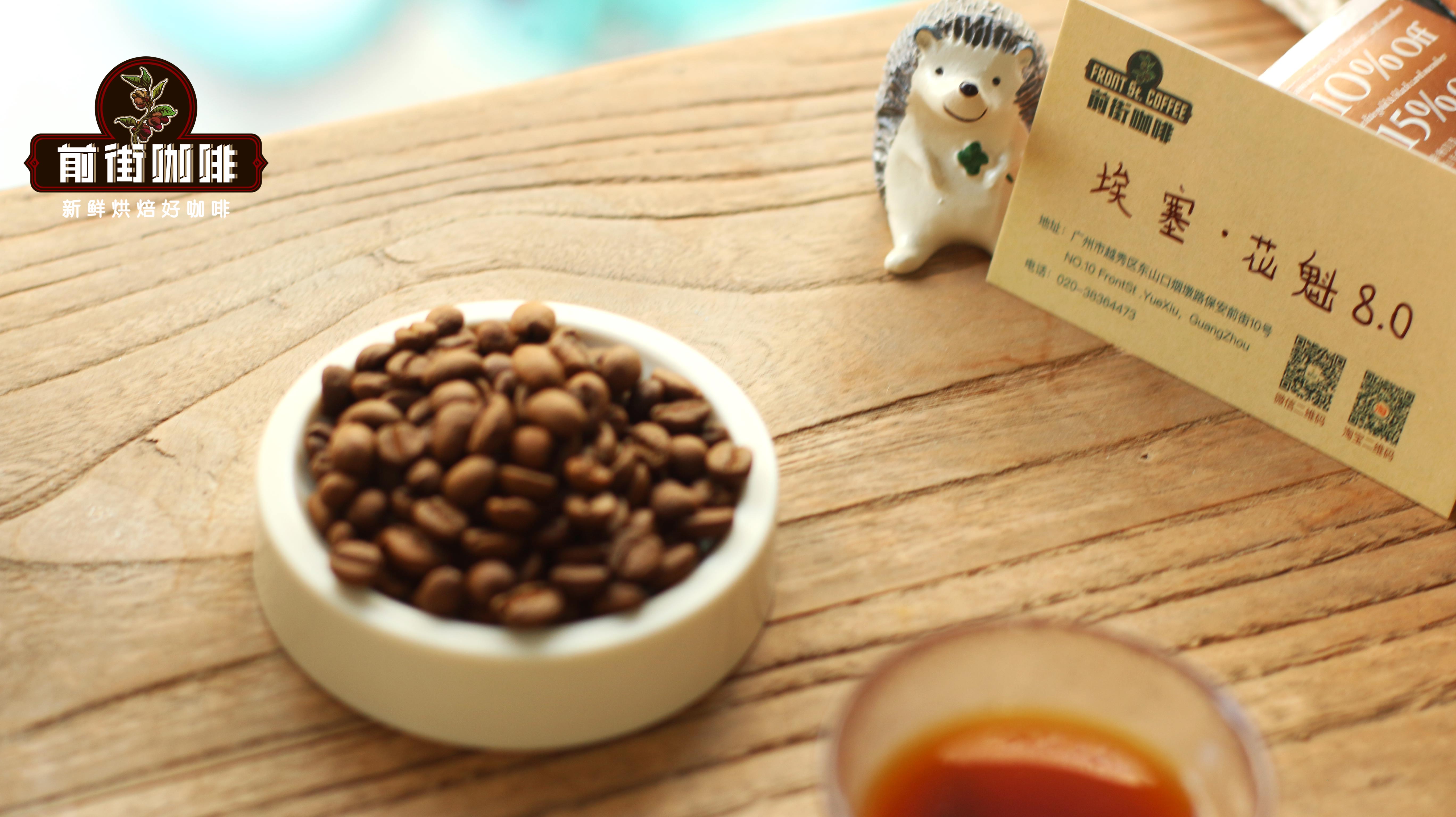
When making ice drip, Front Street Coffee's baristas use 60 grams of Front Street Strawberry Candy coffee beans. This coffee is a blend of Geisha from two producing regions, Costa Rica and Panama. The resulting ice drip is sweet and delicious, with a faint floral aroma and a fruity, preserved-fruit-like sweet-and-tart sensation—a very unique flavor.
In terms of ratio, Front Street uses a 1:10 coffee-to-liquid ratio, meaning 60 grams of beans ultimately yields about 600 milliliters of ice drip coffee. The grind is slightly finer than for pour-over, passing about 85% through a 0.85mm standard sieve. The finer grind and lower coffee-to-water ratio produce a rich, full-bodied ice drip coffee, and this setting is designed to prepare for dilution with ice when serving. The ice-water mixture is prepared at a 1:1 ratio, and the valve is adjusted to a flow rate of 7 drops every 10 seconds. The entire extraction process lasts about 6 to 8 hours. After extraction, bottle the coffee liquid and chill it for 12 hours before drinking.
Ice drip coffee takes a very long time to extract. Front Street Coffee's baristas have to start preparing early each morning and can only finish by the afternoon. There are two reasons for the long extraction time: first, the ice water drips slowly, so collecting enough coffee liquid itself takes a long time; second, extraction efficiency is extremely low at low temperatures, and just like with cold brew, the only way to enhance the coffee's flavor is to extend the extraction time.
The above content is compiled by CoffeeHunters, a coffee news website.


