







Search Results for: coffee-to-milk ratios

Coffee to Milk Ratio | How does the coffee-to-milk ratio in a latte affect the taste? What's a suitable coffee-to-milk ratio for making a latte at home?
Front Street bets that among all the coffee drinks coffee machine owners make at home, milk coffee must be at the top, and among them, the latte is the undisputed "face" that everyone favors. Because of this, Front Street constantly receives many questions about making lattes at home, such as "what milk is best" and "how [more…]

What's the Difference Between a Cappuccino and a Latte? A Detailed Guide to Iced Cappuccino and Coffee-to-Milk Ratios
Cappuccino and latte are both Italian milk coffees, yet they often leave people utterly confused about how to tell them apart. Many enthusiasts have noticed that chain brands are rolling out iced cappuccinos one after another, while specialty coffee shops rarely offer them—behind this lies both a consideration of taste and a real practical challenge in preparation. From Front Street's perspective, this article first traces the naming origins and Italian tradition of cappuccino, then compares it item by item with latte in terms of core differences such as milk foam thickness, coffee-to-milk ratio, and cup volume, and finally breaks down in detail the specific steps and key points for making an iced cappuccino, helping you recreate that refreshing, clearly layered taste at home. [more…]

How to Make a Delicious Latte: A Full Analysis of Espresso Extraction, Coffee-to-Milk Ratios, and Hot and Cold Preparation Techniques
Whether a latte tastes good depends decisively on the extraction quality of the espresso and the ratio of coffee to milk. This article focuses on making latte coffee, breaking down the key steps one by one, from choosing Italian blend beans and the extraction parameters for single and double espressos, to the specific methods for hot and cold lattes. The article also provides detailed guidance on milk frothing temperature control, steam wand operation techniques, and recommends a 1:6 coffee-to-milk ratio. It also retains the complete product information and flavor description of Front Street Coffee's classic blend, making it a useful reference for coffee enthusiasts who want to consistently reproduce cafe-quality results at home. [more…]

Coffee-to-milk ratio | What are the characteristics of a Flat White? What coffee-to-milk ratio is appropriate for making a Flat White?
It can be said that the latte, the flat white, and the cappuccino are the "three musketeers of milk coffee" that now permanently occupy coffee shop menus. Although they are all made from a combination of coffee and steamed milk, the different ratios give each of them its own distinct characteristics. And it is precisely by these distinctive characteristics that we [more…]
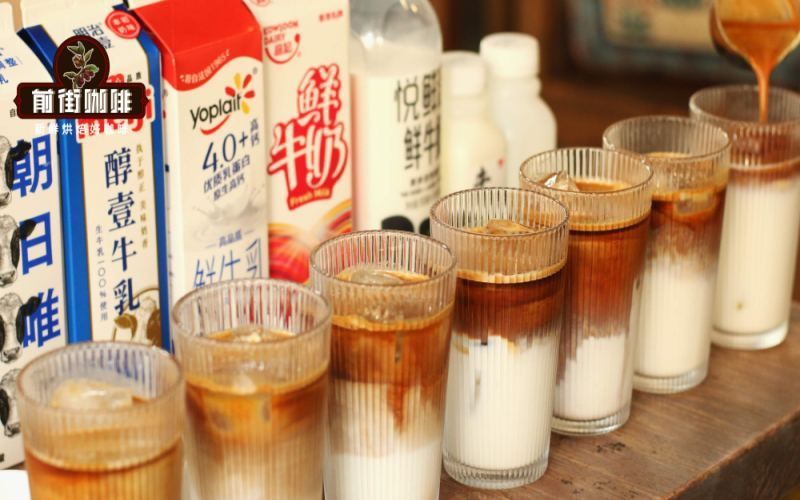
The Complete Guide to Making Iced Latte at Home: From Choosing an Espresso Machine and Pairing Espresso Beans to a Detailed Explanation of Coffee-to-Milk Ratios
Want to recreate a coffee shop's iced latte at home, but always feel like the taste falls a bit short? The problem usually lies in three areas: whether the espresso machine's pressure performance is up to standard, whether the flavor of the espresso beans and milk are in harmony, and whether the ratio of espresso to milk is appropriate. Drawing on Front Street Coffee's practical experience, this article systematically sorts out the key points of making iced lattes at home—including how to judge the extraction capability of a home espresso machine, the coffee-to-milk ratios suited to dark-roast and light-roast espresso beans respectively, how to manage the resting period of coffee beans, and the impact of ice cube selection on the finished drink's mouthfeel. Whether you are a beginner who has just acquired your equipment or a seasoned player looking to further stabilize your output, you can find actionable reference solutions here. [more…]

The Complete Guide to Extracting Coffee with Ice Milk: Milk Brew Methods, Three Bean Tests, and Key Considerations
Using iced milk instead of water to extract coffee, a method known as "milk brew," has become increasingly popular among coffee enthusiasts in recent years. Front Street Coffee once launched a call for beans suitable for milk brew and received a large number of shares from readers. This article selects three representative beans for testing: Strawberry Candy, Boundary Line Xizhua, and Elida Catuai, representing conventional processing, anaerobic processing, and light-medium roasting respectively. The article explains in detail the basic principles of milk brew—why hot milk cannot be used, the advantages of low-temperature extraction—and provides specific preparation parameters: 20g of beans, a coffee-to-milk ratio of 1:10 to 1:12, a grind size passing through a No. 20 sieve at 70%-75%, and refrigerated steeping for 12 hours. In addition, it includes practical tips such as filtering methods, ratio adjustments, and drinking it as soon as possible, helping readers make delicious milk brew coffee at home. [more…]
Recreating Café-Style Iced Lattes at Home: A Complete Guide from Espresso Extraction to Coffee-to-Milk Ratios
Making an iced latte at home that rivals what you'd get at a café isn't simply a matter of pouring ice, milk, and coffee into a glass one after another. From the espresso machine's extraction pressure and the selection and resting of espresso beans to the ratio of espresso to milk, every step directly affects the final flavor. Drawing on Front Street's hands-on experience, this article breaks down the three key elements of making an iced latte at home: how to achieve a stable, well-balanced espresso shot, how to choose milk and set the ratio based on the bean's style, and how to use ice and pour the drink. Whether you're using a budget home machine or more advanced equipment, you'll find practical adjustment ideas here. [more…]
A Detailed Guide to Bean Selection and Coffee-to-Milk Ratios for Latte: Hot and Iced Recipes Plus Milk Frothing Tips
Latte is the category with the highest proportion of milk in the espresso family. Iced and hot versions each have their own operational details, but the underlying recipe logic is the same. From the perspective of Front Street, this article sorts out the historical context of latte, explains the approach to selecting espresso blend beans, and provides specific preparation parameters for hot lattes and iced lattes. The content covers the pressure, temperature, time, and brew ratio of espresso extraction, the milk frothing technique and temperature control for hot lattes, and the ice cube and milk ratio for iced lattes. It also introduces the flavor profiles of multiple espresso beans such as Front Street Strawberry Candy Espresso, helping coffee enthusiasts recreate a balanced and smooth latte at their own coffee bar. [more…]

A Complete Guide to Making Latte Coffee: Ingredient Selection, Coffee-to-Milk Ratios, and Pouring Techniques
To make an excellent latte, three things matter most: the choice of coffee beans and milk, the ratio of coffee to milk, and the specific techniques of extraction and incorporation. Different coffee beans directly shape the flavor profile of a latte, and the texture of the milk likewise influences the final mouthfeel. Get the ratio wrong and you either lose the coffee flavor to too much milk or end up with harsh bitterness from too little. And if the incorporation step is handled poorly, you get one sip that's all milk followed by another that's all coffee. Drawing on Front Street's practical experience, this article breaks down material selection, the coffee-to-milk ratio, and incorporation techniques one by one, helping coffee lovers consistently produce a delicious latte at home. [more…]

Starbucks Flat White | How to distinguish an Australian white coffee from a latte? Did flat white originate in Australia? What is the coffee-to-milk ratio in a flat white?
Coffee enthusiasts who regularly drink espresso know that there are many types of espresso drinks, such as those available at Front Street Coffee, including latte, mocha, cappuccino, as well as off-menu items like flat white and dirty coffee. Their recipes are all based on espresso. [more…]

A Step-by-Step Guide to Making an Authentic Latte: A Full Analysis of Milk Quantity and Espresso Ratios for Hot and Iced Drinks
Making a latte at home, do you always find that yours turns out either too bitter, or the milk flavor overwhelms the coffee aroma? Actually, as long as you choose fresh ingredients, master the espresso extraction ratio, and then adjust the coffee-to-milk combination based on the bean's roast level and whether you want a hot or cold drink, you can easily recreate coffee-shop quality. This time, Front Street Coffee breaks down the key points of latte-making clearly: from the espresso extraction formula and the flavor tendencies of beans at different roast levels, to the coffee-to-milk ratios best suited for hot lattes and iced lattes respectively, along with reference solutions based on specific products such as Front Street Coffee's Huakui SOE and Sunflower·Warm Sun blend. Whether you prefer a rich, toasty aroma or a fresh, floral-fruity profile, you can find the balanced, delicious cup that suits you. [more…]

The Ultimate Latte Guide | What's the Correct Coffee-to-Milk Ratio for a Latte? How Can Coffee Beginners Make a Delicious Latte at Home?
For a delicious latte, Front Street believes the most important factors are the quality of the coffee beans and milk, the ratio of coffee to milk, and the extraction and integration process. First point: choose suitable ingredients. Why is a latte so simple? Basically, every coffee bean menu has it as a staple, yet every shop's latte doesn't taste exactly the same. [more…]
Can Milk Also Be Used for Cold Brew Coffee? A Detailed Guide to the Making Principles, Coffee-to-Milk Ratios, and Practical Steps of Milk-Brewed Lattes
The allure of cold extraction lies in its ability to suppress the release of bitter compounds while, through prolonged steeping, bringing out a unique fermented note and rich aroma. In recent years, a method called "milk brew" has become popular in the coffee world—replacing the water in cold brew with milk or plant-based milk, turning milk from a supporting player into the main extraction medium. The proteins and milk fat in milk slow the release of flavor compounds, making the final cup softer and smoother. This article starts with the principles, then explains how to choose coffee beans, the recommended coffee-to-milk ratio of 1:10 to 1:13, the specific parameters for an 8-hour cold steep, and includes a convenient method for making milk brew with drip bag coffee, helping you craft a rich and robust milk cold brew. [more…]

Why Is Cappuccino Not Suitable for Takeaway? A Detailed Explanation of Its Coffee-to-Milk Ratio and the Key Feature of Thick Milk Foam
Cappuccino, latte, and flat white are all espresso drinks, yet cappuccino is often left off café delivery menus. The reason isn't the difficulty of making it, but rather its signature thick milk foam, which dissipates rapidly during delivery, affecting both texture and portion size. This article approaches the topic from the definition of cappuccino, the ratio of coffee to milk, and the thickness of the milk foam, comparing the differences between latte and flat white, and explaining why coffee brands like Front Street Coffee insist on preserving a thick, substantial milk foam when making cappuccino. If you're curious about whether cappuccino can be delivered, or what its exact milk-to-espresso ratio is, this article will give you clear answers. [more…]

Espresso Milk Beverage Brewing Guide: A Detailed Explanation of Coffee-to-Milk Ratios for Lattes, Cappuccinos, Flat Whites, and Dirty Coffee
To craft a satisfying milk-based espresso drink, the ratio of coffee to milk is the core element. The reason different milk coffees can become independent categories is precisely because each has its own unique flavor expression. This article will use Front Street Coffee's output parameters as a reference to analyze one by one the blending logic of four classic milk coffees—latte, cappuccino, Dirty, and flat white—explaining the appropriate ratio of espresso to milk in each drink, as well as the taste characteristics corresponding to these ratios. It should be noted that specific parameters will vary depending on the beans and milk, and the key lies in understanding the pairing approach rather than mechanically copying the numbers. [more…]

Iced Latte Making Tutorial: From Espresso Extraction to Coffee-to-Milk Ratio, with Detailed Coffee Bean Selection and Operation Techniques
On a scorching summer day, a glass of icy, smooth latte is often more appealing than a bitter Americano. This article will walk you through the process of making an iced latte, from espresso extraction parameters and coffee bean selection strategies to the ideal ratio of milk to coffee. It will also share three key tips for enhancing the flavor, including how to choose Italian-style beans based on roast level, how to master the milk-to-coffee ratio, and easily overlooked details in the process. Whether you're a beginner just starting out or an enthusiast looking to refine your skills, you'll find practical guidance here. Front Street Coffee also offers specific product recommendations for different flavor preferences. [more…]

Espresso Italian-style coffee bean making tutorial | How many milliliters is a standard espresso? Is there a big difference between single and double shots? What is the coffee-to-milk ratio for a hot latte?
For more specialty coffee knowledge, please follow: Front Street Coffee (Frontsteet Coffee). Espresso is now commonly used as the base for espresso-based drinks, such as the familiar latte, cappuccino, and mocha. Their difference lies in the varying ratios of espresso to milk, which creates different flavors. [more…]
How to Make a Delicious Iced Latte: A Complete Guide from Coffee Bean Selection and Coffee-to-Milk Ratios to Brewing Details
Iced latte coffee looks like it only takes three steps to complete: add ice, pour milk, pour coffee. But to make a truly delicious iced latte, there are many considerations from material selection to operational details. This article will unfold from three dimensions: First, how to choose suitable coffee beans and milk; Front Street Coffee's specialty blend, dark cocoa blend, classic blend, commercial blend, and strawberry candy espresso each have different flavor expressions; Second, how to pair the milk-coffee ratio reasonably, using 35g espresso, 250ml fresh milk, and 75g ice cubes as a reference; Third, what easily overlooked details exist in the operation, including espresso extraction quality and the impact of production speed on layering and mouthfeel. [more…]
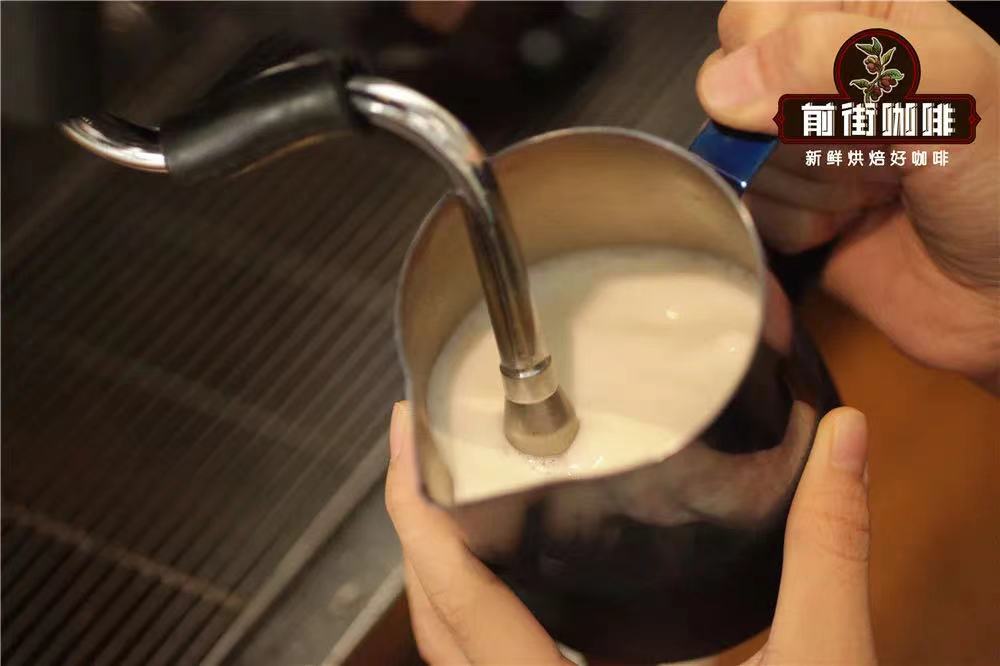
Homemade Latte Recipe | How Can Coffee Beginners Make a Delicious Latte at Home? What Is the Coffee-to-Milk Ratio for a Latte?
For professional coffee knowledge exchange and more coffee bean information, please follow Coffee Workshop (WeChat official account: cafe_style). For more specialty coffee beans, please add our personal WeChat Front Street Coffee (FrontStreet Coffee), WeChat ID: qjcoffeex. Quite a few friends have asked [more…]

What Milk Should You Choose for Brewing Coffee? Whole Milk vs. Skim Milk—Which Pairs Better with Coffee?
The pairing of coffee and milk is a classic choice for many enthusiasts in their daily drinking. Milk can soften the bitterness while preserving the coffee's aroma, making the entire cup more drinkable. However, different coffee types have different requirements for milk: espresso needs a stronger base to support the milk flavor, while pour-over coffee, being lighter in nature, requires more caution when adding milk. This article discusses the principles of pairing coffee with milk, the coffee-to-milk ratio for latte, whether pour-over coffee is suitable for adding milk, and the difference between fresh milk and pure milk, and shares Front Street Coffee's practical experience in latte ratio adjustment, helping readers find a milk coffee solution that suits them. [more…]