








What Separates a Homemade Iced Latte from a Café One?
An iced latte at home is not just ice, milk and coffee poured in order. Three things decide the result: a well-extracted espresso, milk chosen and dosed to match the bean, and correct use of ice and pouring. Extraction is the usual weak point, because a machine that cannot hold pressure will not pull full flavor from the grounds.
Home machines vary widely in extraction capability. A device limited to 3 to 4 bar produces thin espresso that turns watery once milk is added, while a machine reaching 9 bar gives a stronger base. Bean choice matters too, and many cafés rely on coffee beans for commercial use. A soe latte using a single-origin espresso will taste different from a blend-based version.
Making an iced latte at home that rivals one from a café isn't simply a matter of pouring ice, milk, and coffee into a glass in sequence. From the espresso machine's extraction pressure, the selection and resting of espresso beans, to the ratio of espresso to milk, every step directly affects the final flavor. Drawing on Front Street's hands-on experience, this article breaks down three key aspects of making iced lattes at home: how to achieve a stable and well-extracted espresso, how to choose milk and set the ratio based on the bean's style, and how to use ice and pour the final drink. Whether you're using a budget home machine or more advanced equipment, you'll find practical adjustment ideas here.

A customer asked Front Street how to make an iced latte, and Front Street's answer was: it's the same idea as "putting an elephant in the fridge" — three steps: first add ice, then pour milk, and finally pour the coffee in. Done.
Jokes aside, what this friend really wants to know is probably this: using the same beans and following Front Street's photo tutorials, why can't they recreate that café iced latte at home? So today, Front Street is sharing a set of insights on making iced lattes at home.
Stable and Well-Extracted Espresso
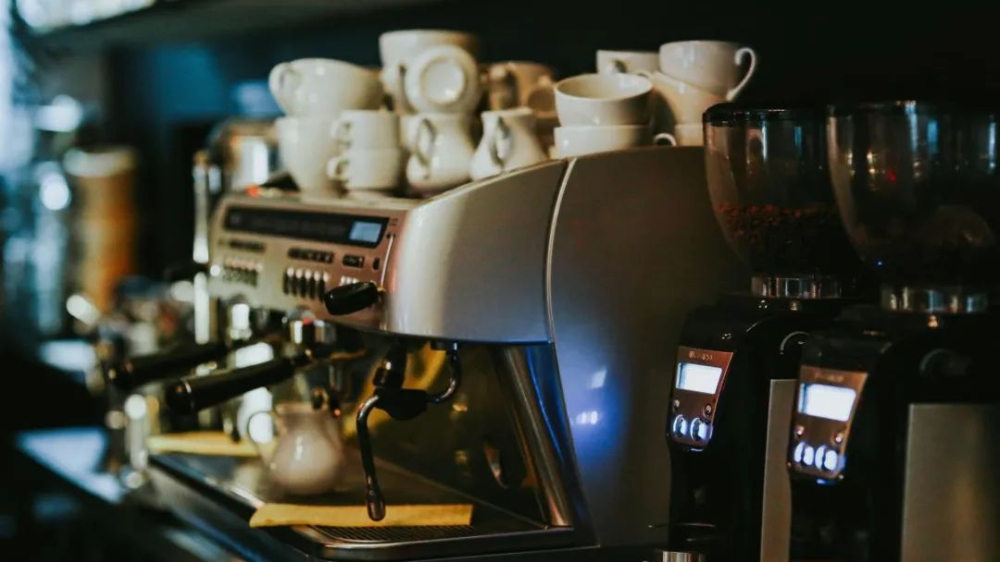
The reason many homemade iced lattes lack the rich aroma of café versions often comes down to the espresso machine's pressure capability.
Commercial machines costing tens of thousands or even over a hundred thousand yuan may not differ much from several-thousand-yuan home machines in common functions, but there's a visible gap in espresso quality between machines priced at five or six thousand versus one or two thousand yuan. A friend of Front Street treated a "toy machine" costing just over a thousand yuan — an all-in-one grinder-extractor with only 3–4 bar of pressure — as a standard pressurized espresso machine. The resulting espresso tasted watery even on its own, and with milk added for a latte, it must have been even weaker.
For home espresso machines, the machine you choose determines how difficult it is to make coffee. The lower and more unstable the extraction performance, the harder it is for coffee to fully release its flavor compounds. So to successfully replicate a café iced latte, a capable pressurized espresso machine is essential (pressure must reach 9 bar) — for example, the Welhome 310. If you also want that rich, delicate golden crema on your espresso, Front Street recommends pairing it with a dedicated espresso grinder — grinding fresh and extracting immediately gives the best results.
Coffee Beans Determine the Flavor Direction of the Iced Latte
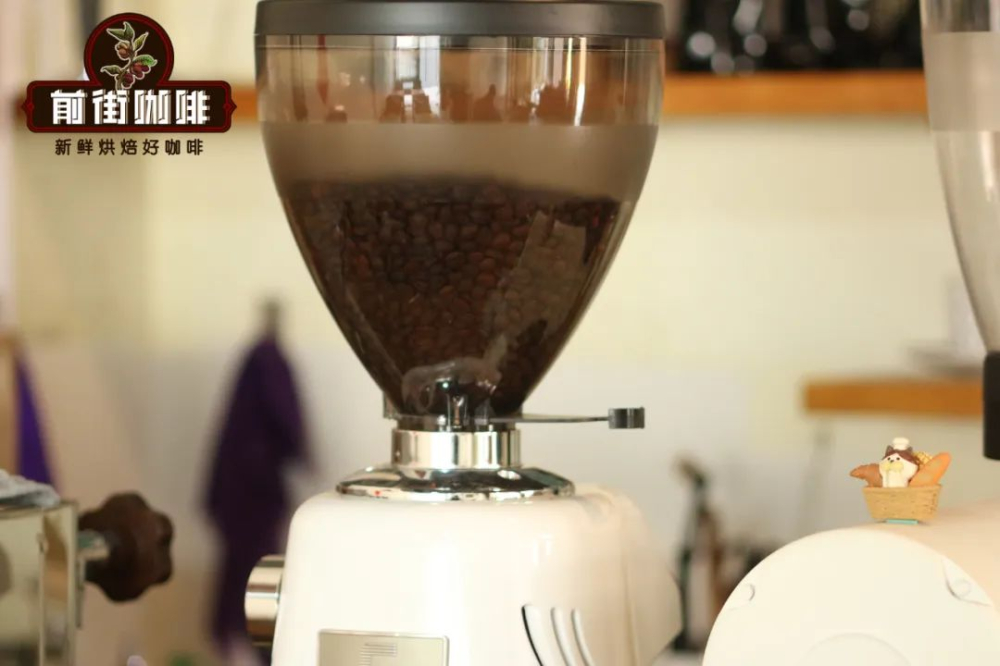
Whether it's a dark-roasted blend that looks pitch black or a medium-light roasted SOE with acidity, when choosing espresso beans you should prioritize: does the espresso it produces pair well with milk, and will its flavor be masked by the milk? For choosing milk, you can also refer to Front Street's milk reviews and pick one that fits your budget and taste preferences.
Front Street's café uses the Sunflower Warm Sun Blend, composed of Ethiopian natural red cherry and Honduras sherry barrel beans. The medium roast brings out creamy chocolate and fruity sweetness, and as an iced latte it has notes of wine, vanilla, cream, and chocolate.
Some friends have told Front Street that their espresso has a lot of rough foam on the surface. This is actually caused by beans being too fresh, and such espresso usually tastes mediocre. Based on Front Street's experience, espresso beans should ideally be stored in a cool place for 7–10 days after arrival, and consumed within 50 days for the best flavor.
Find the "Golden Ratio" Between Espresso and Milk Based on Taste
First, the quality of the espresso directly determines the flavor of the iced latte. For example, if the espresso is over-extracted and has a burnt bitterness, no amount of milk can mask that negative taste. Actually, getting a well-extracted shot isn't difficult — it's just a matter of finding the right parameters by adjusting dose, grind size, and so on. Using Front Street's basic formula: a 1:2 ratio of grounds to liquid, extraction time controlled at 26–30 seconds, with no abnormalities during extraction (sputtering, unstable flow rate).
For iced latte tutorials, Front Street usually doesn't give a precise ratio but rather a general range: coffee:milk = 1:4 to 1:8 .
This is because everyone uses different beans, different extraction parameters, and possibly different milk. Even with the same ratio, the iced latte will taste different — there's no one-size-fits-all answer.
With dark-roasted espresso beans featuring dark chocolate and nut notes, the espresso tends to have a strong, heavy bitterness, so you can add a larger proportion of milk to maintain a balanced taste. For example, when Front Street serves Warm Sun, they use a 1:5 coffee-to-milk ratio. If you find 1:5 still too bitter, keep increasing the milk until it suits your taste.
When the beans are a lighter roast with floral and fruity acidity, the espresso itself is milder, and too much milk will only mask the coffee's aroma — so reduce the milk proportion accordingly. For example, when Front Street makes an SOE latte with their house-roasted Konga beans, the coffee-to-milk ratio is 1:4, and it tastes of butter cookies.
Catch the Ice Off Guard — Extract the Espresso and Pour It In Immediately
As the main component of an iced latte, ice serves only one purpose: to add a chilled sensation to the coffee. Rather than fussing over how much ice to add, pay more attention to how fast the ice melts. Once it melts, it dilutes the entire milk coffee — not only does the coffee flavor become weaker, but the texture gets more watery too.
Catch it off guard — immediately open the camera, focus~ click~
To avoid this, Front Street uses harder "old ice" and minimizes the time the ice and milk sit together in the glass. The freshly extracted espresso is gently poured in right away, and the golden crema floats on top while the dark coffee flows down along the glass wall, creating a dirty-style layered effect.
- END - Front Street Coffee
No. 10 Baoqian Street, Yandun Road, Dongshankou, Yuexiu District, Guangzhou, Guangdong Province
The above content is compiled by CoffeeHunters, a coffee news website.


