







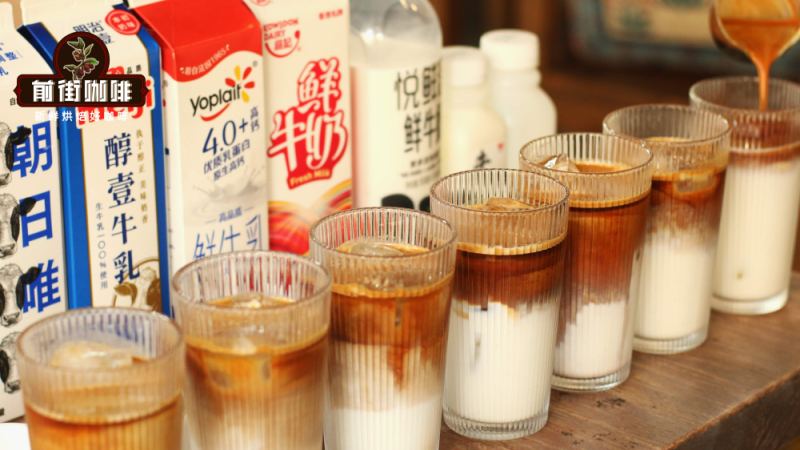
Want to recreate a café-style iced latte at home, but always feel like the flavor falls short? The problem usually lies in three areas: whether the espresso machine's pressure performance is up to standard, whether the flavor of the espresso beans and milk are well matched, and whether the ratio of espresso to milk is appropriate. Drawing on Front Street's practical experience, this article systematically breaks down the key points of making iced lattes at home—including how to assess a home espresso machine's extraction capability, the suitable coffee-to-milk ratios for dark-roasted versus light-roasted espresso beans, how to manage the resting period of coffee beans, and the impact of ice selection on the final taste. Whether you're a beginner who just got your equipment or a seasoned enthusiast looking to further stabilize your output, you'll find actionable reference solutions here.
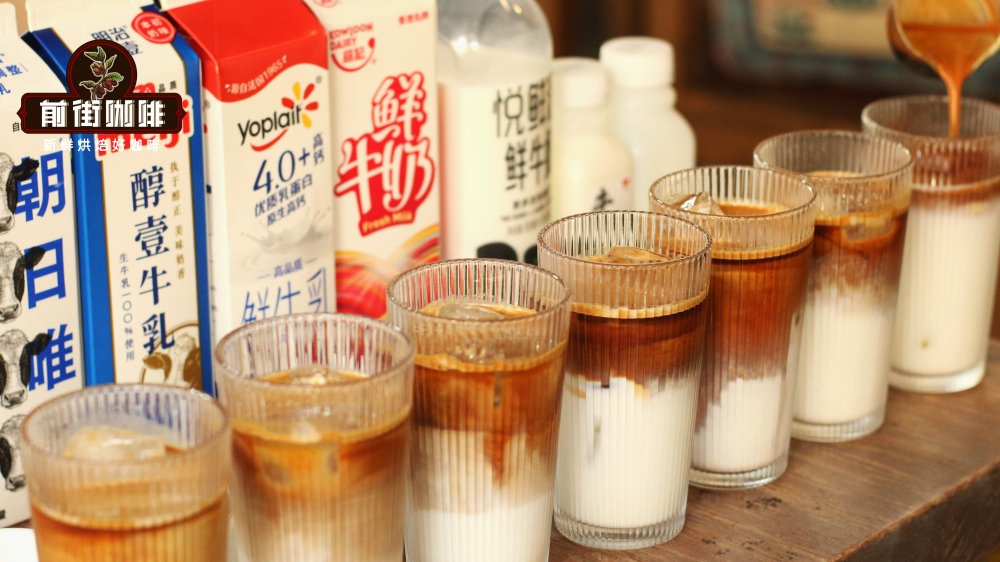
A customer once asked Front Street how to make an iced latte, and Front Street's answer was: it's the same principle as "putting an elephant in the fridge"—three steps in total: add ice, pour milk, pour espresso over it, done.
Of course, that's a joke. What this friend really wanted to figure out was most likely this: I bought the same beans and followed Front Street's step-by-step tutorials, so why can't I recreate that café taste at home? Since everyone shares this confusion, Front Street will now share the complete insights on making iced lattes at home.
Stable espresso extraction starts with the machine
In café terminology, "iced coffee" broadly refers to all cold coffee drinks. The iced latte Front Street is discussing today is just one type—others include iced Americano, cold brew, ice drip, iced pour-over, and more. Thanks to the added milk, iced lattes have a rich, smooth mouthfeel and a loyal following. But many beginners trying them at home end up wondering: why doesn't my homemade latte taste as good as the one from the café?
Ultimately, the reason most people can't make an ideal iced latte at home comes down to the espresso machine's pressure capability.
Between a commercial machine costing ten thousand yuan or even over a hundred thousand, and a home machine costing a few thousand, there may not be a world of difference in basic functions—but with equipment priced at five or six thousand versus one or two thousand, the gap in espresso quality is immediately obvious. A friend of Front Street once fell into this trap, treating a "toy machine" costing just over a thousand yuan—with built-in grinding and extraction but only 3–4 bar of pressure—as a proper espresso machine. The result: the espresso tasted thin as water even on its own, and making a latte with milk was even more disappointingly weak.
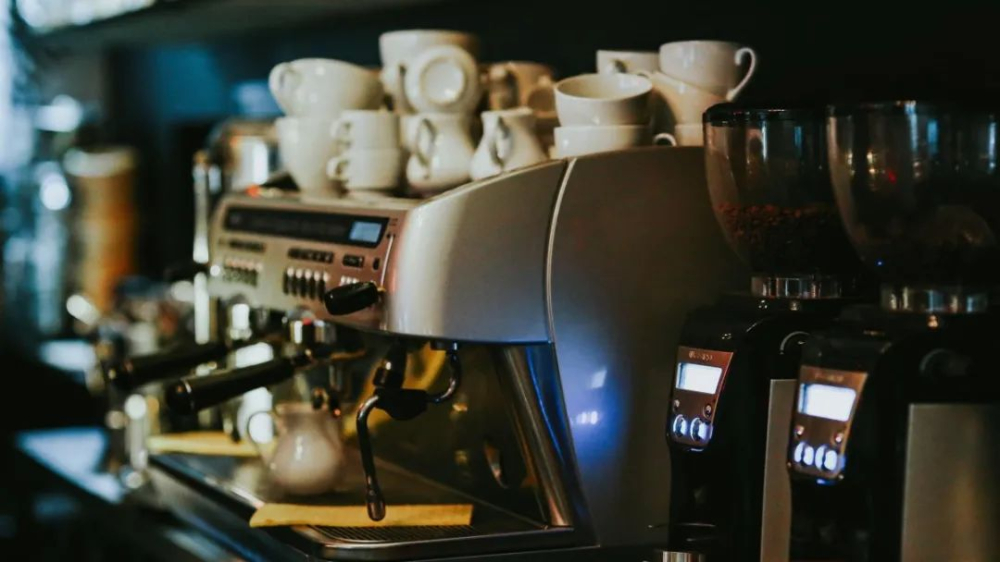
There's a rule with home espresso machines: the tier of equipment determines the difficulty of operation. The weaker and more unstable the extraction performance, the harder it is to fully draw out the flavor compounds in the coffee. So to successfully recreate a café-style iced latte, a pressure-capable espresso machine is indispensable—with at least 9 bar of pressure, such as the Welhome 310. If you also care about that golden, dense crema on the surface of the Espresso, Front Street suggests adding a dedicated espresso grinder—grinding fresh and extracting immediately is the way to go.

The choice of espresso beans determines the flavor foundation of the iced latte
Whether it's a dark, oily blended dark roast or a medium-light roast SOE with acidity, the first thing to consider when choosing espresso beans is: does the espresso it produces pair well with milk, and will its flavor be overwhelmed by the milk? As for milk, Front Street has done comparative reviews before—just choose based on your budget and taste preferences.
If you want a taste close to what you'd get at a café, Front Street's Specialty Blend coffee beans are the top choice, suitable for home, office, and specialty community café use. This blend consists of Colombian washed beans and Brazilian semi-washed beans, presenting flavors of nuts, dark chocolate, and caramel, with a pleasant bittersweet quality. Made into a latte with milk, it's smooth on the palate, stable for latte art, and full of roasted aroma; when made as a Dirty, the layering is beautiful, and the surface retains a dark brown "tiger stripe."
If you prioritize crema performance, you can choose Front Street's best-selling espresso bean—Front Street Classic Blend coffee beans—suitable for beginners, latte art practice, and higher-end specialty cafés. If you want to learn latte art at home, this is the one to buy. It's a blend from three origins, a medium-dark roast espresso recipe inspired by the classic "Mamba" combination (Mandheling plus Brazil), with a small amount of Robusta added to enhance aroma and crema, boosting overall flavor intensity. Even beginners can easily pull a golden-crema espresso at home.
Some friends have also told Front Street that their espresso has lots of rough bubbles on the surface. This is actually caused by beans being too fresh, and such espresso usually tastes mediocre. Based on Front Street's experience, after receiving espresso beans, let them rest in a cool place for 7–10 days, and consume within 50 days for the best flavor performance.
Find the "golden ratio" between espresso and milk
The quality of the espresso directly determines whether the iced latte tastes good. For example, if the espresso is over-extracted and has a burnt bitter taste, no amount of milk can mask that negative flavor. Actually, getting a properly extracted shot isn't complicated—it's just a matter of adjusting dose, grind size, and other parameters to find the right combination. Taking Front Street's commonly used basic formula: 1:2 coffee-to-yield ratio, extraction time of 26–30 seconds, with no abnormalities during the process (such as splattering or unstable flow rate).
Regarding the iced latte recipe, Front Street generally doesn't give precise numbers but rather a rough range: the ratio of coffee to milk is between 1:4 and 1:8. The reason is that everyone uses different beans, different extraction parameters, and possibly different milk—even if you follow the same ratio, the resulting iced latte will still taste different. It can't be generalized.
If you're using a dark-roast espresso bean dominated by dark chocolate and nut notes, the espresso usually has a heavy bitterness and thick body, so you can increase the milk ratio to balance the taste. For example, when Front Street produces Warm Sun, a 1:5 coffee-to-milk ratio is used. If 1:5 still tastes too bitter, keep adding milk until it's comfortable for you.
If the beans are on the lighter roast side, of the floral and fruity acidity type, the espresso itself is relatively mild, and too much milk will actually mask the coffee's aroma. In this case, feel free to reduce the milk amount. For example, when Front Street makes an SOE latte with its own roasted Konga coffee beans, the coffee-to-milk ratio is set at 1:4, giving it a butter-cookie-like aroma.
Before the ice has a chance to react, quickly pull the espresso and pour it in
The only job of ice in an iced latte is to provide a chilled sensation. Rather than fussing over how many ice cubes to add, focus first on how fast the ice melts. Once the ice melts, the entire milk coffee gets diluted—the coffee flavor weakens and the texture becomes increasingly watery.
To avoid this, Front Street uses harder, aged ice for service, minimizing the time ice and milk coexist in the cup. The freshly pulled espresso is gently poured into the cup immediately—the golden crema floats on top, while the dark coffee liquid flows down along the wall of the cup, creating a dirty effect similar to a dirty coffee.
The above content is compiled by CoffeeHunters, a coffee news website.


