








Making lattes at home, do you always feel that yours turn out either too bitter or the milk flavor overpowers the coffee aroma? Actually, as long as you choose fresh ingredients, master the espresso extraction ratio, and adjust the coffee-to-milk pairing based on the bean roast level and whether it's served hot or iced, you can easily replicate coffee shop quality. This time, Front Street breaks down the key points of latte making clearly: from the espresso extraction formula and the flavor tendencies of beans at different roast levels, to the coffee-to-milk ratios best suited for hot and iced lattes respectively, plus reference plans based on specific products like Front Street Huakui SOE and Sunflower·Warm Sun blend. Whether you prefer rich caramelized notes or fresh floral-fruity tones, you can find the balanced cup that suits you.
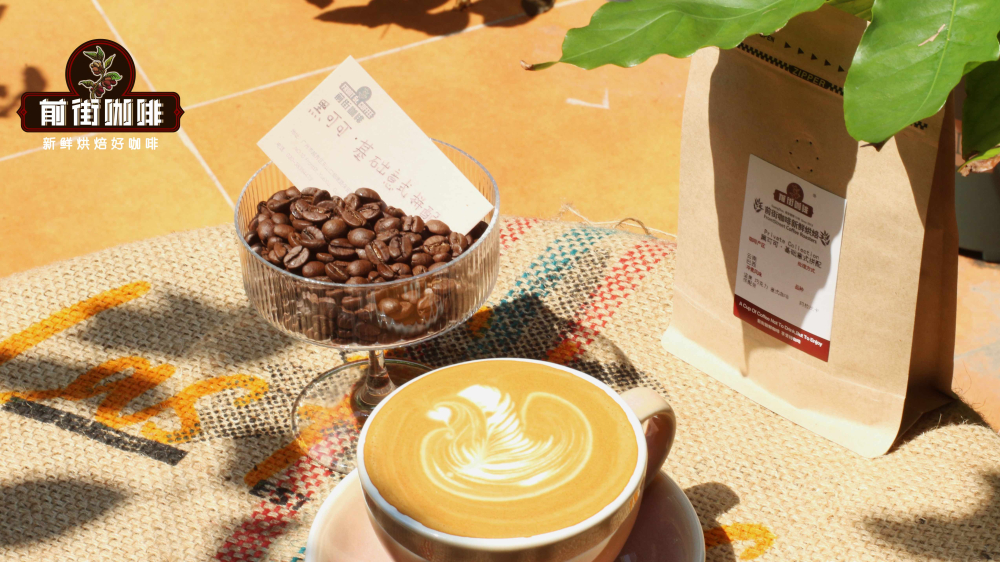
Front Street dares to say that among friends who have a coffee machine at home, milk coffee definitely ranks among the most frequently made drinks, and the latte is even more so everyone's top-choice "signature." That's why Front Street is constantly asked all kinds of questions about making lattes at home, such as "how to choose milk," "how to steam milk foam," and "how to do latte art." Among them, the most frequently asked question is: what ratio should a latte use to taste good?
What characteristics does a delicious latte have?
Many friends report that compared with lattes from coffee shops, the ones they make at home are either too bitter or lacking in coffee aroma and richness. Front Street thinks that to make a coffee-shop-quality latte is actually not complicated: as long as the ingredients are fresh, the espresso extraction ratio is moderate, and the two are paired properly, you can easily recreate a similar taste.
First, the full name of latte, "Caffè Latte," itself makes it clear that both coffee and milk are the stars of this drink. To achieve the best taste, the flavors of the two in the cup must be evenly matched—using milk to soften the sharp bitterness of espresso so the whole thing blends evenly and drinks smoother, richer, and more velvety. This is precisely one of the reasons lattes have always been one of consumers' favorites.

Espresso ratio
Friends with brewing experience all know that the taste of a latte is mainly determined by the coffee beans used, followed by the espresso extraction ratio, and only then by the milk.
The reason coffee beans are key is ultimately that they directly determine the final flavor direction of a latte. To make the coffee taste good, freshness is the first prerequisite, and the next is the espresso extraction ratio, because it affects both the strength of the coffee base itself and how the "coffee flavor" shows up in the whole latte.
If you use medium-to-dark roasted coffee beans to make a latte, the flavor usually leans rich, caramelized, and somewhat nutty. Front Street suggests first applying the basic formula we've mentioned in many articles: a dry coffee-to-liquid ratio of 1:2 (20g coffee grounds extracted into 40g coffee liquid; 18g grounds corresponds to 36g liquid weight), with time controlled at around 25–30 seconds, while ensuring there is no splattering or unstable flow throughout the extraction. Coffee liquid made at this ratio has relatively high strength and moderate aroma, making it very suitable for milk-based coffee drinks like lattes.
If you switch to medium-roast coffee beans to make a latte, such as Front Street Huakui SOE, which highlights floral and fruity notes, then what we want more is a soft, fragrant latte with less bitterness. To provide enough coffee aroma, the extraction must be adjusted accordingly.
Considering that the lighter the roast, the more the beans need a higher extraction yield, extending the extraction time is a good method. While keeping the dry coffee-to-liquid ratio at 1:2, you can make the grind finer so the time falls between 30–35 seconds. The espresso extracted this way can allow the milk coffee to show richer floral and fruity flavors. (PS: As far as espresso extraction is concerned, light-roast and even extremely light-roast beans are not very compatible and are prone to splattering and lacking aroma, so Front Street won't discuss that in detail here.)
What does using different coffee-to-milk ratios determine?
Whether it's a cold drink or a hot drink, the ratio of coffee to milk is the key to determining which one dominates in a latte. Simply put, adding too much milk will cover up the coffee flavor, making the latte thin and lacking richness; adding too little milk will make the coffee's bitterness stand out and may even lose its sweetness; only when the two are coordinated can the latte's taste reach balance. So a suitable ratio is essentially finding a balance point between milk and coffee liquid.
In many latte tutorials online, coffee and milk are usually given as an approximate range, sometimes 1:4–1:6, sometimes 1:4–1:8—in short, there is no fixed standard. Front Street believes the reason these figures are so "vague" is mainly that each shop or brand uses different coffee beans, with differences more or less in origin, processing method, roast level, and blend formula. This gives the extracted espresso a different flavor profile, thereby changing the overall style of a latte.
What ratio is suitable for making lattes at home?
Here Front Street combines different roast levels and the differences between hot and iced latte mouthfeel to help everyone briefly sort out how to more quickly find the "secret recipe" that suits them.
If you extract with shiny black espresso beans, the coffee liquid usually has obvious caramelized notes and a relatively heavy bitterness. To maintain a balanced latte taste, it's best to increase the proportion of milk so the coffee-to-milk ratio falls in the 1:7–1:8 range. For example, Front Street has tried making a hot latte with the darkest-roasted Robusta: first extract 36g of coffee liquid from 18g of grounds, then add 288g of steamed hot milk, for a thick and solid mouthfeel; when making an iced latte, because ice cubes make it more refreshing, the ratio is adjusted to 1:7, that is, pouring in 252g of fresh milk, and the coffee's bitterness becomes much softer.
When using medium-to-dark roasted coffee beans whose flavors are mainly roasted nuts, white chocolate, vanilla, cream, cookies, toffee, and so on to make a latte, the taste usually emphasizes sweetness and smoothness. In this case, you might as well put the ratio in the 1:5–1:6 range. For example, for the hot latte made with Front Street's standard Sunflower·Warm Sun blend, the coffee-to-milk ratio falls at 1:5, with dense milk aroma yet still retaining the coffee's richness; if it's an iced drink, 40g of coffee liquid corresponds to 180g of fresh milk, a ratio of 1:4.5, and the vanilla and chocolate flavors instantly become refreshing.
Finally, for medium-roast beans with floral-fruity aromas, the espresso itself has a relatively gentle aroma and a less intense mouthfeel, sometimes with higher acidity. To make it a good partner with milk, you can reduce the proportion of milk to highlight the coffee's "presence."
For example, when Front Street makes a Huakui SOE latte, in order to present its fragrant berry and citrus notes, it directly uses a 1:4 ratio: adding 160g of milk to 40g of coffee liquid. On the first sip you can feel the milk's sweetness, followed by the fresh aroma brought by the espresso, making the whole thing very soft.
The above content is compiled by CoffeeHunters, a coffee news website.


