









Coffee enthusiasts who regularly drink espresso know that there are many types of espresso drinks, such as those available at Front Street Coffee, including latte, mocha, cappuccino, as well as hidden menu items like flat white and dirty coffee. Their recipes are all espresso plus milk, just with different mixing ratios. Common ones like latte and mocha are familiar to everyone, butflat whitewhat is it? What is its connection to flat white? Literally, does it mean Australian white coffee? Next, Front Street Coffee will answer these questions one by one in this article!
flat whitewhat is it?
Actually, theflat whitementioned above by Front Street Coffee and Australian white coffee are both names for flat white, just called differently, but they are the same espresso drink.

Flat whiteis a coffee beverage originating from Australia, hence also calledAustralian white coffee, but some argue that flat white actually originated in New Zealand. Besides the origin dispute, the methods of making flat white also vary. Flat white is a milk coffee drink with a stronger coffee flavor, less milk, and thinner milk foam. In terms of espresso base, New Zealanders prefer to use double ristretto to make flat white, while Australian baristas prefer single espresso.

And according to Front Street Coffee, in Australia, people only make flat white hot, because once ice is added, it becomes a flat white without soul, as ice dilutes the overall concentration, so it can also be understood that a cold flat white is a latte.
So how do you make a flat white?
Because each coffee shop uses different models of espresso machines, the extraction parameters need to be readjusted. Front Street Coffee will use the standards from its own shop to explain how to make a flat white.
The specific production process is as follows:
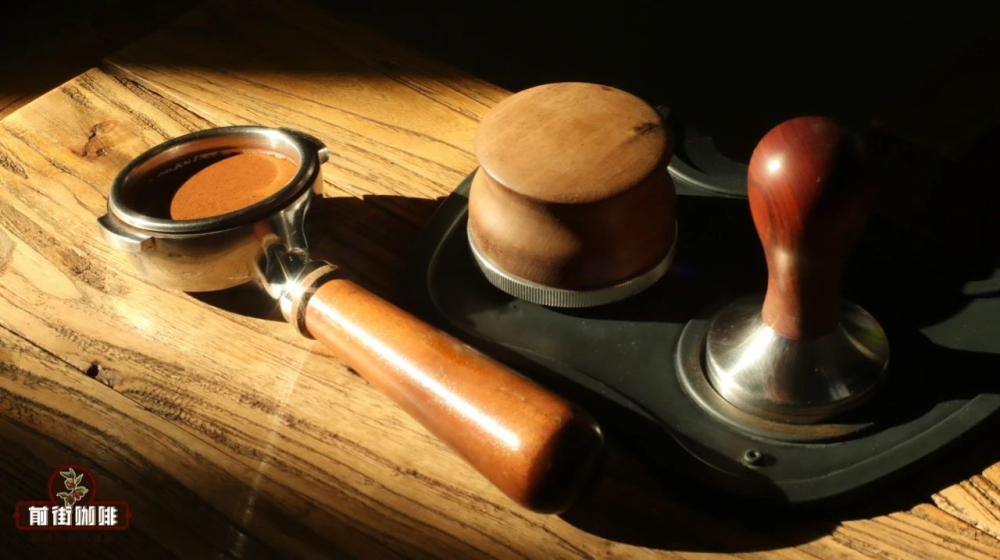
When Front Street Coffee makes espresso, it uses a commercial coffee machine, with the following extraction parameters:
Pressure: 9 bar
Temperature: 90.5~96 degrees
Time: 20~30 sec
Powder-to-water ratio: 1:1.7~1:2
Dose: 12g (single espresso) 20g (double espresso)
Extracted espresso volume: 20ml (single) 40ml (double)
Recommended milk-to-coffee ratio for flat white

Milk: whole fresh milk (Front Street uses Wei Ji fresh milk)
Steaming milk temperature: 50-60 degrees Celsius (too low a temperature cannot activate the lactose in milk, too high a temperature will destroy the protein in milk, resulting in a grainy texture)
Milk foam thickness: 5mm (1cm milk foam is for making latte, 1.5cm thick milk foam is for making cappuccino)
Espresso content: 40ml
Milk content: 140ml

The above is the explanation of the process for making flat white at Front Street Coffee. However, according to Front Street Coffee, many coffee enthusiasts, when making flat white, if not controlled well, will turn it into a latte. So how can one distinguish flat white from latte?
So how to distinguish flat white from latte? This depends on the espresso ratio between them, because actually each shop'sflat whiteand latte ratios will differ. Taking Front Street Coffee's latte as an example:
Front Street Coffee's standard for latte:Using a 300ml ceramic coffee cup, espresso base is 40g, milk plus milk foam 260ml. Milk foam thickness is about 1 cm (foam steaming level: steam milk at 5 parts full to 7 parts full foam).

Front Street Coffee's standard for flat white:Using a 220ml glass cup, espresso uses 30g of espresso, milk plus milk foam 190ml. Milk foam thickness is about 0.5 cm. (Foam steaming level: steam milk at 5 parts full to 5.5-6 parts full foam).
Difference:In terms of cup volume, latte is larger thanflat white. Visually, latte's milk foam is slightly thicker, with a slight dome, while flat white's milk foam is slightly thinner, flat in shape. In terms of flavor, latte has a richer milky taste, while flat white has a more prominent coffee taste. Therefore, Australians jokingly say that latte is coffee-flavored milk (meaning it is essentially milk), while flat white is milk-flavored coffee (meaning it is essentially coffee).

From this, it can be seen thatflat whiteand latte can still be distinguished by milk foam thickness. So when making latte and flat white at home, the main things to focus on are the milk foam thickness and the ratio of espresso to milk.
The above is the relevant knowledge about flat white compiled by Front Street Coffee, hoping to help coffee enthusiasts who want to learn about flat white, so that they can make a satisfactory flat white at home in the future.
For professional coffee knowledge exchange more coffee bean information please follow Coffee Workshop (WeChat public account cafe_style )
For more specialty coffee beans, please add private WeChat Front Street Coffee, WeChat ID: kaixinguoguo0925
The above content is compiled by CoffeeHunters, a coffee news website.


