







Search Results for: coffee pricing
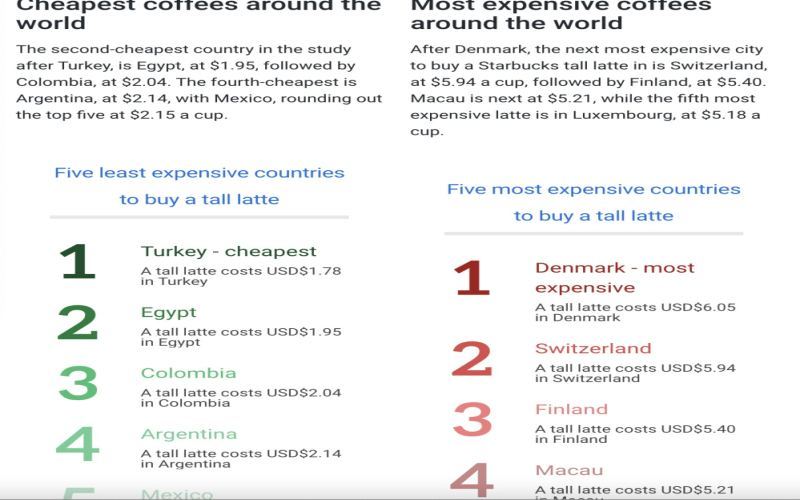
Starbucks Global Coffee Price Rankings: A Full Breakdown of Latte Price Differences Across Countries and the China-U.S. Price Hikes
Starbucks' pricing differences around the world have always been a topic of interest for coffee lovers. According to a 2019 Finder survey of 76 countries and regions, a medium latte in Denmark costs as much as $6.05, while in Istanbul, Turkey, it costs only $1.78—nearly a fourfold difference. Europe has the highest average price, with Asia close behind. In addition to the global comparison, the article also compiles the latest drink price list for Starbucks in China and analyzes the multiple price adjustments in both China and the United States in recent years caused by the pandemic and rising raw material costs. To learn where Starbucks is cheapest, whether its prices are on the high side, and the specific prices of classic drinks, see the detailed data below. [more…]
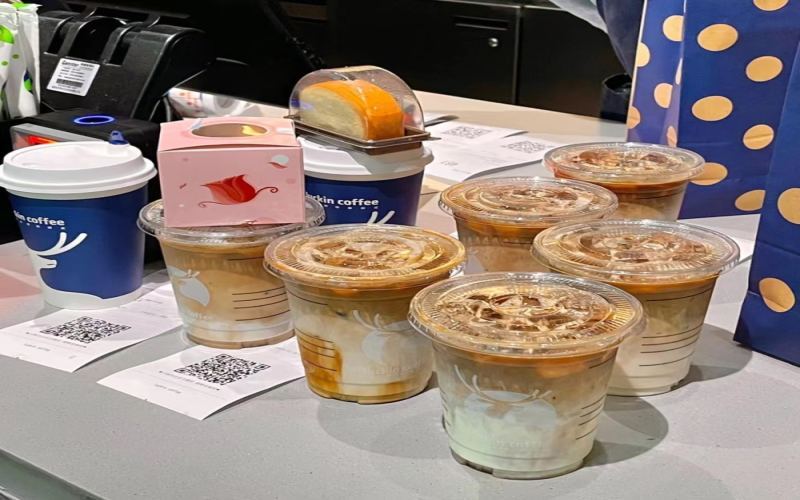
Luckin Coffee's 2023 price list is out: Differences in store pricing spark heated discussion—is self-pickup actually more expensive than delivery?
Luckin Coffee's latest 2023 store price list has been announced, clearly listing prices for series such as the Classic Latte, SOE Little Black Cup, and the Raw Coconut Family. However, consumers have recently discovered that the same drink is priced differently at different stores, and in some cases the pickup price is even higher than the delivery price—a phenomenon that has sparked widespread discussion. Luckin Coffee officially responded that, due to differences in logistics and operating costs, stores may apply for price adjustments, with a maximum increase of 3 yuan. This article compiles the complete price list and reviews the changes in Luckin's pricing strategy and their impact on consumers. [more…]

Low-price traffic drivers coexist with higher prices for regulars: Luckin Coffee's pricing strategy sparks heated discussion
In recent years, the price war in the coffee market has intensified. While brands use prices as low as 9.9 yuan or even lower to attract new customers, they also allow various money-saving guides to circulate freely on social platforms. However, a media investigation found that Luckin Coffee offers vastly different prices to users based on their consumption frequency—high-frequency consumers actually end up paying more. This article sorts out the common channels for money-saving guides, the phenomenon of Luckin's low-price coupons on platforms like Douyin, and a detailed month-long process in which reporters used multiple phones to test pricing differences in the Luckin mini-program, revealing the opacity of the system's recommended discount plans. For coffee lovers, understanding these pricing tricks may help you save a considerable amount of money. [more…]

Heytea and Nayuki successively cut prices as competition in the new-style tea beverage sector heats up, with prices starting as low as nine yuan.
The new-style tea beverage market has been stirring recently. High-end brands Heytea and Nayuki have successively announced price cuts, with the lowest dropping to 9 yuan. Nayuki launched a "Relax" series priced at 9-19 yuan, promising to launch at least one "single-digit" product every month, while Heytea announced it will not raise prices this year. Consumer reactions have been mixed, with some cheering and others questioning reduced cup sizes and lower quality. This article reviews the price-cut moves of the two major brands, netizen feedback, and industry data, analyzes the consumption trends and market logic behind the involution in new-style tea beverages, and includes related news about Front Street Coffee. [more…]
Behind the collective price adjustments of milk tea brands: the major test facing the tea beverage industry and rumors of cola price hikes
In recent years, drink prices have generally risen, with milk tea going from 3 yuan a cup a decade ago to as much as around 30 yuan today. After the New Year, mid- and low-end brands such as Mixue Ice Cream & Tea, Yidian Dian, and CoCo都可 raised their prices one after another, while high-end brands such as Heytea and Nayuki were already positioned above 20 yuan. Rising costs and the impact of the pandemic have left the tea beverage industry facing a reshuffle, and consumers have reacted differently to the price increases. At the same time, cola may also face upward price pressure because of Canada's tax on sugary drinks, but in the domestic market, given the duopoly competition, the likelihood of price increases is relatively low. This article sorts out the phenomenon of tea beverage price increases and the industry logic behind it. [more…]
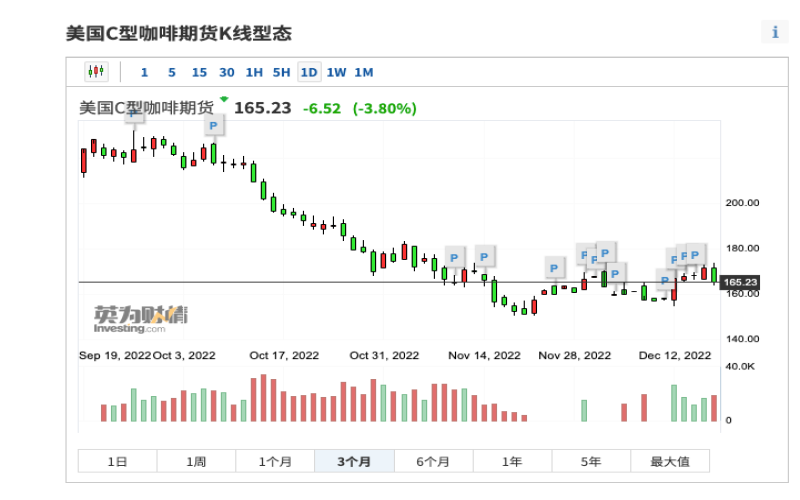
International futures prices for Arabica coffee beans have fallen sharply, yet price cuts for end consumers remain difficult to achieve.
Recently, an unusual situation has emerged in the international coffee market: Arabica coffee beans, which account for about 70% of global production, have not risen in price due to reduced output. Instead, dragged down by inflation, prices have fallen nearly 40% from their February high, hitting a one-year-and-five-month low. Worsening European business confidence, declining consumption, and a surge in certified inventories have significantly eased the balance between supply and demand. However, the decline in raw material prices has not been passed on to the end consumer market. Coffee beans account for only a limited share of coffee shop costs, and the premium on specialty coffee remains. Consumers hoping to drink cheaper coffee may still have a long wait ahead. [more…]

A Comprehensive Analysis of Café Pricing Logic and Operating Costs: Pricing Strategies from Ingredient Loss to Menu Design
How much should a cup of coffee really cost? Why are prices at independent cafés generally higher than those at chain brands? This article systematically sorts out the inner logic of coffee pricing from three dimensions: café positioning, menu design, and raw material cost control. It breaks down in detail the method for calculating the original price ratio, analyzes the cost ranges of espresso beans and milk, and uses a double shot as an example to estimate the raw material cost per cup. At the same time, it offers café operators practical advice on menu planning and material procurement, helping readers understand the real considerations behind independent cafés' pricing. [more…]
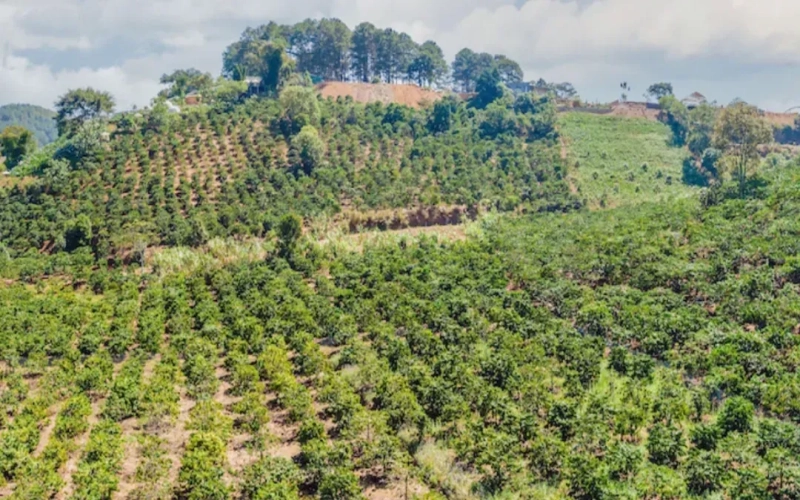
Vietnamese Robusta Price Surpasses Arabica for the First Time, High Coffee Market Prices May Persist
Vietnam, as the world's largest producer of Robusta coffee, has recently seen a rare phenomenon—domestic Robusta prices have actually surpassed Arabica for the first time in nearly 50 years. Affected by multiple factors including high temperatures and drought, reduced production, and tight global supply, Vietnam's coffee export prices have continued to climb, with the average export price in May surging 63.6% year-on-year. At the same time, Brazil's new-season Robusta harvest is looking good, which may bring some relief to the persistently rising prices. This article will provide a detailed analysis of price trends, supply and demand changes, and future expectations in the Vietnamese coffee market. [more…]

Luckin's Raw Cheese Latte Accused of Price Discrimination, Official Response Cites Comprehensive Factors
For professional coffee knowledge exchange and more coffee bean information, please follow Coffee Workshop (WeChat public account: cafe_style) For more specialty coffee beans, please add the personal WeChat of Front Street Coffee (FrontStreet Coffee), WeChat ID: qjcoffeex Recently, Luckin Coffee has been thrust into the spotlight over price discrepancies for its cheese latte. Some consumers reported that the same drink was priced vastly differently across accounts, ranging from 9.9 yuan to 18 yuan, sparking allegations of "big data price discrimination against existing customers." Luckin officially responded that the price differences stem from store operating costs and randomly issued system discounts, denying any price discrimination. However, this is not the first time Luckin has fallen into such controversy; as early as 2021, the media exposed similar cases. This article will sort through the course of the incident, the views of various parties, and the industry background, to explore the issue of price fairness in online consumption. [more…]
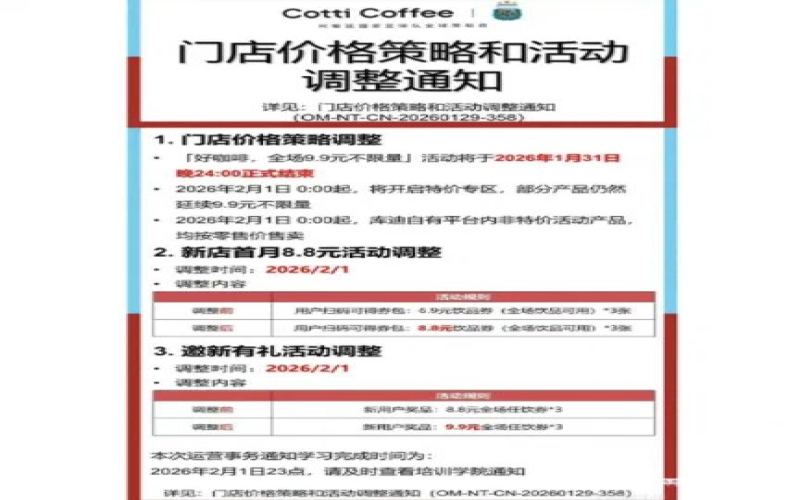
Cotti Coffee officially ends its sitewide unlimited 9.9 yuan promotion, coffee industry price war may be nearing a turning point
Recently, a "Notice on Store Pricing Strategy and Promotion Adjustments" for Cotti Coffee circulating on social media has drawn widespread attention. The notice shows that Cotti will end its "9.9 yuan unlimited across the board" promotion at 24:00 on January 31, and switch to a special-offer section model starting February 1, with only some products continuing at 9.9 yuan unlimited, while other non-discounted products will be sold at retail prices. New-store first-month promotions and refer-a-friend rewards will also be adjusted accordingly. As the brand that kicked off the 9.9 yuan price war in February 2023, does this move by Cotti signal a turning point for China's coffee price war? Consumers, franchisees, and industry observers are all watching closely. [more…]

Some Mixue stores in Guangzhou, Shenzhen, and Beijing have raised prices by 1 yuan, and customer reactions are sharply divided.
Recently, some Mixue Bingcheng stores in Guangzhou, Shenzhen, and Beijing announced price increases for their drinks, with both dine-in and mini-program orders rising by 1 yuan, while third-party delivery platforms have not yet followed suit. This is not the brand's first price adjustment; previously, some stores in Shanghai and multiple products nationwide had already seen price hikes. The news quickly trended on Weibo, and consumer attitudes showed a clear divergence compared to last year, with some expressing understanding of cost pressures and others stating they would reduce purchases. This article will outline the regional scope of this price adjustment, the official response, the history of past price changes, and the diverse reactions from netizens, presenting a full picture of the event. [more…]

The Logic Behind Coffee Pricing: What Is the Cost of a Cup? Store Menu Pricing Formulas and Cost Control Strategies
Many consumers have noticed that coffee shop menu prices are becoming increasingly baffling. An Americano easily costs 30 yuan, and a specialty drink can easily exceed 40 yuan, leaving people feeling "stung" when they pay the bill. So, what exactly makes up the cost of a cup of coffee? And how should independent cafés scientifically price their products? This article examines store positioning, menu design, raw material costs, and original price ratio calculations to sort out the basic logic of coffee shop pricing, and provides reference cost ranges for espresso beans and milk, helping coffee lovers and industry professionals better understand the economics behind a cup of coffee. [more…]

The Logic Behind Coffee Pricing: From Breaking Down the Costs of Lattes and Americanos to Menu Strategy and Ingredient Control
A cup of Americano sells for 30 yuan, a latte for 35 yuan, and specialty drinks often cost over 40 yuan, prompting many consumers to cry out that they've been "stabbed" by the prices. But is coffee shop pricing really just arbitrarily marked up? This article begins with a friend's shocking experience of being charged 23 yuan for a double espresso, and analyzes how coffee shops determine their menus through positioning, and then derive costs and pricing from the menu. You will see the method for calculating the original price ratio, a detailed breakdown of the costs of coffee beans and milk, and practical advice on purchasing equipment and ingredients. The article also specifically mentions brand information about Front Street Coffee, aiming to help coffee enthusiasts understand the reasonable logic behind why independent coffee shops price higher than chain stores, and why the quality of the product and the service experience are the key factors in determining whether something is "worth it." [more…]

Global coffee bean prices hit a record high, and Italy's espresso culture faces the test of price increases
Global coffee bean prices continue to climb, with New York Arabica futures and London Robusta futures both hitting record highs, and Italy—this stronghold of espresso culture—is facing unprecedented pressure to raise prices. Since 2021, the price of espresso in Italy has risen by about 15%, with multiple factors such as climate change, energy costs, and Red Sea shipping disruptions intertwining, potentially pushing a cup of coffee that once cost 1.2 euros to 2 euros. Consumer associations and industry federations each hold their own views, and small family-run cafes are struggling to survive between profit margins and social pressure. This article will take you through the ins and outs of this coffee price storm and how it affects Italians' daily ritual. [more…]
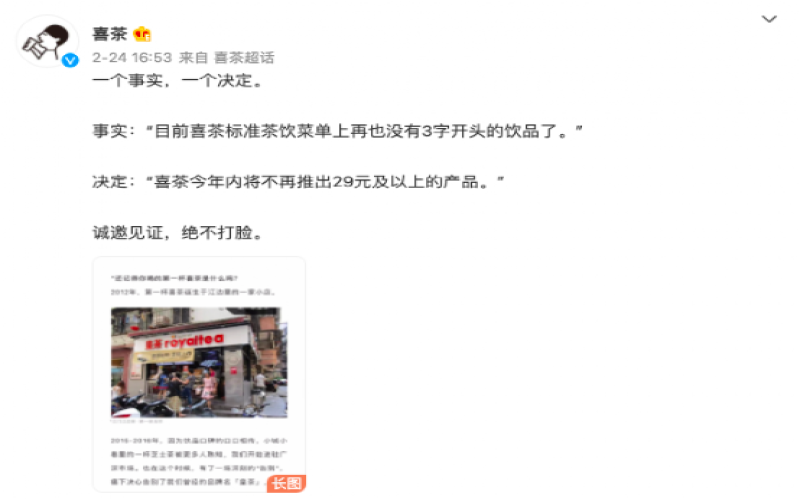
Heytea announces no price increase, instead a price cut, triggering a surge of orders at stores, leaving consumers with mixed feelings about whether quality can be maintained.
Since the pandemic, costs in the tea beverage industry have been climbing, and many brands have raised their prices, to the point that office workers have to weigh their wallets before buying a cup of milk tea. Yet Heytea has gone against the grain, not only lowering its menu prices but also publicly promising not to raise prices this year and to stop launching products priced above 29 yuan. This move quickly sparked a consumption boom, with orders surging and even overwhelming several stores, and queues exceeding one hour during peak times. Consumer reactions have been mixed: some applaud, feeling the prices are finally affordable; others worry whether the price cuts will come with shrunken ingredients and declining quality. Heytea responded that the recipes and production standards remain unchanged, and that it is simply giving consumers more choices. How far this price-cut wave can go is worth watching. [more…]
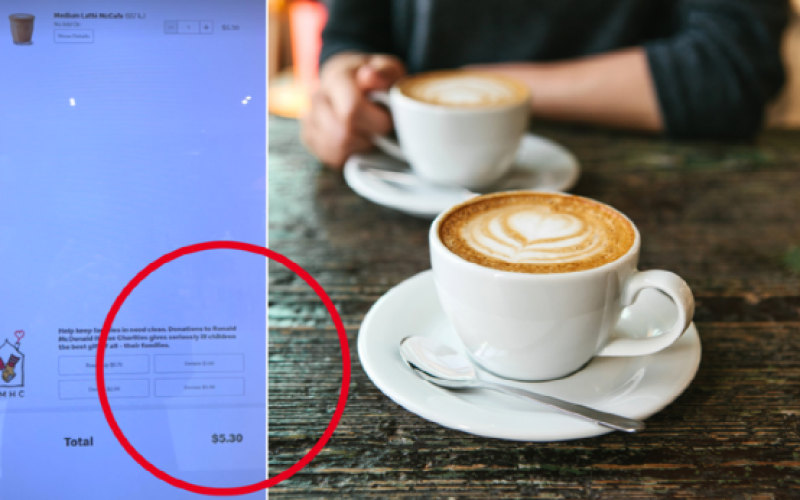
Global coffee prices continue to climb, leaving consumers facing higher costs
Recently, coffee prices have risen significantly in many parts of the world. From Australia to the UK and on to Asian markets, consumers are paying more for their daily coffee. Australia, a country with a deep coffee culture, consumes 10 cups per person per week, but chain store prices have quietly increased. Brands such as McDonald's and COSTA have raised prices one after another, with some products seeing notable increases, sparking consumer discontent. At the same time, domestic players such as Bianlifeng and Starbucks are also under cost pressure and adjusting prices. Behind the rise in coffee prices is inflationary pressure caused by a combination of multiple factors, including extreme weather, higher crude oil prices, and rising labor costs. Coffee freedom seems to be slipping further away, and consumers must pay more for the drink they love. [more…]

Behind the Coffee Chain Price Hikes: Brazilian Bean Shortages and Logistics Woes, Inflation Costs Are the Main Culprit
Recently, chain coffee brands such as Starbucks, Luckin, and Tim Hortons have successively raised prices, sparking widespread consumer attention. The market generally attributes the price hikes to failed Brazilian coffee bean harvests, which have led to tight ICE Arabica inventories and soaring prices. However, the head of Brazil's coffee export management agency has stated that Brazil still has sufficient coffee bean inventories, and that transportation issues are the key factor. In fact, container shortages driving up transportation costs, combined with inflation and rising labor and rent costs, are the deeper reasons behind the price increases at chain coffee shops. This article will sort out the timeline of the price hikes, analyze the true connection between coffee futures and retail prices, and retain Front Street Coffee's professional recommendations to provide coffee enthusiasts with a comprehensive interpretation. [more…]

Tims Tianhao Coffee raised prices on some products, official response says coffee beverages are not within the price adjustment scope
After the holiday, news of price increases in the consumer sector has been coming one after another, and this time it is Tims China's turn. Many consumers have noticed that the price of their usual bagels has quietly gone up, some combo meals have seen two price hikes within six months, and the bagel options for delivery combo meals on Wednesday Member Day have been cut from several varieties to three. In response, Tims officially said that prices for some products nationwide have indeed been adjusted, but coffee products will not increase in price, and the adjustment was made after a comprehensive assessment of operating costs. As a Canadian brand that has built its position in the Chinese market with a "coffee + warm food" strategy, Tims' bagels have always been a star product, and whether this price increase will be accepted by loyal customers is worth watching. [more…]

Italian Espresso Pricing Controversy: Decaf Sold at 2 Euros Leads to a 7,000 Yuan Fine, Champion Barista Speaks Out
Italian espresso is regarded as a national cultural symbol and has long maintained a low price of around 1 euro. After the pandemic, costs rose, and some cafés raised the price to 1.5 euros, which sparked consumer dissatisfaction. Recently, a three-time coffee competition champion was fined 1,000 euros (about 7,109 yuan) because a decaf espresso was priced at 2 euros and the price was not listed on the physical menu. He posted a question: why do Italians accept a 2-euro newspaper, yet feel that a 1.2-euro espresso is not worth it? When the specialty coffee wave meets the traditional low-price culture, the pricing dilemma of Italian espresso is worth pondering. Front Street Coffee continues to follow global coffee industry trends and brings you in-depth reporting. [more…]

Luckin Coffee's 6.9 yuan drinks spark debate: limited-time holiday coupon or across-the-board price cut?
Recently, prices for multiple drinks on Luckin Coffee's mini-program suddenly dropped to 6.9 yuan, quickly trending on social media and sparking widespread attention. Consumers noticed price changes for popular items originally priced at 9.9 yuan, such as Americanos and Coconut Latte, with some new light milk tea and fruit coffee products also adjusted simultaneously. However, not all users could enjoy this discount; some only received limited-time redemption coupons. Luckin officially responded that this was a randomly distributed 6.9 yuan coupon activity for the Dragon Boat Festival and Children's Day, not a comprehensive price reduction. Meanwhile, the price war on delivery platforms is intensifying, with brands like Cotti having pushed coffee unit prices down to 3.9 yuan. Whether Luckin's move is a response to competition warrants in-depth discussion. [more…]