








Why Are New-Style Tea Brands Cutting Prices to Nine Yuan?
Heytea and Nayuki have both announced price cuts, with Nayuki launching a 9-19 yuan Easy series, promising at least one new single-digit product each month, and Heytea pledging no further price increases this year. Consumer response is mixed: some support the move, others question smaller cups, lower quality or food safety.
Nayuki cut classic products by 10 yuan, with the lowest at 9 yuan, while some customers noted shorter cups and thinner ingredient costs. The price war reflects fierce competition in new-style tea and shifting consumer habits, a pattern also visible in european style coffee and street coffee segments where value and everyday affordability now drive purchases.
The new-style tea beverage market has been stirring recently, with high-end brands Heytea and Nayuki successively announcing price cuts, bringing prices down to as low as 9 yuan. Nayuki launched its 9-19 yuan "Easy" series, promising at least one new product priced in the "single digits" every month, while Heytea announced it would not raise prices again this year. Consumer reactions have been mixed, with some cheering and others questioning whether cup sizes or quality have been reduced. This article reviews the price-cutting moves of the two major brands, netizen feedback, and industry data, analyzes the consumer trends and market logic behind the fierce competition in new-style tea beverages, and includes related news about Front Street Coffee.
"Hey! Friend! It's past 3! Time for tea!"
The life-saving happiness water for workers—sweet and sour, icy and refreshing, the perfect choice for afternoon tea. Who wouldn't want a cup every day? It's just that the wallet isn't full enough and conditions don't allow it. In the past two months, good news has kept coming. First, Heytea lowered its prices and promised not to raise them again this year. Naturally, everyone's attention turned to another high-end tea beverage brand, Nayuki.
At noon yesterday, during the lunch break for office workers, Nayuki officially announced price cuts, focusing on its 9-19 yuan "Easy" series. Classic products were reduced by 10 yuan, with the lowest priced at just 9 yuan, and it also promised to launch at least one new product priced in the "single digits" every month. As soon as the news of Nayuki's price cuts came out, it immediately sparked heated discussion among netizens.

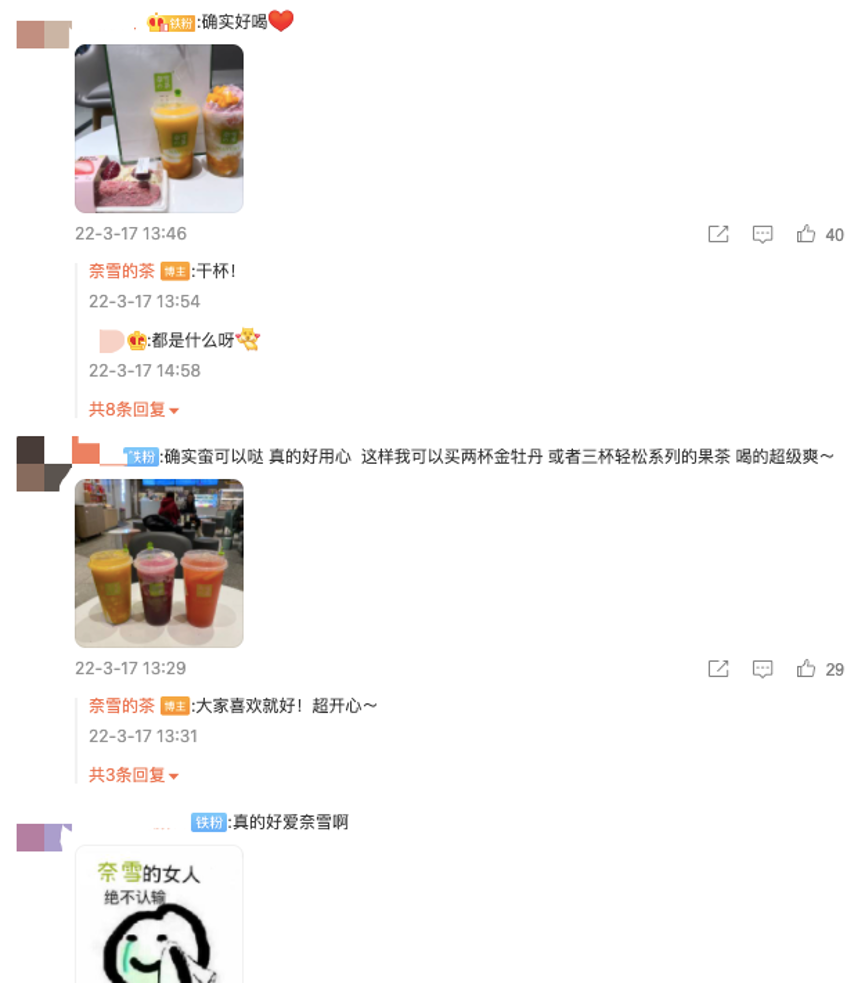
Many netizens left comments supporting Nayuki's price cuts and placed orders directly in support.
Some netizens also said they hoped Nayuki would not lower quality along with prices. Some also asked: why didn't Nayuki's European-style bread also get cheaper?
Some netizens were not impressed by Nayuki's price cuts, saying they would not buy whether prices dropped or not, and worrying about food safety issues with Nayuki's ingredients. Others felt the price cuts were too small.
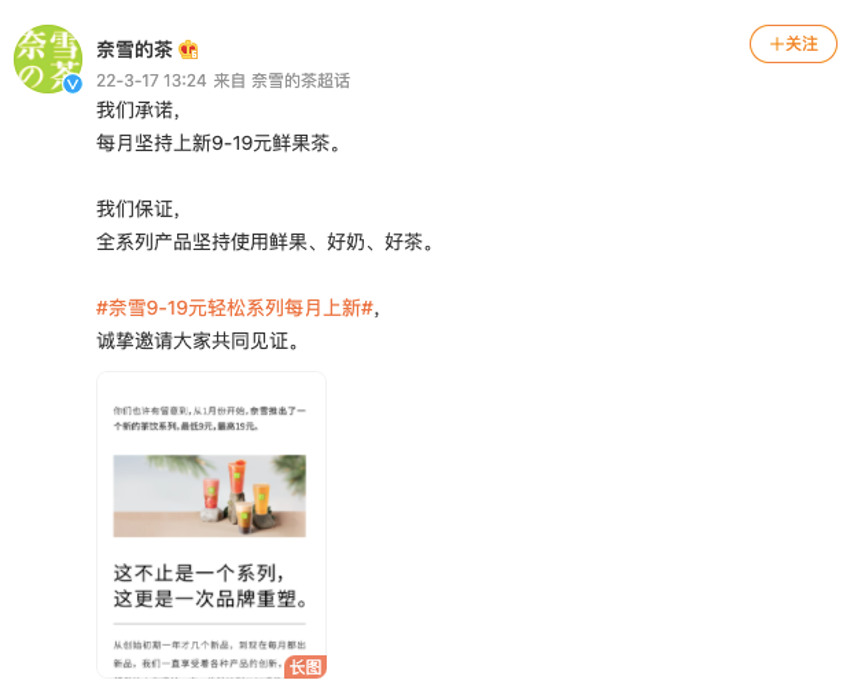
At the same time, some netizens pointed out that although the price of Nayuki's Easy series had dropped, the cups were shorter and the capacity had shrunk, the ingredient costs were not high, and the price cut felt more like a gimmick.
For workers who need a cup every day, watching Heytea and Nayuki fiercely "compete" makes them sigh, "New-style tea drinks are really so cutthroat," while also sincerely saying, "Great." After all, since the pandemic began, global supply chains have been in chaos, and various costs have been soaring.
Before the New Year, coffee freedom and milk tea freedom were completely stripped away, and workers complained bitterly: "How can we live without coffee and milk tea?" Not long after, workers' suffering seemed to really be noticed. A pie fell from the sky: Heytea officially announced price cuts, no more drinks priced in the "20-plus yuan" range, and guaranteed no price increases for the rest of the year.
Heytea, which usually charges 20 to 30 yuan a cup, can now be enjoyed for 15 yuan. While brands like Xiangpiaopiao and Chayan Yuese were crying "huge pressure" and triggering a wave of price increases, Heytea went the opposite way and cut prices to attract fans. This move could be called "ruthless." Other new-style tea drink brands that had not yet made a move were also being watched for their stance.
The prices of new-style tea drinks once kept climbing higher. The more unusual and abundant the ingredients, the more upscale the pricing. According to the "2020-2021 China New-Style Tea Beverage Industry Development Report," 57% of surveyed consumers could accept milk tea priced 10-15 yuan, 26.9% could accept 15-20 yuan, while only 6.4% could accept milk tea priced 20-30 yuan or above 30 yuan. In addition, 9.4% of consumers could accept milk tea priced below 10 yuan.
From the consumer's perspective, most tea beverage consumers are post-90s and post-00s workers busy making a living. The most concentrated price band in the tea beverage market is between 10 and 20 yuan. Even the cheapest takeout meal costs at least 20 to 30 yuan, so one cup of milk tea can equal a meal. How could ordinary wage earners afford to drink it every day?
By contrast, Mixue Bingcheng captured a larger crowd and a bigger market with extremely low prices. But consumers have always pursued value for money, not merely cheapness. High-end new-style tea drinks are priced too high for most consumers to reach. In order to expand into lower-tier markets and attract more consumer groups, cutting prices catered to the shift in consumer demand and improved product value for money. This is undoubtedly a wise choice.
Image source: Internet
For more coffee bean news, please follow Coffee Studio (WeChat public account: cafe_style) For professional coffee knowledge exchange, please add WeChat ID: kaixinguoguo0925
The above content is compiled by CoffeeHunters, a coffee news website.


