








Why Do Cafes Price Coffee the Way They Do?
A cup of coffee at an independent cafe generally costs more than at a chain because its price is built from store positioning, menu design, and raw material cost control, not from the beans alone. Rent, labor, utilities, renovation, and equipment investment differ from store to store, so selling prices naturally vary. Two espressos costing 23 yuan is one example of how wide that range has become.
Many cafes set prices through menu structure rather than a direct per-cup calculation. The cost-of-goods ratio method breaks down what a drink really costs: the coffee material, meaning espresso beans, plus milk, syrup, and fruit, each carry their own cost ranges. Using a double espresso as an example shows the ingredient cost per cup. Some consumers report paying 30 yuan for an Americano, 35 for a latte, and over 40 for flavored drinks.
How much should a cup of coffee actually cost? Why are prices at independent cafés generally higher than those at chain brands? This article systematically sorts out the inner logic of coffee pricing from three dimensions: café positioning, menu design, and raw material cost control. It breaks down in detail the calculation method for the cost-of-goods ratio, analyzes the cost ranges for espresso beans and milk, and uses a double espresso as an example to calculate the ingredient cost per cup. At the same time, it offers café operators practical advice on menu planning and material procurement, helping readers understand the real considerations behind independent café pricing.
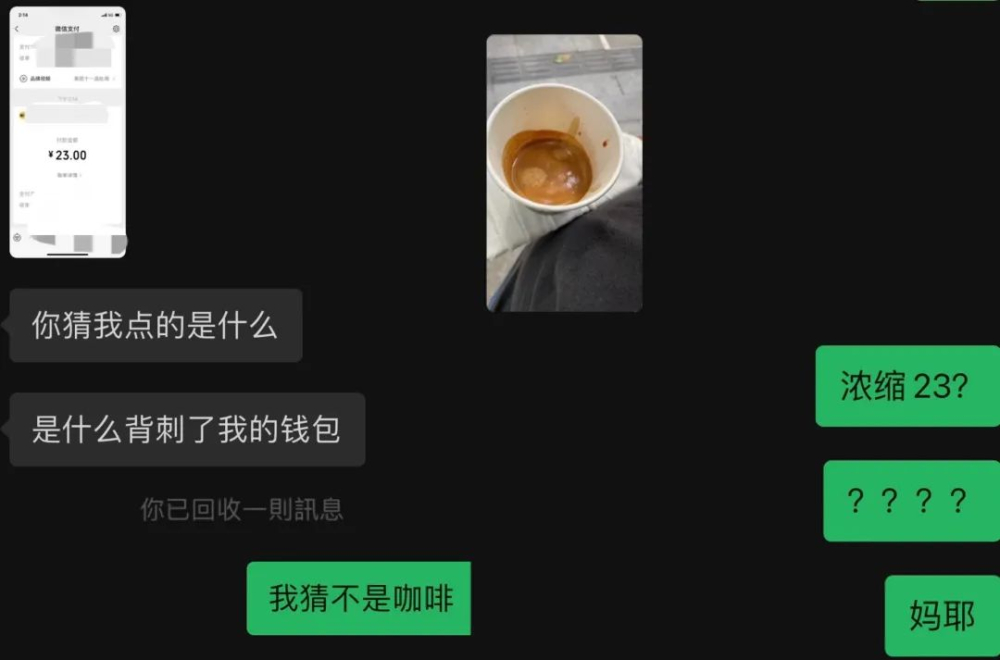
Recently, a friend of the author sent over a receipt and admitted being shocked by the price. When I learned that two espressos cost 23 yuan, I couldn't help feeling that my previous judgment about coffee spending had been overly optimistic.
In fact, many consumers have complained about similar experiences on social platforms. The way many cafés display prices nowadays is baffling: some menus list only product names without prices, and some are even entirely in English with no Chinese at all, leaving people caught off guard only when they pay the bill.
Even when a menu clearly marks prices, some people still find the numbers hard to accept the moment they see them. One netizen lamented: 30 yuan for an Americano, 35 yuan for a latte, and those specialty coffees with flavored syrups and fruit start at over 40 yuan, which really makes you feel the pinch. What's more disappointing is that the high price does not buy a flavor experience that matches it.
Faced with the ever-widening price range of coffee products, many consumers are eager to know: how much does a cup of coffee actually cost?
One point needs to be made clear first: every store's rent, labor, utilities, renovation, and equipment investment differ, so it is only natural that selling prices vary. Therefore, this article does not intend to directly calculate the cost of a single cup of coffee, but rather to discuss how cafés set prices and how they should reasonably set prices.
"Clarify the store's positioning, determine the direction of the menu, and thereby influence costs and pricing"
Observation shows that the root cause of high pricing at many cafés lies in rent and labor pressure, as well as poorly designed menu structures. Stores lack clear positioning and have not researched the spending habits of nearby customer groups, resulting in chaotic menus that both drive up material costs and increase waste.
Therefore, before designing a menu, a café must clarify its own positioning—whether it targets the general public, focuses on being an internet-famous check-in spot, or serves a niche group of coffee enthusiasts. From an actual operations perspective, the core products on the menu are basically the categories the owner mainly promotes and customers are willing to pay for.
The coffee products on the menu need to match the location and the store's style, which also means the store location and decor are themselves part of the selling point. The menu should be adjusted flexibly accordingly. For example, if a store is located in a residential community or small town but its products and pricing benchmark those of bustling commercial districts or major cities, then both the menu and the prices will deter customers.
So the coffee menu should be polished like a product, making it a signature that draws customers to visit specifically, and only then should costs and pricing be considered comprehensively. Only with clear positioning can materials be selected precisely, costs be controlled effectively, and reasonable prices be set.
"How should menu products be priced?"
The actual practice at many cafés is to purchase materials first and then work backwards to products, so high pricing is not intentional but rather the result of persistently high material costs. To cover various expenses while still leaving room for profit, prices naturally rise.
Therefore, be sure to first determine the main customer base, set an approximate price range, and then choose production materials accordingly.
If pricing is to be worked backwards from raw material prices, then one needs to refer to the cost-of-goods ratio, that is, the proportion of raw material costs in the product's selling price.
"Raw material cost = material cost × (1 + loss rate)"
The loss rate is calculated at about 5%, for example the loss from defective beans in coffee beans.
"Cost-of-goods ratio = raw material cost ÷ selling price × 100%"
For example (illustrative only): if a cup of Americano sells for 10 yuan, the raw material cost should be controlled at around 3 yuan, giving a cost-of-goods ratio of 30%. Generally speaking, the cost-of-goods ratio should not exceed 30% of the selling price, but this still needs to be combined with each store's actual situation, taking rent and labor costs into consideration as well.
"How to control material costs well"
Coffee equipment: choose only what is suitable, not what is expensive. It is not advisable to blindly spend heavily on equipment as soon as you open a store; in the early stage of opening, there is really no need to tie up all your funds in equipment. The more expensive the equipment, the higher the product pricing will naturally be.
Coffee materials: whether coffee beans or other materials, when purchasing you must choose suppliers, manufacturers, or brands with legal production qualifications—this point is crucial.
The best-selling products at ordinary cafés are inseparable from espresso, so the value for money of espresso directly affects whether customers are willing to come back again.
The price of espresso beans varies. Taking one pound as the unit, espresso beans with an ordinary taste cost 50 to 60 yuan; those with a more prominent flavor profile cost 70 to 80 yuan; and if the flavor is unique or estate beans are used in a blend, or SOE coffee beans are used, the price ranges from 90 to 150 yuan.
When opening a café, Front Street Coffee's commercial blend is the top choice. This is a medium-dark roasted espresso bean whose recipe, based on the classic combination of Brazil and Colombia, adds a small amount of Robusta beans, and is designed specifically for producing espresso in stores. During extraction it delivers rich crema, so even beginners can easily create latte art.
Usually one pound of beans is about 454 grams. Calculated by double espresso, a cup of coffee beverage consumes about 17 to 20 grams of beans, so one pound can make about 22 to 26 cups, and the bean cost of a single espresso is between 2.2 and 6.8 yuan.
On milk cost: ordinary fresh milk costs 11 to 13 yuan per liter, and higher-quality fresh milk costs 16 to 19 yuan per liter. The milk needed for a cup of milk coffee, plus loss, is about 200 milliliters, so one liter of milk can make 4 to 5 cups, with a per-cup cost of about 2.5 to 4.5 yuan.
However, the above only calculates the raw material cost of coffee beans and milk. If the rent, equipment, materials, and other expenses of each store, as well as positioning differences, are added in, independent cafés simply cannot compete with chain brands on cost. Therefore, it is entirely normal for an independent store's per-cup price to be higher than that of a chain store.
Many times, when consumers walk into an independent café, what they expect is precisely the service and experience that chain stores cannot provide. As for the price being slightly higher than chain brands, most people are actually mentally prepared for that. What truly makes people feel stung is often a mismatch between product quality and pricing, and when service is also lacking, that is when they feel the money was not well spent.
Image source: Internet
The above content is compiled by CoffeeHunters, a coffee news website.


