







Why Did Vietnam Coffee Prices Flip Between Species?
Vietnam's Robusta export price has passed its Arabica price for the first time in nearly 50 years. According to VICOFA, average Robusta export prices in May reached $3,920 per ton against $3,888 for Arabica. Domestic spot prices tell the same story, with Robusta quoted at 132 to 139 million dong per ton and Arabica at 100 to 130 million.
The reversal comes from tight global supply after high temperatures and drought cut Vietnamese output, while export prices climbed. Average coffee export prices from January to May were $3,428 per ton, up 50 percent year on year, and May alone hit $4,208 per ton, 63.6 percent above May last year. A stronger Brazilian Robusta harvest may ease prices.
Vietnam, as the world's largest producer of Robusta coffee, has recently seen a rare phenomenon—domestic Robusta prices have actually surpassed Arabica, marking the first time in nearly 50 years. Influenced by multiple factors such as high temperatures and drought, reduced production, and tight global supply, Vietnam's coffee export prices have continued to rise, with the average export price in May soaring 63.6% year-on-year. Meanwhile, Brazil's new-season Robusta harvest is good, which may provide some relief to the continuously rising prices. This article will provide a detailed interpretation of the price trends, supply and demand changes, and future expectations in the Vietnamese coffee market.
Vietnam is the country with the highest Robusta coffee production in the world, but it also cultivates Arabica coffee beans. In terms of variety structure, Robusta accounts for about 95% of Vietnam's total coffee production, while Arabica accounts for only about 5%.
Although Vietnam's Robusta production far exceeds that of Arabica, for a long time, the price of Vietnamese Arabica coffee beans has always been higher than that of Robusta. However, this long-standing pattern has recently reversed.
According to a report released by the Vietnam Coffee and Cocoa Association (VICOFA), the average export price of Vietnamese Robusta coffee in May was $3,920 per ton, while the average export price of Arabica coffee was $3,888 per ton. This is the first time in nearly 50 years that Robusta prices have surpassed Arabica in Vietnam.
At the same time, local coffee companies in Vietnam report that actual domestic coffee prices are even higher than the official data recently released. Currently, the spot price of Robusta coffee in Vietnam is between 132 million and 139 million Vietnamese dong per ton, while the spot price of Arabica coffee is between 100 million and 130 million Vietnamese dong per ton.
In addition, relevant data also show that the average coffee export price from January to May was $3,428 per ton, an increase of 50% compared to the same period last year. Among this, the average coffee export price in May was as high as $4,208 per ton, up 11.7% from April and a significant increase of 63.6% compared to May last year.
The core reason why Robusta prices can be higher than Arabica is the market supply shortage. Although Brazil recently reported growth in both Robusta production and exports, this still cannot make up for the supply gap caused by reduced production in Vietnam and Indonesia.
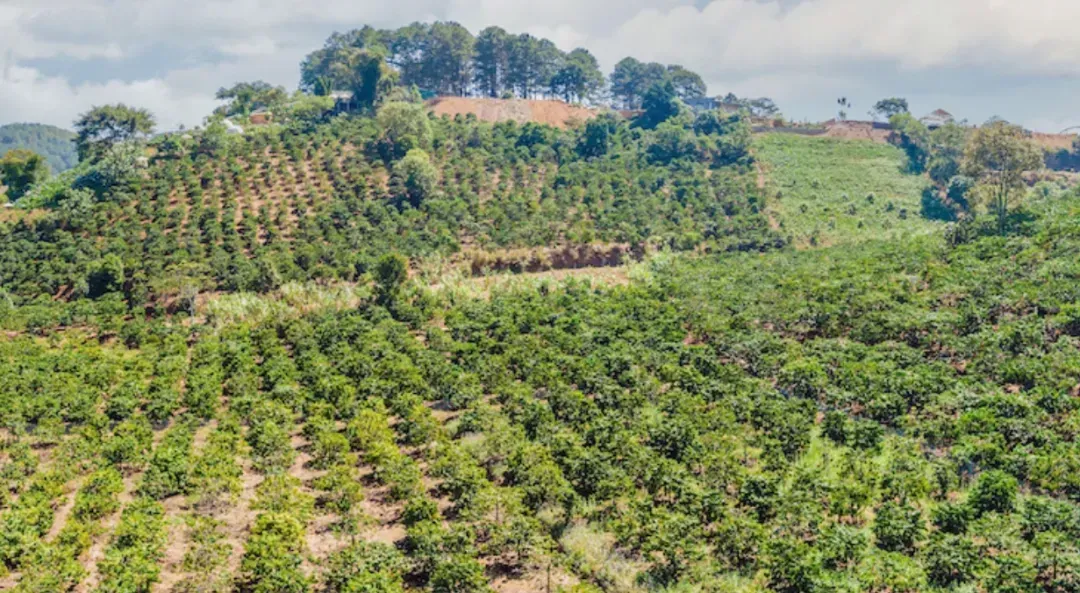
Although Vietnam's coffee export reports in recent months show that export volumes have risen in tandem with coffee prices, affected by prolonged high temperatures and drought weather, Vietnam's coffee industry may face a decline in both production and export volumes in the second half of the year.
Therefore, the Vietnam Coffee and Cocoa Association stated that its previous forecast of a 20% decrease in Vietnam's coffee export volume for the 2023/24 season remains unchanged. Since more than 1.2 million tons of coffee have already been exported, higher than the same period last year, this proves that market inventories are at a low level, demand is strong, and prices remain high. It is expected that domestic coffee prices will continue to remain high in June.
Before Robusta prices rose, many roasters would choose to blend Robusta with Arabica when making blended coffee beans. However, as Robusta prices climb, roasters may consider increasing the proportion of Arabica coffee used.
On the other hand, Brazil's new Robusta season has begun harvesting, and the harvest situation is good. The Brazil Coffee Exporters Council (Cecafé) estimates that Brazil's coffee export volume for the 2023/24 season could reach 46.3 million bags (each bag of 60 kilograms), which would set a historical high. This news is expected to alleviate the continuous upward pressure on Robusta coffee prices to some extent.
The above content is compiled by CoffeeHunters, a coffee news website.


